
 English
  Polski
  Deutsch
  Nederlands
  Svenska
  Norsk
Norsk  Dansk
Dansk  Français
  Italiano
  Español
  Português
  Slovenčina
  Suomi
Suomi  Gaeilge
 A Family Has Grown Bulbs for Over 120 Years These Tips Will Guarantee a Spring Full of Flowers
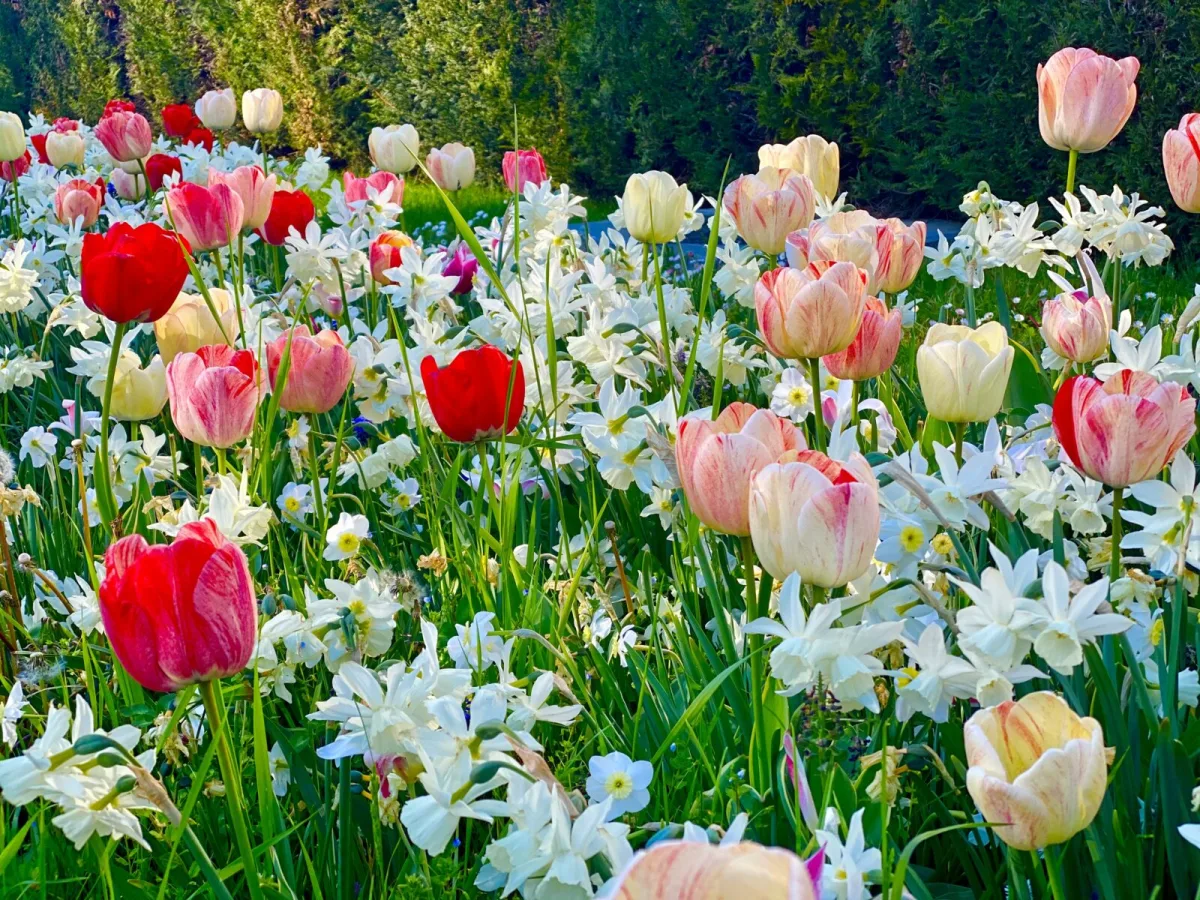
If you want to admire a garden in full bloom in spring, the decisive work happens in autumn. That’s when it’s time to plant bulbs that will deliver the first strong wave of colour after winter. Long-time grower Brent Heath, whose family has been devoted to bulbs since 1900 in Virginia, is considered one of the most respected experts in the field. Together with his wife Becky, he built a well-known company focused on selling and growing bulbs, and their experience is now used by gardeners across North America.
Brent isn’t only a grower, but also a daffodil breeder, photographer and advocate of nature-friendly gardening. In his work he emphasises that a garden should benefit not only plants, but also bees, birds and butterflies. Their family motto, plant bulbs and harvest smiles, captures well just how much these plants can bring to any gardener.
When to plant bulbs and how to do it
The best time for autumn planting is just before the first frosts arrive. In practice, though, the condition of the soil matters more than the calendar. Bulbs need to go in before the ground freezes solid so they have time to root. Once roots begin to form, bulbs cope better with cold, because their tissues gain greater resilience.
If you’re planting later, it’s a good idea to water thoroughly after planting and cover the area with mulch. Mulch won’t warm the soil, but it will slow down freezing. Good choices include pine needles or finely shredded bark. This kind of material also suppresses weeds, supports soil life and gradually breaks down into humus.
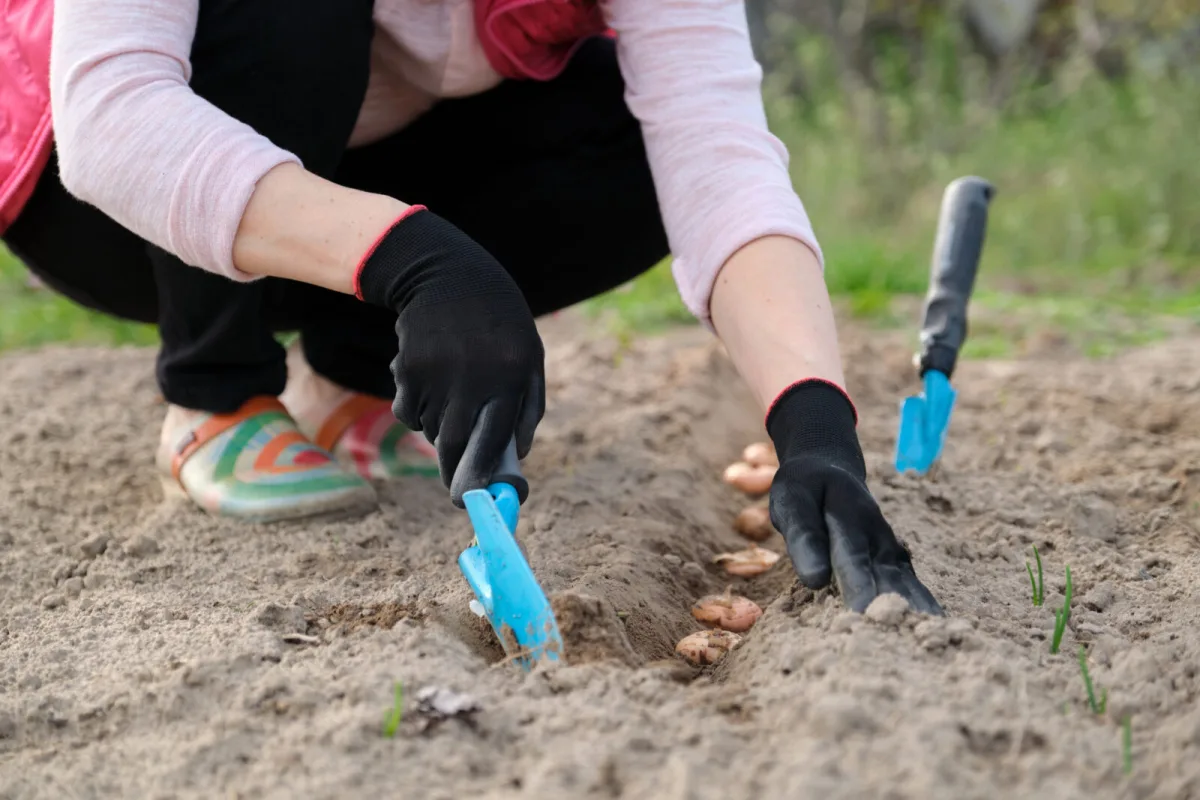
Ideally, plant when the soil is around 10 to 15 °C. More accurate than judging by air temperature is using a soil thermometer. Planting itself is straightforward. The pointed end of the bulb should always face up, and the planting hole should be about three times the height of the bulb. In beds, space bulbs roughly three times their width apart, while in containers you can plant more densely.
Soil matters more than quick feeding
The foundation of success is healthy soil. Instead of aggressive fertilisers, compost is recommended above all, because it feeds soil microorganisms. They then make nutrients available to plants in a natural form. That’s what benefits bulbs the most.
Fast-acting chemical fertilisers can deliver an immediate effect, but it rarely lasts. There’s also a risk of root damage, which can increase susceptibility to disease. If you do need to add something, organic, slow-release fertilisers are the better choice. It’s also important never to put fertiliser directly into the planting hole with the bulb. The correct approach is to backfill over the bulb first and apply nutrients on the soil surface afterwards.
How to plan for a long flowering season
One of the best features of bulbs is that you can design plantings so the garden blooms in sequence for many weeks. You can achieve this by combining species with different flowering times. A practical technique is so-called layered planting in one hole. Place the large, later-flowering bulbs at the bottom, add a layer of soil, and plant mid-season types above. Closest to the surface should be the small, early-flowering bulbs.
Pairing bulbs with perennials works extremely well. Daffodils, for example, combine beautifully with daylilies. Once daffodil foliage starts to wither after flowering, daylilies will cover it and at the same time draw excess moisture from the soil. That suits bulbs during dormancy. In a similar way, you can combine bulbs with other perennials so the garden’s colour flows smoothly from early spring into summer.
Protection from wildlife and rodents
Some bulbs are not very tempting to animals, while others are considered delicious. Daffodils and ornamental alliums usually resist both deer and rabbits. Tulips, however, are often browsed, so it’s worth protecting them with repellents. The same applies to crocuses, which attract rodents and squirrels with their scent.
For smaller pests such as voles, treating bulbs with a product that masks their odour can help. Scent is often the main reason they locate bulbs in the soil. Protection is especially important for species that animals consider a delicacy.
Why animals leave some bulbs alone
The resistance of certain species comes down to their chemistry. Plants in the amaryllis family, which includes daffodils, snowdrops and spring snowflakes, contain compounds that are unpalatable to most animals and many insects. That’s why herbivores usually avoid these bulbs.
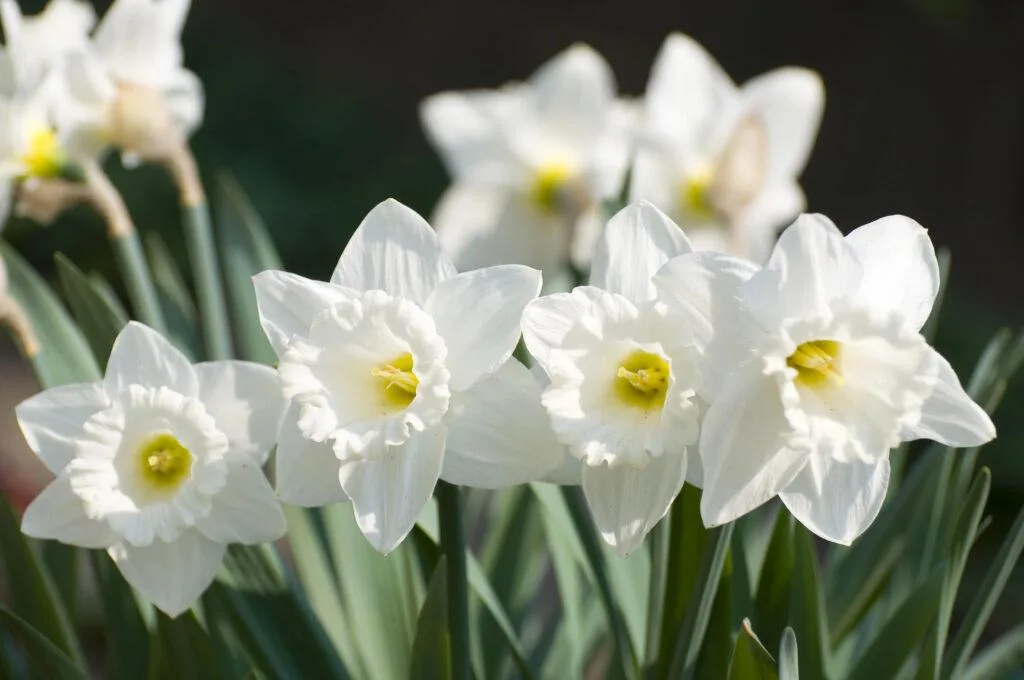
Daffodil leaves act like solar panels and after flowering they must collect enough energy for the next season.
Tulips, on the other hand, have sweeter, more attractive pollen, so they lure pollinators, but unfortunately also wildlife. That’s the trade-off for their popularity in gardens. If you want to keep tulips in good condition, protection is often essential.
Where bulbs belong and where they don’t
The idea of a lawn in bloom is tempting, but it’s not suitable to plant bulbs into a standard intensively maintained lawn. A conventional lawn is regularly irrigated and often treated with chemicals. That environment doesn’t suit bulbs.
If you want to grow them in grass, it should be more naturalistic and mown higher. Taller growth allows bulb foliage to ripen and also encourages deeper grass rooting. Good candidates for such a spot are crocuses, snowdrops or glory-of-the-snow.
Daffodils need sun even after flowering
Daffodils often bloom well in the first year even in a spot that seems suitable only in spring. The problem comes later. The bulb can draw on energy reserves stored from the previous season, but after flowering the leaves must recharge again from the sun. If trees leaf out above them and the site falls into shade, the bulb can’t rebuild properly and the following year it flowers weakly or not at all.
After flowering, leave the foliage for at least eight weeks, until it naturally yellows. Only then can it be removed. It’s also true that most bulbs prefer a dry dormancy period. In constantly wet soil they suffer stress and can be attacked by fungal disease. Nearby perennials, annuals or groundcovers can help by drawing excess moisture from the soil.
Thoughtful combinations bring the best results
Autumn bulb planting isn’t complicated, but it pays to follow a few principles. The right timing, well-draining living soil, sensible pest protection and careful siting are what matter. Add a mix of bulbs with different bloom times and suitable companion plants, and your reward will be a garden full of colour from the first weeks of spring.
The greatest success comes from combining practical care with good planning. Bulbs then aren’t just a brief spring decoration, but a considered part of the garden that returns each year with renewed energy.
Source: Joe Gardener, Family Handy Man, Pestrazahrada.cz
Related articles

Homegrown Physalis Tastes Better Than Store Bought But Green Fruit Can Be Toxic
Cape gooseberry (Physalis peruviana) rewards you with aromatic, sweet-tart fruit when grown in a sunny, sheltered spot. Learn how to raise plants from seed, care for them, and why unripe green fruit should never be eaten.
Never prune a walnut tree in spring
English walnut is a magnificent, long-lived tree, but timing matters—spring pruning can cause heavy sap bleeding and slow healing. Learn the right site, spacing, feeding, harvesting, and pruning window for a healthy crop.
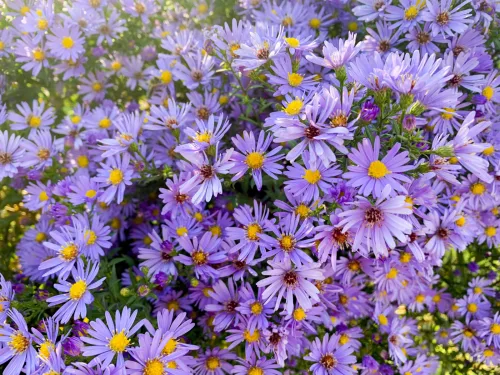
Autumn asters turn the garden into a haven for pollinators
Autumn asters light up borders in September and October with clouds of colour while offering vital nectar and pollen when many other plants have finished. Chosen well, they’ll keep feeding pollinators right up to the first proper frosts.
Comments (0)
Be the first to comment.