
 English
  Polski
  Deutsch
  Nederlands
  Svenska
  Norsk
Norsk  Dansk
Dansk  Français
  Italiano
  Español
  Português
  Slovenčina
  Suomi
Suomi  Gaeilge
 Why You Should Pinch Out Suckers on Cordoned Tomatoes Early Without Tools
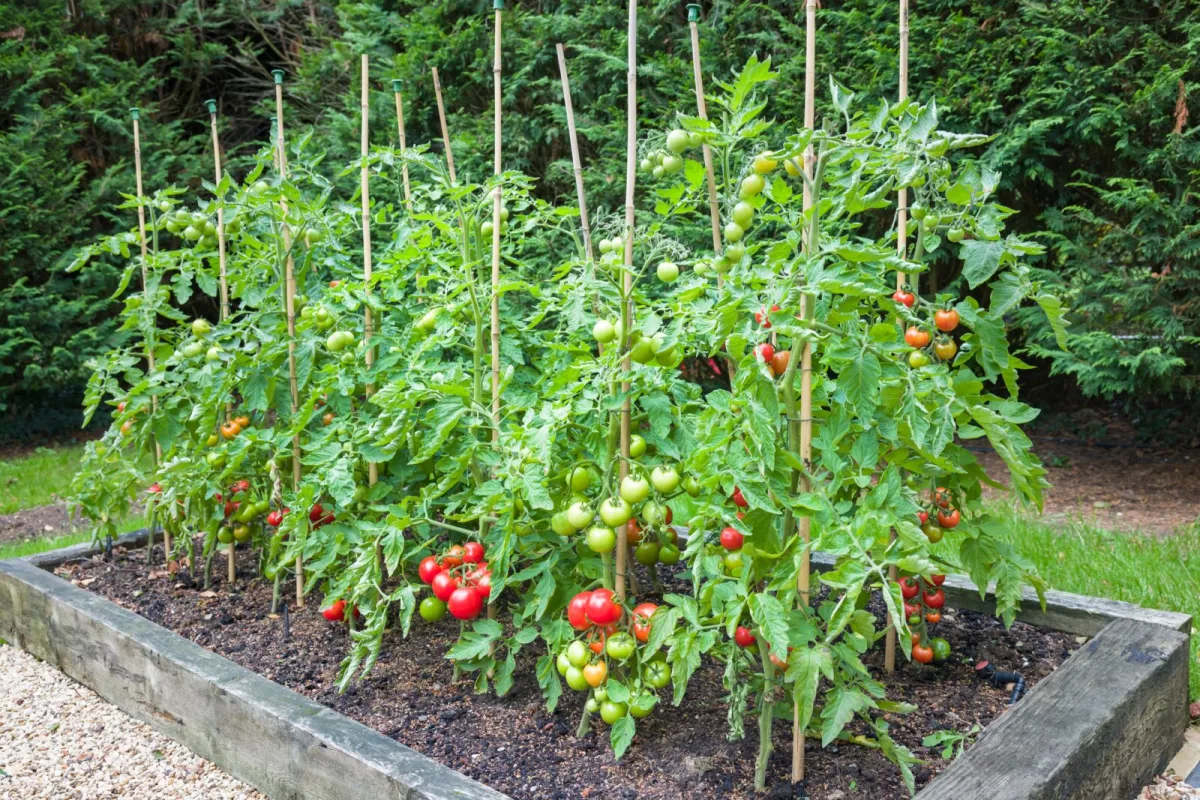
With tomatoes, it’s important to distinguish between bush (determinate) and cordon (indeterminate) types. Bush tomatoes are usually grown without tall support and without interfering with side shoots. Cordon varieties, on the other hand, need tying to a support and also the ongoing removal of suckers, meaning side shoots that grow from the leaf axils. If suckers are left unchecked, the plant becomes unnecessarily crowded, airflow is poorer, and it spreads its energy across too many shoots. The result is often smaller fruit and a higher likelihood that fungal diseases will take hold in the crop.
When to remove suckers so the plant is stressed as little as possible
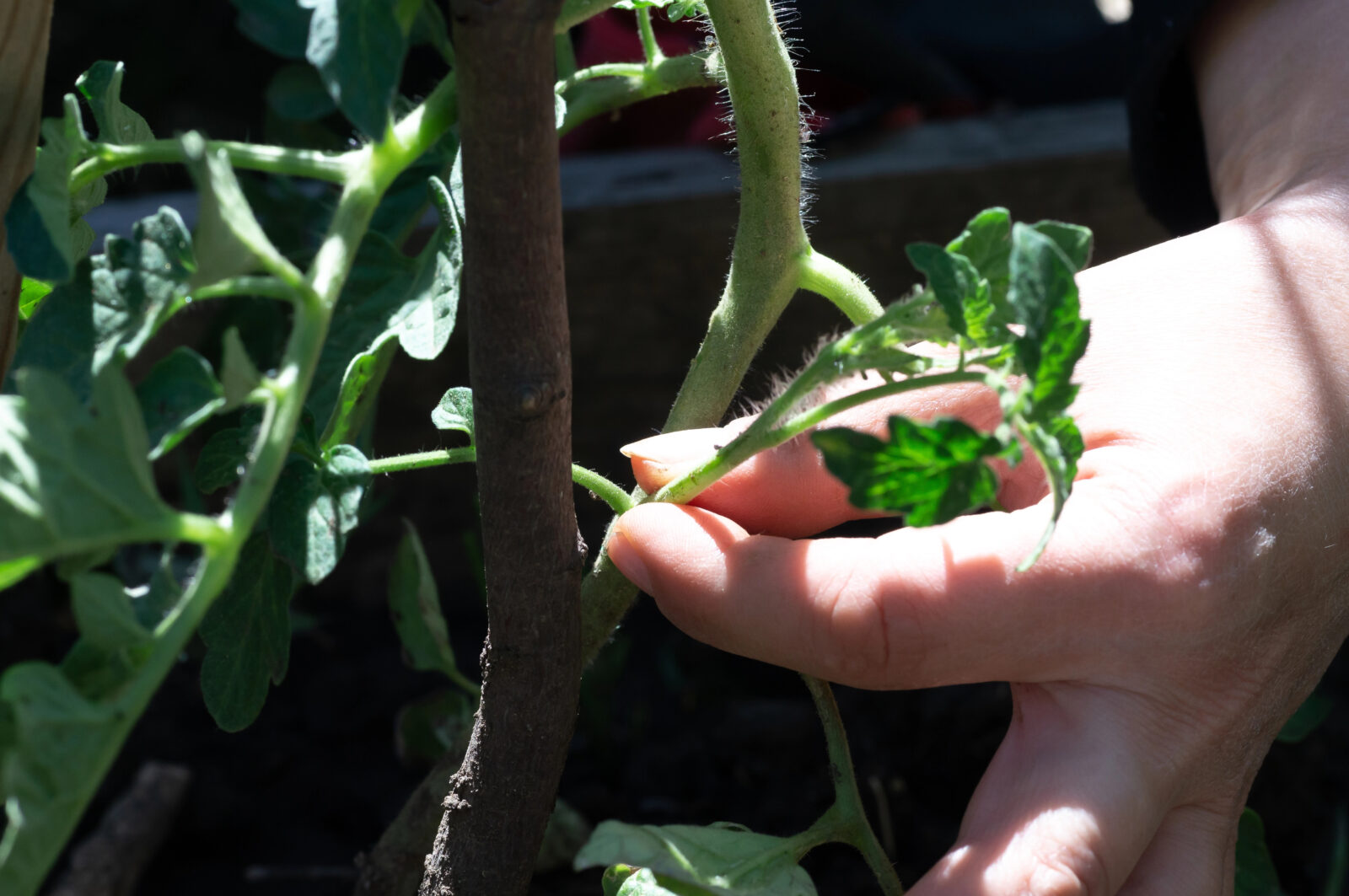
It’s best to act early, when the suckers are roughly 5 to 10 cm long. At this stage they’re easy to remove and the wound left on the plant stays small. Overgrown suckers are already thick, and removing them creates a larger injury that seals more slowly. The size of the wound often determines how easily infection can enter the tissues and how quickly any problems can spread along the stem.
Breaking out is gentler than pinching, cutting or snipping
In practice, this job is often described as pinching out, even though from the plant’s point of view it’s safest to break the suckers out rather than pinch them off. When you snap a sucker out, your fingers don’t come into direct contact with the fresh wound in the tissues in the way they can when you pinch. That reduces the chance of introducing infection into the damaged area. For this reason, breaking out is considered the lowest-risk method when it comes to grey mould developing on injured parts.
Why to avoid secateurs and a knife
An even greater risk comes with snipping or cutting suckers out. With tools, there’s a danger of transferring infection from one plant to another if the blade isn’t clean or regularly disinfected. One infected cut is enough for the problem to gradually show up on multiple plants, both in the greenhouse and outdoors. Mechanical damage also creates an entry point for pathogens, which multiply very quickly in warm, humid conditions.
Grey mould as a common consequence of plant injury
Typical grey mould can develop at the damaged spot. It appears not only after poor sucker removal, but also after other tasks, for example when harvesting fruit and a piece of tissue breaks away or the stem is damaged. The causal agent of this disease is the fungus Botryotinia fuckeliana, which can exploit weakened areas and, under favourable conditions, move into other parts of the plant. That’s why the point of correct technique is mainly to minimise wounds and limit opportunities for infection to spread.
The smaller the injury you create when working on tomatoes, the smaller the chance grey mould will establish in it.
What happens if we don’t remove suckers
If suckers are left on, the plant quickly becomes dense. Leaves and shoots overlap, humidity is trapped inside the plant, and airflow is weak. That creates conditions that favour fungal diseases. At the same time, the plant puts nutrients into lots of side shoots instead of concentrating them on setting and ripening fruit. In practice, this often shows up as smaller fruit, slower ripening, and a less manageable harvest.
How many stems to train cordoned tomatoes on during the season
Suckers are removed continuously throughout the growing season, and the usual aim is to train cordoned tomatoes to a single main stem. This keeps the plant more open, makes it easier to tie in to its support, and directs energy into the fruit. Training on two stems is possible when the plant has a sufficiently strong root system and can supply both stems properly with water and nutrients. Grafted plants are also often trained on two stems, especially when they’re on a more vigorous rootstock and have greater growth strength.
Source: GrowVeg, Gardenia, Gardening Know How, Pestrazahrada.cz

A lover of nature, gardens, and everything that moves, blooms, or grows. He literally grows everything, from herbs to rare species, and he enjoys caring for animals just as much. In his work, he connects modern technology with tried-and-tested grandmotherly methods and is happy when both paths lead to the same goal.
Related articles
Next year you can harvest better if you don’t sow carrots where they won’t thrive
Carrot root fly can ruin carrots, parsley and celery from the inside out, often without obvious warning until harvest. Better site choice, rotation, later sowing and simple physical barriers can dramatically cut damage next season.

How to Propagate Roses from Cuttings at Home and Fill Your Garden with Blooms Almost for Free
Want more roses without paying for new plants? With a few healthy cuttings and a simple plastic-bottle mini greenhouse, you can root new bushes at home in just a few weeks.
Heathers can cope where other plants won’t, but one soil detail decides everything
Heathers and heaths are tough evergreen shrubs that can flower across the seasons when you choose the right types. Success hinges on matching the plant to your soil pH and ensuring free drainage.
Comments (0)
Be the first to comment.