
 English
 Polski
 Deutsch
 Nederlands
 Svenska
 Norsk
 Dansk
 Français
 Italiano
 Español
 Português
 Slovenčina
 Suomi
 Gaeilge
White Painted Trunks in Orchards Protect Trees from a Hidden Winter Threat
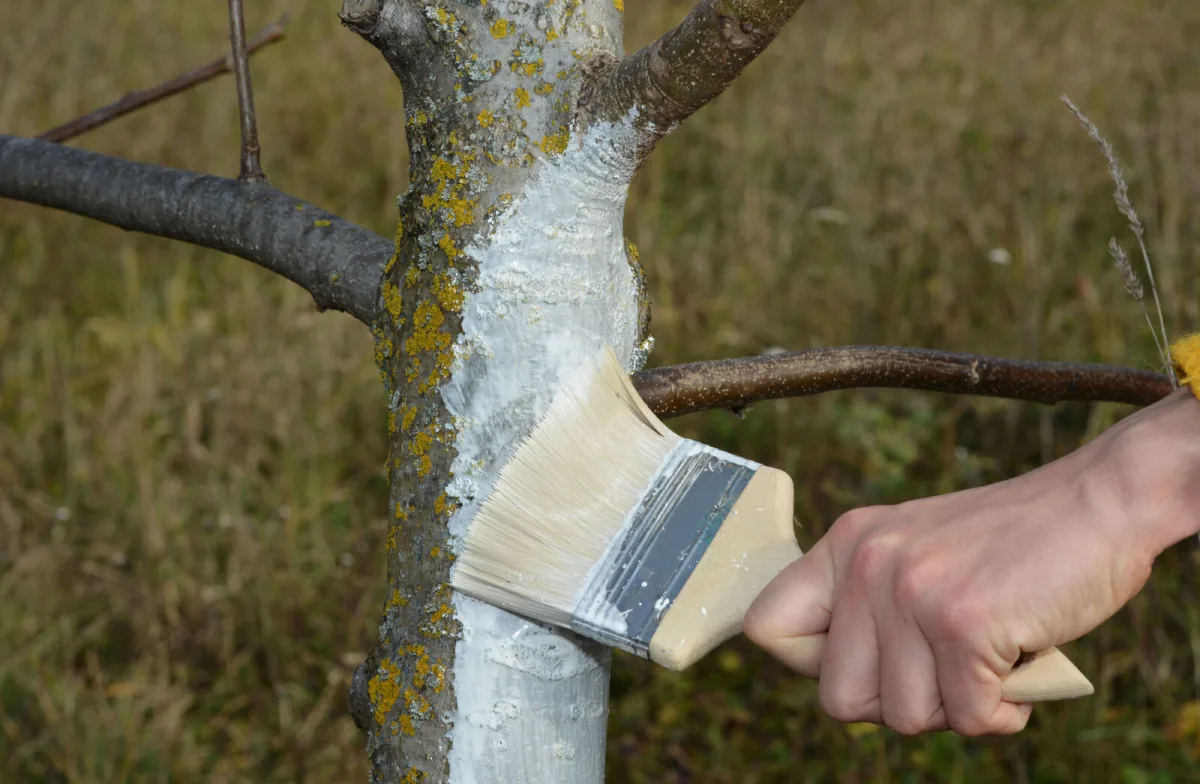
In winter orchards and gardens, you’ll often see trunks painted white. It’s not for show, but a practical protective measure that helps fruit trees and some ornamentals get through a tough winter without serious damage. The main purpose of whitewashing is to protect the bark from rapid temperature changes between a sunny day and a freezing night.
On bright winter days, dark bark on the sun-facing side warms up quickly. Then, when temperatures drop fast below freezing in the evening and overnight, the tissues suddenly contract. This repeated stress is what leads to bark splitting and the formation of frost cracks. Once weakened, these spots easily become an entry point for diseases and other harmful organisms.
How a white coating protects the tree
A white layer reflects sunlight and limits overheating of the trunk. This reduces the temperature swings that are most dangerous for bark. Protection is most important on the south and southwest sides, because that’s where the winter sun is strongest.
The coating doesn’t only protect against splitting. Lime wash also has a disinfecting effect and can help limit moss and lichen growth. Another benefit is a slight delay in the start of growth. With some species, this can help postpone budbreak and flowering, so blossoms are less exposed to late spring frosts.
When is the best time to whitewash
The best window runs from autumn into early winter, roughly from October to December. That’s when it makes sense to act before major differences between daytime and nighttime temperatures set in. If you miss it, you can still apply the coating during winter, for example in January, provided the weather is favorable.
Ideal conditions are days when it isn’t freezing, the sun is out, and the trunk surface is dry. Whitewash is harder to apply to wet or icy bark, and the result is usually not as good. The treatment typically lasts for several months, and if needed it can be refreshed again in the second half of winter.
How to prepare and apply the coating correctly
Traditionally, a solution made from hydrated lime and water is used. A common ratio is 2 kilograms of lime to 10 liters of water. If you don’t want to mix it yourself, you can also use ready-made products formulated specifically for whitewashing trunks. These often include additional conditioning ingredients.
It’s very important not to overdo the concentration. A mix that’s too strong can damage the bark and cause unwanted scorching. That’s why it’s best to follow the manufacturer’s dosing recommendations or a proven recipe.
Before painting, it’s a good idea to clean the trunk thoroughly. Use a wire brush to remove moss, lichens, and any loose old bark. Pests often hide in these places, and debris would also prevent the coating from adhering evenly.
Apply the coating in a continuous layer from the lower trunk upward. You can treat not only the trunk itself, but also the strongest branches with a diameter of about 10 to 15 centimeters. Most often a brush, roller, or sprayer is used. On the trunk, a height of about one meter is usually sufficient, though you can go higher if needed.
Which trees benefit from this most
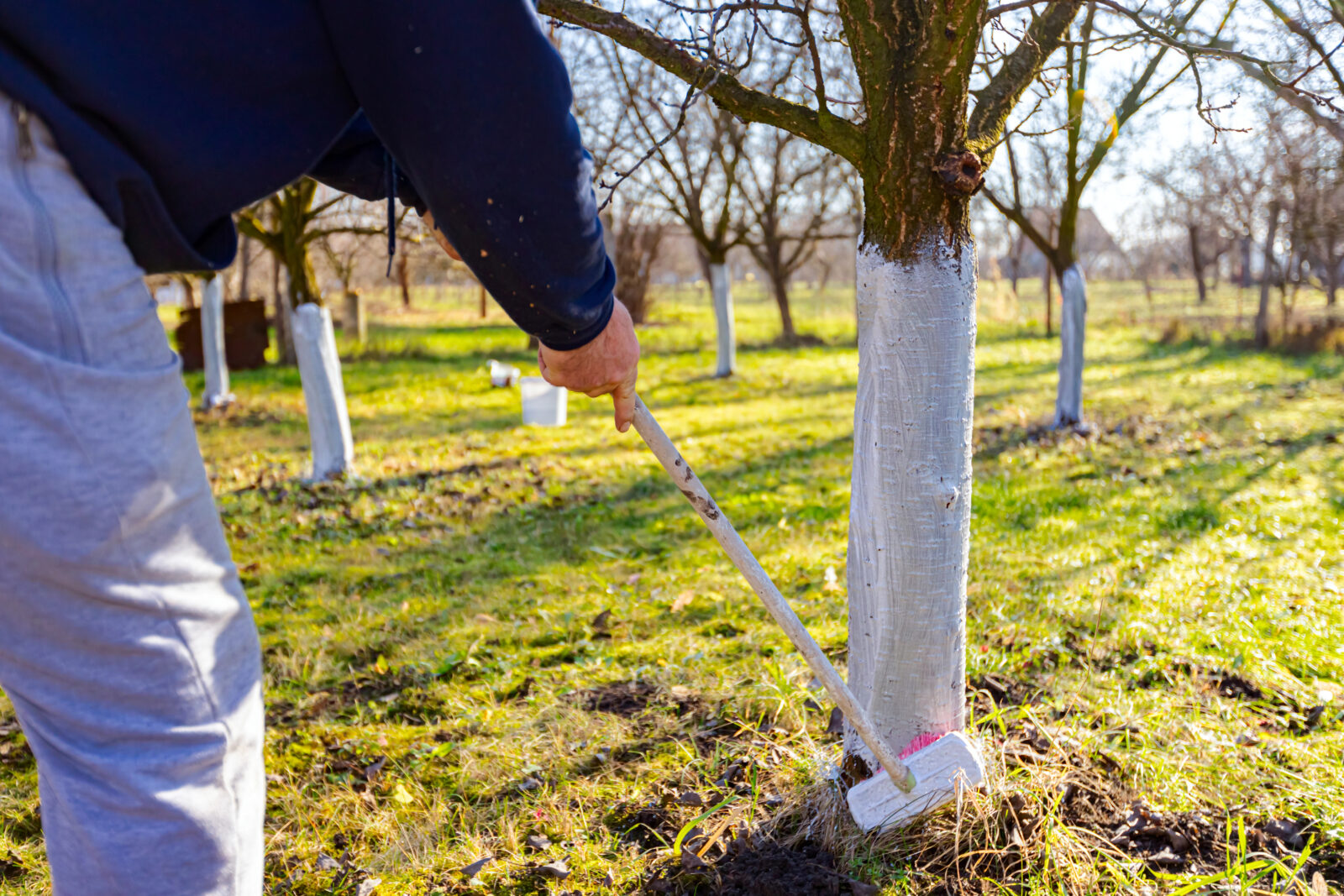
Whitewashing is most important for younger trees, whose bark is more sensitive. It also depends on the species, cultivar, site, and overall care. Trees growing in exposed, strongly sunlit locations are at higher risk.
Among fruit trees, this protection is especially worthwhile for cherries, peaches, and plums. With apples, pears, and walnuts, the benefit is usually greatest mainly on young trees. Among ornamentals, whitewashing can help, for example, flowering cherries, Japanese maples, or willows.
A gentle protection with added benefits
A properly done lime wash is not dangerous to the tree or the surrounding soil. It’s a biodegradable solution, and any residue can gradually work into the soil as a beneficial substance. If the mix is made correctly and applied evenly, there’s no reason to worry about this treatment.
Whitewashing trunks is a simple winter task that can significantly reduce the risk of bark splitting, limit the spread of disease, and help trees get through the critical period without unnecessary stress.
Anyone who wants healthier fruit trees and ornamentals shouldn’t underestimate this traditional protection. Timely treatment of the trunk often determines what condition a tree enters spring in.
Source: Nature Hills Nursery, Vetas, Pestrazahrada.cz

A lover of nature, gardens, and everything that moves, blooms, or grows. He literally grows everything, from herbs to rare species, and he enjoys caring for animals just as much. In his work, he connects modern technology with tried-and-tested grandmotherly methods and is happy when both paths lead to the same goal.
Related articles
Ten Minutes in Autumn Decide Your Currant Crop
Currants crop best on younger wood, while old stems drain the plant and shade out productive new growth. A quick autumn prune keeps the bush open, healthy, and reliably fruitful next season.
What to do for currant bushes in October so they’re loaded with fruit next year
October is the best time to set currant bushes up for a strong spring and a heavy crop. With the right pruning, protection and autumn feeding, you’ll encourage more flower buds and better winter hardiness.
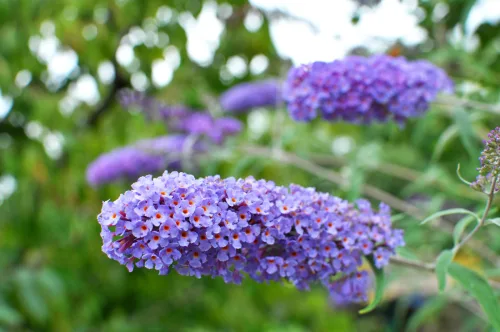
October care for butterfly bush encourages abundant flowering, good shape and safe overwintering
Butterfly bush (Buddleja davidii) benefits from a light autumn tidy-up, seedhead removal and a bit of root protection. These October steps help keep the shrub compact, limit self-seeding and improve its chances through winter.
Comments (0)
Be the first to comment.