
 English
  Polski
  Deutsch
  Nederlands
  Svenska
  Norsk
Norsk  Dansk
Dansk  Français
  Italiano
  Español
  Português
  Slovenčina
  Suomi
Suomi  Gaeilge
 When the Soil Is Dry, Its Time Comes A Mediterranean Perennial with Silvery Leaves and a Curry Scent
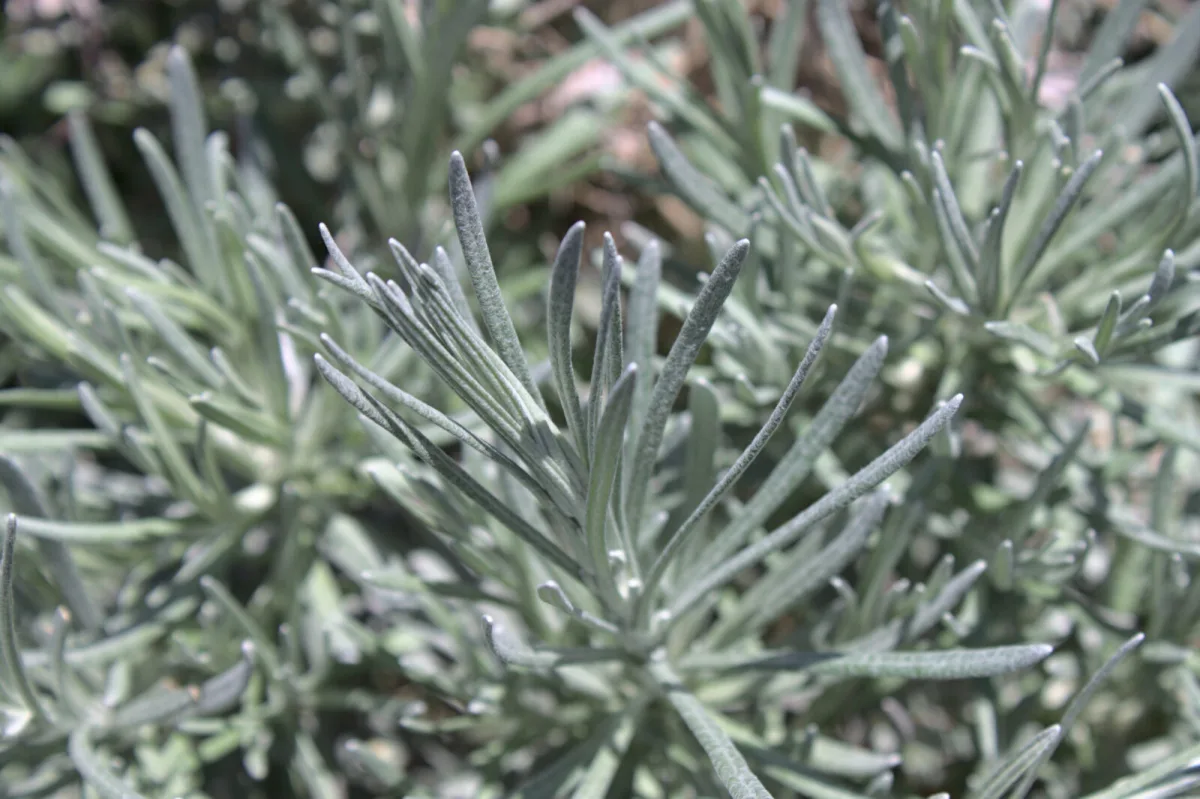
If you enjoy the spicy aroma of curry, you’ll be drawn to Italian strawflower Helichrysum italicum, also known as the curry plant. It comes from the Mediterranean and is easy to recognise by its distinctive, spicy scent, which many people associate with curry powder. In the garden it’s valued not only for its fragrance, but also for its year-round ornamental appeal and wide range of uses.
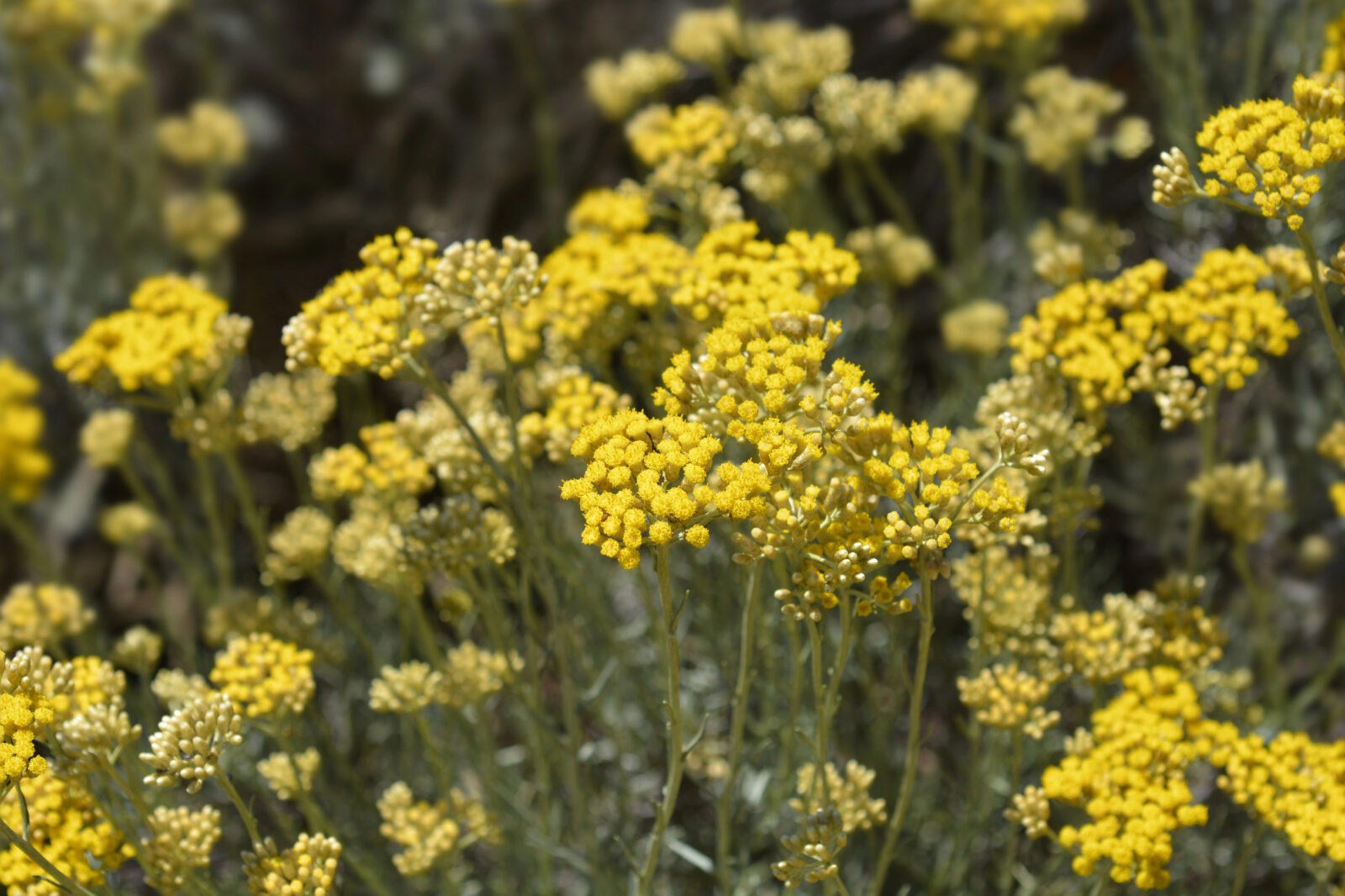
The plant forms fine, narrow to needle-like leaves in a grey-silver colour. From a young age it grows into densely branched, compact shrubs, usually around 40 cm tall. In summer it flowers with masses of small yellow blooms that are decorative and also suitable for drying.
Short-lived isn’t a drawback when you know when to renew the shrub
Italian strawflower isn’t a long-lived woody plant. Even though older shrubs can still look attractive, after a few years it usually pays to replace them with younger plants. You’ll get a more vigorous clump with a nicer shape, fuller foliage and a stronger scent.
In gardens, this herb has become popular because it’s low-maintenance yet decorative for most of the year. With the right site, it rewards you with compact growth and abundant flowering.
The site makes all the difference, ideally sun and free-draining soil
The key to success is choosing a spot similar to where it grows naturally. In Mediterranean landscapes, Helichrysum occurs on dry, rocky slopes and often on sandy ground near the sea. In the garden it therefore appreciates a sunny, warm position and, above all, free-draining soil, whether ordinary garden soil, sandy soil or a gravelly mix.
It copes well with hot sun, wind and, once well rooted, drought. What it dislikes is shade, persistently damp soil, frequent watering and heavy ground that holds water. In such conditions it gradually declines and may die. A spot next to an intensively watered lawn is also unsuitable, as the soil is often unnecessarily wet.
Interestingly, in richer soils it can form slightly taller, wider shrubs with more abundant foliage. If you grow it in a container, it’s worth using a herb potting mix, which is typically lighter and better draining.
In the border or in a pot, with frost in mind
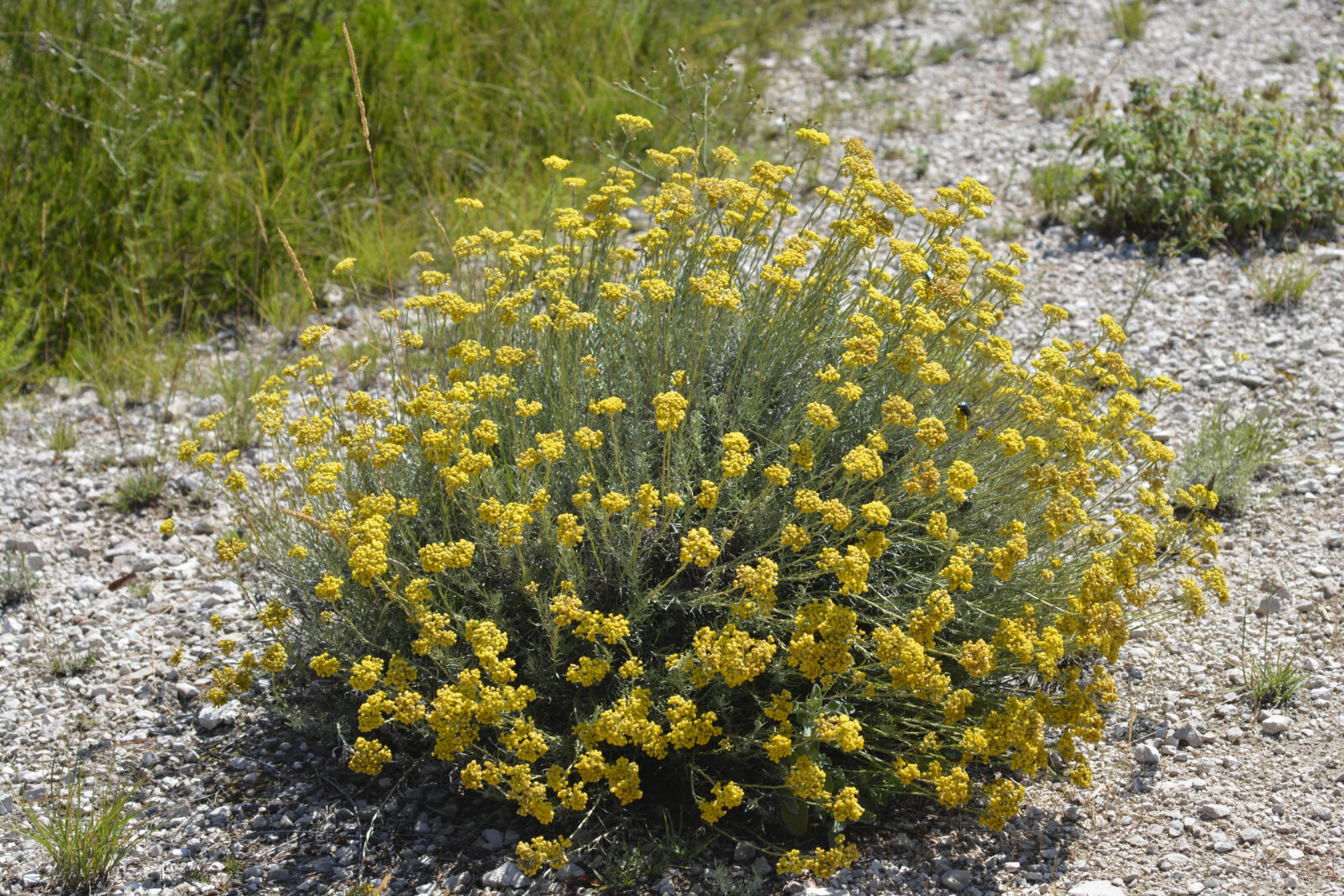
In a garden design, Italian strawflower fits best in herb beds or in mixed beds with edible plants, where it can also be used as a partial edging. It’s also excellent in gravel gardens, rockeries, dry-stone walls, perennial plantings, sunny slopes and along paths, where its fragrance stands out with every brush of the foliage.
It’s important to bear in mind that it is sensitive to temperatures dropping to roughly below -10 °C. For year-round planting in open ground, it’s therefore more reliably grown in warmer lowland areas. At higher elevations it’s safer to plant it in containers that can be moved into shelter for winter. In a herb bed, place it nearer the edge or in the middle section so it gets plenty of sun and the soil dries quickly.
If you have the space, plant several specimens, ideally at least three, with enough room between them so the shrubs can thicken naturally while still having good airflow around them. A dense but well-aerated planting supports healthy growth.
Care is simple, water only after planting and prune regularly
Growing the curry plant is easy. You can plant it in spring or in early autumn. After planting, water thoroughly so the plants root in well. Once established, further watering is only rarely needed, typically during prolonged extreme drought for new plantings.
It usually doesn’t require feeding and manages without complicated interventions. However, if you want a neat, compact shape, regular trimming is worthwhile, as it encourages branching and a fuller shrub. In early spring, a harder cut-back is recommended, similar to lavender, to rejuvenate the plant and prevent it from becoming bare in the middle.
How it overwinters in the ground and in a container
Before winter, it’s a good idea to cover especially younger outdoor plants with evergreen boughs or white horticultural fleece. This protection helps during temperature swings and in bare frosts, which tend to be the riskiest for this warmth-loving herb.
If you grow Helichrysum in a pot, move it in good time in autumn to a bright, cool place where the temperature doesn’t drop below freezing. Over winter, only occasional watering is needed so the root ball doesn’t dry out completely. Under these conditions it can overwinter successfully and reshoot in spring.
Flowers for dried arrangements and as a helper against moths
The yellow flowers are attractive not only in the border. They dry well and are used in dried bouquets, where they hold their colour and shape for a long time. They’re also traditionally mentioned for household use in deterring moths, especially if you put the dried flowers in a small sachet and place it in a wardrobe.
Italian strawflower combines ornamental value with a strong scent and practical uses at home and in the kitchen.
In the kitchen it flavours, but the leaves aren’t eaten
The curry plant can be surprisingly versatile in the kitchen. Fresh or dried leaves are used to scent dishes such as vegetable recipes, soups, rice, pulses, herb butter or olive oil. It suits roasted meat, poultry and fish, and it’s also appreciated by fans of Asian cooking or more robust salad combinations.
It’s important to know, however, that the leaves are used only for flavouring. Add them at the start of cooking to release their aroma, then remove them before serving. They aren’t eaten, as they are tough and unpleasant to chew.
Tea from dried flowers supports digestion
You can also make an herbal tea from the dried flowers. Traditionally, it’s described as a drink that supports good digestion. If you dry the flowers, do so somewhere dry and out of direct sun so they retain their colour and fragrance, and store them in a well-sealed container.
Source: Gardening Know How, Záhrada, Pestrazahrada.cz

A lover of nature, gardens, and everything that moves, blooms, or grows. He literally grows everything, from herbs to rare species, and he enjoys caring for animals just as much. In his work, he connects modern technology with tried-and-tested grandmotherly methods and is happy when both paths lead to the same goal.
Related articles
The Christmas Amaryllis That Can Bloom for Years but Most People Throw It Away After Flowering
Hippeastrum is a spectacular winter-blooming bulb that, with the right care, will flower again year after year. Learn how to plant it correctly, look after it after flowering, and bring it into dormancy so it reliably reblooms.
How to Grow Winter Garlic for a Much Bigger Harvest
Autumn planting is the key to strong, healthy winter garlic, but the details make all the difference. With the right timing, bed choice, seed-clove treatment and a simple bicarbonate trick, you can noticeably boost yield.
A tree or shrub planted properly in autumn can outpace spring stock and improve fruiting
Many fruit trees and soft-fruit shrubs establish better when planted in autumn, because roots keep growing while the top is dormant. Done well, this head start means stronger spring growth, less watering, and a healthier first year.
Comments (0)
Be the first to comment.