
 English
  Polski
  Deutsch
  Nederlands
  Svenska
  Norsk
Norsk  Dansk
Dansk  Français
  Italiano
  Español
  Português
  Slovenčina
  Suomi
Suomi  Gaeilge
 When and where you’re most likely to encounter an adder in Bohemia and how to stay safe and avoid one
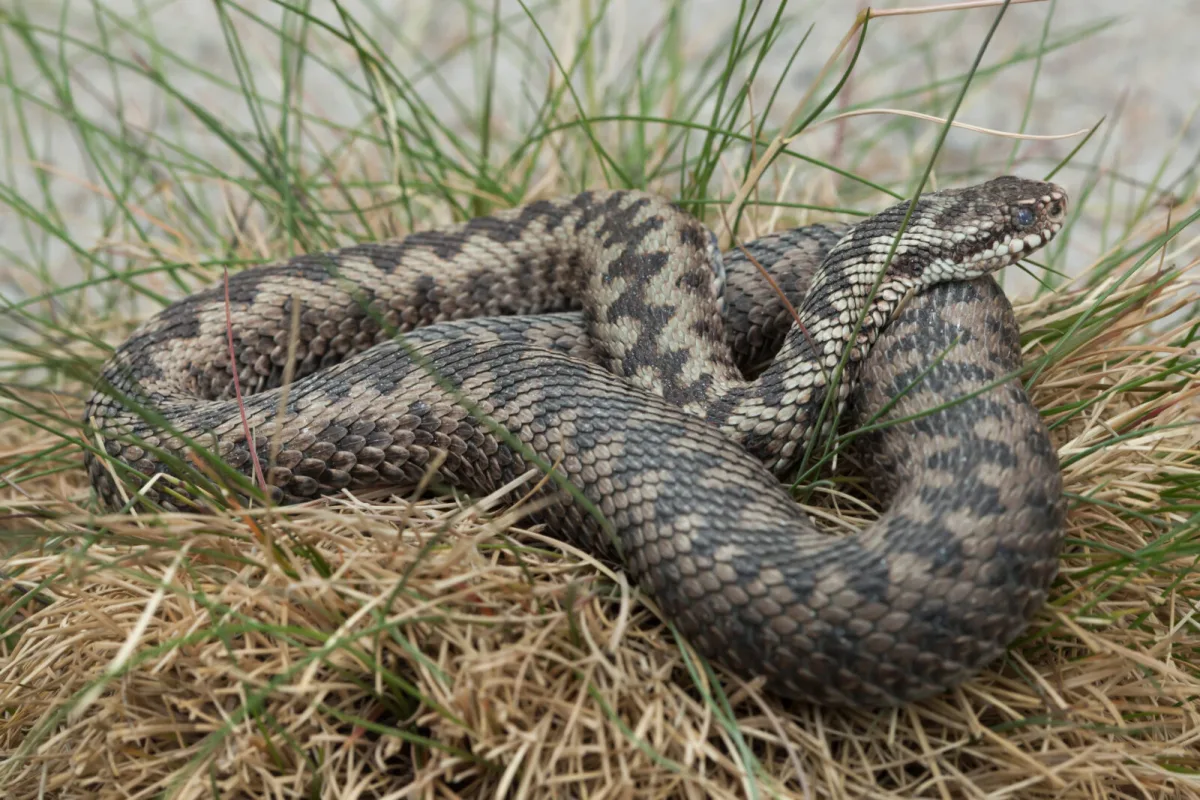
The common European adder (Vipera berus) is the only venomous snake living in the wild in the Czech Republic. Even so, it has a reputation as a dangerous animal best avoided. In reality, the adder is very shy, tries to avoid conflict with people, and bites are uncommon—most often after being stepped on, grabbed, or cornered. In Czech countryside it is also legally protected, so the right approach is respect, calmness, and prevention.
Where in Bohemia you’re most likely to come across an adder
In Bohemia, the chance of an encounter is highest at higher and wetter elevations, typically from about 400 to 500 metres above sea level and up. Lowlands and dry, intensively farmed areas are usually avoided. What suits it best is a mix of sunshine and cover, along with proximity to damper spots.
Typical habitats in the field
Adders most often show up on sunny woodland edges, in open woodland, on upland meadows, on clearings and rides, on scrubby slopes, and anywhere with stones, deadwood, or tall grass where they can quickly find shelter. Surprisingly, you can also meet them on rough ground, along railway embankments, by stone walls, around fishponds, and on peat bogs. In some places they may exceptionally wander into gardens too, especially where a garden borders open countryside and offers compost, stacked wood, or piles of stones as cover.
The black adder in the mountains
In mountain areas you may also encounter a dark to black form (melanism), which is more common at higher elevations. At first glance it can look “bigger” and more striking, but the behaviour and the risks are essentially the same: it is still an adder that tries to avoid contact, and the darker colouring helps it warm up more efficiently.
When the odds of an encounter are highest during the year and day
The adder is active mainly in the warmer part of the year. After overwintering, it begins to appear in spring, when it seeks sunny places to warm up. Seasonal “peaks” in sightings often relate to people spending more time outdoors while snakes also move more in search of food and suitable habitat.
Spring and early summer
In spring, adders like to bask on the edges of paths, on stones, or on dry patches in grass. That is when people spot them more often, because they spend longer “on show” in the sun. April and May also bring a period of increased activity after winter and during courtship.
Hot summer weather and a shift in daily routine
On sweltering days, adders reduce activity around midday and may be more active in the morning, in the evening, or after rain, when conditions are cooler and more humid. In extreme heat they keep more to cover. For people, that means an encounter can happen even when you no longer expect “reptile time”, for example on an early evening walk along a grassy forest track.
Autumn
In autumn, adders gradually retreat towards suitable overwintering places, such as piles of stones, rock crevices, mammal burrows, or dry shelters. You can still meet them then too, especially on warm days when they continue to bask.
How to behave if you see an adder
The basic rule is simple: stop, stay calm, and give it space. Most adders will slip away into cover after a moment. If it feels threatened, it may take up a defensive posture and hiss, but that is often a warning rather than an attempt to attack.
The highest risk is stepping on an adder, picking it up, or trying to “shoo it away” with your hand or a stick.
Don’t move in close for a photo and don’t try to edge around it in a way that forces it to move. If it’s on the path, step back to a safe distance and wait, or go around it with a wide berth. Explain to children that snakes are never to be handled, and that even a “small” snake in the grass could be an adder.
How to prevent encounters: practical prevention in the Czech countryside
Prevention isn’t about fear—it’s about sensible habits. In places where adders may occur, the most effective approach is a combination of attentiveness and appropriate gear.
Walking and moving through the countryside
Stick to well-used paths where possible; in taller grass, move more slowly and watch where you step. On stony, scrubby slopes, be careful where you put your hands—for instance when picking bilberries, foraging for mushrooms, or climbing over fallen trunks. Adders often use the edges of cover, where they can retreat to safety in a split second.
Clothing and footwear
In areas where they’re more likely, it’s sensible to wear sturdy, higher footwear and long trousers. The aim isn’t to be “armoured up”, but to reduce the risk in case of accidental contact in grass or bilberry scrub.
Keep dogs on a lead and keep areas around cabins and gardens tidy
When out with a dog, a lead helps—especially in tall grass and along woodland edges. Around cabins, cottages, and gardens in foothill or mountain areas, reduce inviting hiding places: don’t leave piles of stones, boards, or general clutter sitting long-term in a corner of the plot. The adder isn’t drawn there “because of people”, but for shelter and for food in the form of small rodents.
Why it’s worth respecting the adder without fearing it
The common European adder is a natural part of Czech wildlife and an important regulator of small rodents. If you give it space, most encounters become nothing more than a brief observation before the snake disappears into vegetation. The best strategy is to avoid surprises: read the ground, don’t put your hands where you can’t see, and move quietly and considerately. That minimises risk while allowing the adder to do what it does best: live hidden and undisturbed.
Source: Herpetology, Zoo Praha, Treking, Wikipedia, Pestrazahrada.cz

A lover of nature, gardens, and everything that moves, blooms, or grows. He literally grows everything, from herbs to rare species, and he enjoys caring for animals just as much. In his work, he connects modern technology with tried-and-tested grandmotherly methods and is happy when both paths lead to the same goal.
Related articles

How to Safely Tell Czech and Chinese Garlic Apart in the Shop by Taste, Appearance and Quality
Czech and Chinese garlic can look similar at first glance, but they differ noticeably in flavour, aroma, bulb structure and keeping quality. Learn the quick visual and kitchen tests that help you choose the better bulb with confidence.

Three Mistakes When Packing Cabbage into a Crock That Can Turn Your Winter Stores into Waste
Traditional crock-fermented sauerkraut keeps for months and stays wonderfully crisp—if you avoid a few common missteps. Here are the three mistakes that most often lead to soft, grey, foul-smelling cabbage and how to prevent them.

One Rat in the Garden Can Quickly Turn Into a Colony How to Prevent It Without Chemicals
A rat on your property is a warning sign that your garden is offering food and shelter. With a few practical, chemical-free changes, you can make the area far less attractive and stop a bigger infestation taking hold.
Comments (0)
Be the first to comment.