
 English
  Polski
  Deutsch
  Nederlands
  Svenska
  Norsk
Norsk  Dansk
Dansk  Français
  Italiano
  Español
  Português
  Slovenčina
  Suomi
Suomi  Gaeilge
 A tree that grows faster than bamboo with stunning flowers you won’t miss in the garden
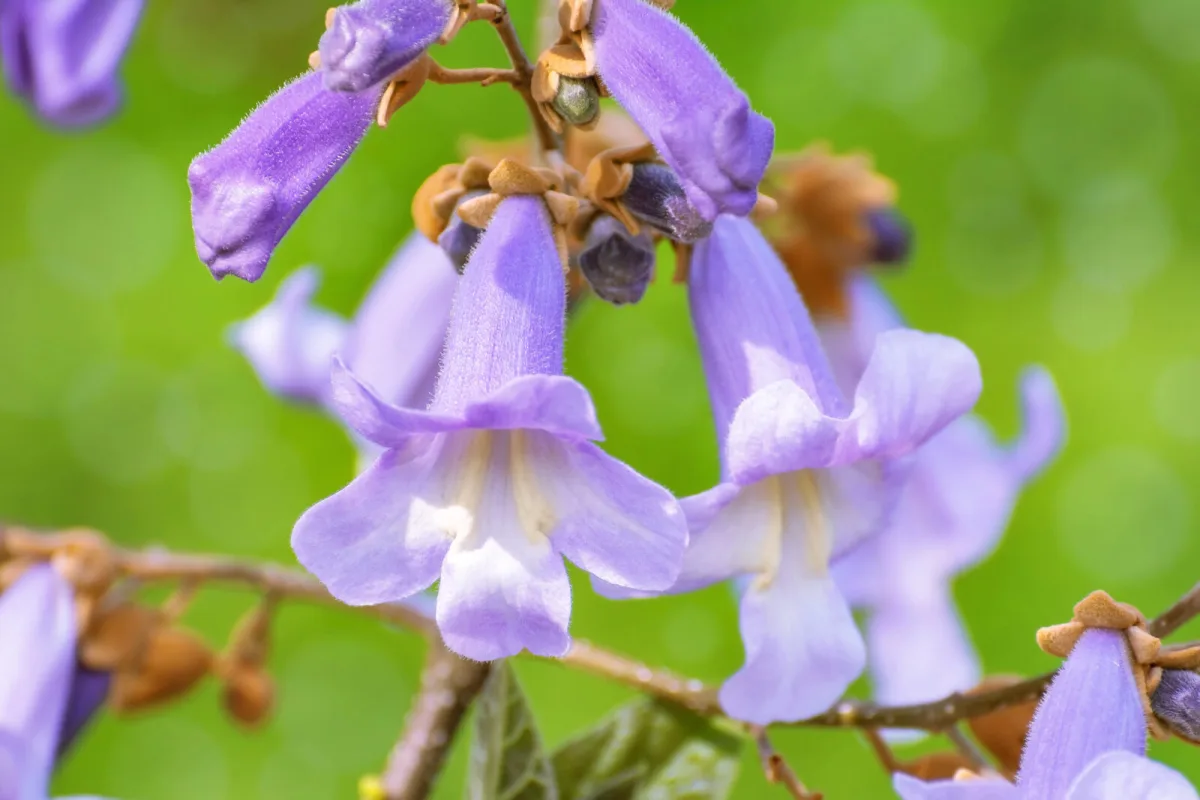
Paulownia tomentosa, also known as the Chinese empress tree, is one of those trees that can transform the feel of an entire garden. It catches the eye with its unusual look, abundant flowering, and the speed with which it can reach an impressive size. That rapid growth and overall bulk are also exactly why it doesn’t belong in small front gardens or tight spaces, where it would soon become a nuisance.
It is a deciduous tree with a bold canopy and striking leaves, best appreciated by gardeners who have plenty of room and want a true focal point on the plot. With the right siting and basic care, paulownia rewards you with a dramatic spring display and quick annual growth.
Where paulownia comes from and why it has that name
The name paulownia commemorates Anna Pavlovna, Queen of the Netherlands, after whom the tree was named. Even so, its roots are not in Europe. It originates in Asia, and to this day you’ll commonly see it in China, Japan, and Korea, where it has long been valued not only as an ornamental tree but also for practical uses.
The epithet “tomentosa” refers to its softly downy qualities and, in older accounts, to its fine, light seeds. In the past, these were used as a cushioning packing material when shipping fragile goods such as porcelain. Today that role is usually filled by synthetic packaging, but historically paulownia had a natural and surprisingly practical place even in packing and transport.
Wood with a reputation for being light, strong, and useful
Paulownia is also valued for its timber, which is notably lightweight yet strong. Thanks to its good resonant qualities, it is suitable for making musical instruments, and it is also popular with carvers and woodworkers because it is easy to work. Because the tree grows so quickly, it is often mentioned as a species suitable for biomass production as well.
In some Asian traditions it was said that if a father planted a paulownia on the day his daughter was born, the tree would grow so quickly that by the time she reached adulthood it would provide wood for items for her dowry.
This idea neatly captures how closely paulownia is associated with rapid growth and practical benefit. It isn’t just ornamental, but a tree that for generations was seen as a useful companion.
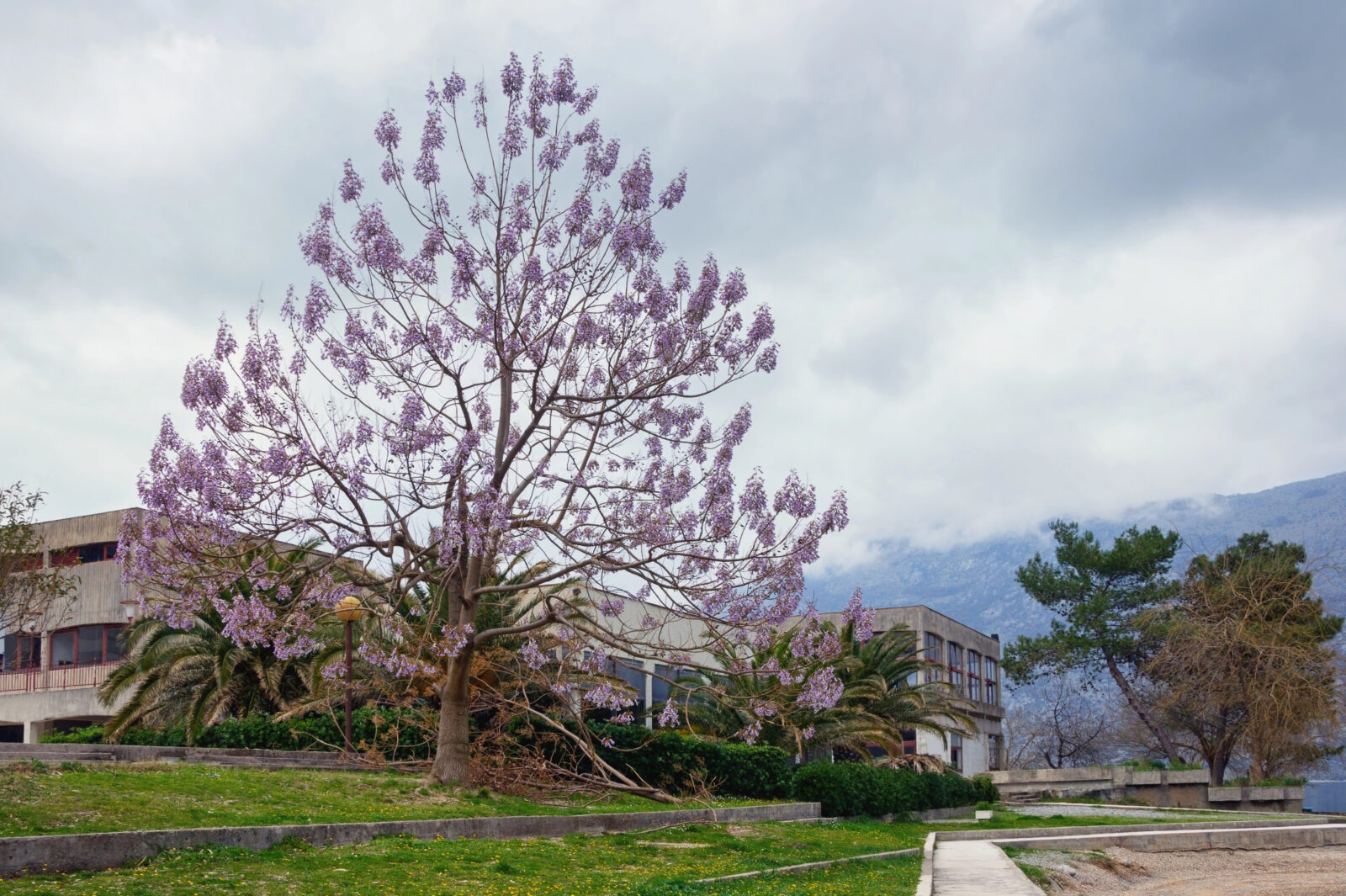
Flowers and leaves that make the biggest impression
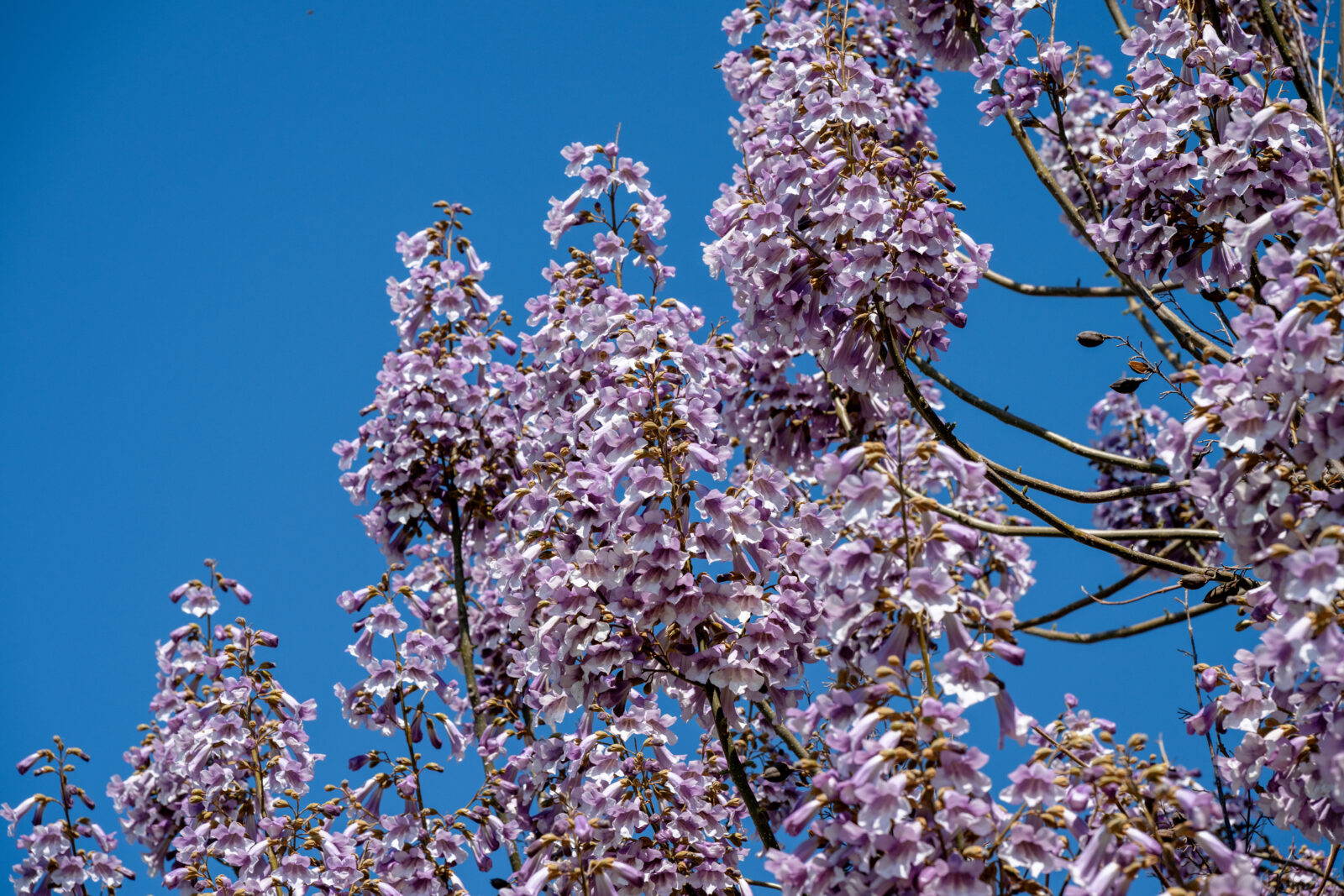
What’s enchanting about paulownia is that in spring it flowers first, and only afterwards do the huge leaves fully unfold. In May, the branches are often filled with upright clusters of lilac to violet blooms that stand out even from a distance. They are especially striking on still-bare branches, when nothing distracts from the flowers and the tree looks positively ceremonial.
The leaves can be very large, often up to around 40 cm, and in shape they may resemble catalpa. Throughout the season they create a strong exotic effect while also casting pleasant shade. It’s precisely this combination of oversized foliage, rapid growth, and showy flowers that makes paulownia a standout in both contemporary and naturalistic gardens.
What conditions paulownia needs
If paulownia has a good site, it can thrive without complicated demands. It does best in a sunny position and deep, well-drained soil, ideally slightly alkaline. In such conditions, with basic care, it can begin flowering relatively soon, often in about three to five years.
It’s important to remember that this is a tree with great potential in both height and spread. It’s worth thinking ahead about whether it may eventually shade your house, neighbours, or other plantings. Given enough space, it rewards you with balanced growth and a bold, well-shaped crown.
Planting, watering, and simple aftercare
Young plants can be more sensitive to late spring frosts. For that reason, it’s often recommended to plant young trees in early summer so they have enough time to root in and strengthen before autumn and winter arrive. In the first year, regular watering is crucial, because that’s when it’s decided how strongly the tree will get established.
In later years, paulownia usually doesn’t require much attention and can be close to low-maintenance. In autumn, it’s useful to shape the crown so the tree keeps a neat structure and branches well where you need it. Basic protection of the trunk can also make sense, especially while the tree is still young and more vulnerable.
If you’re looking for a bold tree with distinctive flowers, enormous leaves, and the ability to fill space quickly, Paulownia tomentosa may be exactly the tree that will give your garden a new character.
Source: Gardenia, World Paulownia, Fast Growing Trees, Pestrazahrada.cz

A lover of nature, gardens, and everything that moves, blooms, or grows. He literally grows everything, from herbs to rare species, and he enjoys caring for animals just as much. In his work, he connects modern technology with tried-and-tested grandmotherly methods and is happy when both paths lead to the same goal.
Related articles
When Other Flowers Fade Asters Are Just Getting Started
Asters step in just as summer colour starts to wane, flooding borders with late-season blooms. They’re also a valuable nectar source for pollinators and later a seed larder for birds.
Drought tolerant fruit trees for Czech gardens that handle heat and winter frosts
Warmer summers and longer dry spells are changing what can be grown in Czech gardens. With the right variety and a sunny, sheltered spot, olives, pomegranates and figs can cope with heat, drought and even winter cold.
Thuja hedges are on the way out gardeners are choosing a shrub that shrugs off frost and drought and never looks dull
Thuja may be a long-standing classic, but today’s hedges are increasingly built from more varied shrubs that look better through the seasons. One standout choice is ninebark, prized for its toughness, colour and easy care.
Comments (0)
Be the first to comment.