
 English
  Polski
  Deutsch
  Nederlands
  Svenska
  Norsk
Norsk  Dansk
Dansk  Français
  Italiano
  Español
  Português
  Slovenčina
  Suomi
Suomi  Gaeilge
 Simply Bringing Balcony Plants Indoors Isn’t Enough

As summer draws to a close and nights turn cooler, most balconies quickly lose their colour. A common reaction is to throw out the entire window boxes and start again in spring. With many plants, though, that’s unnecessary. Quite a few popular balcony plants aren’t typical annuals at all—they simply can’t handle frost in our climate. If you bring them in on time in autumn and give them a suitable winter rest, they’ll wake up in spring stronger, flower earlier, and often form a much fuller framework than newly bought plants. Alongside saving money, you’ll gain a head start on the season and keep proven plants that brought you joy all summer.
Which plants are worth overwintering and which are better replaced
Not everything that flowers on a balcony in summer is worth keeping through winter. True annuals such as petunias, trailing petunias (surfinia types), marigolds, or nasturtiums are difficult to overwinter, and it’s usually easier to buy new plants or raise them again from seed. On the other hand, many long-lived species from warmer regions overwinter very well—provided you give them the right conditions.
Among the most reliable are pelargoniums (geraniums), both upright and trailing. You can overwinter large stock plants as well as cuttings rooted in late summer. Fuchsias appreciate a cooler regime, and older, well-ripened plants cope best with wintering. Lantana behaves much like pelargoniums, overwintering in gentle cool conditions—just remember it’s a poisonous plant. With ornamental foliage plants such as Swedish ivy (Plectranthus) and some variegated or silvery trailing plants, it’s often better to overwinter younger plants in a slightly warmer room. Angel’s trumpet (Brugmansia) practically requires a winter rest, and propagation material is most often taken after it wakes up in spring. From the “southern” plants, it’s also worth sheltering oleanders, bougainvilleas and citrus, which won’t survive winter outdoors but will come through without trouble in a bright, cool place. In containers, some herbs are also worth protecting, for example rosemary—where the key is preventing the rootball from freezing solid.
When to move plants to their winter quarters—and why not to wait
The basic rule is simple: move them before the first night frosts arrive. In most areas that means October, sometimes earlier. A brief cool spell usually won’t harm plants and can even help them harden slightly, but once temperatures drop towards 0 °C, the soft, fleshy parts of pelargoniums or fuchsias can be nipped. Damaged tissue then becomes an easy entry point for disease, typically grey mould. Bringing them to safety in time is often the deciding step that determines whether a plant comes through winter in good condition.
Preparation before overwintering: cleanliness, pruning and pest checks
Before you carry pots indoors, it pays to give them a short but thorough tidy-up. First, clean the plants so nothing is left in the winter space to rot unnecessarily. Remove spent flowers, buds, and any yellowing or dry leaves. This reduces the risk of mould and also prepares the plant for its resting period.
Maintenance pruning matters too. With pelargoniums and fuchsias, shoots are commonly cut back by about half to two-thirds, always just above a healthy bud. The plant becomes more compact, dries out less, and needs far less water over winter. A neater shape is also easier to handle and takes up less room in storage.
Equally important is checking for pests. Look especially at the undersides of leaves and around leaf stalks, where aphids, whitefly, or spider mites often hide. In a warmer, sheltered environment they can multiply quickly over winter, and by spring the plant may be noticeably weakened. If you find anything, deal with it before placing plants into winter quarters—not later, when everything is already grouped together.
What makes the ideal winter space: the right balance of temperature and light
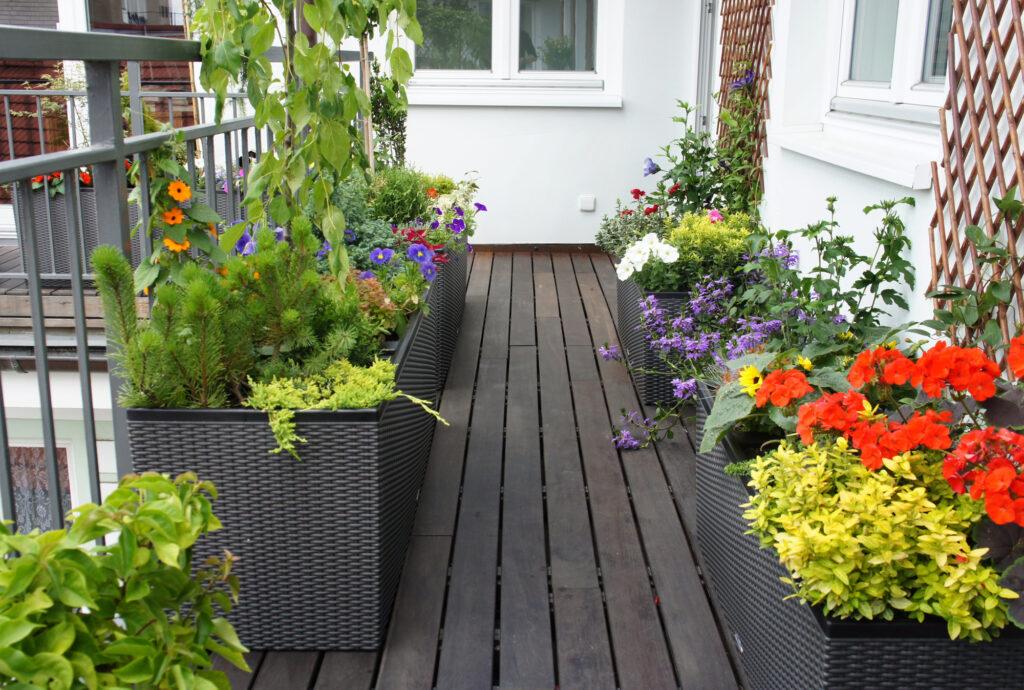
Success comes down to balancing cool conditions with the light available. As a rule, the warmer you overwinter a plant, the more light it needs to avoid stretching into weak, spindly growth. For many balcony plants, the best option is a bright but unheated spot—such as a hallway, porch, or a cooler conservatory. A range of roughly 6 to 10 °C suits pelargoniums, lantanas, oleanders and citrus well. In these conditions, fuchsias often stay partly in leaf and remain in a gentle rest without unnecessary stress.
Another option is a cooler, darker cellar or garage, around 2 to 6 °C, where plants usually drop their leaves and sit quietly. This suits fuchsias, older pelargoniums, or angel’s trumpets, for example. The essential point is that the space must never freeze, because a frozen rootball is often fatal.
By contrast, it rarely pays to overwinter cool-loving balcony plants in a typical heated living room. Higher temperatures combined with a lack of winter light lead to pale, brittle growth and overall exhaustion. The exceptions are some ornamental foliage plants that can tolerate a brighter room—ideally by a south- or west-facing window—but even then, an overheated room without ventilation is a problem.
Winter care: less water, no feeding, and occasional fresh air
In winter, plants slow down and don’t need intensive care. The most common mistake is overwatering. Water sparingly so the compost doesn’t dry out completely, but also isn’t kept constantly wet. After watering, no water should be left standing in the saucer, otherwise roots can rot. In a cool winter space around 5 °C, watering once or twice a month is usually enough—sometimes even less, depending on pot size and air humidity.
Skip feeding during this period. From early autumn to the end of February, fertiliser is generally unnecessary, because the plant can’t use nutrients properly and you risk weakening it and encouraging unsuitable growth. To help prevent fungal diseases, a brief airing is useful when outdoor weather allows. Fresh air lowers humidity and limits the spread of mould on leaves and stems.
Waking plants up in spring and returning them to the balcony
Plants can safely go back onto the balcony in mid-May, after the danger of late frosts has passed. From late February and through March, however, you can begin waking them gradually. Move plants to a brighter, warmer spot, slowly increase watering, and after a while add light feeding. In early spring, pruning back to strong, swelling buds is also helpful so the plant thickens up and forms a healthy base for the season.
Depending on root condition, repotting into fresh compost for balcony plants is often needed in spring. Pelargoniums, fuchsias, Plectranthus, and coleus are commonly repotted every year. With young lantanas, angel’s trumpets, oleanders and citrus, it’s also worthwhile after the first year to refresh the compost and, if needed, move up a pot size. With older, large plants, growers more often choose partial replacement of the top layer of compost and regular feeding during the season. A well-overwintered plant will reward you with a strong start, earlier flowering, and a markedly better look all summer long.
Source: Garden Design, Growing Place, Pestrazahrada.cz

A lover of nature, gardens, and everything that moves, blooms, or grows. He literally grows everything, from herbs to rare species, and he enjoys caring for animals just as much. In his work, he connects modern technology with tried-and-tested grandmotherly methods and is happy when both paths lead to the same goal.
Related articles
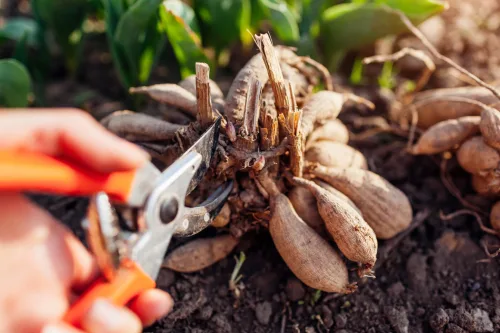
What to Do Before Frosts So Tuberous Plants and Bulbs Make It Through Winter
Tender tuberous plants and bulbous flowers often need help to survive winter. Learn when to lift and store them and when a thick mulch layer in situ is enough.
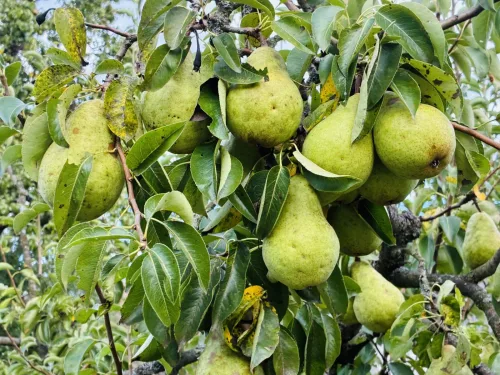
Common Mistakes When Harvesting and Storing Pears and How to Keep Them Fresh Longer
Pears need harvesting slightly under-ripe and then ripened off the tree to develop their best flavour and texture. Learn how to pick, ripen and store them correctly so they last well into winter.

How to Store Carrots for Winter and Why the First Step After Harvest Matters
Carrots can stay fresh for much of the winter, but only if you handle them properly right after harvest. Careful sorting, gentle handling and the right storage method prevent rot and keep roots crisp for longer.
Comments (0)
Be the first to comment.