
 English
  Polski
  Deutsch
  Nederlands
  Svenska
  Norsk
Norsk  Dansk
Dansk  Français
  Italiano
  Español
  Português
  Slovenčina
  Suomi
Suomi  Gaeilge
 Peruvian groundcherry ripens in autumn and brings tasty, nutrient-rich fruit from the garden
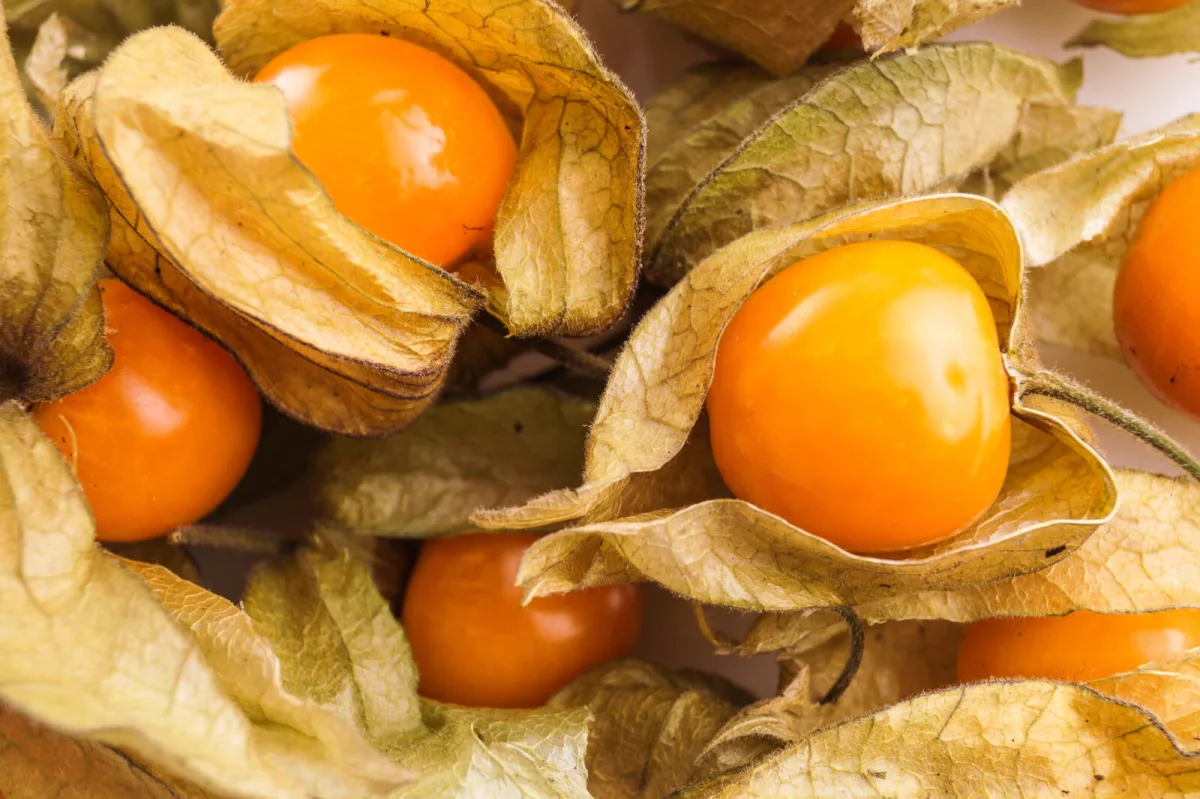
Peruvian groundcherry is one of those plants that attracts attention in Czech gardens mainly in late summer and through autumn. Its orange fruit is hidden inside a dry, papery husk that looks like a little lantern. That wrapper tells you more than the berry’s colour alone. As soon as it starts to dry, turn yellow and thin to a parchment-like texture, it’s a sign that harvest time has arrived.
The flavour of groundcherry is bold and unusual. It blends sweet and tart notes, and many people compare it to a mix of gooseberry, pineapple and citrus. Some varieties also carry subtle exotic undertones. That makes it a fruit that’s interesting not only fresh, but also in desserts or dried.
How to tell when the fruit is properly ripe
Unlike many other fruits, with groundcherry the key isn’t the berry itself, but its husk. A green, juicy calyx means the fruit inside still isn’t ready to eat. Only when the husk lightens in colour, dries out and feels brittle is it time to pick. Harvesting doesn’t happen in a single short window, either. The first ripe fruit can appear by late August, the peak is usually September, and ripening often continues into October chills.
If the weather cools before everything on the plant has ripened, you can pick the fruit and let it finish ripening at home. Safety matters here. Only fully ripe berries are edible. Unripe fruit and the rest of the plant are not suitable for eating and can be harmful.
Growing it is much like tomatoes and peppers
Peruvian groundcherry is a heat-loving annual, so it needs similar care to tomatoes or peppers. Seeds are sown in late winter/early spring, and seedlings are planted out only after the risk of late frosts has passed. They do best in a warm, sunny, sheltered spot in lighter, free-draining soil. Taller, vigorous plants are worth tying to a support so they don’t snap under the weight of the fruit.
The upside is that it doesn’t have to be expensive to grow. Seed and young plants are usually affordable, and with a good crop a home harvest can yield a large amount of fruit. Some more compact cultivars can even be tried as overwintering plants indoors, provided they have enough light and temperatures around 10 to 15 °C.
A natural source of vitamins and interesting compounds
Groundcherry is sometimes described as a natural multivitamin because it contains vitamin C as well as provitamin A. Compared with some other fruits it may not stand out for a single extraordinary value, but it offers a balanced mix of nutrients and other bioactive substances. It’s this variety that makes it nutritionally appealing.
In recent years, researchers have also been looking at compounds known as withanolides. Lab and animal studies suggest possible anti-inflammatory or protective potential, but this isn’t proof that a normal serving of fruit has the same effect in people. Even so, it’s clear that groundcherry isn’t only a flavour curiosity, but also a fruit with a noteworthy composition.
Don’t confuse it with its ornamental relative
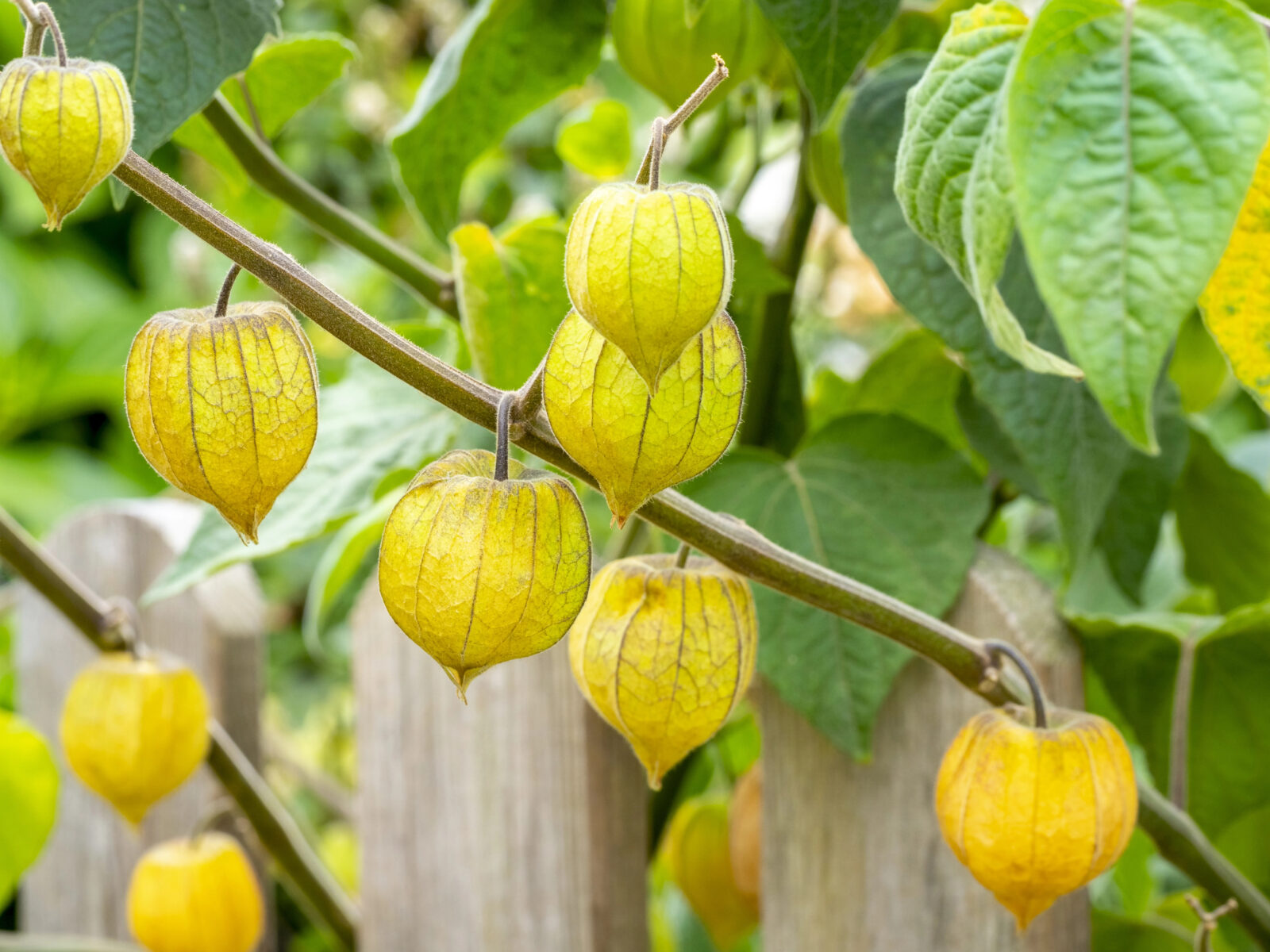
In gardens you may also come across another plant with striking lanterns, but it isn’t suitable for eating. This is an ornamental species known as the Chinese lantern plant. It differs from Peruvian groundcherry mainly in its vivid red husks, and also in the fact that it is perennial in our conditions. Peruvian groundcherry, by contrast, has a husk that is more beige to yellowish, and inside it hides an orange edible berry.
A simple rule applies for harvesting: edible groundcherry has a dry, pale husk and a fully ripe orange fruit. Ornamental red lanterns are not a suitable substitute.
How to keep the fruit for as long as possible
A big advantage of groundcherry is its excellent keeping quality. If the fruit remains in an intact husk, it will keep for a very long time in a dry, cool place, easily for several months. That makes it a practical fruit for gradual use at home.
Another option is drying. This greatly extends shelf life, but some valuable carotenoids are lost at higher temperatures. That’s why it’s better to choose a gentler method. At home, after removing the husks, you can spread the berries in a single layer and dry them in the oven at a low temperature with light airflow. Once dried, it’s worth checking the fruit for a few more days to make sure no moisture remains that could shorten storage life.
Peruvian groundcherry is therefore an understated but very interesting autumn harvest. Pick it in time, recognise the right level of ripeness, and make the most of its flavour and nutritional value.
Source: Garden World, Pestík, Pestrá zahrada, Pestrazahrada.cz

A lover of nature, gardens, and everything that moves, blooms, or grows. He literally grows everything, from herbs to rare species, and he enjoys caring for animals just as much. In his work, he connects modern technology with tried-and-tested grandmotherly methods and is happy when both paths lead to the same goal.
Related articles
A Mulberry Tree in the Garden Brings Sweet Fruit and a Beautiful Tree When Planted in Autumn
Mulberries are wonderfully sweet, aromatic fruit that rarely make it to shops in good condition, which is why growing your own makes sense. Planting a mulberry in autumn helps it root well and start strongly in spring.
The Christmas Amaryllis That Can Bloom for Years but Most People Throw It Away After Flowering
Hippeastrum is a spectacular winter-blooming bulb that, with the right care, will flower again year after year. Learn how to plant it correctly, look after it after flowering, and bring it into dormancy so it reliably reblooms.
How to Grow Winter Garlic for a Much Bigger Harvest
Autumn planting is the key to strong, healthy winter garlic, but the details make all the difference. With the right timing, bed choice, seed-clove treatment and a simple bicarbonate trick, you can noticeably boost yield.
Comments (0)
Be the first to comment.