
 English
 Polski
 Deutsch
 Nederlands
 Svenska
 Norsk
 Dansk
 Français
 Italiano
 Español
 Português
 Slovenčina
 Suomi
 Gaeilge
A Hen’s Egg as a Small Miracle of Nature
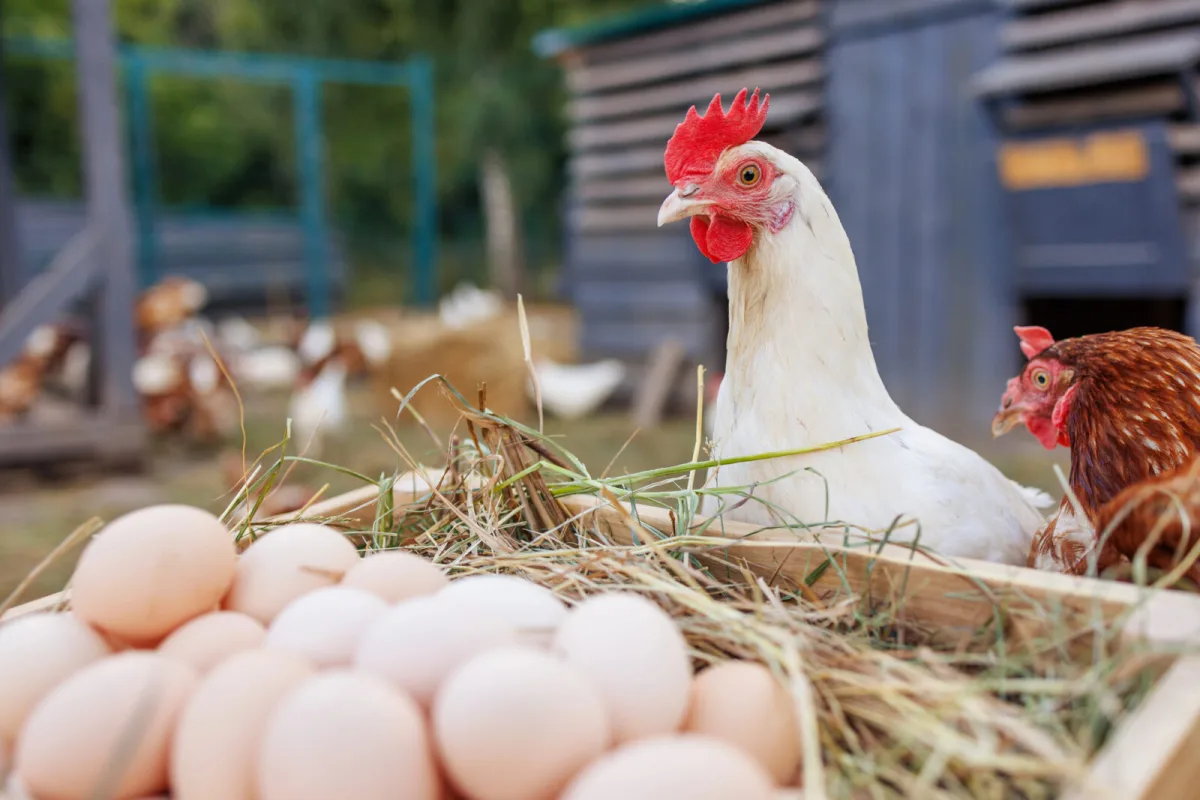
A hen can be a surprisingly regular egg producer, although not every breed lays with the same frequency. Pullets usually start their first lay at around 20 weeks of age, but the pace then varies with breed, condition, and keeping conditions. Some hens lay almost daily, others every other day, and some only a few times a week. There are also individuals that, due to physical abnormalities or health issues, do not lay at all.
Regular laying can be disrupted by a range of influences, such as moulting, short winter days, extreme heat or cold, illness, stress, lack of water, or unsuitable feed. As soon as conditions improve, most hens return to their usual rhythm. Peak production is typically during the first two years, although some hens keep laying actively for a long time after that.
It’s also important to remember that a hen does not need a rooster in order to lay eggs. A rooster is only necessary if the eggs are to be fertile and later hatch into chicks.
What happens inside a hen’s body
A female chick is born with a large number of immature yolk follicles. Once she reaches maturity, these are gradually released into the oviduct, where they turn into a fully formed egg. In a well-laying hen, there are usually several eggs at different stages of development at the same time. At the top are tiny yolks; lower down the albumen, membranes, and shell form step by step.
From the release of the yolk to laying takes about 25 hours. During this time, the egg white, protective membranes, and finally the shell form around the yolk. Shell colour is added right at the very end. If sperm is present in the oviduct, fertilisation happens even before the albumen begins to be deposited.
Although a hen uses a single external opening, the egg does not normally come into contact with droppings when it is laid. Her body is designed so that, at the crucial moment, the route of the egg and waste are kept separate. The typical interval between two eggs is roughly one day, which is why a hen that lays daily will usually lay a little later each successive day. If that time would fall at night, she will usually wait until morning.
Calcium and the role of the shell
Shell formation places a heavy calcium demand on a hen’s body. If there isn’t enough in her feed or supplements, her body starts drawing on its own reserves. That’s why a reliable supply of minerals is essential, whether through a complete layer ration, crushed shells, or natural intake from the soil in free-range conditions.
The shell is not just a hard casing. Its surface also carries a protective coating that helps limit bacterial penetration. For that reason, it’s recommended not to wash eggs right after they’re laid, but only shortly before use. If there’s just a small amount of dirt on the surface, it’s better to wipe it off carefully and dry the egg well.
Why not all eggs are the same
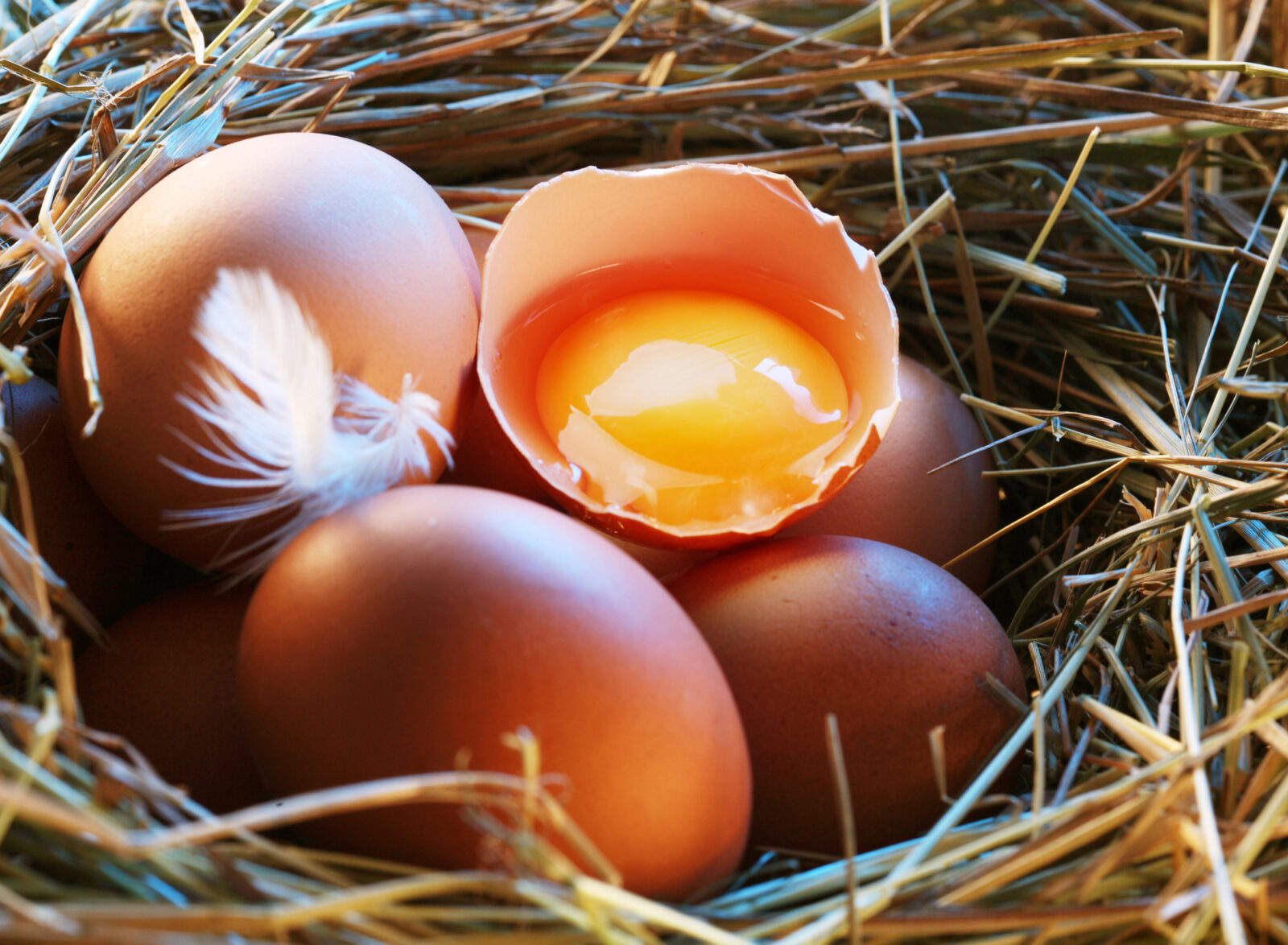
Young pullets at the start of laying often produce smaller eggs or eggs with unusual shapes. In older hens, irregularities can also appear due to age, stress, or illness. The first eggs tend to be smaller, while their size usually increases as the hen matures.
There are other oddities, too. Sometimes a tiny egg appears that hasn’t fully developed; other times an egg with no shell, held together only by the membrane. More rarely, there may be an egg within an egg, or an egg with two yolks. Occasionally you may find a yolkless egg. Shells can be smooth, chalky, bumpy, wrinkled, or unusually coloured.
Shell colour mainly depends on the breed. White and brown eggs are common, but there are also breeds that lay cream, greenish, blue, or very dark eggs. This doesn’t change the quality of what’s inside. Eggs with different shell colours are essentially the same on the inside.
How hens behave when laying
Most hens don’t feel the need to have their own separate nest. On the contrary, they often prefer the same laying spot as the others. It’s not unusual for two or three to squeeze into one nest while another remains empty. Some are sociable; others choose peace and privacy.
Many hens cackle loudly before laying or right afterwards. This behaviour is often referred to as the egg song and sounds almost like a proud announcement to the flock. Hens also learn by imitation, so placing a dummy egg in a nest can help encourage laying where the keeper wants it.
If hens have free range, they may choose a completely different spot outdoors. Sometimes a hen then disappears for a while and returns weeks later already with chicks. It also happens that hens eat broken eggs. As a one-off it’s usually not a problem, but if one develops the bad habit of deliberately pecking eggs open, she can teach the others.
Roosters, fertility, and hatching
A rooster in the flock primarily serves to fertilise eggs. Beyond that, he often also plays the role of a lookout, warning of danger and calling hens to food. Even with an active rooster present, though, not every egg is automatically fertile. Some hens avoid him, while others are clearly his favourites.
Hens don’t come into heat like some mammals, so they can be fertilised essentially at any time. What’s more, sperm can survive in the oviduct for several weeks, so a single mating can ensure fertility for many eggs laid in succession.
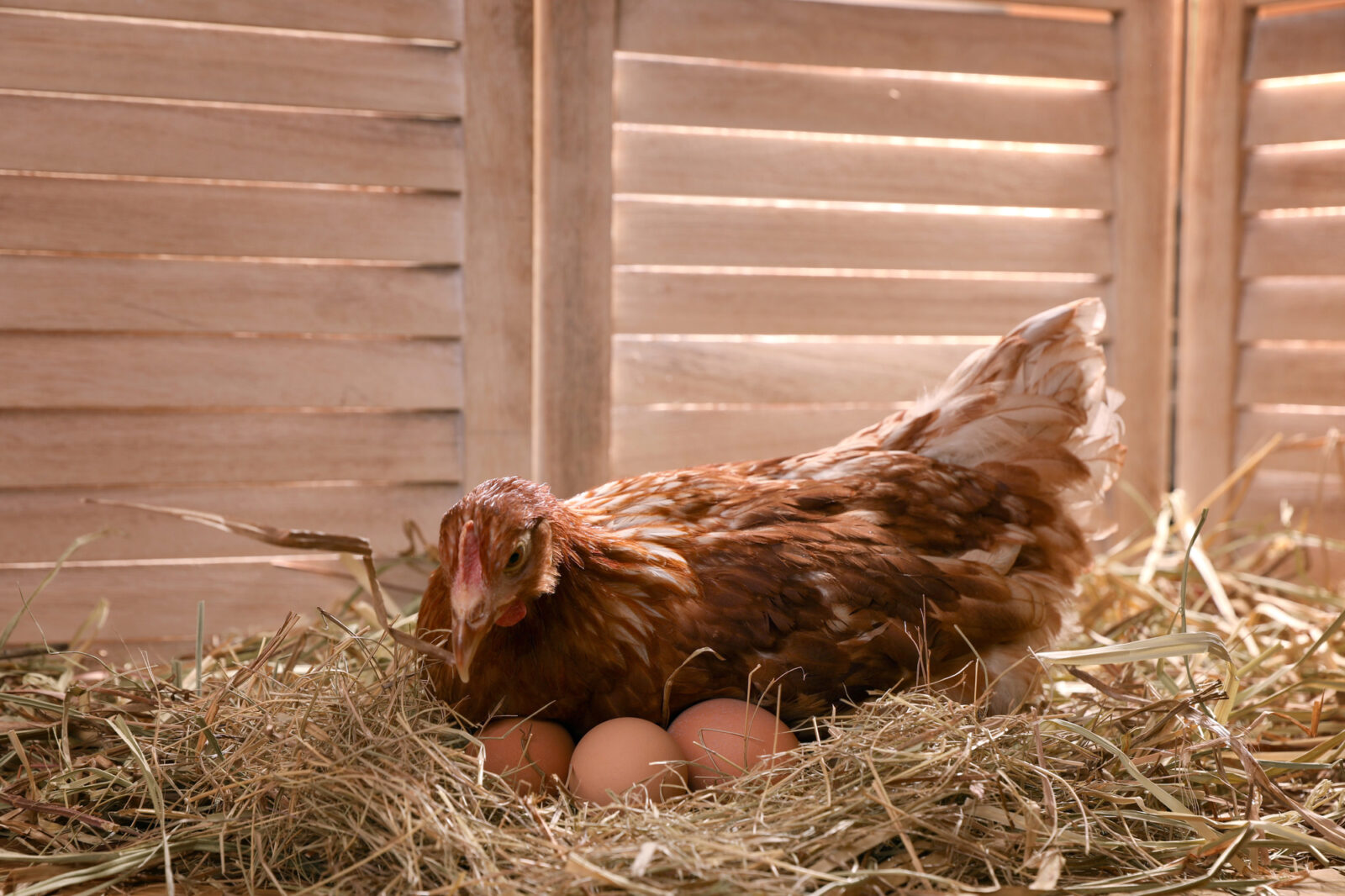
A broody hen of any breed can sit on eggs, and she will often accept eggs from other hens as well. While sitting, she usually gets up once a day to drink, eat, and relieve herself. Under normal circumstances this won’t harm the eggs. Incubation typically takes around 21 days, although small variations are quite common.
Not every fertile egg develops into a chick. Development can stop due to lack of nutrients, temperature fluctuations, or other problems. A broody hen often recognises on her own that something is wrong with an egg and will push it out of the nest.
What you can tell about an egg in the kitchen
A fresh egg has a firmer yolk, a thicker layer of albumen around it, and a thinner, more watery part farther out. Near the yolk are whitish, twisted strands that hold it in place. These are not a sign of an embryo, but a natural part of the egg.
Fertile eggs are perfectly edible, and everyday collection means an embryo won’t start developing unless the eggs are warmed in an incubator or under a broody hen. Yolk colour changes with the feed and can range from pale yellow to deep orange. Red or brown specks inside an egg aren’t dangerous, though they can look unappealing.
If you’re not sure how old an egg is, a simple water test helps. The freshest eggs sink to the bottom, while older ones tend to float due to the enlarging air cell. An egg that floats is best discarded, or at least cracked very cautiously.
An egg as a small natural miracle
A chicken egg may seem ordinary, but in reality it’s a finely tuned biological system. It’s formed regularly in a precise sequence of steps, it responds to the hen’s health and environment, and it can be both food and the beginning of new life. Every egg holds more fascinating detail than it appears at first glance.
Source: BackYard Chickens, Instructables, Pestrá zahrada, Pestrazahrada.cz

A lover of nature, gardens, and everything that moves, blooms, or grows. He literally grows everything, from herbs to rare species, and he enjoys caring for animals just as much. In his work, he connects modern technology with tried-and-tested grandmotherly methods and is happy when both paths lead to the same goal.
Related articles
Want fresh eggs in winter Chickens need more than a warm coop
Short days and cold weather naturally slow egg production, but the right mix of light, housing, nutrition and water can keep layers going through winter. Here’s how to set up your flock for steadier winter laying without stressing the birds.
How to Keep a Hive Dry in Winter and Protect the Colony from Dangerous Damp
In winter, moisture—not cold—is often the biggest threat to a bee colony. Learn how condensation forms in the hive and what practical steps help keep bees dry and thriving until spring.
Tame Hens Are Calmer and Happier The Secret Lies in Small Daily Habits
Hens are far more observant and trainable than many keepers expect. With calm routines, consistent signals and small rewards, they can learn to come when called and feel safer around people.
Comments (0)
Be the first to comment.