
 English
  Polski
  Deutsch
  Nederlands
  Svenska
  Norsk
Norsk  Dansk
Dansk  Français
  Italiano
  Español
  Português
  Slovenčina
  Suomi
Suomi  Gaeilge
 June in the Apple Orchard Will Decide Whether You Harvest Healthy Fruit
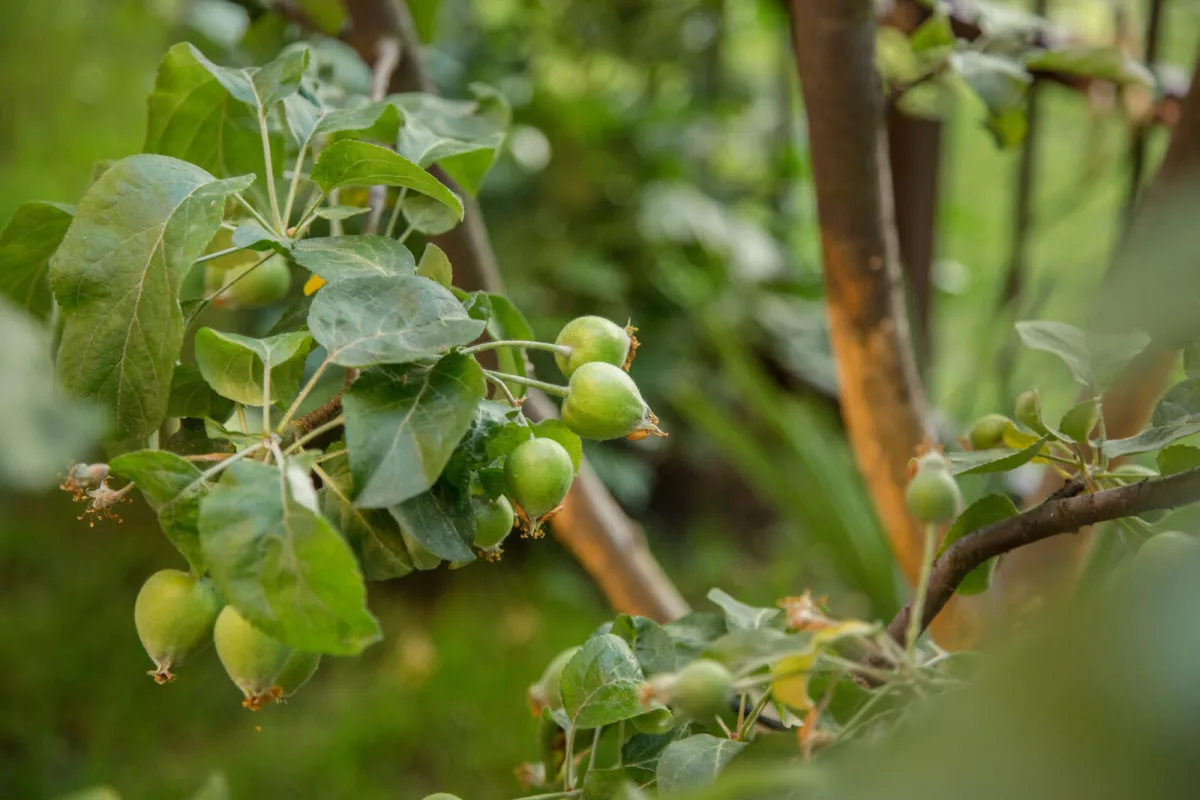
The alternating thunderstorms, muggy spells and subsequent heat in June really put fruit trees through their paces. When you then find little apples under the canopy, it’s easy to panic. But some drop is natural. Around mid-June comes the so-called June drop, when the tree naturally reduces the number of fruitlets. It sheds those that were poorly pollinated, badly set, or that it wouldn’t be able to size up later. This also relieves structural strain, because a lighter crop reduces the risk of branches being damaged later under the weight of the harvest.
The key is to look closely. If the fallen fruitlets are clean and show no signs of damage, it’s usually just natural regulation. But if you notice tiny dark punctures, traces of frass, or if leaves start showing spots or a whitish coating, it’s not selection at all, but pressure from pests or disease. In that moment, it pays to act quickly, because June is decisive for orchard protection.
The most common June threats and what to do about them
Codling moth and the start of wormy apples
Codling moth is a moth whose caterpillars bore into the fruit and cause the familiar “wormy” apples. In June, the flight of the first generation finishes and a window opens when treatment makes the most sense. But spraying blind isn’t a good idea. The crucial moment is just after the larvae hatch, while they are still on the surface of the leaf or fruit and haven’t yet burrowed inside. Once the larva is in the apple, a standard spray will hardly touch it and the damage won’t show up until harvest.
If you choose conventional protection, systemic insecticides aimed at codling moth are used at this time. If you want a gentler approach, you can reach for selective biological products that target codling moth while putting less strain on beneficial insects. Some growers also get good results from parasitic nematodes applied according to the label, which can help interrupt the pest’s life cycle.
An essential June habit: regularly collect prematurely fallen mini apples and dispose of them away from an open compost heap. If a caterpillar remains inside, it can later pupate and set the stage for another wave of damage in summer.
Apple scab and powdery mildew as typical June diseases
The combination of warm days, frequent rainfall and high humidity creates ideal conditions for fungal diseases in June. You’ll recognise apple scab by brown-black spots on leaves and later on the fruit, which can become misshapen. Powdery mildew shows up as a whitish, floury coating, mainly on the tips of young shoots and on leaves. Once leaves stop working properly, the tree feeds the crop less effectively and fruit drop can speed up dramatically.
In full growth, systemic fungicides often have the fastest effect because they move into the tissues and protect new growth as well. If you prefer a more eco-friendly route, contact products based on sulphur or copper are used. These need preventive timing, however, because after heavy rain the protective film can wash off easily and effectiveness drops quickly.
Hidden calcium deficiency and later crop spoilage
A common mistake is to blame fruit drop only on drought or a lack of nitrogen. Yet in June, calcium can be the limiting factor, and it’s essential for the strength of fruit cell walls. When the tree doesn’t have enough, the problem may only fully show in autumn as bitter pit: brown, dry, bitter-tasting spots under the skin that make apples store poorly or even inedible.
The trouble is that in summer, especially during drought, the tree may not reliably take up calcium through the roots. A practical solution is foliar feeding: spraying leaves and developing fruit with foliar fertilisers higher in calcium. It’s best applied in the evening to minimise the risk of leaf scorch and to support uptake.
Simple steps that make a big difference in June
Water at the roots and keep the leaves as dry as possible
During dry spells, watering helps, but it’s worth directing water under the canopy, ideally into the active root zone. Hosing down the foliage in warm weather can actually increase the risk of scab and powdery mildew, because it prolongs leaf wetness and creates better conditions for infection.
Open up the canopy and speed drying after rain
If you didn’t manage pruning in spring, in June you can often remove so-called water shoots with little risk: vigorous, upright shoots inside the canopy that crop poorly and, above all, thicken the tree. Opening the canopy improves airflow, helps it dry faster after rainfall, and usually reduces fungal disease pressure.
Sticky bands as prevention against ants and indirectly against aphids
You can fasten sticky bands around the trunk to limit ants climbing into the canopy. Ants often protect aphids and move them onto new shoots because they feed on their sweet honeydew. When ants’ access is made harder, aphids tend to be more vulnerable to natural predators and the tree is generally in better condition.
How to tell you’re on the right track
Good June monitoring is mainly about consistency. Watch whether newly dropped fruit show puncture marks, whether leaf spots are spreading, and whether a whitish coating appears on young shoots. Combine that with a timely, targeted treatment for codling moth, sensible protection against fungal diseases, and foliar calcium, and you’ll greatly increase the chance that instead of wormy, damaged apples you’ll harvest a healthy, juicy crop at the end of the season.
Source: Gardener’s World, Urob si sám, RHS, Pestrazahrada.cz

A lover of nature, gardens, and everything that moves, blooms, or grows. He literally grows everything, from herbs to rare species, and he enjoys caring for animals just as much. In his work, he connects modern technology with tried-and-tested grandmotherly methods and is happy when both paths lead to the same goal.
Related articles
Why the Tree That Feeds a Family for Generations Is Disappearing from Czech Gardens
The English walnut used to be a staple of larger gardens and farmyards, valued for its nutritious nuts and many practical uses. With the right site and variety, it remains one of the most rewarding long-lived trees you can plant.
How to Get Rid of Mice and Rats in the House, Loft and Garden Effectively
Mice and rats don’t leave quietly—scratching sounds, droppings and gnaw marks are clear warnings. A lasting solution comes down to three steps: block entry points, remove food sources, then use traps or professional control.
Two Mistakes When Harvesting Onions Can Cut Your Supply by Months
With good growing and the right handling, onions can turn into a near year-round pantry staple. These simple harvest and curing steps determine whether they keep for weeks or for months.
Comments (0)
Be the first to comment.