
 English
  Polski
  Deutsch
  Nederlands
  Svenska
  Norsk
Norsk  Dansk
Dansk  Français
  Italiano
  Español
  Português
  Slovenčina
  Suomi
Suomi  Gaeilge
 Butterfly bush buddleja needs sun and pruning but one soil mistake can kill it
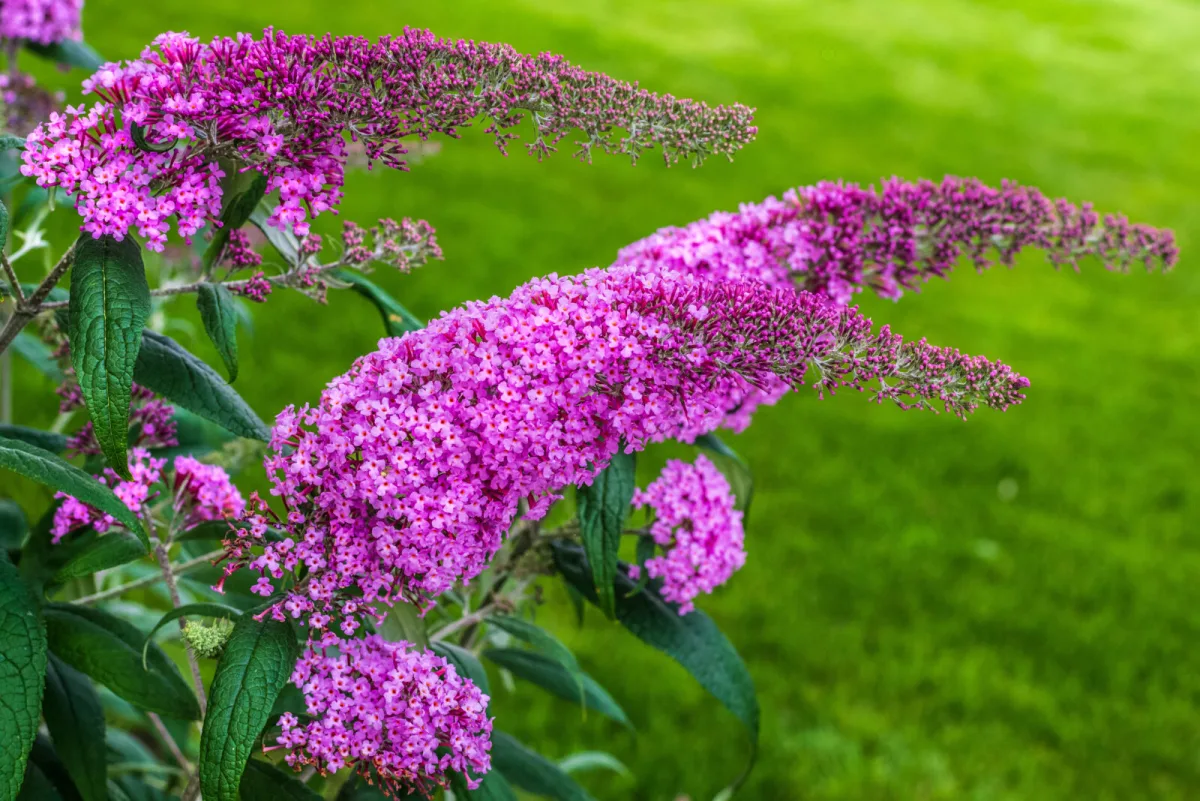
Buddleja, often known as the butterfly bush, is a popular summer shrub thanks to its long flowering season and low-maintenance nature. The most commonly grown is Buddleja davidii, which thrives in most gardens as long as it gets plenty of sun and an annual prune. Alongside it, there are species that need a more sheltered spot or some winter protection. With the right choice of species and a few basics, buddleja will reward you with masses of flowers from early summer right through to the end of the season.
How to choose the right species and shrub size
Height and growth habit
Many buddlejas grow to a substantial size and commonly reach about 2.5 to 3 m, even if you prune them very hard in spring. For smaller gardens, the front of borders, or containers, dwarf cultivars of Buddleja davidii are a better fit, such as the Buzz or Nanho types, which usually top out at around 1 to 1.2 m.
Buddleja can also be grown in different forms. Besides the classic upright or fountain-shaped shrub, it’s sometimes sold as a lollipop standard on a clear stem. For this, the weeping Buddleja alternifolia is often used, but you may also come across Buddleja davidii grown in this way.
Flower colours and differences between species
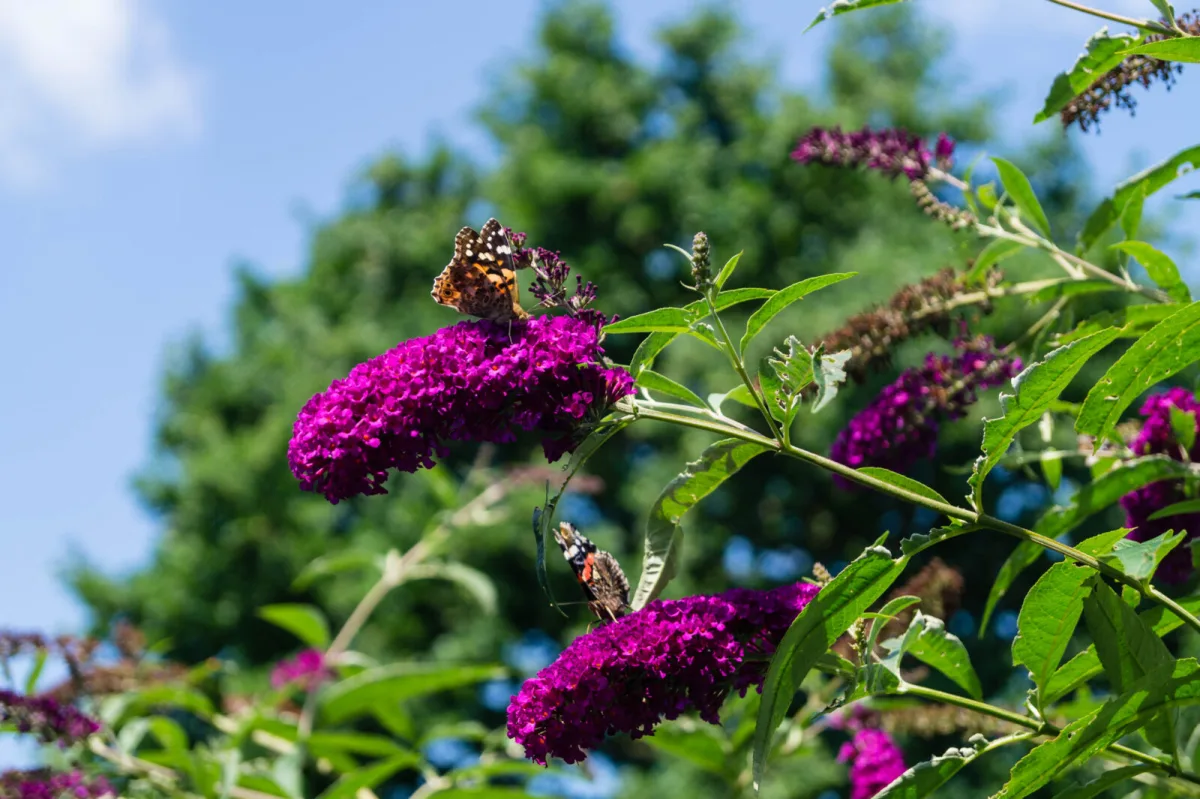
Buddleja offers a wide range of shades and different flower structures, from slender panicles to more compact clusters. Among the hardy garden species is Buddleja davidii, which flowers in colours from white through pink, lilac and blue to deeper crimson tones. Also grown is the weeping Buddleja alternifolia with lilac flowers, and Buddleja globosa with orange flower heads and its hybrid relatives.
For warm, urban gardens or sheltered corners, choose more demanding species such as the grey-leaved buddleja with soft purple bloom, or the striking red-flowered buddleja, which performs best where it doesn’t suffer from winter swings in temperature.
Hardiness and what it means in practice
Fully hardy buddlejas can be planted in a sunny part of the garden without special measures. Less hardy species will usually cope with an average winter, but in severe cold they benefit from protection, such as planting against a south-facing wall or temporarily covering with horticultural fleece. Tender, heat-loving buddlejas are typically grown in containers and moved for winter into a frost-free greenhouse or conservatory.
If you want a sure thing, choose cultivars proven in ordinary conditions, which reliably grow and flower over the long term without complicated care.
When and where to plant buddleja
Position and shelter from wind
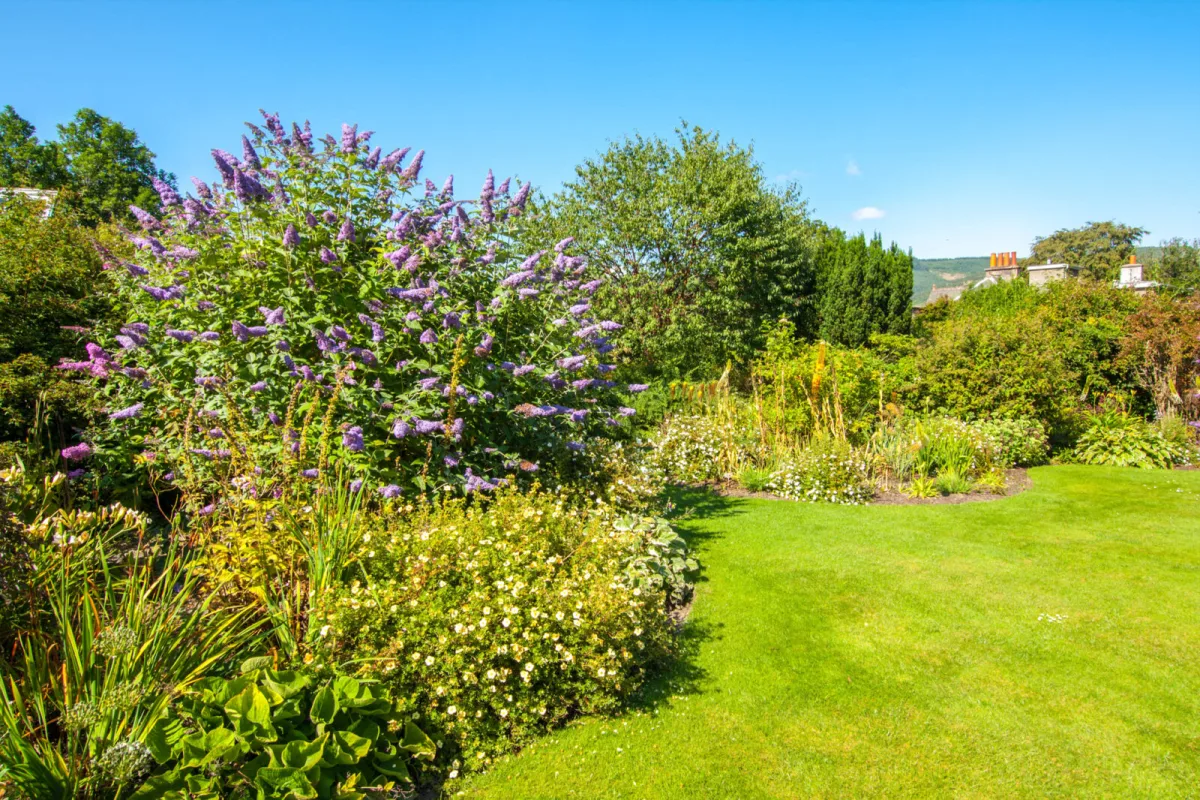
Buddleja needs a sunny site, ideally one that gets light for most of the day. In full sun it flowers most heavily and produces long flower panicles. Avoid very windy spots, though, because the long shoots can snap in summer storms and the shrub may rock so much that soil loosens around the base and the roots become exposed.
When planning, allow for the eventual size. A strong spring prune will help keep some types to roughly 1.8 to 2.4 m, and dwarf cultivars smaller still. Compact buddlejas can also be grown successfully in large containers.
Best time to plant
Hardy buddlejas can be planted almost all year round, as long as the soil isn’t frozen. With summer planting, however, you must water regularly, because the plant is in full leaf and loses moisture quickly. Spring is best, when the soil has warmed up and is usually naturally moist, making it easier for the shrub to establish. For less hardy and tender species, spring planting is close to essential, as they need a full season to build strength.
How to plant in the ground and in a container
Planting in open ground
Plant buddleja like any other shrub. Dig a hole roughly deep enough for the root ball to sit comfortably, but at least two to three times wider. It’s worth mixing the soil with well-rotted compost or thoroughly decomposed manure. After planting, the top of the root ball should sit just below the surrounding soil level. Water in thoroughly, and for the first few months keep the soil evenly moist, not waterlogged. Full establishment often takes time, easily around 18 months.
Planting in a container
For dwarf buddlejas in pots, use a quality peat-free compost, ideally enriched with some loam to improve stability and nutrient retention. At planting time, it’s worth adding a slow-release fertiliser so the plant has enough feed for its first summer. Repotting into fresh compost is advisable about once every two to three years. Over time, a larger container will also be needed, often around 60 cm in diameter, to give the roots enough space.
Routine care through the year
Watering and mulching
The most important period for watering is after planting. For roughly the first year to year and a half, water so the soil doesn’t dry out, but also isn’t kept constantly saturated. Once buddleja is well established, it usually copes with short dry spells. A mulch layer about 5 cm deep helps conserve moisture and improves soil structure at the same time.
Feeding and nutrition
In good garden soil, buddleja usually doesn’t need additional feeding. An annual top-up of organic matter in the form of compost or well-rotted manure is generally enough. Buddlejas in containers are more demanding, so it’s best to add a controlled-release fertiliser each year, or feed with a liquid fertiliser from spring to early autumn according to the manufacturer’s directions.
Removing spent flower heads
After flowering, you can snip off the browning flower panicles to keep the shrub looking tidy. On some plants this can also encourage a smaller second flush, although it’s usually not as heavy as the first.
Overwintering and protecting more tender types
Hardy buddlejas generally don’t need any special winter care. With less hardy types, temporary protection during hard frosts can be worthwhile, such as covering with horticultural fleece. Container plants, which are more vulnerable to the root ball freezing solid, are safer moved into a cool but frost-free place, such as an unheated greenhouse or conservatory.
Pruning buddleja depending on when it flowers
Species that flower on this year’s growth
A large proportion of buddlejas flower on new shoots produced in spring and early summer. These can be cut back hard in spring, usually from late March into April, leaving only a low framework of permanent branches. This encourages strong new growth and large flower panicles in summer. With some types, it’s better to leave the base a little higher so the shrub looks more natural and overwinters more reliably.
Species that flower on last year’s wood
Some buddlejas set their flowers on shoots from the previous season. For these, a hard spring prune would remove the flower buds, so they are pruned after flowering, typically in early to mid-summer. The usual approach is to remove the spent flowering branches while keeping the shrub’s shape.
Light maintenance pruning for Buddleja globosa
Buddleja globosa generally doesn’t need regular hard pruning. However, if some branches stick out too far or the shrub loses its form, you can shorten them towards the end of winter. Bear in mind this may reduce flowering that summer, but it can improve vigour and encourage a more compact habit.
Buddleja on a stem and shaping standards
With buddlejas grown as standards, shorten the crown hard in spring back towards the point where branching begins. The head will reshoot in early summer. If you buy a weeping type as a young plant and want to train it into a standard, select one strong upright shoot as the future stem and tie it to a stake so it grows straight.
Propagating buddleja from cuttings
Buddleja is very easy to propagate from cuttings. In summer you can take softwood cuttings, and later semi-ripe cuttings, which usually root readily. You can also try hardwood cuttings from autumn through to mid-winter. Young plants are usually grown on for a longer period and planted out in their permanent position after about two years, once they’ve strengthened and developed a good root system.
Common problems and how to prevent them
Buddleja is generally robust and rarely causes trouble. In recent years, however, cases of leaf damage from aphids have been seen. Affected leaves may curl, crinkle, and develop paler to yellow patches. At the first signs, regular checks and prompt action help prevent the pest population from building up.
In cold, waterlogged soil, even hardy buddlejas can struggle through winter, because the roots can rot easily. If your garden soil is heavy and holds water, it’s worth planting in a raised bed or nearer the house, where the microclimate is often drier and warmer. Late spring frosts can damage freshly emerging leaves, but most plants recover once temperatures rise and continue growing.
Source: Rhs, Garden Express , Pestrazahrada.cz
Related articles
The Christmas Amaryllis That Can Bloom for Years but Most People Throw It Away After Flowering
Hippeastrum is a spectacular winter-blooming bulb that, with the right care, will flower again year after year. Learn how to plant it correctly, look after it after flowering, and bring it into dormancy so it reliably reblooms.
How to Grow Winter Garlic for a Much Bigger Harvest
Autumn planting is the key to strong, healthy winter garlic, but the details make all the difference. With the right timing, bed choice, seed-clove treatment and a simple bicarbonate trick, you can noticeably boost yield.
A tree or shrub planted properly in autumn can outpace spring stock and improve fruiting
Many fruit trees and soft-fruit shrubs establish better when planted in autumn, because roots keep growing while the top is dormant. Done well, this head start means stronger spring growth, less watering, and a healthier first year.
Comments (0)
Be the first to comment.