
 English
  Polski
  Deutsch
  Nederlands
  Svenska
  Norsk
Norsk  Dansk
Dansk  Français
  Italiano
  Español
  Português
  Slovenčina
  Suomi
Suomi  Gaeilge
 How to tell whether an apricot needs regrafting after a hard renovation prune
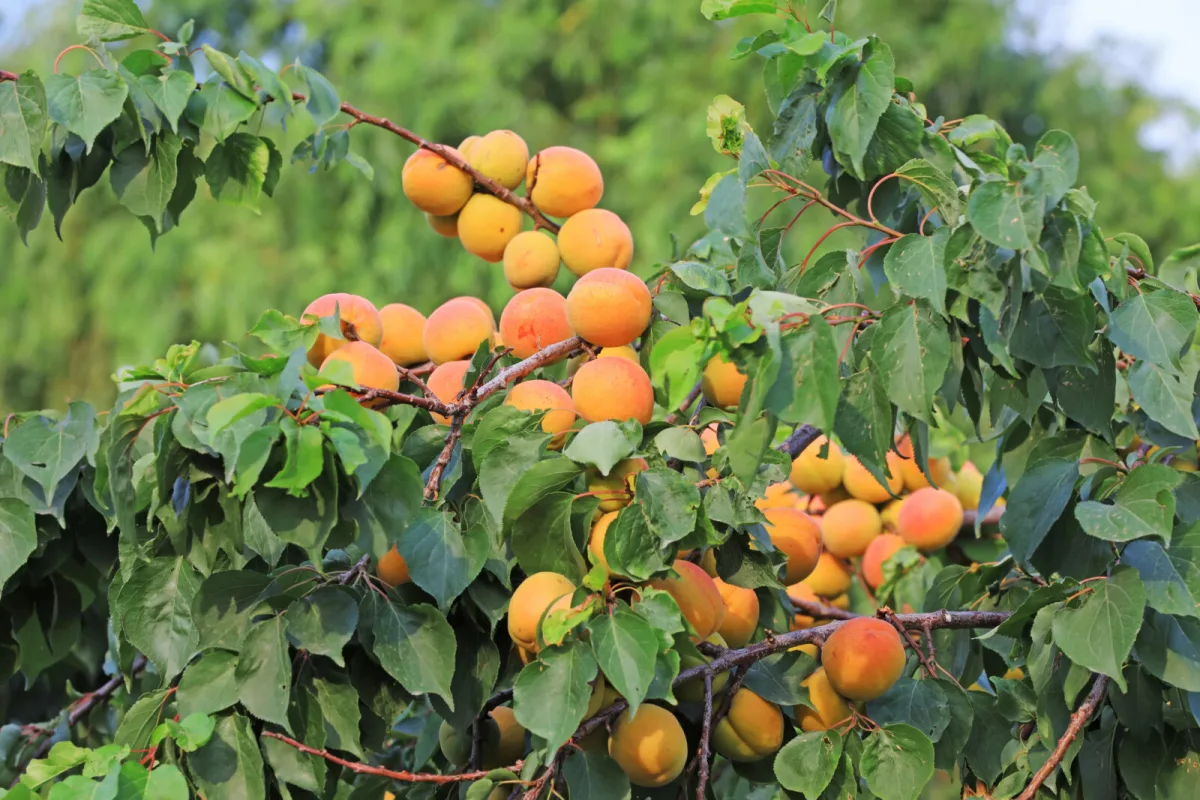
If you’ve cut an apricot back to about 1 m above the ground because of severe monilia and heavy gummosis, it’s only natural to wonder what comes next. In spring, new shoots often break, and you can select a few of the strongest to form the future canopy. The key question is whether that retained trunk needs to be grafted again, or whether you can continue without further intervention.
The deciding factor is the original budding or grafting height
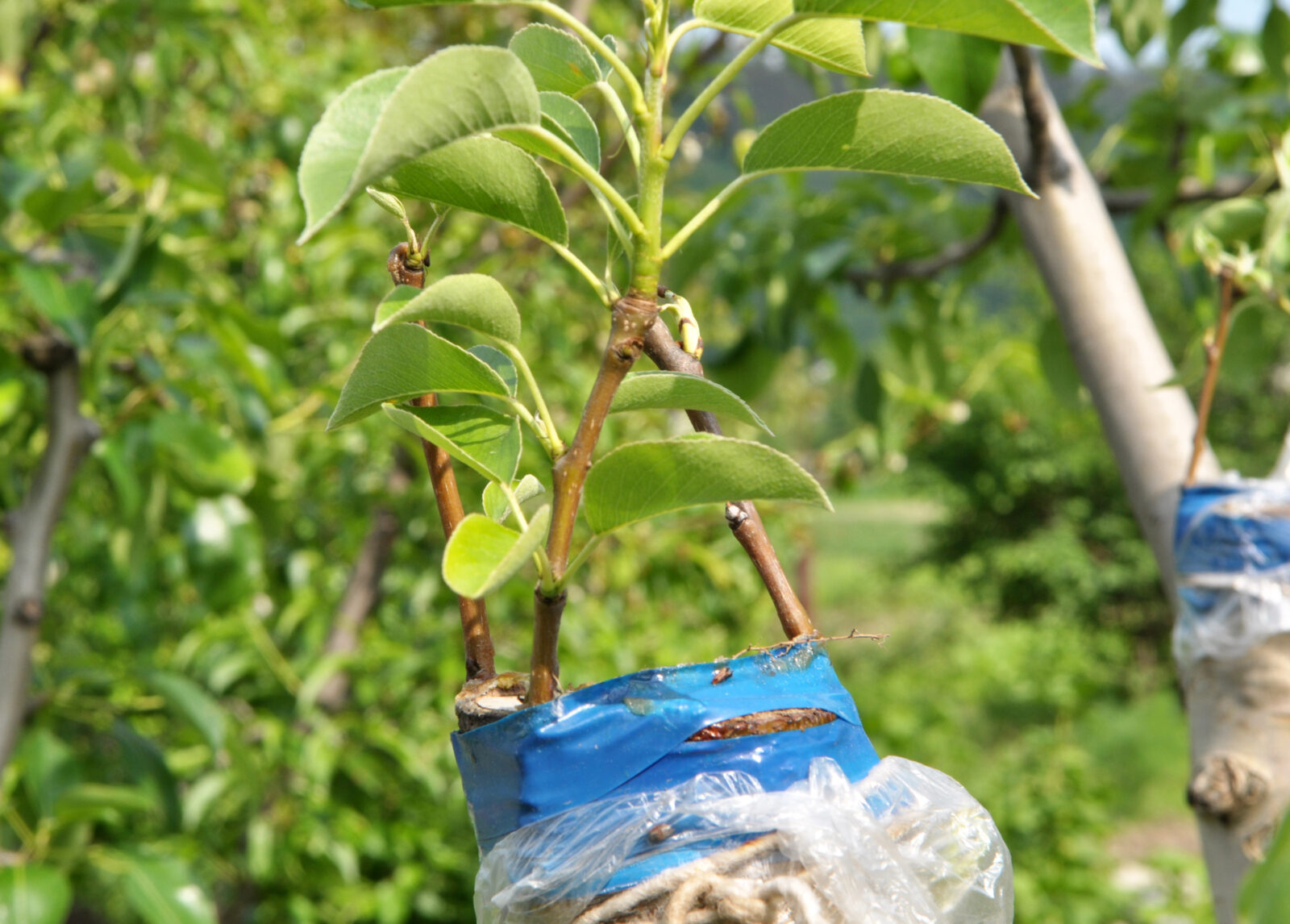
Whether regrafting is necessary depends on how high the tree was originally grafted or budded. In other words, whether your cut removed the named cultivar (the scion), or whether it’s still present on the trunk. With nursery fruit trees, the graft union is commonly quite low, so even after a drastic cutback it may still be realistic to rebuild a crown from new shoots.
Typical graft heights on apricots
In practice, apricots are often grafted onto rootstocks in late winter at roughly 10 to 15 cm above the ground. When grafting onto field-grown rootstocks, it’s more often around 15 to 25 cm. In larger operations you’ll see a range of about 10 to 30 cm. So if you made your cut well above those heights, there’s a good chance the cultivar portion is still on the tree.
Leaves and the rootstock apricots are commonly grafted onto will give you clues
The way the tree breaks bud can reveal a lot, too. Apricots are often grafted onto plum rootstocks. If, after pruning, the new shoots carry typical apricot leaves, there’s a fair chance it’s still the original purchased cultivar and the tree doesn’t need immediate regrafting. On the other hand, if you see characteristics that look more like plum, they may be suckers from the rootstock—in which case grafting would make sense.
The trunk’s health is the critical factor
Even if everything looks promising, one major uncertainty remains: the disease may have settled directly in the trunk, and the new shoots may not stay healthy long term. That’s why it makes sense to watch whether gummosis returns, whether shoots start dying back, and how the tree is growing overall. If the condition stabilises, you can gradually build a new canopy from the shoots you’ve kept.
When to carry on—and when to replace the tree instead
If the new shoots are thriving and the tree shows no further significant signs of damage, you can continue growing it without regrafting and focus on training the new framework. But if the problems return, tissues die back, or gummosis worsens, it’s often wiser to remove the tree and buy a new, healthy one. So the decision doesn’t hinge only on where the tree was originally grafted, but above all on whether the trunk is still viable after the infection.
Source: Gardening Know How, Záhrada, Pestrazahrada.cz

A lover of nature, gardens, and everything that moves, blooms, or grows. He literally grows everything, from herbs to rare species, and he enjoys caring for animals just as much. In his work, he connects modern technology with tried-and-tested grandmotherly methods and is happy when both paths lead to the same goal.
Related articles
Why the Tree That Feeds a Family for Generations Is Disappearing from Czech Gardens
The English walnut used to be a staple of larger gardens and farmyards, valued for its nutritious nuts and many practical uses. With the right site and variety, it remains one of the most rewarding long-lived trees you can plant.
How to Get Rid of Mice and Rats in the House, Loft and Garden Effectively
Mice and rats don’t leave quietly—scratching sounds, droppings and gnaw marks are clear warnings. A lasting solution comes down to three steps: block entry points, remove food sources, then use traps or professional control.
Two Mistakes When Harvesting Onions Can Cut Your Supply by Months
With good growing and the right handling, onions can turn into a near year-round pantry staple. These simple harvest and curing steps determine whether they keep for weeks or for months.
Comments (0)
Be the first to comment.