
 English
  Polski
  Deutsch
  Nederlands
  Svenska
  Norsk
Norsk  Dansk
Dansk  Français
  Italiano
  Español
  Português
  Slovenčina
  Suomi
Suomi  Gaeilge
 How to Prune Tomatoes Properly for a Heavy Crop Without Unnecessary Suckering
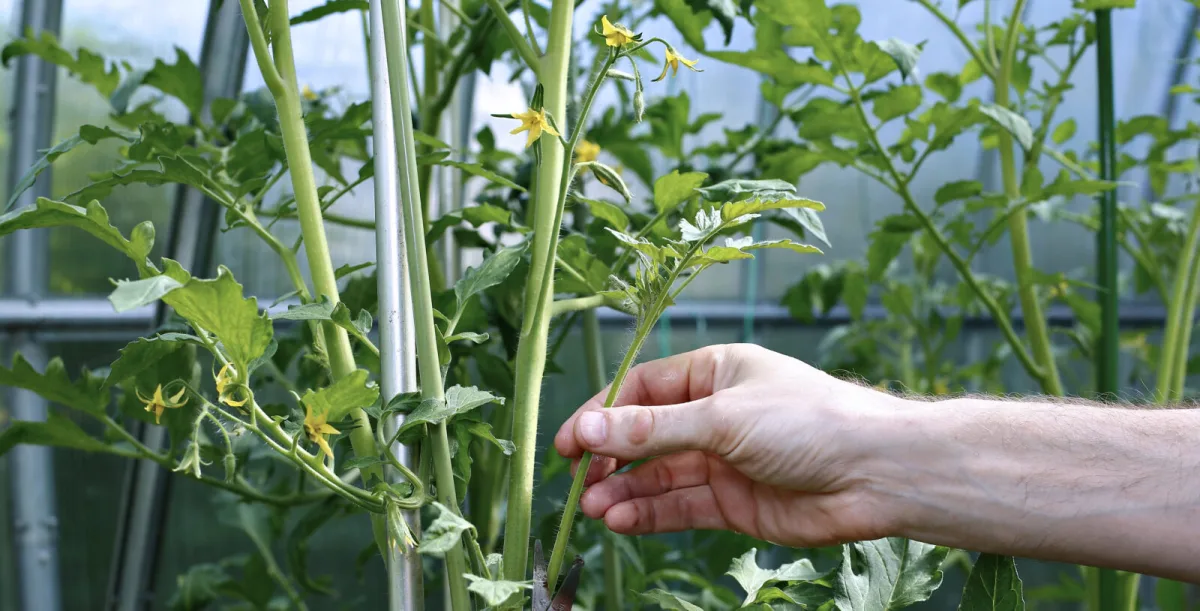
With tomatoes, you’ll often hear the same advice repeated: you must pinch out so‑called suckers, otherwise the plant will be weak and the harvest small. In practice, though, there’s no one-size-fits-all rule. It depends on the variety, the length of your season, the type of support, the weather, and what you want from the harvest. Pruning can be useful mainly for plant health and better ripening, but it doesn’t automatically mean you have to remove every side shoot.
What a sucker is and why it forms
A sucker is a side shoot that appears in the leaf axil, where a leaf stem joins the main stem. At first it looks insignificant, but if you let it grow, it gradually becomes a full branch with leaves, flowers, and later fruit. People often say suckers only drain the plant; in reality, they’re a natural part of growth and they also represent additional potential yield.
Bigger fruit, or more fruit
Deciding what to do with suckers is simple at its core. If you remove suckers, the plant has fewer shoots and therefore fewer fruits, but the available nutrients are concentrated into a smaller number of tomatoes, which are often larger. At the same time, the canopy opens up, air circulates better, and the risk of fungal diseases can drop, along with pests that thrive in dense, tangled growth.
If you leave suckers, you’ll get more fruiting stems and the plant will usually set more flowers. The result is often a longer harvest period and a higher number of fruits, though frequently smaller. That’s neither bad nor good—it’s simply a different kind of harvest. Choose the option that matches your season and whether you want a few huge tomatoes or a steady supply of smaller ones.
Why it often makes sense to leave suckers and still prune
In warm areas with a long summer, leaving suckers can be an easy way to get lots of sweet tomatoes, because the plant has time to crop for a long period. In cooler regions with a short season, the pressure to ripen in time is greater. Even there, it may not make sense to remove every sucker and bet everything on a few large fruits that might not ripen, or could be damaged by disease or pests. Often it’s more practical to aim for a steady flow of tomatoes and prune selectively: keep some growth for fruit, and remove some to protect plant health and conserve energy.
First, be clear on what type of tomato you’re growing
With bush, so‑called determinate varieties, heavy pinching out is usually not recommended. These plants grow to a set height and produce most of their crop in one main flush. If you systematically remove shoots, you can actually reduce your harvest.
With cordon, indeterminate tomatoes that keep growing and fruiting until frost, controlled pruning is far more useful. It helps keep the plant manageable, easier to tie in, and better able to channel energy into flowering and ripening.
Step 1 – Choose one or two main stems
Soon after planting, decide whether you’ll train the plant to one or two main stems. Some seedlings branch low down and offer several strong shoots. Your choice should match your support and your planting date. A sturdy cage or solid framework can carry two stems, while strings, a ladder-style support, or late planting often works better with one main leader. Cut off extra strong basal stems with clean pruners, and keep removing new shoots that emerge from the lower part of the plant.
Step 2 – Remove leaves and branches that touch the soil
Anything lying on the ground or touching the soil is more prone to disease and gives pests an easy foothold. That’s why it makes sense to cut off lower leaves and trailing branches to improve airflow and reduce soil-borne problems. Mulch also helps by preventing soil and spores from splashing onto leaves during watering or rain.
Step 3 – Prune below the first flower truss
Once the first flower truss appears, remove shoots and leaves below it. This signals to the plant to put energy into flowering and fruit set rather than needlessly thickening the base. Leaves are essential for photosynthesis, but with indeterminate tomatoes it’s often enough to keep a sensible minimum that can support the crop without turning the plant into an impenetrable thicket.
Step 4 – Don’t remove suckers automatically; remove non-fruiting growth
Every two to three weeks, go through your plants and remove lower shoots that aren’t forming flowers or fruit. This approach differs from the common rule of snapping off all suckers. The aim is to reduce parts that consume water and nutrients but don’t contribute to yield. Sometimes that means keeping a sucker if it’s already carrying flowers, and instead removing a secondary branch below it that still isn’t producing anything.
At the same time, cut off leaves that are damaged, yellowing, or suspicious for disease. Those parts no longer support the plant and can be a source of infection. It’s sensible to dispose of them in the bin rather than adding them to the compost if you’re not confident about the health of the crop.
Step 5 – Pinch out the growing tip before the first frost
Two to three weeks before the expected first frost, it pays to stop the main stem from growing. Cut the tip off above the highest flowers and remove new blossoms and very small green fruits that won’t have time to size up. The plant will then redirect energy into ripening what it has already set, instead of producing more leaves and more fruit set with little chance of harvest.
When pruning goes too far, and when to cut back
Overly aggressive pruning can weaken a tomato plant, because less leaf area means less energy for fruit development. In regions with long, hot, sunny days, leaves also protect tomatoes from sunscald, so it can be better to prune less and leave fruit with natural shade.
Weakened plants may cope worse with heat and be more susceptible to disease and pests. With some varieties, heavy pruning can also lead to more misshapen fruit. The best approach is to find a balance: keep enough leaves for vigour and protection, but remove what unnecessarily crowds the plant, lies on the soil, or goes a long time without producing flowers. Gardening doesn’t have fixed rules—only goals you set for yourself.
Source: Garden Betty, The Spruce, Pestrazahrada.cz

A lover of nature, gardens, and everything that moves, blooms, or grows. He literally grows everything, from herbs to rare species, and he enjoys caring for animals just as much. In his work, he connects modern technology with tried-and-tested grandmotherly methods and is happy when both paths lead to the same goal.
Related articles
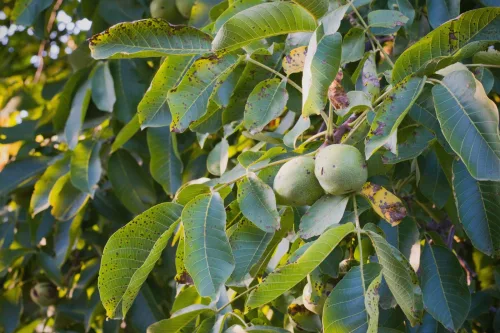
Why the Tree That Feeds a Family for Generations Is Disappearing from Czech Gardens
The English walnut used to be a staple of larger gardens and farmyards, valued for its nutritious nuts and many practical uses. With the right site and variety, it remains one of the most rewarding long-lived trees you can plant.

How to Get Rid of Mice and Rats in the House, Loft and Garden Effectively
Mice and rats don’t leave quietly—scratching sounds, droppings and gnaw marks are clear warnings. A lasting solution comes down to three steps: block entry points, remove food sources, then use traps or professional control.
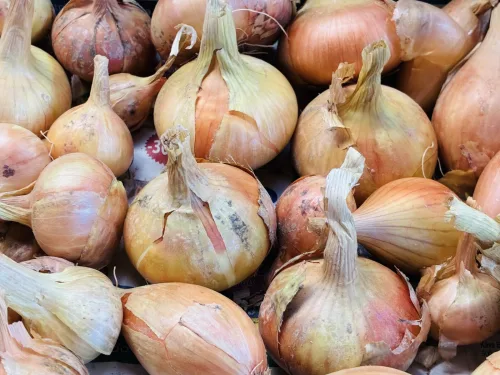
Two Mistakes When Harvesting Onions Can Cut Your Supply by Months
With good growing and the right handling, onions can turn into a near year-round pantry staple. These simple harvest and curing steps determine whether they keep for weeks or for months.
Comments (0)
Be the first to comment.