
 English
  Polski
  Deutsch
  Nederlands
  Svenska
  Norsk
Norsk  Dansk
Dansk  Français
  Italiano
  Español
  Português
  Slovenčina
  Suomi
Suomi  Gaeilge
 Grow a Pineapple from a Store-Bought Top and Harvest Your Own Fruit
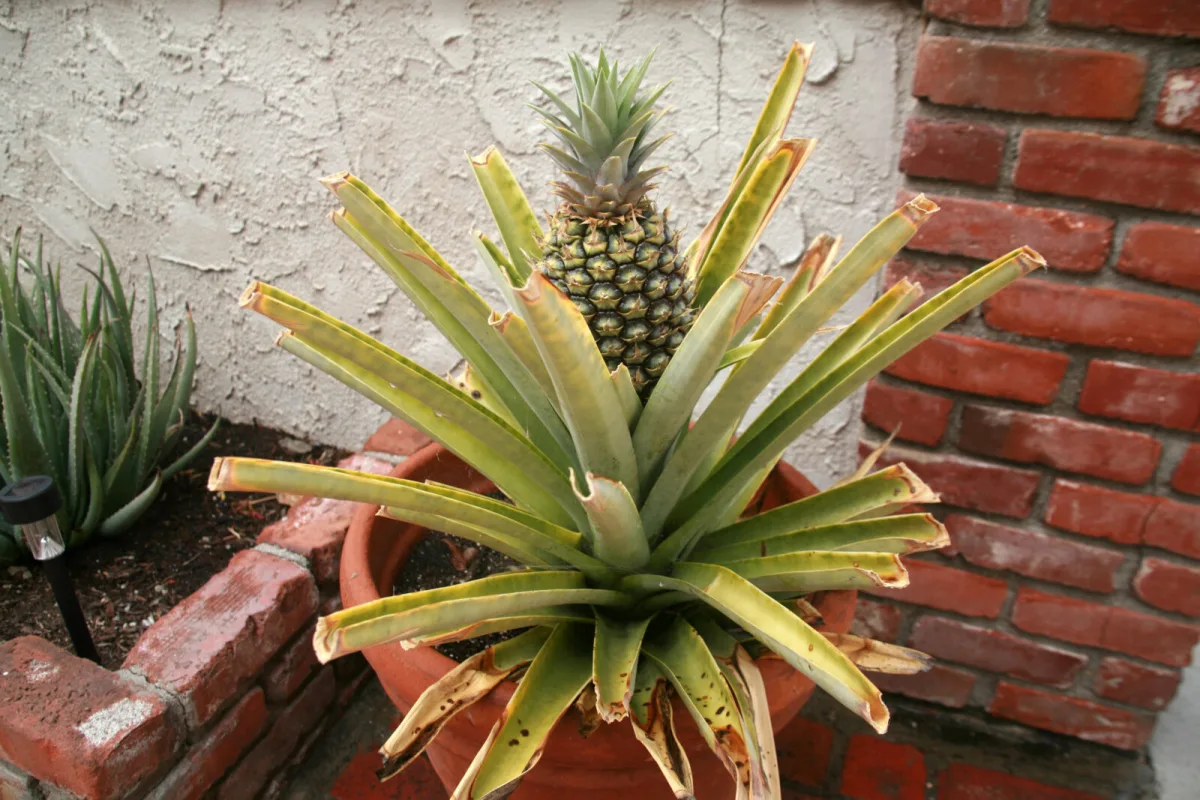
Growing a pineapple from the leafy top is a simple at-home experiment that even a beginner can manage. From one ordinary shop-bought fruit, you can create a decorative plant with a firm rosette of leaves that looks exotic in your home all year round. And if you give it the right conditions and a bit of patience, it may eventually surprise you with flowers and then a real pineapple.
The crown takes best from a fresh, healthy fruit. Choose a pineapple with firm leaves, free of rot and without obvious drying. An interesting option is a fruit with noticeably coloured or variegated leaves, because it will grow into a striking houseplant.
You can grow a pineapple from just the top of the fruit
Yes, a pineapple crown can root and grow into a stand-alone plant almost anywhere, even outside the tropics. In warmth and with plenty of light it will gradually strengthen, form a new centre in the rosette, and in time may send up a flower stalk. If a fruit appears, it will be genetically a continuation of the original plant, because you’re starting from a part of an existing pineapple.
How to prepare and plant a pineapple crown
1) Choose a suitable fruit and cut off the top
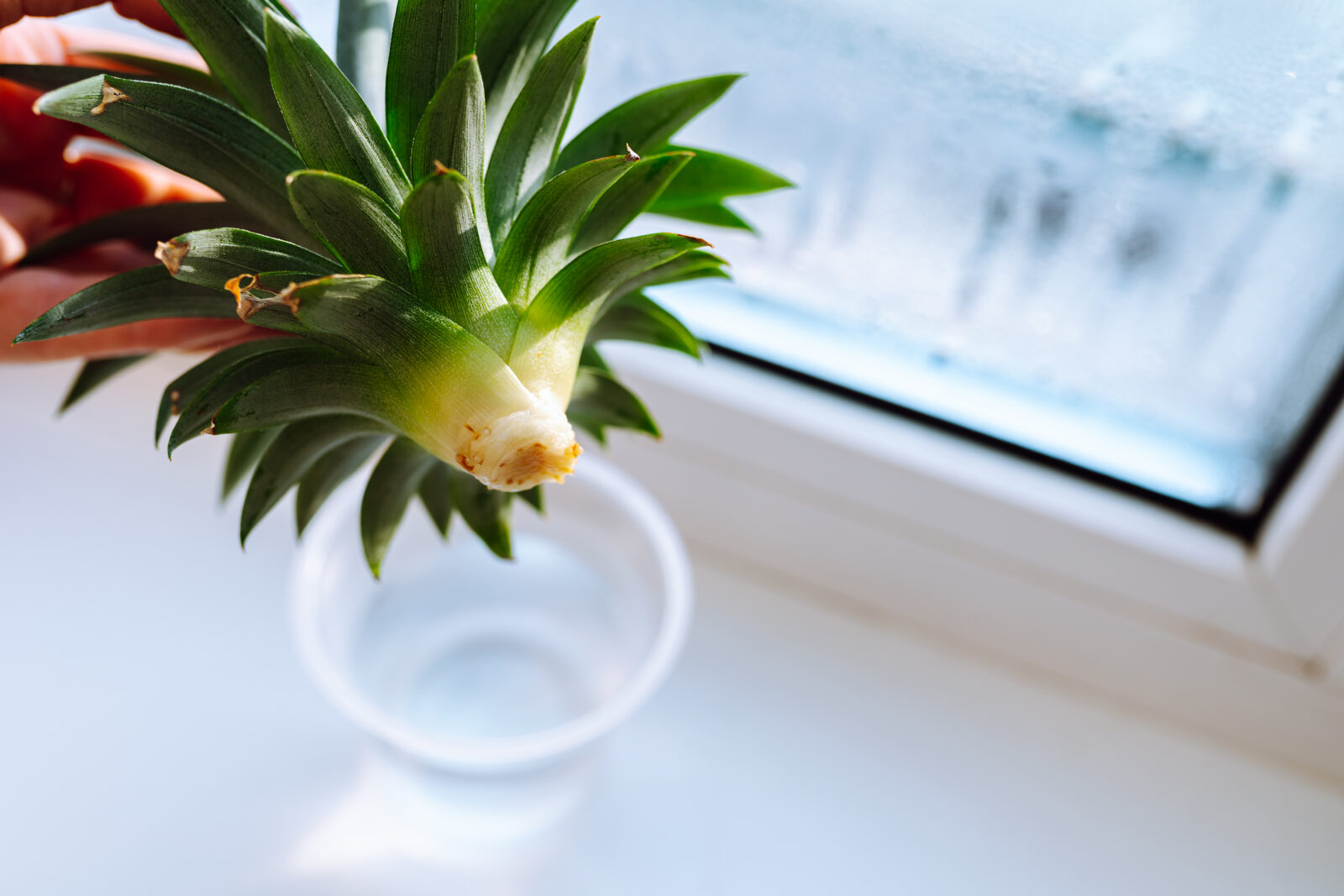
Buy the freshest pineapple you can, ideally a larger one. Cut off the crown so the cut is about 2 to 3 cm below the bottom edge of the leaves. This gives you a solid central core with leaves, which will form the base of the future plant.
2) Clean up the base and find the root buds
Remove a few of the lowest leaves and trim away the outer fleshy parts at the base of the crown until you can see small bumps around the edge of the stem. These brownish nubs are root buds, from which the root system will later develop.
3) Let the cut dry to prevent rot
The base of the crown is prone to rotting after cutting. Set it in a warm, dry room for a few days so the cut surface can dry and form a protective layer. This step often decides success, especially in a cooler home.
4) Plant in potting mix rather than in water
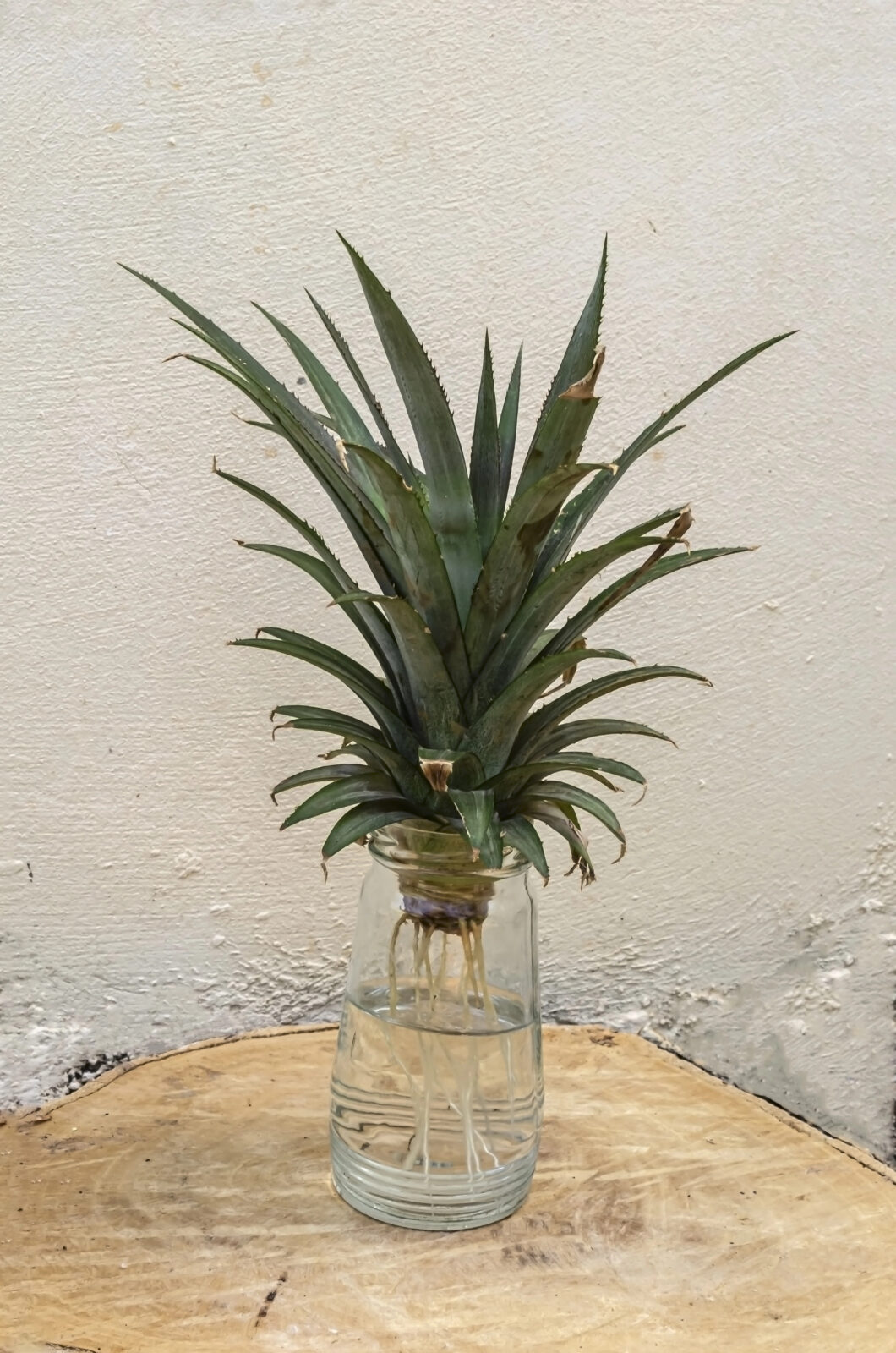
Although you can root the crown in water, in practice it’s usually more reliable to plant it straight into a free-draining potting mix. Use a blend that sheds water well, such as compost with perlite or coarse sand, or a cactus and succulent mix. Moisten the mix before planting, set the crown so the base sits firmly and doesn’t wobble, then water thoroughly.
5) Raise humidity and provide bright, indirect light
After excess water has drained, you can cover the pot with a clear plastic bag to keep humidity higher. Place the plant in a bright spot out of harsh midday sun. If your home is short on light, supplemental lighting helps too, because pineapple needs consistently bright conditions to grow.
6) Waiting for roots and repotting
Keep the potting mix evenly moist, but never waterlogged. If it dries out, top up gently. Roots usually form in 6 to 8 weeks. Once the crown is firmly anchored and clearly growing, remove the cover and repot into a larger container with a free-draining, slightly moist mix. Keep in mind that a mature plant can reach roughly 1 to 1.3 m, so over time it will need space and a stable pot.
Caring for pineapple after it has rooted
The key is regular watering so the mix stays moist but not constantly wet. Overwatering encourages rot, while prolonged dryness slows the plant down. In spring and summer, feed with a water-soluble fertiliser about once every four weeks. In autumn and winter, feeding about once every eight weeks is enough, as growth is usually slower.
The plant can outgrow its pot quickly, so it’s handy to have a larger container ready. Unless you live in a consistently warm area, pineapple should spend winter indoors in warmth and bright light.
Summering outdoors and bringing it back before frost
In late spring and summer, pineapple can benefit from time outside. Choose a spot in partial shade, protected from scorching sun and heavy rain. As soon as temperatures start to drop in autumn, bring the pot back indoors before the first frost, because cold can seriously damage the plant.
When to expect flowers and how to improve the chances of fruit
Pineapple grows slowly, so you’ll usually wait at least two to three years for flowers and fruit, sometimes longer. With more mature plants, flowering can be encouraged by increasing exposure to ethylene, a gas released as fruit ripens. A practical home method is to place the plant for a few days in a plastic bag together with an apple, which naturally releases ethylene.

Another often mentioned method is to lay the plant on its side briefly between waterings, which may indirectly stimulate ethylene production. Once flowering begins, a flower stalk appears over the course of several weeks to months, the flowers fade gradually, and then the fruit starts to form.
How many pineapples one plant will produce and what happens next
One plant typically produces one fruit. After it ripens, the mother plant may gradually die back, but if it’s in good condition it often produces offsets, commonly called pups. These young plants can be left to grow on, or later separated and grown on their own. Each pup then has the chance to flower and produce its own pineapple in time.
Important: Pineapple doesn’t behave like a typical perennial that fruits every year. The fruit is usually a one-off, and continued growing is typically carried on through the offsets.
Source: Gardening Know How, Pestrazahrada.cz

A lover of nature, gardens, and everything that moves, blooms, or grows. He literally grows everything, from herbs to rare species, and he enjoys caring for animals just as much. In his work, he connects modern technology with tried-and-tested grandmotherly methods and is happy when both paths lead to the same goal.
Related articles
Next year you can harvest better if you don’t sow carrots where they won’t thrive
Carrot root fly can ruin carrots, parsley and celery from the inside out, often without obvious warning until harvest. Better site choice, rotation, later sowing and simple physical barriers can dramatically cut damage next season.

How to Propagate Roses from Cuttings at Home and Fill Your Garden with Blooms Almost for Free
Want more roses without paying for new plants? With a few healthy cuttings and a simple plastic-bottle mini greenhouse, you can root new bushes at home in just a few weeks.
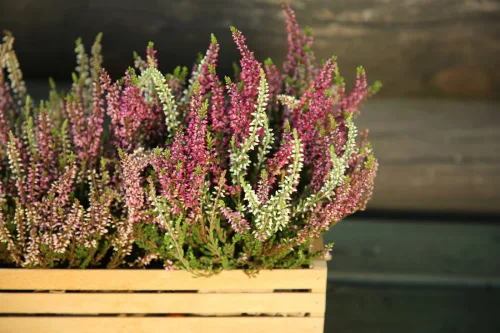
Heathers can cope where other plants won’t, but one soil detail decides everything
Heathers and heaths are tough evergreen shrubs that can flower across the seasons when you choose the right types. Success hinges on matching the plant to your soil pH and ensuring free drainage.
Comments (0)
Be the first to comment.