
 English
  Polski
  Deutsch
  Nederlands
  Svenska
  Norsk
Norsk  Dansk
Dansk  Français
  Italiano
  Español
  Português
  Slovenčina
  Suomi
Suomi  Gaeilge
 You Can Remove a Hornet Nest Without a Permit If You Meet Legal Conditions
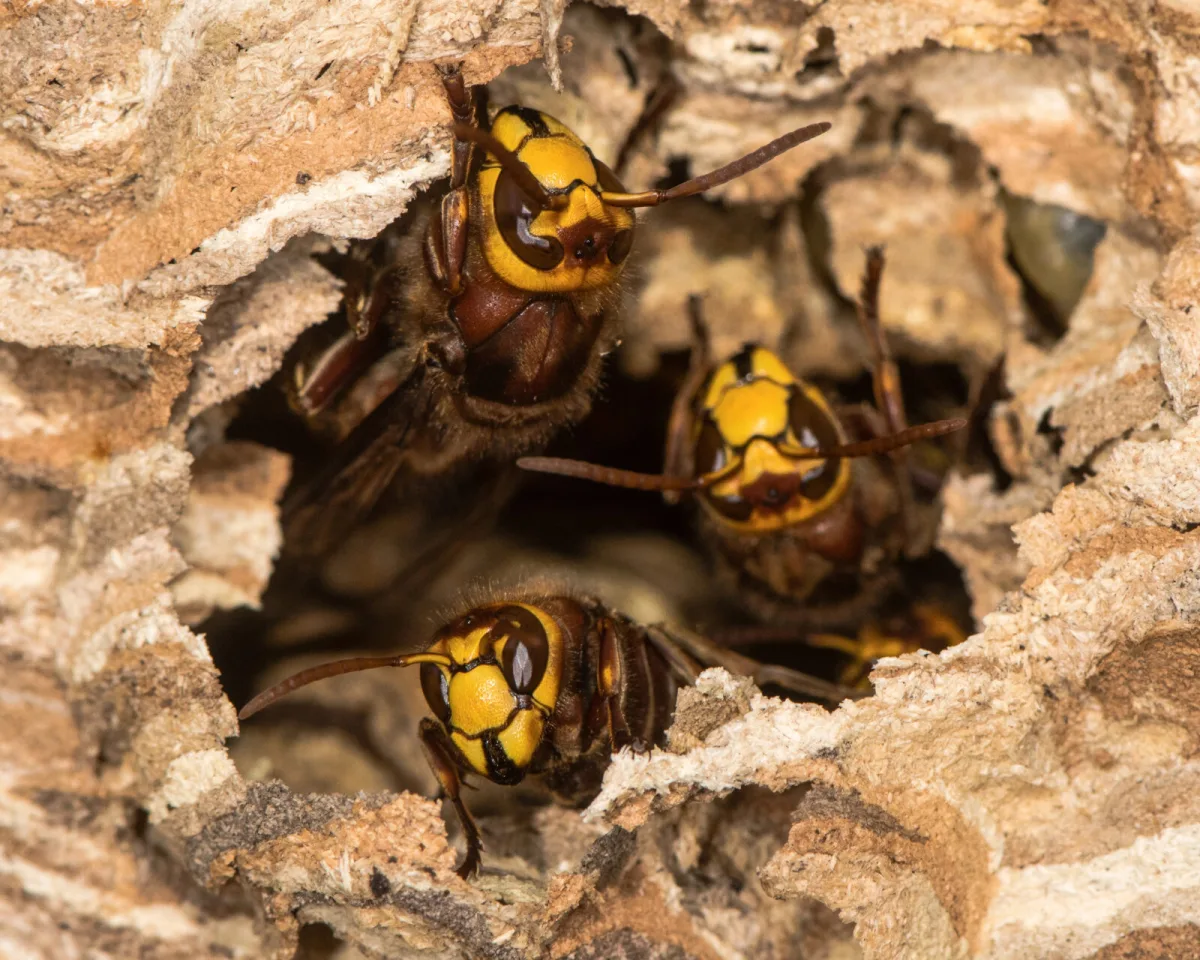
Home and garden owners often wonder whether a hornet nest can be removed without running into legal trouble. In the Czech Republic, the European hornet is considered a wild animal under general protection, but it is not listed as a specially protected species. That creates an important difference compared with species for which any intervention would require permission from the authorities.
The European hornet is not a specially protected species
The European hornet (Vespa crabro) is not included in the list of specially protected animals under Decree No. 395/1992 Coll. From a legal standpoint, it is therefore mainly covered by the general protection of wild animals under Section 5 of Act No. 114/1992 Coll., on the Protection of Nature and the Landscape. In practice, this means the law is aimed chiefly at preventing unnecessary killing and unjustified destruction of nature.
However, if a nest poses a real risk to health or safety, intervention is considered justified. In that situation, the nest can be removed even without special exemptions and without prior approval from the nature conservation authority.
What this means for property owners
In everyday practice, you can arrange for professional removal of a hornet nest and there is no need to apply for a special permit. The intervention should be proportionate to the situation and have a clear reason, typically protecting people, children or pets, or preventing repeated stings in areas with frequent foot traffic.
When removing a hornet nest is sensible and defensible
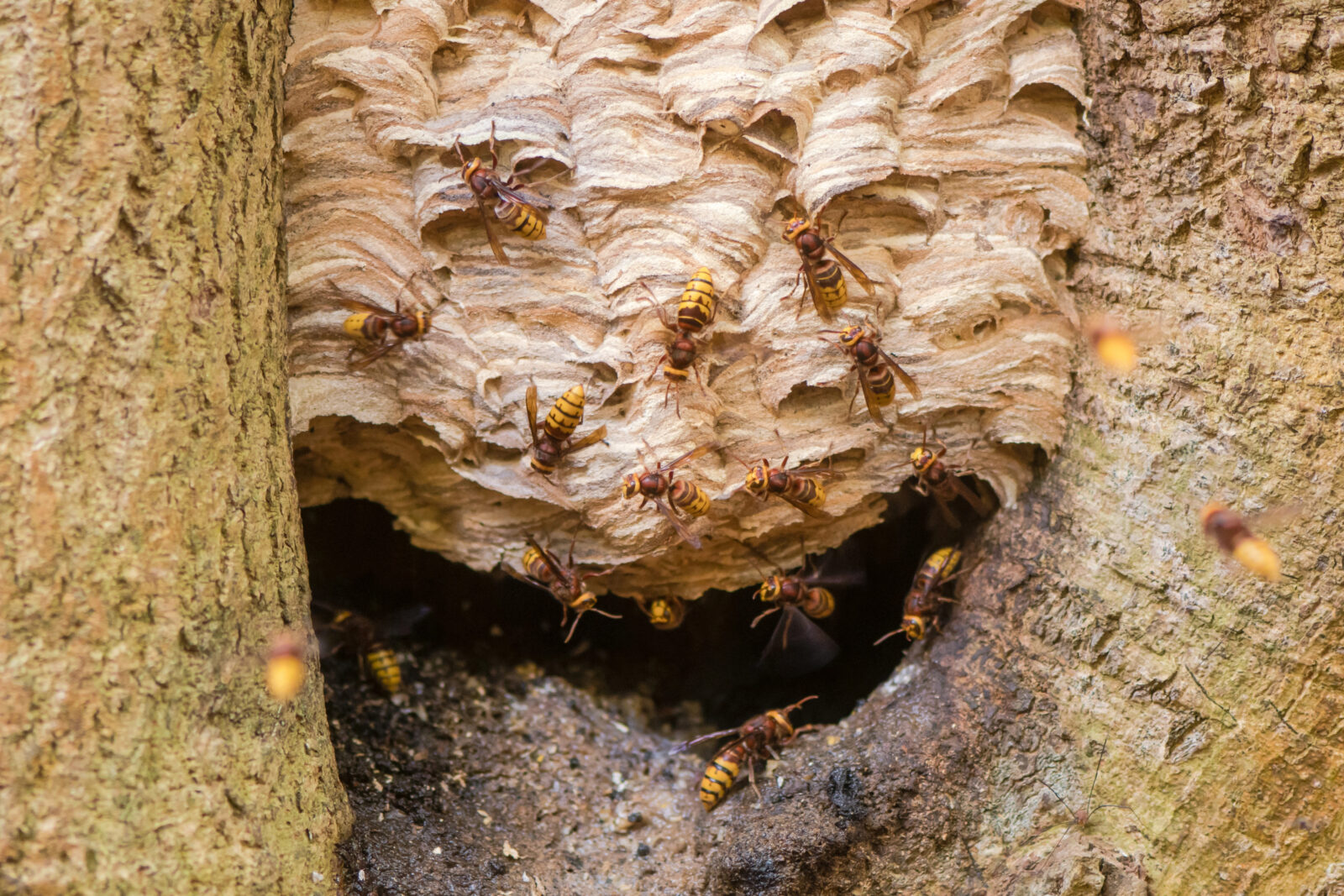
General protection of wildlife is based on the principle that you do not interfere with nature without good reason. With hornets, a justified reason is usually a situation where the nest is very close to places people use regularly, or where conflict is likely almost every day.
Typical high-risk situations
The risk is higher if the nest is by the front door, near a patio, in a children’s play area, in a wall along a busy route, or inside part of the building structure. A household where someone has an allergy to stings from bees, wasps or hornets is particularly sensitive, because even a single sting can cause a serious medical emergency. It also makes sense to act when hornets threaten animals that may repeatedly wander too close to the nest.
When to consider leaving the nest in place
Hornets play a useful role in the ecosystem because they hunt flies, wasps and other insects. If the nest does not interfere with normal use of the property, it may be more practical and wildlife-friendly to leave it alone. This applies especially when it is well away from the house, for example at the edge of the garden or in nearby woodland, and no one in the household has allergies.
The time of year matters, too. Towards the end of the season, especially in autumn, the colony naturally weakens and gradually dies out. Hornets typically do not reuse an old nest, so sometimes it is enough simply to adjust your routine around the area for a short time and wait it out.
What the nature protection law says in general
Act No. 114/1992 Coll. distinguishes between general protection and special protection of selected species. General protection applies to all wild animals and emphasises that they should not be killed without justification. Special protection applies to species listed in the implementing decree, for which interventions are more strictly regulated.
In practice, this means that if there is a factual reason, such as protecting health and safety, removing a hornet nest in the Czech Republic is usually straightforward. By contrast, destroying nests simply for convenience or when there is no risk is not appropriate.
How the rules differ in neighbouring countries
There is no single approach across Europe. While in the Czech Republic the European hornet is not specially protected, in Germany its protection is significantly stricter and interfering with a nest without permission can lead to substantial penalties. A similar regime exists in Austria. In Slovakia, the hornet is listed as a protected species, so an exemption is usually required. In Poland, protection is assessed case by case, and it also depends on whether the nest is in an area away from human dwellings.
The Asian hornet as a new threat
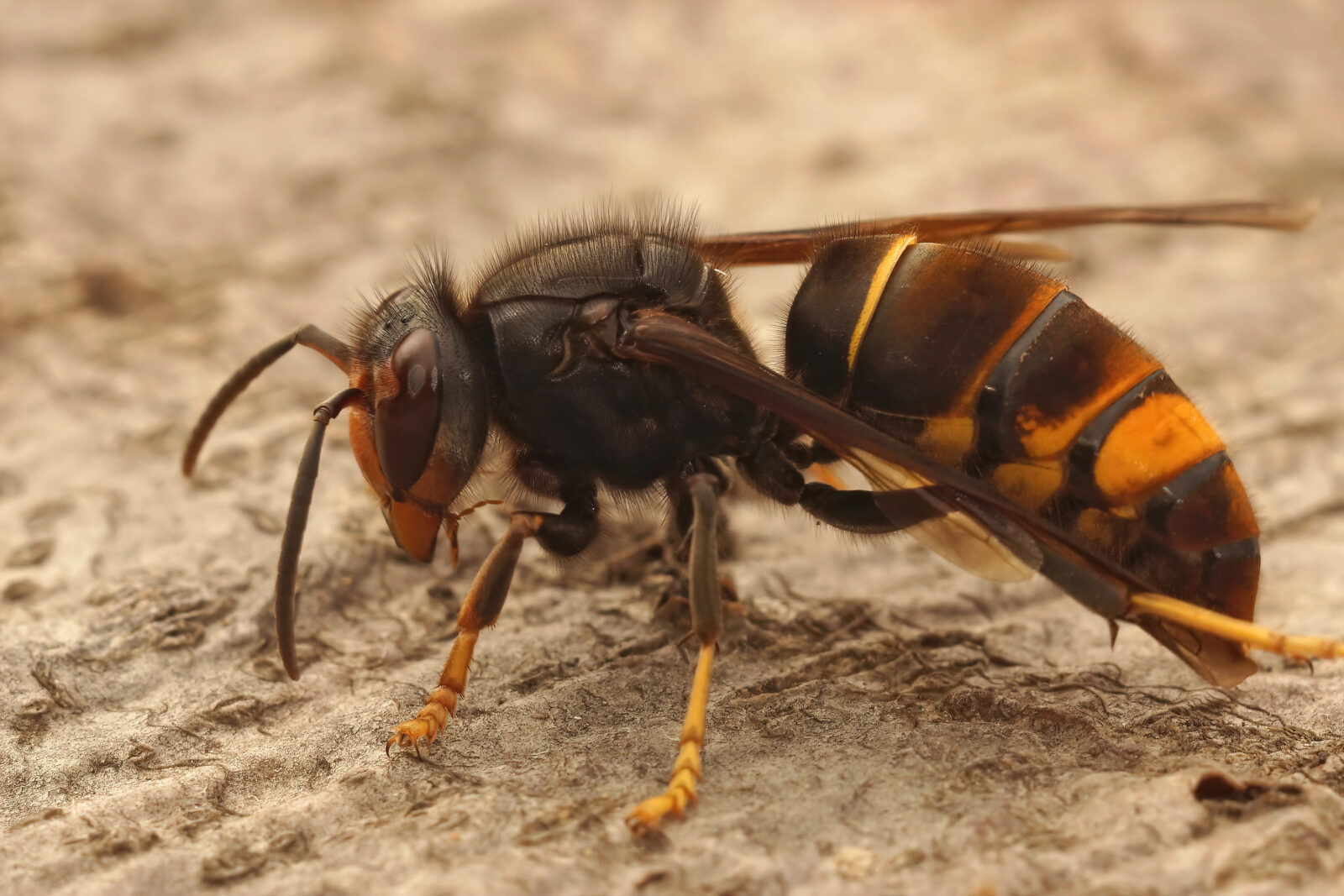
Alongside the European hornet, recent years have also brought attention to the invasive Asian yellow-legged hornet (Vespa velutina). This species is spreading across Europe and poses a major threat to honey bee colonies, because it can hunt bees persistently at hive entrances and weaken or destroy entire colonies. In the Czech Republic, its presence was confirmed in October 2023 in Plzeň, and another nest finding appeared in 2024 in the Opava region, suggesting further potential spread.
What to do if you suspect an Asian hornet
If you notice an individual that looks different from the usual hornet, it is sensible to take a photo and report the finding to the relevant institutions, typically the Nature Conservation Agency of the Czech Republic. Common identifiers include a smaller body than the European hornet, darker colouring, an orange band on the abdomen, and strikingly yellow leg tips. It is not safe to try to catch the insect, as the sting can be extremely painful.
Not all stinging insects can be handled the same way
In the Czech Republic, some solitary bee species and selected bumblebee species are among the specially protected animals. If you are not sure what has moved in, it is safer to identify the species first and only then choose a course of action. An incorrect intervention can be unnecessary, and with protected species it can also be legally problematic.
A practical approach when you find a hornet nest
The most important thing is to stay calm, because hornets typically do not attack unless provoked. It makes sense to temporarily cordon off the area around the nest and warn household members not to approach it. Then assess whether the nest is in a place with frequent foot traffic and whether repeated contact is likely.
If the risk is higher, it is best to contact professionals who will choose a proportionate and safe method. If the nest is not putting anyone at risk, you can opt to live alongside it and wait until the end of the season, when the colony dies out naturally.
Source: Hasičský záchranný sbor České republiky, Deratiz, Veronica, Ministerstvo životního prostředí, Pestrazahrada.cz

A lover of nature, gardens, and everything that moves, blooms, or grows. He literally grows everything, from herbs to rare species, and he enjoys caring for animals just as much. In his work, he connects modern technology with tried-and-tested grandmotherly methods and is happy when both paths lead to the same goal.
Related articles
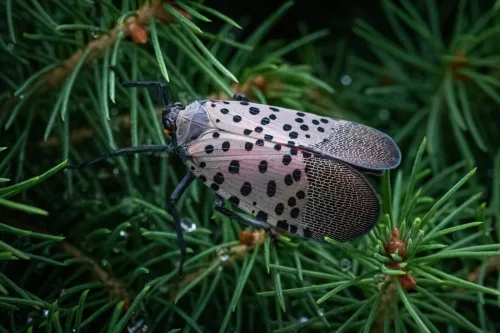
A feared pest from China has reached Europe and it has no Czech name and it devastates everything from grapevines to orchards
Hungary has confirmed the first European detection of Lycorma delicatula, a highly destructive invasive pest known for severe damage to grapevines, fruit trees and many other plants. Authorities have launched quarantine measures to prevent it from establishing and spreading further.
Grandma’s Favourite Flower Is Back and It’s Surprisingly Easy to Grow
Phlox is a classic cottage-garden perennial that brings rich colour, fragrance, and pollinators into the border with minimal fuss. Choose the right spot for the species, keep moisture even, and you’ll be rewarded with weeks of bloom.
A Simple Plant Propagation Trick That Will Fill Your Garden With Cuttings
Propagating plants can be surprisingly easy when you keep cuttings consistently moist without letting them dry out. This simple plastic-bag method creates a humid microclimate that encourages fast rooting using everyday household items.
Comments (0)
Be the first to comment.