
 English
  Polski
  Deutsch
  Nederlands
  Svenska
  Norsk
Norsk  Dansk
Dansk  Français
  Italiano
  Español
  Português
  Slovenčina
  Suomi
Suomi  Gaeilge
 When to Move Tomatoes Outside into the Bed, Greenhouse, or Polytunnel
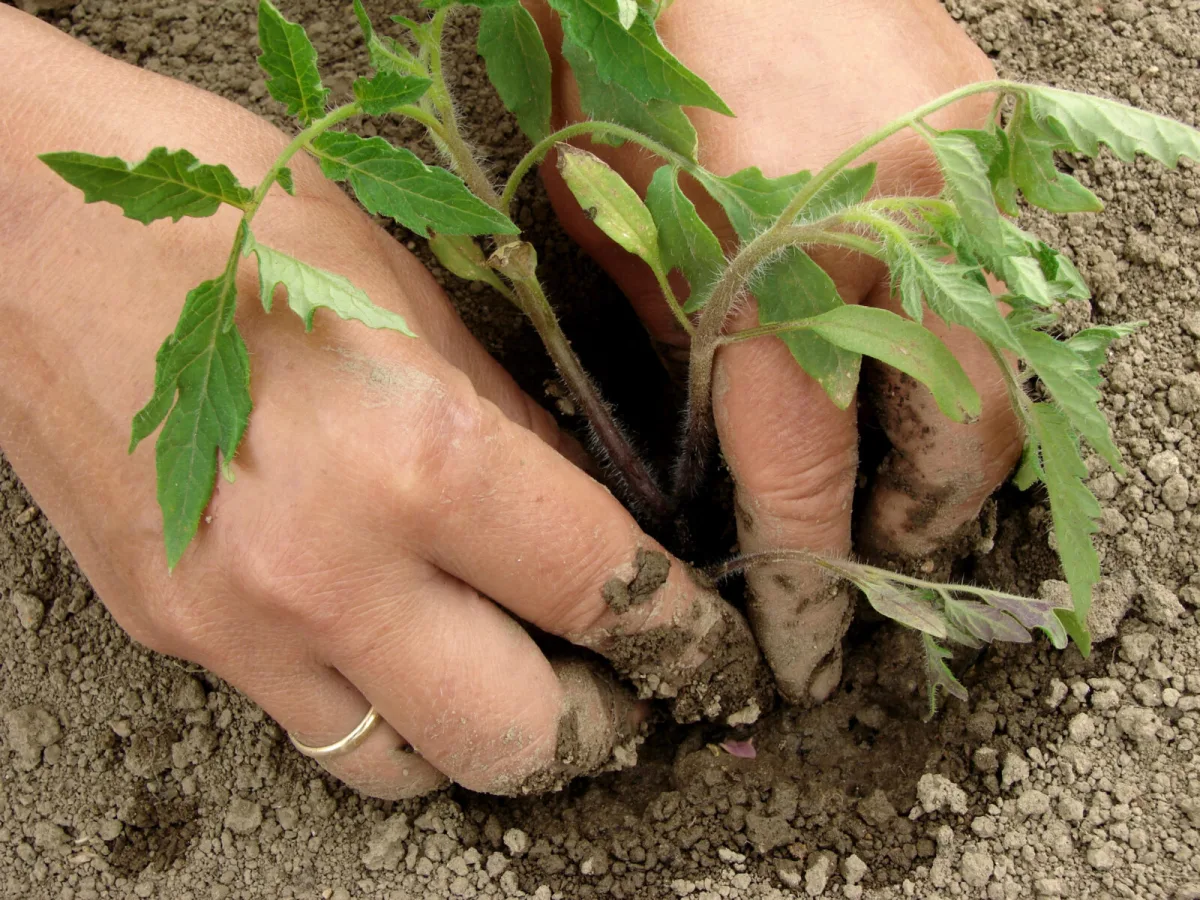
Home-raised tomato plants are usually moved out into the bed in late April to early May, once the weather has settled. The most important condition for success is warmth, because tomatoes are sensitive to cold and frost. So don’t rush planting and wait until the soil has warmed to roughly 13 to 15 °C. If the soil is colder, growth can slow down noticeably and plants often set fewer flowers and fruits.
For extra reassurance, it’s worth following the traditional timing of the “Ice Saints” (the mid-May cold spell), around 12 to 15 May. Only after this period is the risk of late frosts usually much lower, and young plants establish more reliably.
Protection from rain and blight is worth it
Tomatoes love warmth, but they can’t stand leaves staying wet for long. That’s why conditions in a polytunnel are often better than in a fully open bed. The structure protects plants from wind and, most importantly, from rain, which makes it harder for fungal diseases to spread, especially late blight. You can achieve a similar effect with a simple shelter, or by growing tomatoes against a house wall under the roof overhang, where rain won’t fall directly onto the plants.
Preparing the site and spacing
Before you start digging, think through your planting layout. Tomatoes need plenty of space so the foliage dries quickly and plants have light and airflow. Allow roughly 60 to 80 cm between individual plants. With more vigorous varieties, wider spacing also makes sense for later care, side-shooting and tying in.
Planting holes and adding nutrients
Dig planting holes about twice the size of the seedling’s root ball. This creates a loose area that roots can grow into more easily. It’s a good idea to mix compost into the excavated soil to supply basic nutrients and improve soil structure. Don’t overdo highly concentrated feeding right against the roots, though; seedlings should focus on rooting in well first.
Removing seed leaves helps prevent rot
Before planting, check the lower part of the plant. It’s practical to remove the cotyledons (seed leaves), the first small leaves at the base. They sit very close to the soil, get damp easily when watering, and are prone to rotting. They die off over time anyway, so removing them is a simple step that improves crop hygiene.
Gentle removal from the pot
Lift the seedling out of the pot carefully so the root ball doesn’t fall apart. It helps to gently squeeze the sides of the container and pull the plant out by the root ball, not by the stem. The less you damage the roots while handling, the faster the tomato will take off after planting.
Planting deeper for stronger roots
It’s beneficial to plant tomatoes a little deeper than they grew in the pot. When part of the stem is buried, it can form additional roots along it. The result is a sturdier plant that takes up water and nutrients better and usually copes better with short dry spells. Just make sure leaves aren’t resting on the soil and that the plant sits upright in the hole.
Backfilling, firming in, and labelling varieties
Once the seedling is positioned, backfill the hole with the prepared soil and firm the soil around the plant well so there are no air pockets around the roots. If you’re growing several varieties, it pays to label them right at planting, because young plants look similar and it’s easy to mix them up later.
With grafted tomatoes, watch the graft union. The thickened join on the stem should remain above the soil surface so the plant doesn’t root from the scion and lose the advantages of the rootstock.
First watering and the routine for the first few days
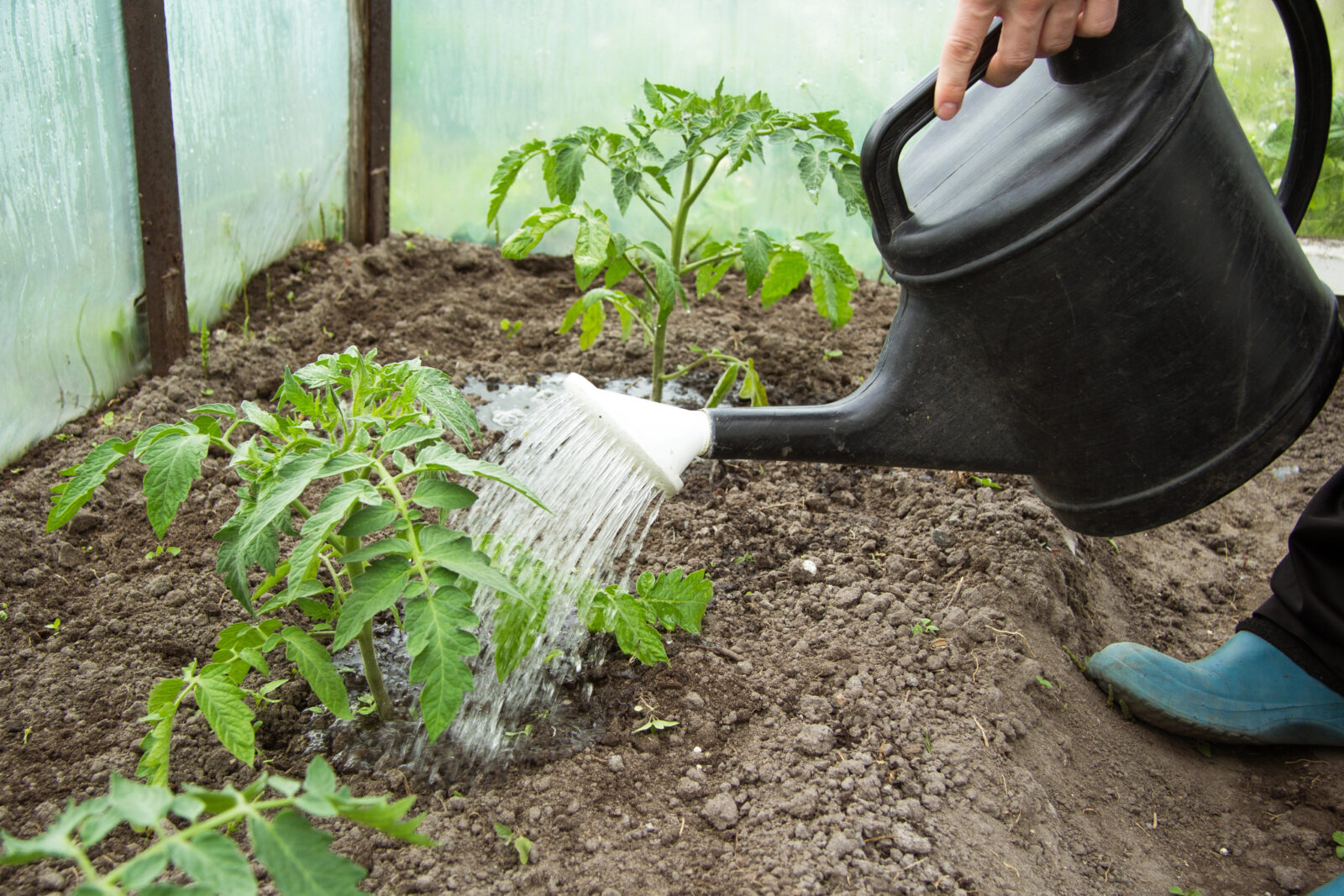
Water tomatoes thoroughly after planting. For the first three days, it’s a good idea to water daily so the plants establish quickly and the roots bond with the surrounding soil. Water at the base and try not to wet the leaves. Later, switch to less frequent but deeper watering, which encourages deeper rooting.
Support for vertical growth
Most tomatoes need support, because shoots grow quickly and without training they break or sprawl along the ground. In a polytunnel, a common simple solution is a string attached at the top to the structure and at the bottom to the plant’s first shoot. Each plant should have its own line so it can be tied in as it grows.
If you don’t have a polytunnel, sturdy tomato canes or a trellis support will do the job as well. What matters is that the support stays stable even when the plant is laden with fruit.
How to reduce the risk of fungal diseases
The key preventative measure is keeping foliage as dry as possible. Whether you’re growing in a bed, in a polytunnel, or on a balcony, protection from rain greatly reduces the likelihood of blight and other fungal problems. If you don’t have a greenhouse, a simple shelter or a small tomato cover made from a clear material can help; it lets in light but prevents plants from being soaked.
Tomatoes can also be grown successfully in containers
You don’t have to give up tomatoes if you don’t have a garden. On a patio or balcony, they can grow very well in a pot, as long as they have plenty of light, a stable support, and regular watering. In containers, it’s crucial to use a large enough volume so roots have space and the compost doesn’t dry out too quickly. As in beds, it’s best to water at the base and, where possible, protect the top growth from rain.
Source: Mein schöner garten, RHS, Pestrazahrada.cz

A lover of nature, gardens, and everything that moves, blooms, or grows. He literally grows everything, from herbs to rare species, and he enjoys caring for animals just as much. In his work, he connects modern technology with tried-and-tested grandmotherly methods and is happy when both paths lead to the same goal.
Related articles
How to Keep Your Pool Sparkling Clean Without Unnecessary Effort or Stress
Keeping pool water crystal clear doesn’t have to be hard work. With a simple daily-and-weekly routine, you’ll prevent cloudiness, algae and breakdowns before they start.
A Simple Trick for a Bigger Pepper Harvest and Faster Ripening
Regular watering and feeding aren’t always enough for a heavy pepper crop. Pinching out the growing tips redirects the plant’s energy into branching, flowering, and ripening fruit faster.
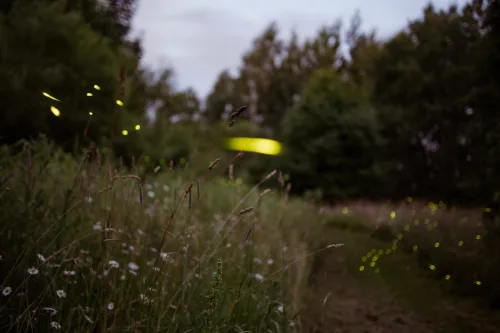
Fireflies are disappearing from the landscape, learn how to create a safe garden home
Warm summer nights are even more magical when fireflies start flashing at dusk—but their numbers are falling. With a few simple changes to mowing, planting, lighting and chemical use, your garden can become a safe refuge again.
Comments (0)
Be the first to comment.