
 English
 Polski
 Deutsch
 Nederlands
 Svenska
 Norsk
 Dansk
 Français
 Italiano
 Español
 Português
 Slovenčina
 Suomi
 Gaeilge
Pruning Grapevines in Autumn or Spring Can Make or Break Your Vine
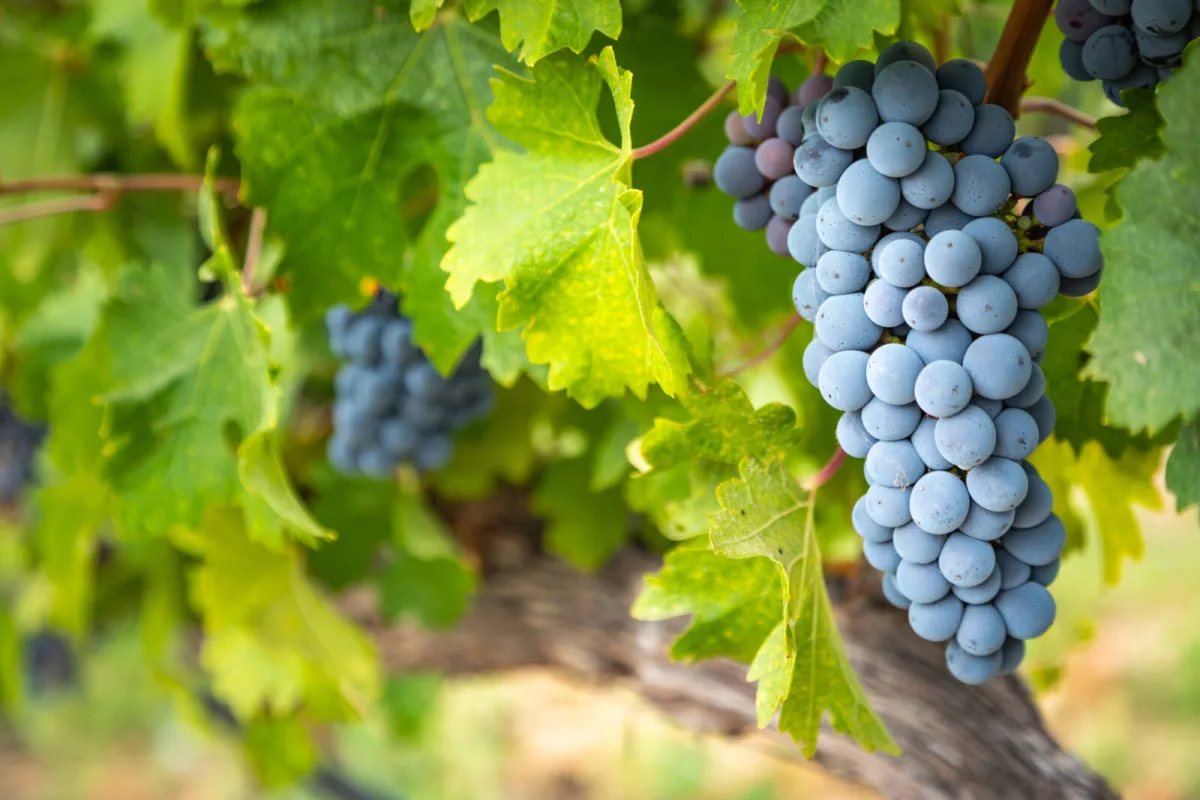
The leaves have dropped, the vine is bare, and your hand reaches for the pruners almost by itself. Autumn garden tidy-up makes it tempting to “take care of” the grapevine too. But with grapevines, the pruning date can matter more than the technique itself. Growers and researchers largely agree that the main prune belongs at the end of winter and in early spring, not in November. There are three reasons: hard frost, wood and trunk diseases, and spring frosts.
Why gardeners and winegrowers don’t always say the same thing
There’s a lot of confusion around autumn pruning. ČESKÉSTAVBY.cz describes it as a clash of two camps: gardeners stress that without pruning you won’t get good-quality, sweet grapes, while experienced winegrowers are wary of autumn pruning and wait for “spring” which for them often really means February. In a way, both sides are right. Vines do need pruning every year; the only question is when.
The same site states elsewhere, very clearly, that grapevines are not pruned after leaf fall because they would be more sensitive to frost. Its recommended pruning window is from late February into March.
Autumn pruning reduces frost hardiness
This isn’t just folk wisdom, as older American trials also show. Back in 1953, researchers Edgerton and Shaulis tested the Concord grape by artificial freezing and found that in March, unpruned vines were more frost-hardy than vines pruned in autumn. A dissertation from Michigan State University that followed up on this work also recorded that vines pruned earlier suffered more damage from spring frosts than vines pruned later.
That’s why the standard advice for cooler regions is to delay pruning until late winter. The grower can then select canes that have overwintered well and adjust the number of buds left according to how many were damaged by frost.
A pruning cut is an open gateway for fungi
The second major issue is wood and trunk diseases, especially Esca, also known as grapevine dieback. Situation reports on grapevine protection from South Moravia warn that infections enter through wounds, particularly after early winter pruning during rainy, mild spells.
International research adds important detail. A South African study published in Phytopathologia Mediterranea found that pruning wounds remain susceptible to infection for three or more weeks, and that susceptibility decreases as the wound ages. The authors also summarise earlier work showing that wounds made at the start of dormancy were more susceptible and stayed open to infection for longer. However, results are not identical under all conditions. In the South African trial mentioned, late-winter wounds were actually more susceptible, leading the authors to conclude that weather after pruning matters more than the calendar date.
The University of Michigan, in its extension materials, notes that in California pruning in February and later significantly reduced trunk disease infections because it avoided the peak of spore spread in December and January. For colder Michigan, it recommends pruning in March or early April, when wounds heal faster.
For small-scale growers, according to the winegrowers’ column from Dobšice, the most suitable pruning time—because of the rising incidence of Esca—is the second half of March.
Later pruning as insurance against spring frosts
Vines break bud from the tip of the cane first, meaning the furthest buds burst earliest. This phenomenon is called acrotony, and growers know how to use it. A review paper by the Italian authors Poni, Sabbatini and Palliotti in the American Journal of Enology and Viticulture (2022) describes delayed winter pruning as a physiological tool against spring frost. The top shoots, which start first, can be “sacrificed” if frost hits, while the lower buds stay dormant and are protected. When you prune, the upper part of the cane is removed anyway.
An Iranian specialist review from 2026 reports that late pruning can delay budburst by 15 to 20 days in different cultivars. But overdoing it doesn’t pay off. A Brazilian study in Revista Brasileira de Fruticultura cites Italian trials where pruning Sangiovese as late as May reduced yield by 55 percent, and pruning in June destroyed the crop completely. The Brazilian authors therefore recommend letting the apical shoots develop no more than two to three leaves.
Czech growers use similar logic. The Dobšice winegrowers’ column advises leaving no more than ten buds on a cane, with a small reserve in case of spring frosts, and removing surplus green shoots—especially those from the lower buds—only after the frost risk has passed.
What to watch out for even with spring pruning
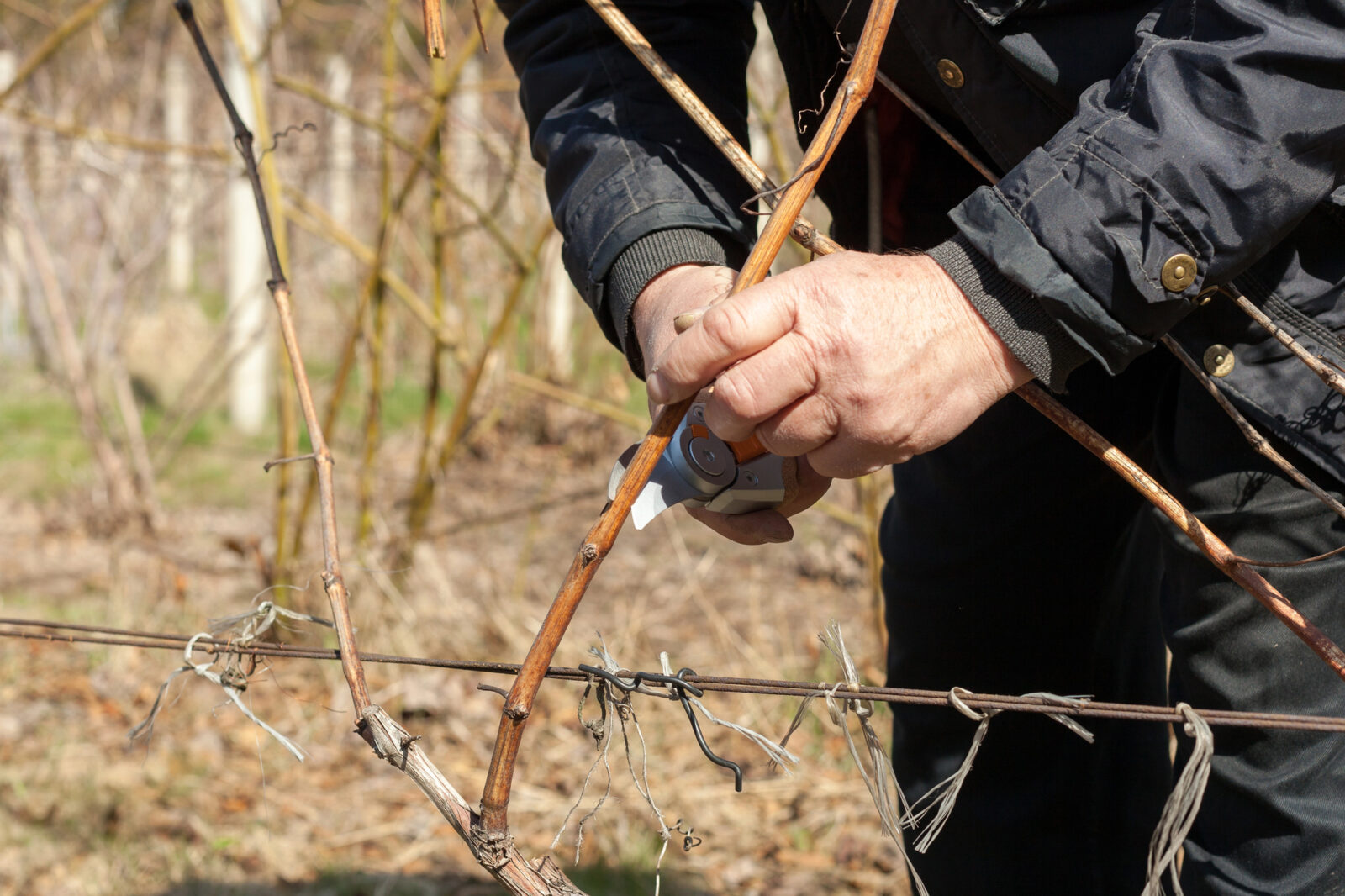
Even March isn’t risk-free. According to the Dobšice column, pruning too late causes heavier sap bleeding from the cuts, which weakens the vine. It’s also best to prune on dry days, because damp, rainy weather encourages the spread of spores from wood-rotting fungi, which enter older wood through pruning wounds.
Pruning cuts can be protected with products that disinfect the wound and block spore entry. The column mentions Bloc Cade and the biological product Vintec, which small-scale growers apply with a brush. South African research also confirms that wound protection is worthwhile, because curative measures against trunk diseases are practically non-existent.
So what to do this autumn
If your pruners are itching to get to work already, resist doing the main prune. Autumn is a good time to remove dead wood and tidy around the vine, but leave the real fruiting-wood pruning for late winter and early spring. The viticulture situation reports also recommend removing and disposing of declining vines and not leaving prunings lying around near the vineyard, as they can be a source of infection.
In summary: pruning after leaf fall increases the risk of frost damage and wood infection, while pruning in the second half of winter into March, in dry weather, gives the vine its best chance. If you grow in a frost pocket or have an early-bursting variety, you can delay pruning a bit longer and keep a reserve of buds on the canes.
Source: České stavby, Vinaři Dobšice, Velké Pavlovice, Michigan State University, MSU Extension, Scielo, Pestrazahrada.cz

A lover of nature, gardens, and everything that moves, blooms, or grows. He literally grows everything, from herbs to rare species, and he enjoys caring for animals just as much. In his work, he connects modern technology with tried-and-tested grandmotherly methods and is happy when both paths lead to the same goal.
Related articles
Five Shrubs Autumn Pruning Will Ruin Even After Flowering
Autumn tidy-ups can be tempting, but cutting the wrong shrubs now can remove next year’s flower buds. Learn which popular ornamentals should be left alone until after flowering or spring.

Your compost freezes in winter and you needn’t throw peelings away
Winter slows composting, but it doesn’t mean you have to stop. Use a lidded container near the back door to store kitchen scraps until the pile thaws and spring warmth restarts decomposition.
Autumn Grape Vine Pruning Shapes Next Year’s Harvest
Autumn pruning is one of the key jobs that determines how well your grapevine will grow and crop next season. The most common mistake is leaving too much wood, which leads to a dense canopy and smaller, slower-ripening bunches.
Comments (0)
Be the first to comment.