
 English
 Polski
 Deutsch
 Nederlands
 Svenska
 Norsk
 Dansk
 Français
 Italiano
 Español
 Português
 Slovenčina
 Suomi
 Gaeilge
Wild Birds Struggle in Winter A Well Placed Feeder Can Save Lives
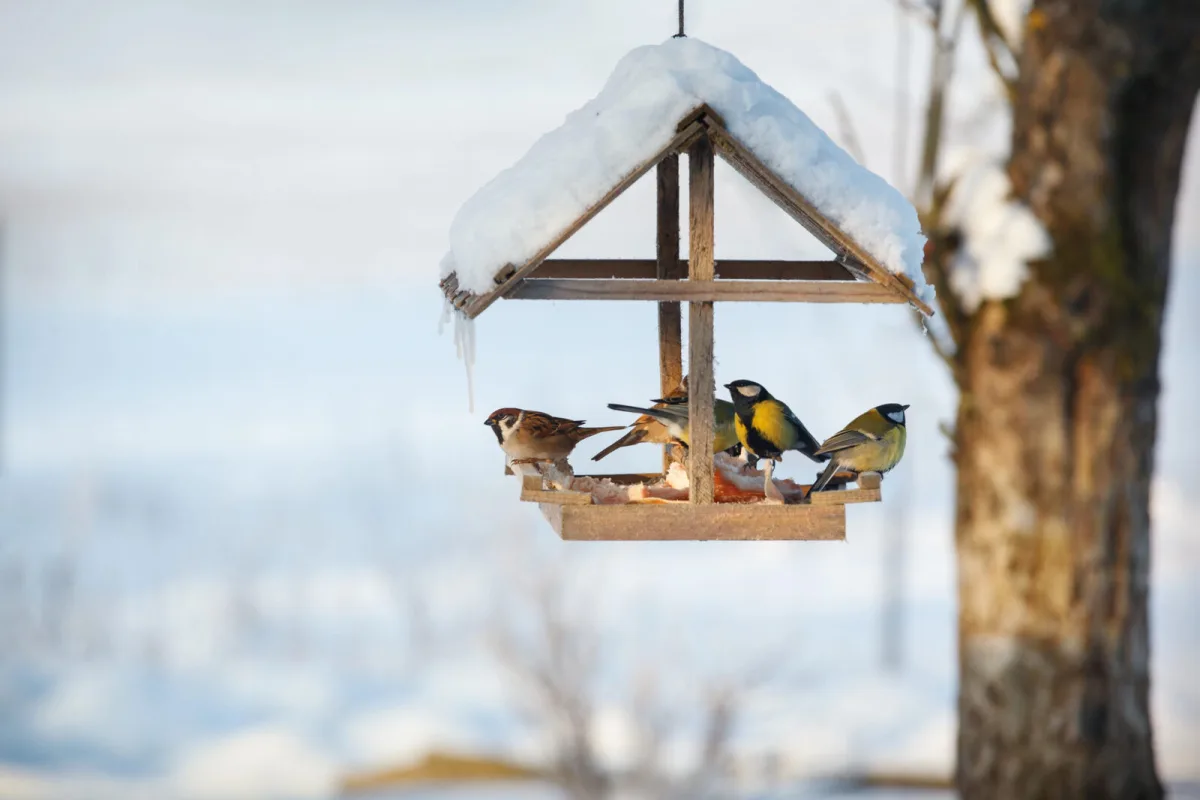
In the cold part of the year, wild birds face far harsher conditions than in spring and summer. Trees and shrubs are stripped of fruit, insects are scarce, and frost and snow limit access to natural food. That’s exactly why winter feeding in the garden can be such valuable help. What people put into a feeder often determines whether birds get through the hard season in good condition.
During prolonged cold spells, birds quickly learn the places where they regularly find food. Once you start offering a feeder, it’s ideal to keep it as consistently stocked as possible. On freezing days it can become a key energy source for robins, chaffinches, tits, nuthatches and other common garden species.
Where to place a feeder in winter
As well as the food itself, where you position the feeder matters too. It should be placed so birds can access it easily, but are also as protected as possible from predators. A good spot offers clear sightlines, where a cat or other predator can’t launch an easy ambush.
The feeder shouldn’t hang right next to dense shrubs or piles of branches, where a predator could strike in an instant. At the same time, it helps if birds have shelter within a sensible distance. A safe setting increases the chance they’ll visit regularly and feed without unnecessary stress.
Which food is best for winter birds
In winter, it’s best to offer high-energy food. Birds need plenty of calories to maintain body temperature and make it through frosty nights. Seeds, nuts and fatty foods are ideal.
Seeds and nuts as the staple
Sunflower seeds are considered one of the best options, especially black sunflower seeds. They’re popular with a wide range of species and, if you want to start with just one type of feed, this is usually a safe bet. Birds take to them readily and get a lot of energy from them.
Higher-fat seeds and a range of unsalted nuts are also excellent. The key is that they mustn’t be treated with salt or seasoning. Mixed seed blends can be convenient, but it pays to choose a good-quality mix. Some cheap blends contain a large proportion of grains that birds often ignore.
Fat-based feeding for freezing days
Fat sources are also very important in winter. Suet, lard, or specially made fat mixes are excellent additions because they provide quick, concentrated energy. Especially during snow and hard frosts, they can make a real difference.
Another good option is unsalted peanut butter intended for birds. It must be salt-free and without unsuitable additives. You can smear it into a pine cone and hang it in a tree. This kind of feed attracts more species and also lasts longer than loose seed scattered in a feeder.
Fruit, cheese and mealworms
Alongside seeds, you can add finely chopped fruit, such as apples or pears. Slightly blemished fruit is fine if it isn’t rotten. Smaller pieces make it easier for smaller birds to take.
Some species enjoy finely grated hard cheese without strong seasoning. Another popular choice is mealworms, especially for robins, tits, woodpeckers and nuthatches. Live ones are generally more nutritious, but dried are more practical for storage and feeding.
If you want to attract goldfinches, it’s worth offering nyjer seed too. Because these seeds are so small, it’s best to use a special feeder type so they don’t simply spill out.
What to watch out for when feeding birds in winter
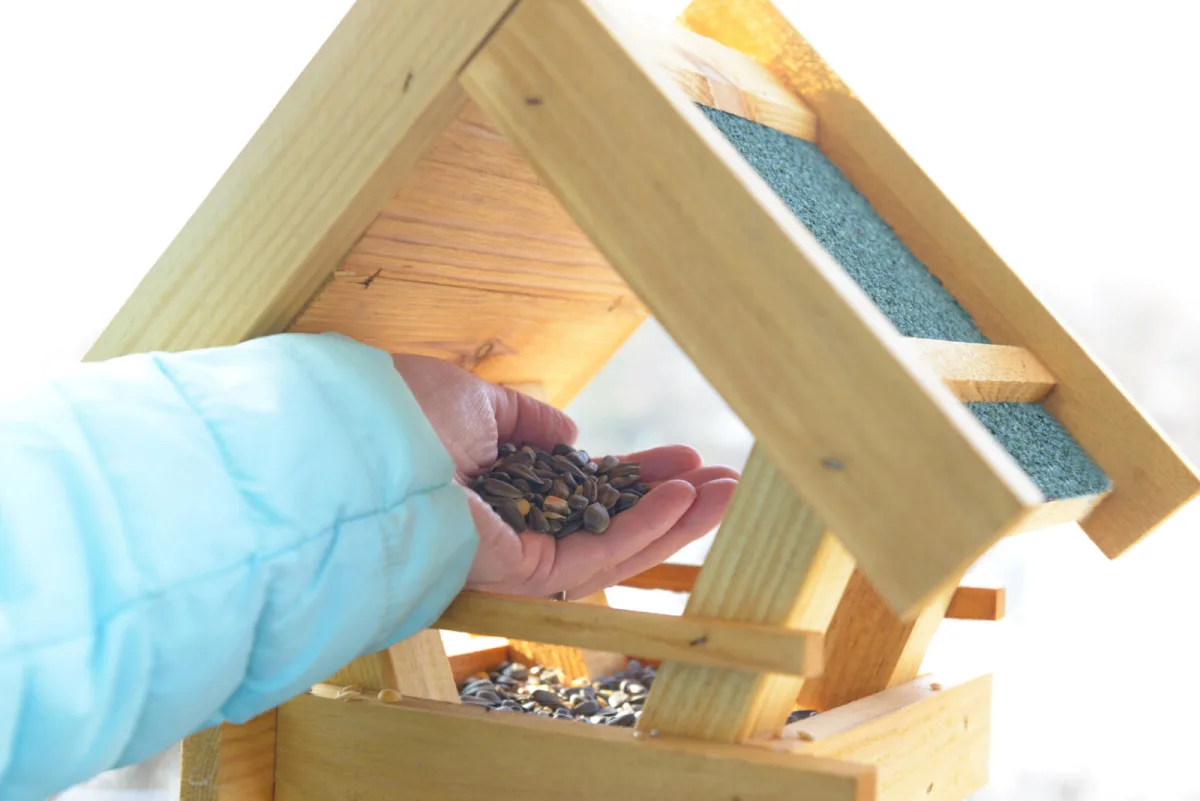
The most important things are cleanliness and regular checks on the condition of the food. Damp, clumped, sprouting or smelly feed must be removed immediately. Spoiled seed can carry moulds and bacteria that harm birds. For that reason, it’s best to clean the feeder regularly and only add amounts that will be eaten quickly.
Consistency is just as important. Birds quickly become reliant on a food source, especially when the weather is harsh. If you know you’ll be away for a while, it’s sensible to ask a neighbour or friend to top up the feeder regularly.
What to avoid when feeding birds
Some foods are unsuitable for birds and can even be dangerous. Never offer chocolate, as it’s toxic to them. Table scraps are also a poor choice, as they’re often fatty, heavily seasoned, or contain ingredients that aren’t good for birds. They also tend to attract rats and other unwelcome visitors.
Rotten or mouldy food doesn’t belong in a feeder either. Salty foods are particularly problematic, such as salted seeds, nuts or processed meats. Excess salt damages birds’ nervous systems and can have serious consequences.
Bread is also best avoided. Although birds may sometimes take it, it has little nutritional value and fills them up at the expense of better food. In winter they primarily need fats, seeds and other concentrated energy sources. Milk should not be offered either, as it can cause digestive upset and dangerous dehydration.
Be cautious with meat as well. Raw meat spoils quickly and encourages bacterial growth, and it also attracts cats, foxes and rodents. A feeder should help birds, not create additional risks.
How to help birds even more
Winter support doesn’t have to end with food. It’s also helpful to think about water, because birds need it even in the colder months. If you have a bird bath in the garden, keep it as clean as possible and try to prevent it from freezing solid in a safe way. Avoid adding salt.
Well-managed winter feeding means good-quality food, a clean feeder, safe placement and regular top-ups.
If you choose suitable feed and avoid the most common mistakes, you’ll create a valuable refuge in your garden for many bird species. At a time when nature is short on resources, even a simple feeder can play a surprisingly big role.
Source: Homes and Gardens, Love the Garden , Pestrazahrada.cz

A nurse by profession, she is passionate about healthy living, nature, and everything that benefits both people and the world around them. In her free time, she enjoys gardening, cooking, sewing, and caring for her family. In her articles, she loves combining professional expertise with practical experience from the garden and everyday life.
Related articles
Comments (0)
Be the first to comment.