
 English
  Polski
  Deutsch
  Nederlands
  Svenska
  Norsk
Norsk  Dansk
Dansk  Français
  Italiano
  Español
  Português
  Slovenčina
  Suomi
Suomi  Gaeilge
 Late blight of tomatoes and potatoes spreads fast learn to spot it
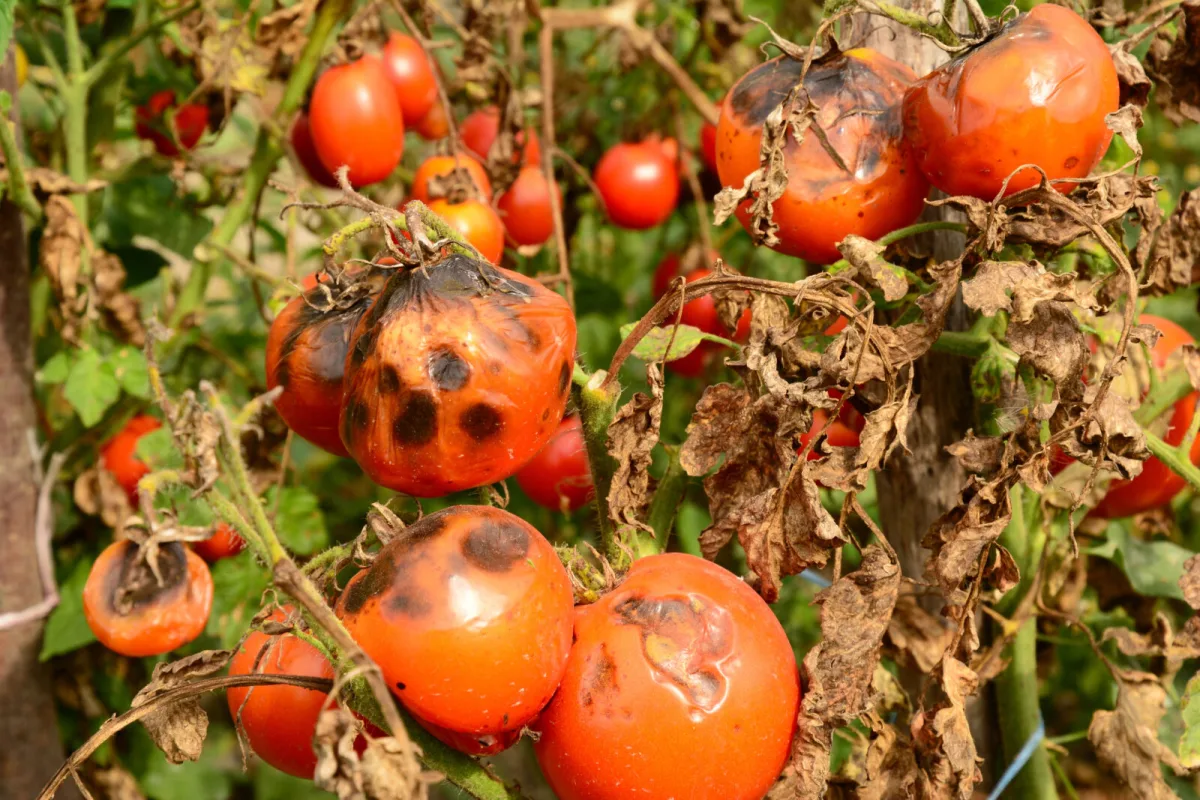
Tomatoes can run into a whole range of problems over the season, but late blight is one of the most serious. It doesn’t attack only tomatoes, but also potatoes, so it can hit two popular crops at once. It doesn’t necessarily show up every year or in every area, but once it arrives and the weather suits it, it can destroy a large part of the harvest in a short time. That’s exactly why it pays to know what it looks like and how to reduce the risk of it taking off in your plot.
What late blight is and where it comes from
Late blight is sometimes referred to as tomato blight or potato blight, but it’s the same problem. The causal organism is Phytophthora infestans, which behaves like a fungus, even though technically it belongs to the so-called oomycetes, or water moulds. It mainly attacks plants in the nightshade family, because tomatoes and potatoes are botanically close relatives. Historically, this pathogen is notorious for causing the Irish potato famine in the mid-19th century.
How the infection spreads and how it damages plants
The pathogen spreads mainly via spores. These can move from infected leaves to healthy ones, but they are also carried by wind and can travel long distances. Late blight likes warm days and cooler nights, typically when dew lingers on foliage. If leaf surfaces stay wet for several hours at a stretch, spores can germinate, penetrate the tissues and start an infection. By contrast, extended periods of heat and dry weather often slow its spread dramatically.
What matters is that late blight is airborne, which sets it apart from many other tomato diseases that are more often linked to the soil. Spores can also be spread via tools, hands, clothing, or when handling plants. Once a lesion forms on the leaves, cells begin to die. Under suitable conditions the whole cycle can complete very quickly, and new spores can form in roughly five days, so the disease advances in sudden leaps.
How to recognise late blight on tomatoes
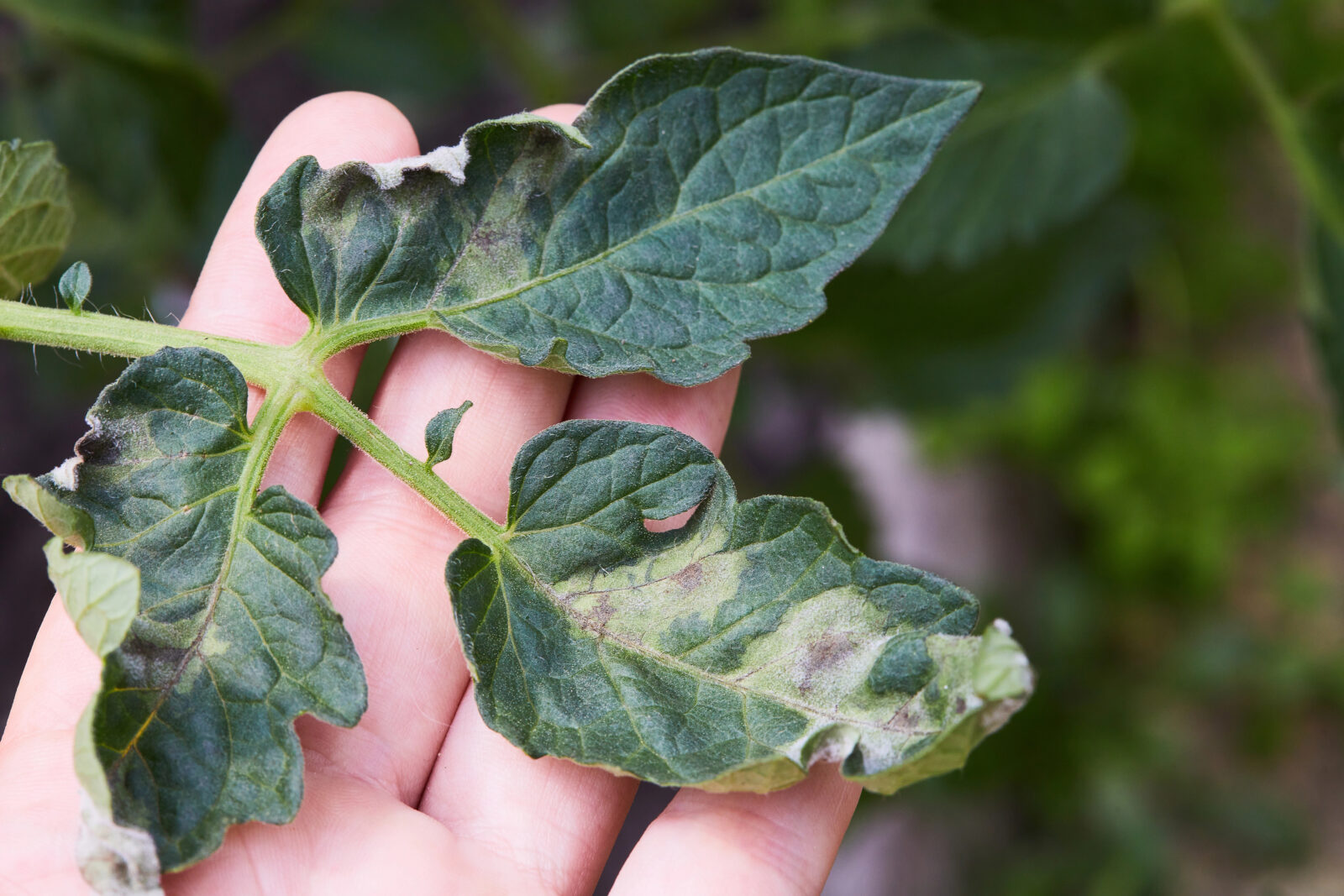
Early recognition is crucial, because it allows you to slow the spread and save at least part of the crop. The first obvious symptom is usually irregular blotches that look water-soaked. The edges of these patches often have a grey or pale green margin, and the spots expand quickly. As well as leaves, brown lesions can appear on stems too, which is a warning sign that it’s more than a minor leaf issue.
As the disease progresses, it can affect the fruit as well. On tomatoes, larger damaged areas develop that may shift in colour from yellowish to dark brown. The foliage gradually shrivels, dries up, and the plant can lose much of its leaf cover. In advanced stages, the crop can look as if it’s suddenly collapsing, losing vigour from one day to the next.
Similar diseases people often confuse it with
Distinguishing between them can be tricky, because tomatoes suffer from several diseases with similar symptoms. Common mix-ups include early blight, Fusarium wilt, Verticillium wilt and Septoria leaf spot. Even so, there are clues that help you judge what’s more likely.
Early blight
With early blight, spots usually appear first on the lower leaves. They tend to be brown to black, and characteristic concentric rings form within a single spot. The surrounding tissue often yellows, and the whole leaf can gradually turn yellow and die. The disease then moves up into the higher parts of the plant.
Fusarium and Verticillium wilt
With these wilts, the main symptom is drooping and loss of turgor, in other words wilting. Yellowing of leaves is common, and if you cut the stem you may find brownish discoloration in the vascular tissues. Fusarium is often marked by the fact that sometimes only one branch, or one side of the plant, wilts first.
Septoria leaf spot
Septoria creates much smaller spots than late blight. They are more round, tiny, and often have a paler centre while the edge may be darker. If you see many small specks on the leaves, it’s more often Septoria than late blight.
Prevention and regular crop checks
Because late blight isn’t present everywhere every year, people sometimes underestimate it. But in suitable weather it’s devastating and can ruin a crop in a matter of days. The foundation is to do everything you can to help leaves dry quickly and to avoid wetting plants unnecessarily.
Training tomatoes up supports and pruning/tying them so air can move between plants helps a lot. Good airflow shortens the time leaves stay wet, making it harder for spores to germinate. Water at the roots rather than overhead onto the leaves, ideally using drip irrigation, a soaker hose, or a nozzle that delivers water right to the base of the plant. Timing matters too: water in the morning after sunrise so the crop can dry during the day and doesn’t go into a cool night with wet foliage.
It’s just as important to inspect the garden often. If you catch the first suspicious spots early, you can remove the most affected parts and slow further spread. And because spores can be carried mechanically, it’s worth paying attention to hygiene, cleaning and, when needed, disinfecting tools used on tomatoes and potatoes.
Resistant varieties and early harvests as a smart strategy
Plant breeding has produced varieties that cope better with certain diseases, including late blight. Variety choice is often the simplest and at the same time a very effective step, because chemical options for the home grower are limited and once the disease breaks out they are rarely effective enough. Resistance does not mean complete immunity, though. Plants can still become infected, but they can slow the progress or keep growing and setting fruit even under some disease pressure.
Many of the more resistant tomatoes are hybrids, which in practice means seed saved from your own fruit may not keep the same traits the following year, and it’s worth buying fresh seed again. Another good tactic is choosing early varieties with a shorter time to harvest. Late blight often shows up later in the season, so if you’ve already picked part of your crop earlier, you reduce the risk of losing everything.
What to do if late blight appears
As soon as you suspect late blight, speed and reducing sources of new spores are key. Remove infected leaves and plant parts as quickly as possible. It won’t guarantee saving the whole plant, but it greatly reduces the chance that another wave of spores will be released from lesions within a few days. Fruit from infected plants is best used as soon as possible, because as infection continues it can become spoiled.
Infected material should not go into the compost. It’s safer to dispose of it in a way that prevents further spread, for example taking it for professional disposal or burying it deeply enough that remnants won’t be dug up again when preparing beds next year. Rotating planting sites won’t stop wind-borne spores, but it helps overall growing hygiene. Tiny bits of leaves and stems almost always remain in the bed, and moving just a few steps often isn’t enough. The greater the distance between last year’s and this year’s planting site, the better.
The most effective protection against late blight is prevention, quick detection of the first spots, and immediate removal of infected parts before they produce more spores.
Source: Almanac, Rhs , Pestrazahrada.cz
Related articles
Winter is crucial for raised beds and most people skip the pest prevention step
Your raised beds don’t go dormant just because winter arrives. A few quick, well-timed tasks now will protect the soil, discourage pests, and set you up for a smoother, more productive spring.
When to Mow the Lawn for the Last Time Before Winter
There’s no universal date for the season’s final mow—your lawn and the weather will tell you. Time it just ahead of hard frost and leave the grass slightly higher to help it overwinter healthier and bounce back faster in spring.
Oleander Still Needs Water in Winter and a Common Mistake Can Cost It Its Roots
Oleander is tough in summer heat, but winter cold can quickly damage roots and shoots if it isn’t prepared properly. Timely protection, sensible watering, and the right overwintering spot make all the difference.
Comments (0)
Be the first to comment.