
 English
  Polski
  Deutsch
  Nederlands
  Svenska
  Norsk
Norsk  Dansk
Dansk  Français
  Italiano
  Español
  Português
  Slovenčina
  Suomi
Suomi  Gaeilge
 How to Tell When Garlic Is Ready to Harvest and What to Do with Flower Stalks
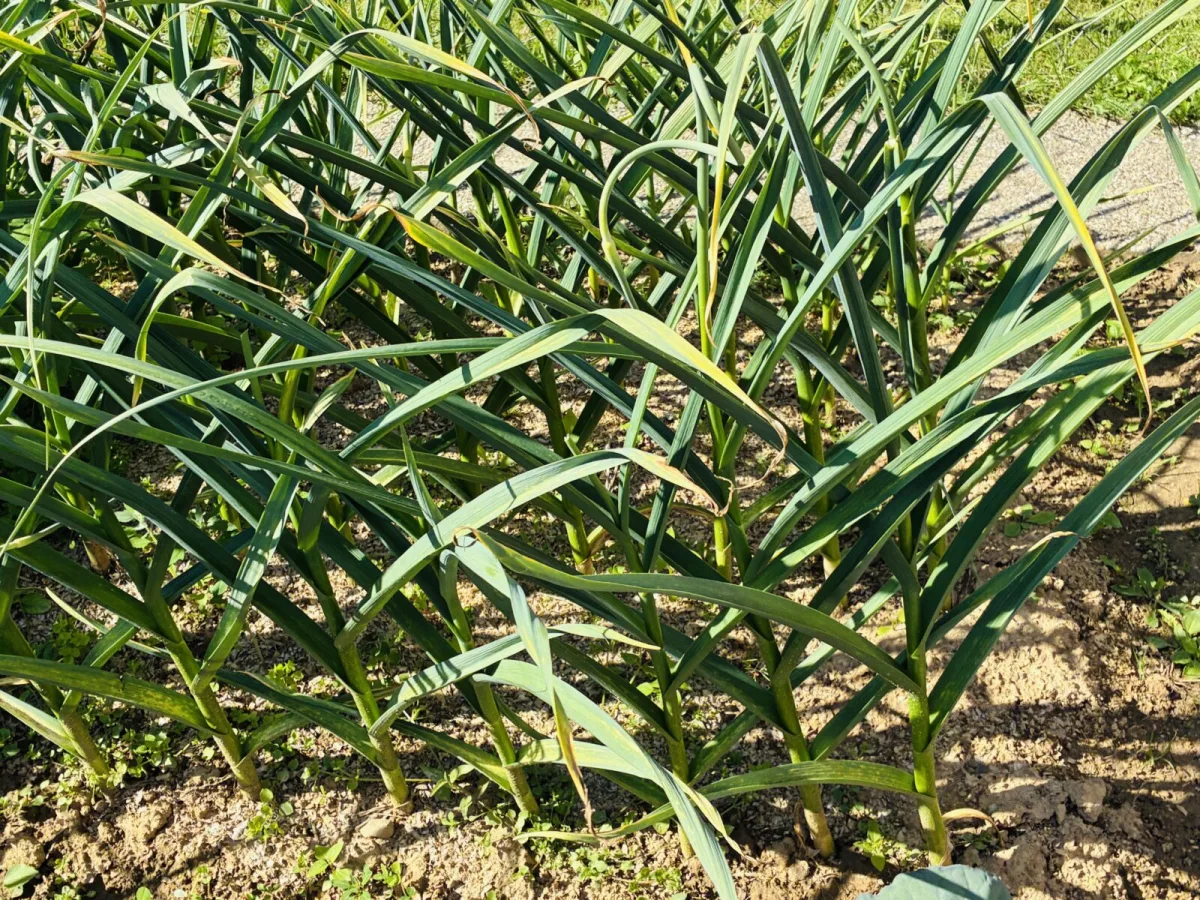
Even a single clove can grow into a full-sized bulb with a bold flavour in just one season. Growing garlic is surprisingly straightforward, doesn’t require fussy care, and rewards you with a homegrown harvest you’ll use in the kitchen almost every day. On top of the bulbs, you can also eat the spring shoots, known as garlic scapes, which have a milder taste and work beautifully both quickly stir-fried and in cold dishes.
Garlic is often valued in the garden as a helpful companion, because its scent can deter certain pests. And in folk tradition it has a long-standing reputation as a plant used as a home remedy for centuries.
Choosing planting stock and why to avoid supermarket garlic
You can plant individual cloves, ideally from high-quality, healthy bulbs sold specifically for planting. Ordinary supermarket garlic is usually a poor choice because it may be treated to prevent sprouting, often comes from regions with a very different climate, and can sometimes carry diseases or pests. If you want large, well-formed bulbs, it’s worth buying seed garlic from a local garden centre, a farmers’ market, or a trusted supplier. Another option is to set aside a few of the best bulbs from your own harvest and replant them.
When to plant garlic for the biggest bulbs
Planting time has a major impact on yield size. Most commonly, garlic is planted in autumn, roughly one to two weeks after the first hard frosts that reliably bring the summer season to an end. The reason is simple: garlic needs a period of cold to develop properly. Ideally it goes through a dormant phase at lower temperatures, roughly several weeks around 4 °C, and has time to make roots before the soil freezes. In spring it then kicks into rapid leaf growth and bulb formation, before summer heat slows it down.
In mild and warm areas you can plant later, even in February or March, but you should expect smaller bulbs. If you garden in a very warm climate without a proper winter, you can mimic the cold period by storing the cloves for about ten weeks in a paper bag in the fridge, then planting them out.
Site and soil where garlic thrives
Garlic loves sun, so choose a spot with roughly six to eight hours of direct light a day. The soil should be fertile yet free-draining. Before planting, compost or well-rotted manure helps, as do organic amendments that support bulb formation. It’s crucial that garlic doesn’t sit in water. In heavy clay soils, raised beds and generous mulching often work well, improving structure while also suppressing weeds.
How to plant, clove by clove
Plant only large, healthy cloves with no signs of mould or damage, because clove size usually translates into the size of the future bulb. Split the bulb into individual cloves as late as possible, ideally just before planting, so the planting stock doesn’t lose quality unnecessarily. You can leave the papery skin on; it usually isn’t a problem.
Set the cloves in pointy end up and the wider base down, at a depth of about five centimetres. Leave roughly ten to twenty centimetres between cloves depending on the vigour of the variety, and about fifteen to thirty centimetres between rows. It’s practical to work fertiliser into the soil slightly below where the base of the clove will sit, so roots can access nutrients right from the start.
Care through the season, mulch and watering
In areas where the soil freezes, it’s important to cover garlic for winter with a thicker layer of mulch, such as straw or leaves. In spring, once hard frosts are no longer a risk, pull the mulch back gradually so young shoots can grow freely. As temperatures rise, garlic puts on growth quickly and needs plenty of nutrients, as it’s a relatively hungry crop. A nitrogen feed in spring, followed by another boost before bulbing starts, can help significantly, especially if the leaves look pale or begin to yellow.
Weeds are a major enemy, because garlic doesn’t compete well and needs the nutrients for itself. During bulb formation it appreciates regular watering, especially in dry spells. As summer approaches, it’s worth reducing water gradually so bulbs ripen properly and the skins firm up.
Hardneck and softneck garlic and how to choose
Before buying planting stock, it helps to understand the two main groups. Hardneck varieties are better suited to colder areas, cope well with harsh winters, and produce fewer but larger cloves arranged around a firm central stalk. Another advantage is the edible flower stalks, or scapes, that appear in late spring to early summer.
Softneck varieties are more commonly grown in warmer regions. They don’t send up typical scapes, often have more smaller cloves, and usually store better. They’re also the type traditionally used for braided garlic, because the neck remains flexible after harvest.
There is also so-called elephant garlic, which botanically isn’t true garlic, but it’s grown in a similar way. It forms enormous bulbs with a milder flavour that’s closer to onion or shallot, and it needs a longer, cooler part of the season.
Scapes and why to remove them on some varieties
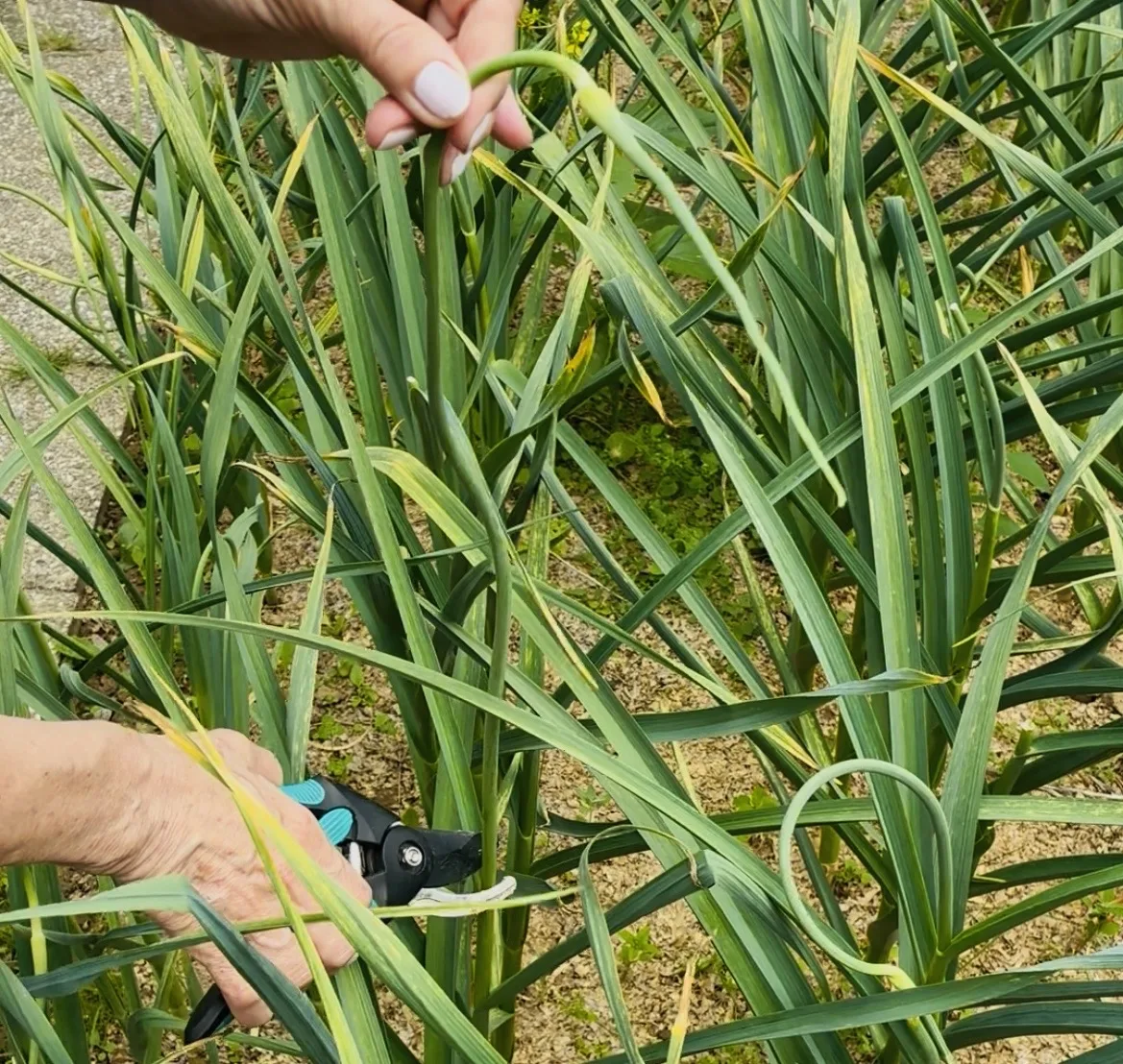
On hardneck types, a flower stalk appears around early summer and often curls into a loop. If you want the biggest possible bulbs, the stalk is usually removed so the plant directs more energy into the bulb underground. Scapes are edible and delicious, but it’s best to harvest them in good time, as they gradually become more fibrous.
When to harvest so the bulbs don’t split
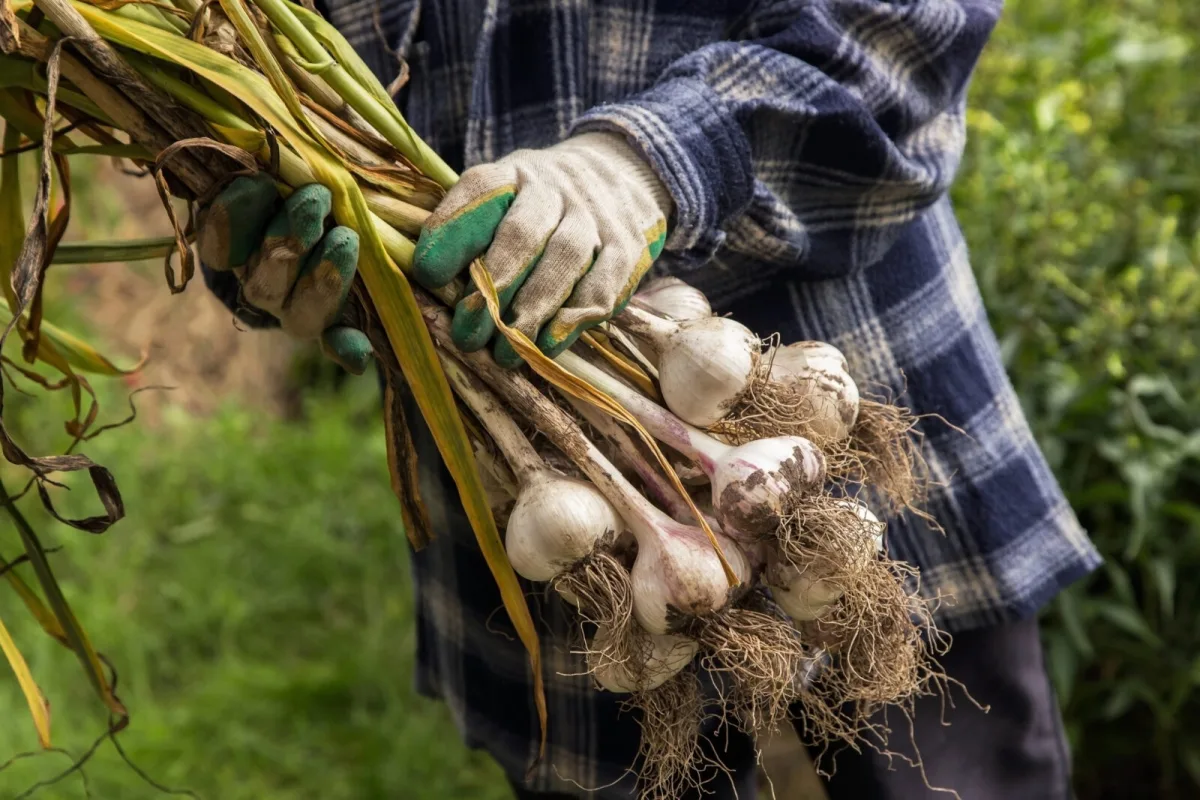
Harvest time for autumn-planted garlic usually falls from late June through August, depending on your region and variety. The main cue is the foliage. The ideal moment is when the leaves start to yellow and flop over, but aren’t completely dry yet. It’s useful to lift one bulb as a test, checking that the cloves are well defined and that the wrapper is dry and papery.
If you harvest too early, the skins tend to be thin and tear easily. If you leave garlic in the ground too long, bulbs can crack and split into individual cloves, which reduces storage life and increases the risk of disease. Harvest by gently loosening with a fork rather than pulling by the leaves, and try not to damage the basal plate or the roots. Shake off loose soil lightly, and don’t trim the tops or roots straight away.
Curing and storing garlic properly
After lifting, garlic needs to cure, ideally somewhere airy, dry, and out of direct sun. For about two weeks it’s left to “ripen”, often hung in small bundles or laid on a rack so air can circulate from all sides. Only when the wrappers are dry and papery and the roots are brittle is it time to prepare it for storage.
Don’t wash the bulbs; clean them dry instead. Remove only the dirtiest outer layers, shorten the roots, and trim the leaves. Store in a cool, dark, dry place with low humidity. A fridge or a damp cellar isn’t suitable, because the combination of cold and moisture encourages quality loss. Stored well, garlic keeps for months, often right up to the next harvest. If you’re planning the next season, set aside a few of the largest, best bulbs for planting.
Pests, diseases and what to watch for
Garlic tends to have fewer problems in the garden than many other vegetables, but issues similar to onions can still show up. Common risks include allium leaf miner larvae and thrips, which weaken leaves and reduce bulb growth. Among diseases, white rot is particularly troublesome; it shows as yellowing and wilting and can destroy roots and whole plants. Prevention helps most: clean planting stock, crop rotation, removing plant debris, and in problem areas a longer break from growing alliums in the same bed.
Gardening observations and traditional curiosities
In folk practice, raw garlic is sometimes rubbed on insect bites to help calm itching. Older gardeners also like to say garlic gradually adapts to local conditions if you save your own planting stock each year from the best bulbs. Historically, garlic was also linked with boosting vitality, and it’s said that athletes in antiquity were given it to support strength and endurance.
How to use garlic in the kitchen and beyond
Alongside the classic bulbs, it’s well worth using scapes too: cook them much like green beans, but with a garlicky bite. When cured properly, garlic’s flavour deepens, and homegrown bulbs often pleasantly surprise with their intensity. If you like having seasoning on hand, you can dry some cloves and make your own garlic powder, or enjoy roasted garlic as a gentler, sweeter option for spreads and side dishes.
Source: Almanac, Rhs , Pestrazahrada.cz
Related articles
How to Keep Your Pool Sparkling Clean Without Unnecessary Effort or Stress
Keeping pool water crystal clear doesn’t have to be hard work. With a simple daily-and-weekly routine, you’ll prevent cloudiness, algae and breakdowns before they start.
A Simple Trick for a Bigger Pepper Harvest and Faster Ripening
Regular watering and feeding aren’t always enough for a heavy pepper crop. Pinching out the growing tips redirects the plant’s energy into branching, flowering, and ripening fruit faster.
Fireflies are disappearing from the landscape, learn how to create a safe garden home
Warm summer nights are even more magical when fireflies start flashing at dusk—but their numbers are falling. With a few simple changes to mowing, planting, lighting and chemical use, your garden can become a safe refuge again.
Comments (0)
Be the first to comment.