
 English
  Polski
  Deutsch
  Nederlands
  Svenska
  Norsk
Norsk  Dansk
Dansk  Français
  Italiano
  Español
  Português
  Slovenčina
  Suomi
Suomi  Gaeilge
 How to Successfully Grow an Almond Tree and Harvest Your Own Almonds in the Garden
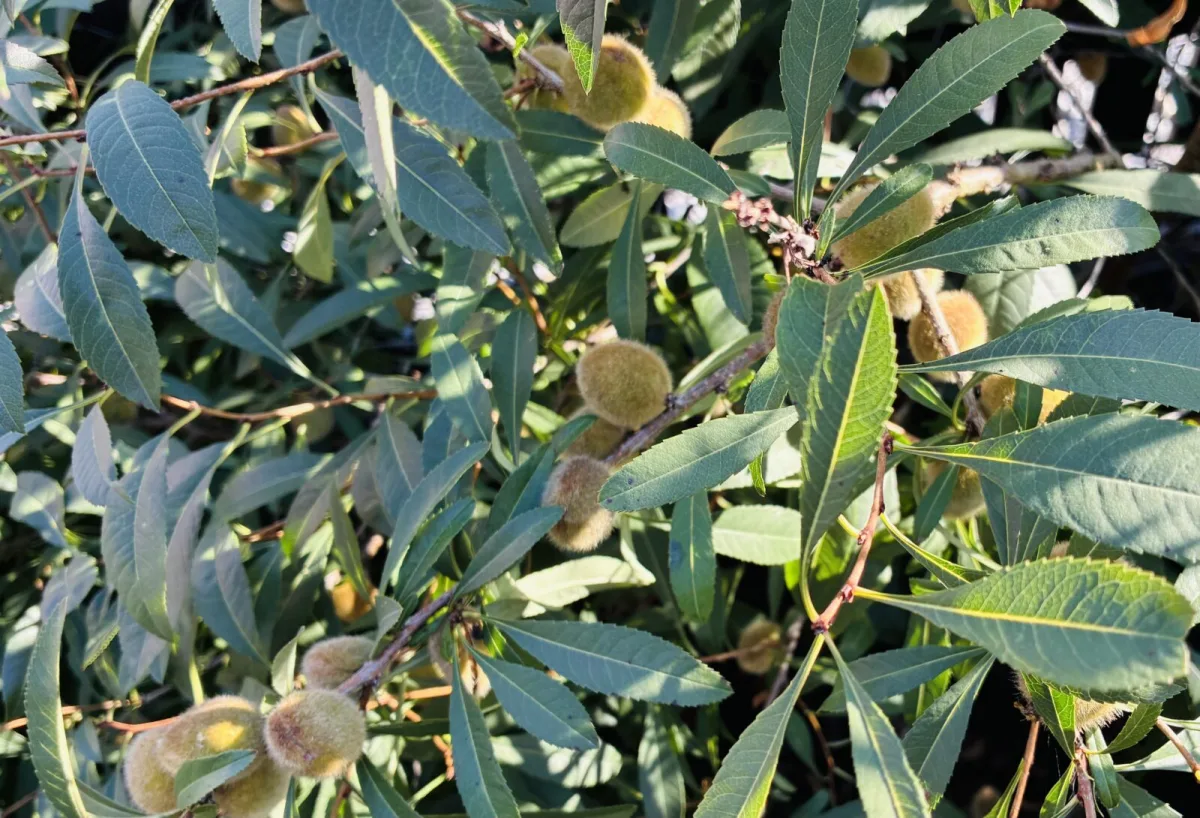
Almond trees are grown either as smaller ornamental trees valued mainly for their abundant spring blossom in white to soft pink, or as medium-sized trees that produce edible seeds known as almonds. For a tree to begin cropping reliably, it usually needs several years of growth, typically around five seasons, before it strengthens and reaches bearing maturity.
Botanically speaking, almonds aren’t true nuts. The almond tree’s fruit is a drupe. What we later eat is the seed hidden inside the fruit’s layered structure. On the outside there is first a green, leathery hull, beneath it a hard, pale shell, and inside sits the brown seed, the almond itself.
Planting an almond tree step by step
When to plant
Almond trees are often sold as bare-root plants. These are planted during dormancy, most commonly in late winter or early spring, when the tree establishes more easily and suffers less stress.
Choosing the right site
An almond tree needs full sun. For good flowering and a chance of setting fruit, allow at least six to eight hours of direct light per day. The soil is just as crucial and must drain well. Heavy clay soils don’t suit almond trees, and prolonged waterlogging can lead to root death. When choosing a spot, it’s sensible to keep the tree away from water and drainage lines, at least about 3 m.
Spacing, planting depth and support
Leave roughly 4.5 to 6 m between trees so they have enough room for the canopy and for good air movement. Almond trees form a strong taproot, so you need to dig a hole deep and wide enough that the root doesn’t have to be bent or shortened. Place the taproot in the centre and gently spread out the lateral roots.
For container-grown trees, keep the same planting depth as they had in the pot. With bare-root plants, watch the root flare (where the roots transition into the trunk) and keep it just above soil level. In windy gardens, temporary staking is worthwhile. Tie the tree loosely so it can move slightly and strengthen, and usually remove the stake after the first season.
Basic almond tree care
The most important condition for success is a suitable climate. If your area suits almond trees, care isn’t overly complicated, but a few key rules determine flowering, health and yield.
Light
An almond tree needs full sun. With insufficient light it flowers and fruits less, and the crown thickens more easily and dries more slowly after rain.
Soil and pH
The ideal soil is a sandy loam with excellent drainage and a pH of roughly 6.0 to 7.0. Before planting, deeper cultivation helps roots penetrate downwards so the tree is stable and more drought-tolerant.
Watering
Almond trees need enough water, especially during fruit development. The goal is to keep the soil evenly moist but not waterlogged. Excess watering and poor drainage increase the risk of root rot, so it’s better to water more thoroughly and less often than little and often, if your soil allows.
Temperature and humidity
Almond trees have fairly strict requirements. Over winter they need a certain number of chill hours, when temperatures drop below about 7 °C, so they flower properly in spring. After this phase, a long frost-free period is critical because the fruit takes many months to mature. The tree is sensitive to severe winter cold, and spring frosts can destroy blossoms and therefore the future crop.
In summer, almond trees do best in warmth, roughly 24 to 35 °C, and they prefer drier air. This combination of heat and lower humidity is why almonds are grown commercially mainly in regions with a similar climate.
Feeding
In spring, use a balanced fertiliser. Apply it in a band under the canopy dripline, where water falls from the tips of the branches. The rate depends on the product and the tree’s condition, as overfeeding can encourage lush growth at the expense of flowering and increase susceptibility to disease.
Pollination and variety choice
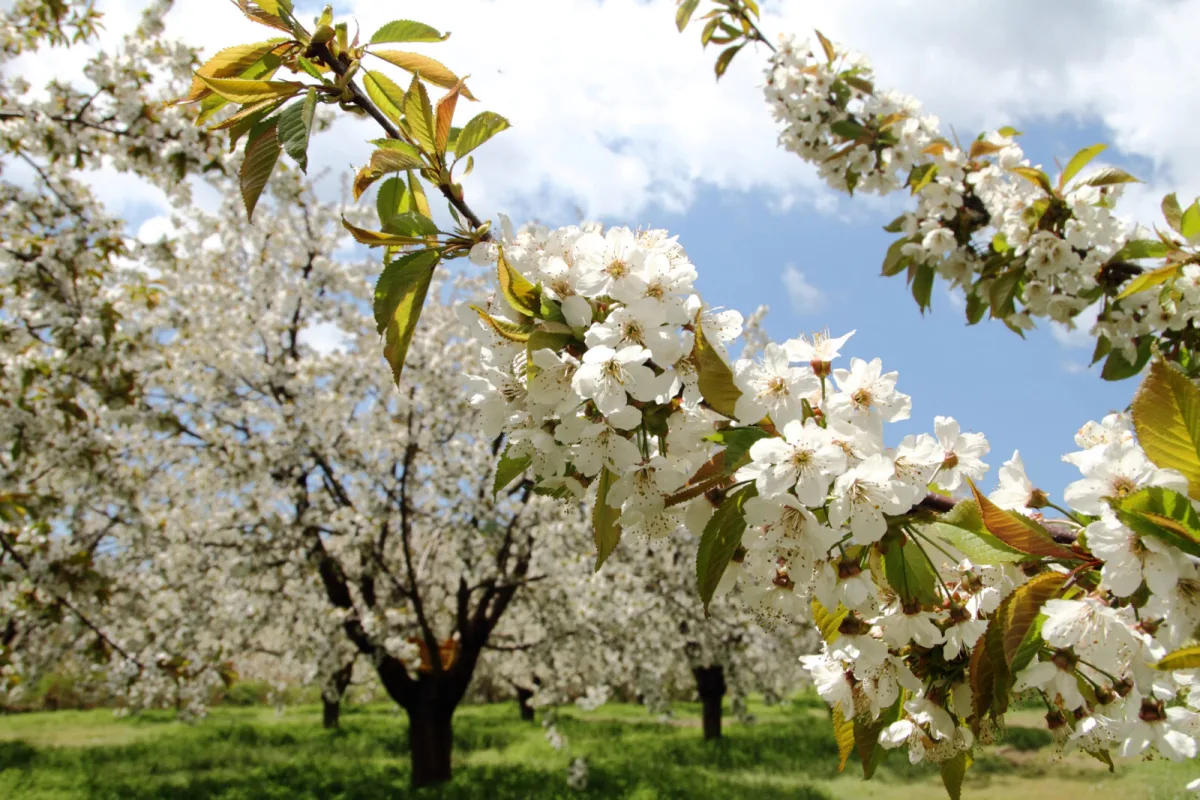
Many almond trees are not self-fertile. To get a crop, you then need at least two varieties that flower at the same time so they can pollinate each other. Nurseries usually state which pollinator is suitable and how far apart to plant the trees. An easier option is to choose a self-fertile variety that crops as a standalone tree, although in some cases it may yield more with a pollinator.
In practice, gardeners benefit from varieties that flower later, because this reduces the risk of blossom damage from spring frosts. There are also tougher cultivars bred for cooler regions, but even with them it remains essential to minimise the risk of late frosts.
Sweet and bitter almonds are not the same
Alongside the commonly grown sweet almond types, there is also a bitter form. Bitter almonds contain higher levels of natural compounds that can be toxic and, if used improperly, may cause poisoning. For this reason, home growing and eating is almost exclusively based on sweet almond trees from reliable sources.
When and how to harvest almonds
The tree itself will tell you harvest time is near. The green hull begins to split and crack open, revealing the pale, hard shell. Once this happens, it doesn’t pay to wait, because the exposed fruit is easily damaged by insects or noticed by birds.
The simplest method is to shake the fruit from the branches. It helps to spread a sheet under the tree beforehand so the fruit is easy to collect and doesn’t get dirty. After picking comes drying, which is essential for crop quality. First remove the green hull, then lay the fruits out in a thin layer, shells on, in a well-ventilated place. A surface that lets air circulate is practical, and covering with netting helps protect against birds. If rain threatens, the crop must be covered.
You can check whether drying is complete by cracking a few samples. If the kernel inside is firm, the crop is ready. If it’s rubbery or soft, it needs more drying, otherwise there’s a risk of mould during storage. Dry almonds in the shell can be kept at room temperature for many months.
Growing in containers and space limitations
Even dwarf almond trees can be difficult to keep in a pot long-term, because over time the tree requires a large volume of compost, stability and room for roots. A container may work short term or for the first few years, but for a permanent planting, a position in open ground is usually better.
Pruning as the basis of a healthy, productive canopy
Regular pruning during dormancy helps keep the tree vigorous and improves light and air access within the canopy. Remove dead and damaged branches, shoots growing towards the centre, congested growth that restricts airflow, and also branches that cross and rub against each other. The aim is a strong, clear structure that can carry the crop while minimising disease pressure.
Propagation and buying a young tree
In nursery production, almond trees are propagated by grafting, which ensures a suitable rootstock, reliable variety traits and good fruiting. For home growers this is technically demanding, so the surest option is to buy a tree from a reputable nursery. For some varieties, there may also be propagation restrictions.
Winter hardiness and preventing frost damage
The most effective winter protection is choosing the right variety for your area. Varieties with better frost resistance and, above all, late-flowering types are an advantage, as they are less likely to be hit by late spring frost. The site matters too, for example a gentle slope and a position where cold air doesn’t pool.
Pests and diseases to watch for
Notable pests include caterpillars and larvae of various moths, which can bore into fruit or damage buds. Aphids and scale insects may also appear; their sticky honeydew attracts ants and weakens the tree. In dry weather, spider mites sometimes multiply; they reveal themselves by fine webbing and can also be reduced by thoroughly hosing the tree with water.
Almond trees can suffer from fungal diseases. Some infections cause cankers and can seriously damage or even kill the tree; others show up as leaf spots or dieback of parts of the plant. Key prevention includes an open, airy canopy, clearing up infected debris, avoiding prolonged leaf wetness and, when needed, targeted use of suitable treatments based on the current situation.
Source: The Spruce, Gardeners World , Pestrazahrada.cz
Related articles
The Christmas Amaryllis That Can Bloom for Years but Most People Throw It Away After Flowering
Hippeastrum is a spectacular winter-blooming bulb that, with the right care, will flower again year after year. Learn how to plant it correctly, look after it after flowering, and bring it into dormancy so it reliably reblooms.
How to Grow Winter Garlic for a Much Bigger Harvest
Autumn planting is the key to strong, healthy winter garlic, but the details make all the difference. With the right timing, bed choice, seed-clove treatment and a simple bicarbonate trick, you can noticeably boost yield.
A tree or shrub planted properly in autumn can outpace spring stock and improve fruiting
Many fruit trees and soft-fruit shrubs establish better when planted in autumn, because roots keep growing while the top is dormant. Done well, this head start means stronger spring growth, less watering, and a healthier first year.
Comments (0)
Be the first to comment.