
 English
  Polski
  Deutsch
  Nederlands
  Svenska
  Norsk
Norsk  Dansk
Dansk  Français
  Italiano
  Español
  Português
  Slovenčina
  Suomi
Suomi  Gaeilge
 How to Choose a Chicken Feeder That Keeps Feed Dry, Clean and Pest-Free
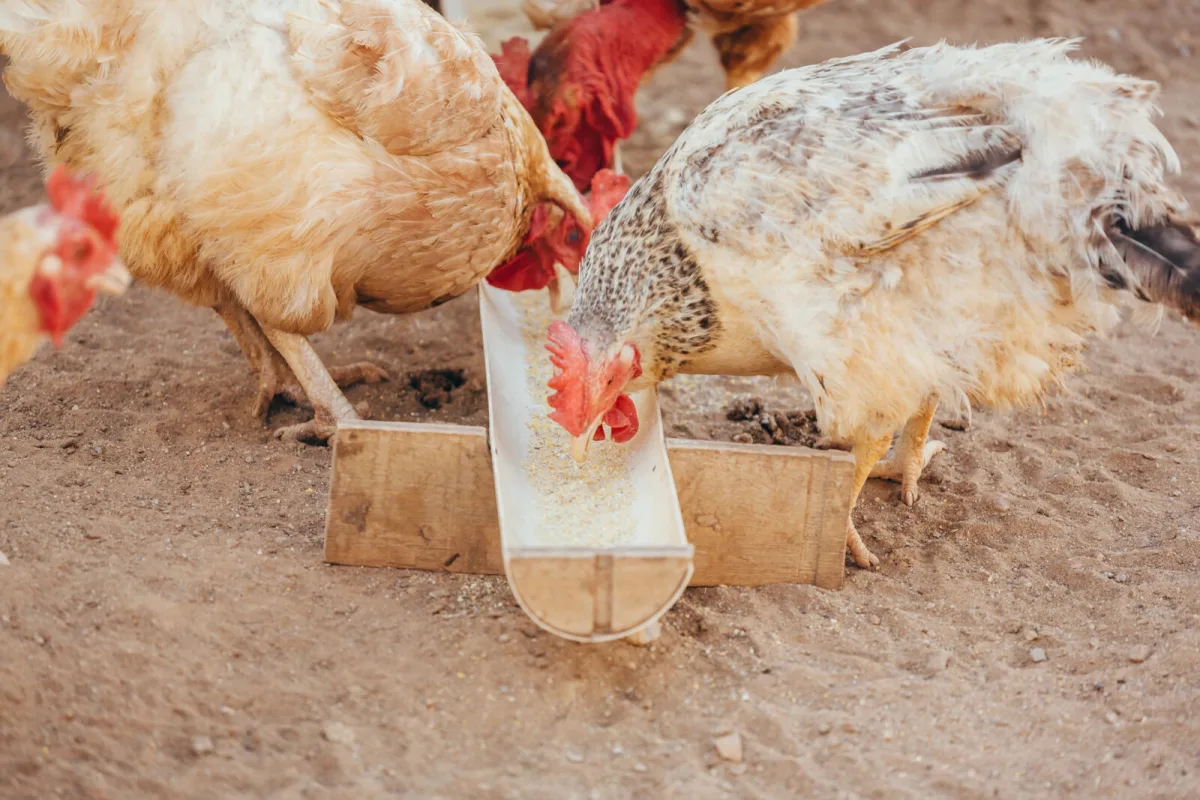
A good chicken feeder needs to do several key jobs at once. It should protect feed from rain and damp, prevent it from getting dirty, reduce scratching and flicking feed onto the ground, and make access as difficult as possible for rats and wild birds. In practice, feed losses are usually the most common headache. When hens hunt for their favourite bits of a mix, they easily scatter feed around them, which means unnecessary costs and a bigger draw for pests.
There are several types of feeders on the market, and each has its strengths and weaknesses. It’s worth matching your choice to flock size, your keeping system, and local conditions. One solution may be fine for a few garden hens, while a larger free-range setup calls for something more robust.
The most common types of feeders
Open trough and hanging feeders
These are among the cheapest and most widely used options. Their weakness is the open access to the feed. Hens can easily toss it out, rain gets in with little resistance, and the feed also stays accessible to sparrows and rodents. Hanging versions also sway, which can spill even more feed.
Treadle feeders
This type uses a lid that opens when a hen steps onto a treadle plate. At first glance it’s a clever form of protection, but it includes moving parts that can wear out or jam. If the lid stops closing properly, the feeder effectively turns into an open bin. Another downside is that smaller hens, bantams, or pullets may not be heavy enough to trigger the mechanism.
Tube and pipe feeders
These are often simple DIY feeders made from plastic pipe. They’re inexpensive, but they can be prone to leaking and hens can still flick feed out fairly easily. If they aren’t made from a material designed for long-term outdoor use, sunlight will eventually damage them and the plastic will become brittle.
Bucket feeders with side holes
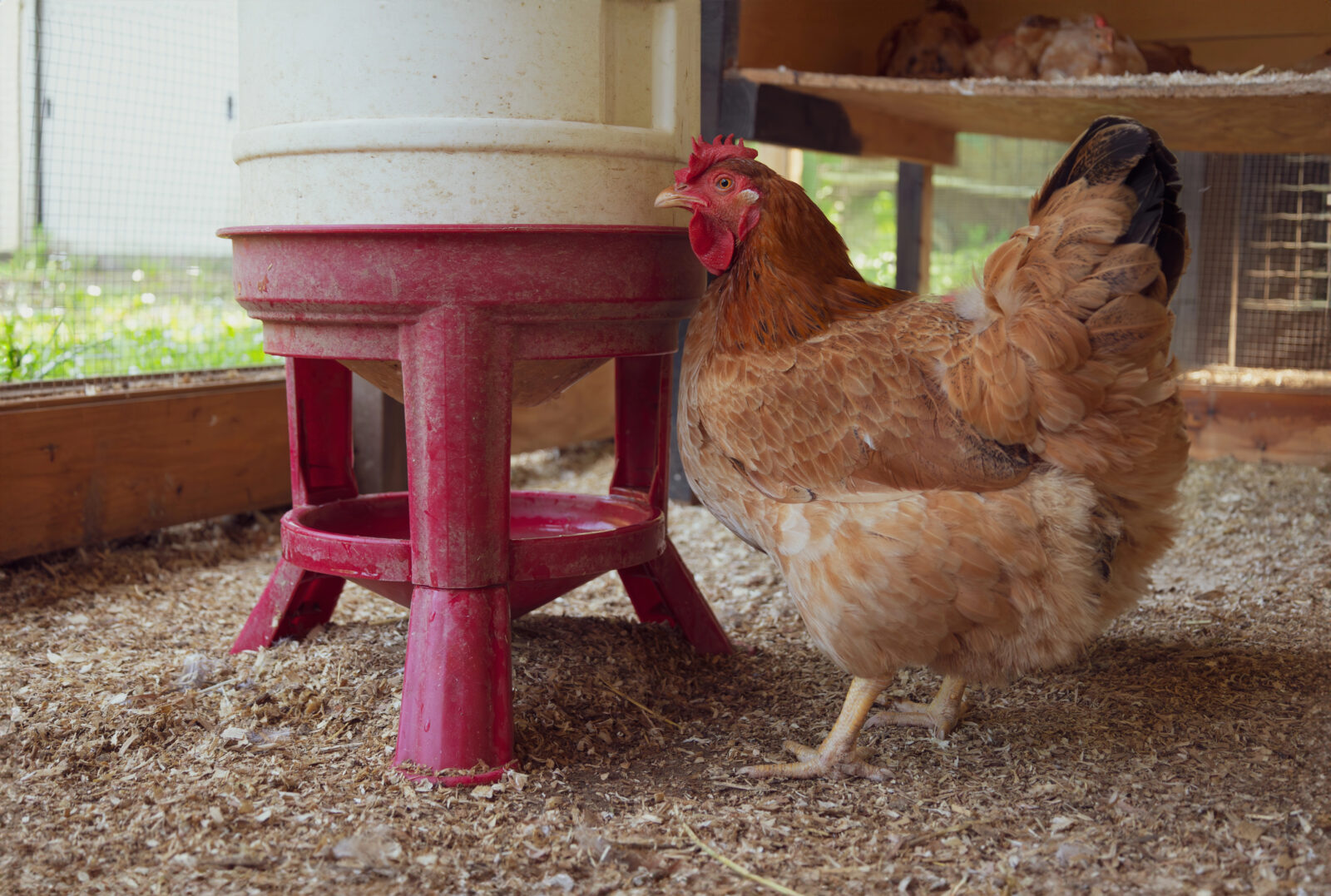
The big advantage is a larger capacity, but the side holes remain open, so feed can still be picked out and scattered. Another drawback is the fixed height of the openings. If it doesn’t match your hens’ size, day-to-day use won’t be ideal. The bucket also often sits low, increasing the chance that rodents will find it.
Enclosed hopper feeders with a covered feeding port
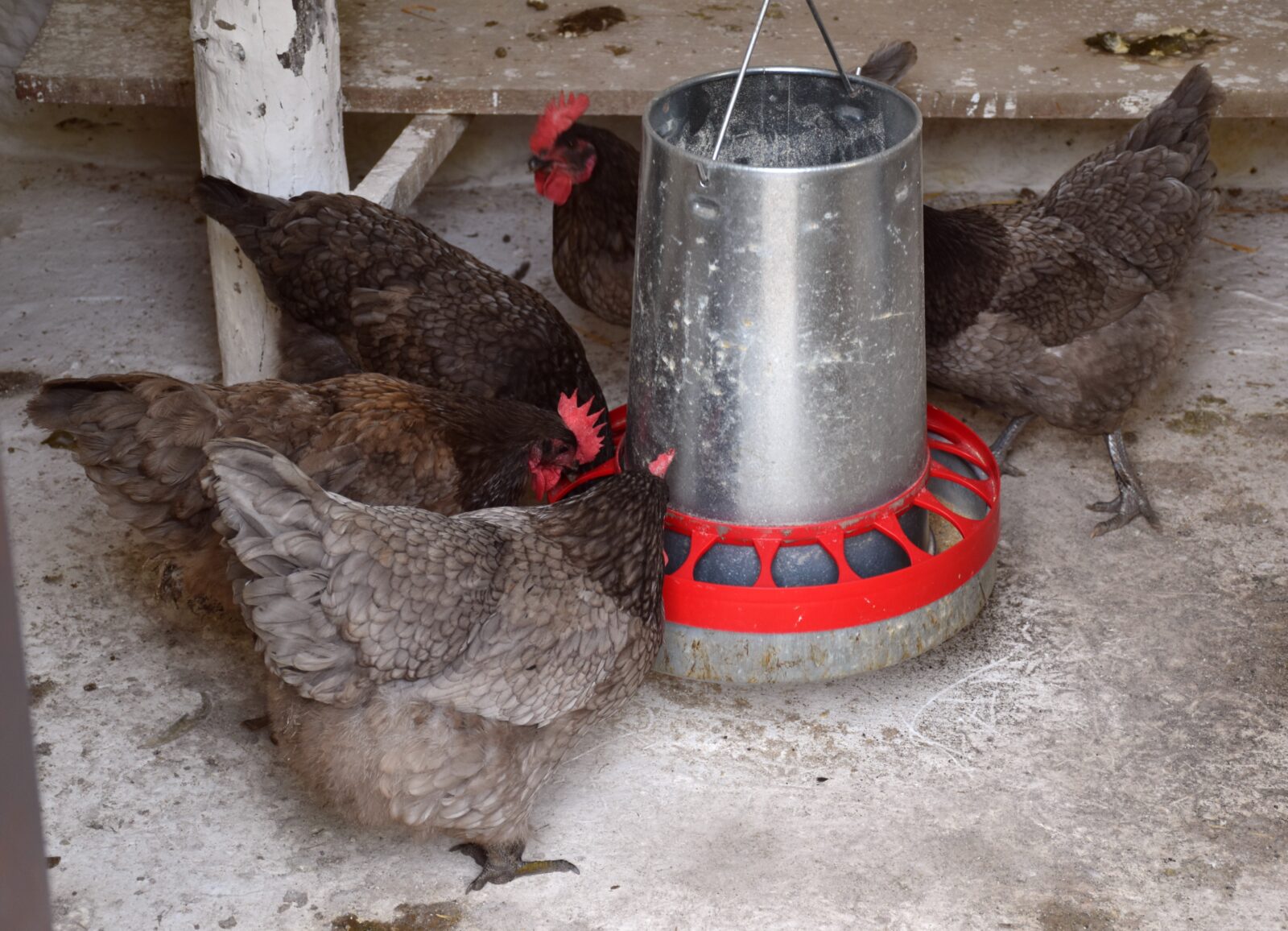
This option is often the most practical in terms of savings and feed protection. The feed sits in a closed hopper and hens reach it through a covered opening. That keeps the contents better protected from rain, and it also isn’t sitting openly where hens can easily fling it out. A major benefit is the lack of complicated moving parts.
What to focus on when choosing
Reducing feed waste
This is where you decide how much your flock will cost to keep in the long run. Open feeders almost always lead to losses. A better design is one where the hen pushes her head inside and the feed sits below the lip of the opening. That kind of setup significantly reduces the amount of grain on the ground.
Correct placement and height
A feeder shouldn’t sit on the floor. That’s where bedding and dirt get into it, and it also becomes the first target for pests. Ideally, fix it to a wall, wire mesh, a post, or another solid support. The height should be roughly level with the base of the neck on the smallest hen in the flock. Too low encourages feed flicking and waste; too high disadvantages smaller birds.
Weather resistance
Damp feed can quickly go mouldy and becomes a health risk. The feeder therefore has to protect not only from ordinary rain, but also from summer humidity. UV resistance matters just as much. Cheap plastics often don’t last long outdoors, so it pays to look at material quality and the length of the warranty.
Rats and wild birds
No feeder on its own can completely eliminate an existing problem with rodents or opportunistic birds. However, it can significantly reduce the amount of spilled feed that attracts them to the coop. If pests have already appeared, you first need to remove the food source, put feed away overnight, and tackle the situation separately. A feeder is a helper, not a complete solution.
How many hens per feeder
Many keepers worry that if only one or two hens can eat at a time, it will cause issues. In reality, when hens have constant access to feed, they usually don’t all eat at once. They take turns through the day and tend to snack little and often. That’s why one well-designed feeder is typically enough for about six to eight hens. With larger flocks, it’s better to place several feeders in different spots than rely on a single large one.
Capacity and day-to-day practicality
A laying hen eats roughly 120 to 150 grams of complete feed per day depending on her size and conditions. An oversized hopper may look convenient, but feed left for a long time in hot weather loses freshness. It’s often more sensible to top up smaller amounts more frequently. Another advantage is being able to remove the feeder easily if you need to clean it or put it away overnight.
The best feeder isn’t the biggest or the cheapest, but the one that keeps feed dry, clean, and as inaccessible to pests as possible.
Which solution makes the most sense
For small to medium flocks, the most practical choice is an enclosed hopper feeder with a covered feeding area, mounted off the ground at the correct height. This design helps save feed, stands up better to the weather, and simplifies daily care. If you also choose a high-quality complete ration or small pellets, feeding will be even more economical and cleaner. When choosing, think not only about the purchase price, but above all how much work and waste the feeder will save you over the coming months and years.
Source: Dine a Chook, Pestrazahrada.cz

A lover of nature, gardens, and everything that moves, blooms, or grows. He literally grows everything, from herbs to rare species, and he enjoys caring for animals just as much. In his work, he connects modern technology with tried-and-tested grandmotherly methods and is happy when both paths lead to the same goal.
Related articles
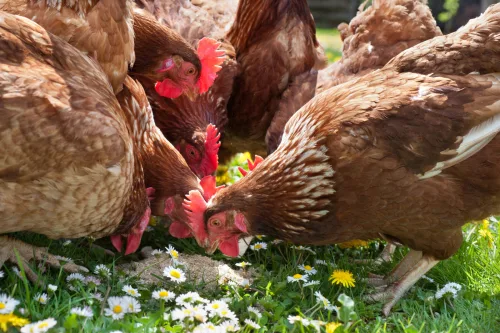
How to Feed Laying Hens So They Stay Healthy, Lay Steady All Year and Produce Strong Shells
A well-balanced diet is the key to healthy hens, strong eggshells and consistent laying. Learn what to feed, what to top up, and what to avoid through the seasons.
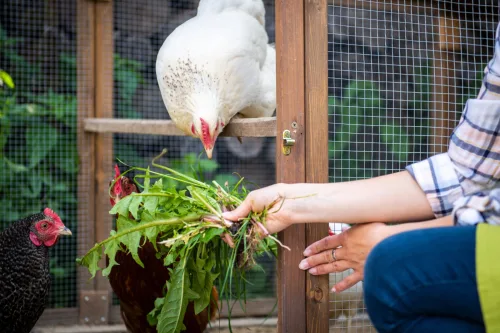
Which vegetables can chickens safely eat every day
Vegetables make a brilliant daily treat for chickens, adding moisture, fibre and valuable vitamins. The key is to use them as a supplement to a balanced complete feed, not a replacement.
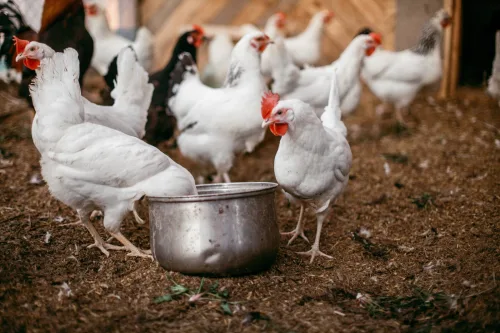
How to Compost Chicken Coop Bedding Safely and Make Nutrient-Rich Fertiliser for the Garden
Keeping chickens produces more than eggs—it also provides a highly valuable source of nutrients for your soil. With proper hot composting, chicken bedding and manure can be turned into safe, crumbly compost that feeds plants steadily and improves soil structure.
Comments (0)
Be the first to comment.