
 English
  Polski
  Deutsch
  Nederlands
  Svenska
  Norsk
Norsk  Dansk
Dansk  Français
  Italiano
  Español
  Português
  Slovenčina
  Suomi
Suomi  Gaeilge
 Gazania flowers bloom from May to October and can be overwintered, yet one arch-enemy still troubles them
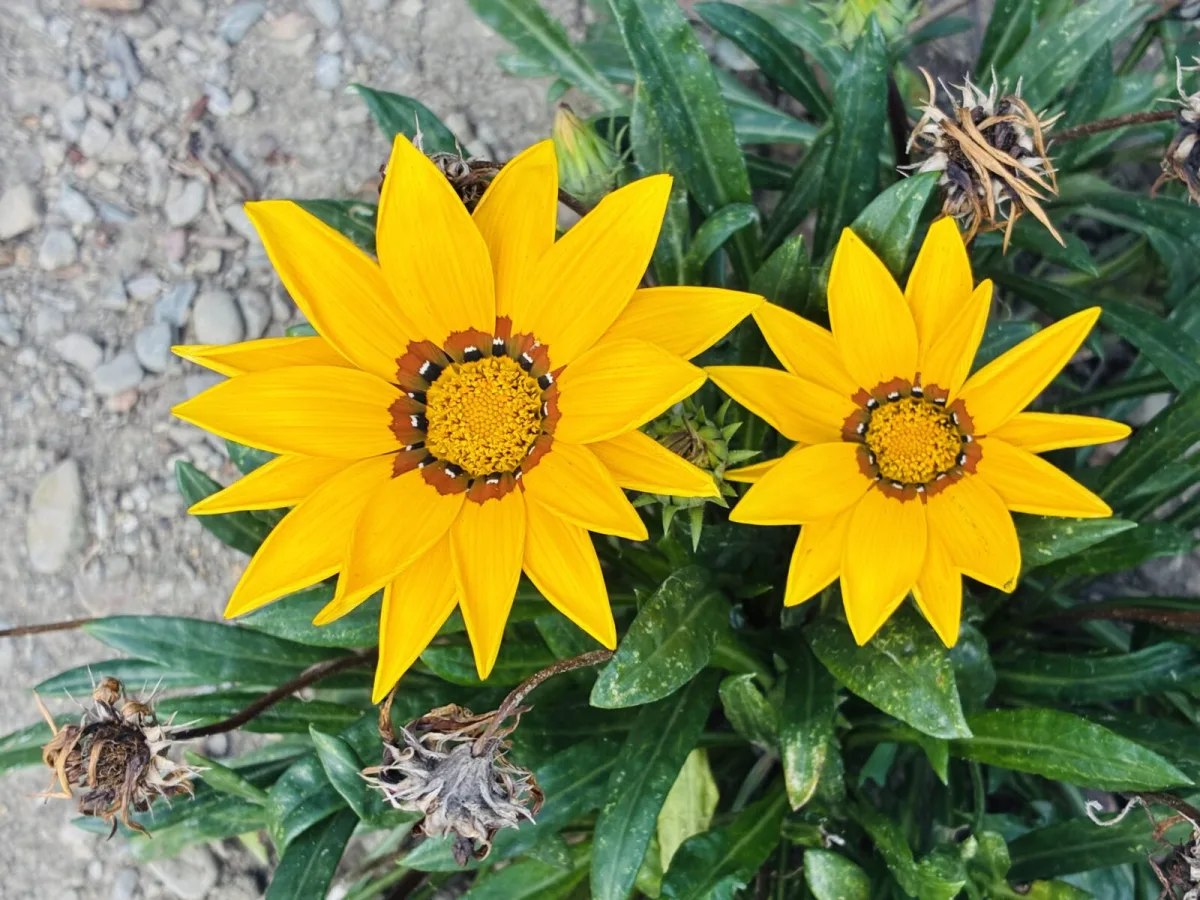
Gazania, sometimes called the treasure flower, is one of the most eye-catching annuals and short-lived perennials for brightening up a patio, balcony, or sunny border. The blooms resemble daisies, but with far richer, more luminous colours. You’ll see shades of pink, red, orange, bronze, gold, and cream, all set off beautifully by fresh green foliage.
A hallmark of gazanias is their love of sunshine. The flowers fully open only with plenty of light; in overcast weather or shade they stay closed. That’s exactly why they’re at their best wherever there’s lots of sun and warmth through the day.
Where to plant gazanias
This plant comes from South Africa, so it suits a hot, sheltered spot. It thrives in full sun, where the flowers open reliably and last well. The soil should be free-draining and only moderately fertile. Gazanias dislike waterlogging, which can lead to root rot.
They’re ideal for gravel gardens, coastal-style planting schemes, pots, and hanging baskets. With their low, spreading habit they fill gaps in borders and form a compact carpet of colour. In containers they look highly decorative on their own or combined with other summer flowers.
When to sow and plant gazanias
Annual types can be sown from late winter to early spring, always under cover and in warmth. Seeds need higher temperatures to germinate, so it’s best to raise them indoors, in a greenhouse, or in a propagator. Young plants are moved outside only in early summer, once all risk of frost has passed.
Gazanias are not frost-hardy, so there’s no advantage in rushing to plant them out. If exposed to cold, they can be damaged or fail completely.
How to sow
Sow the seeds in trays or small pots filled with seed compost. Scatter them on the surface, then cover only lightly with a thin layer of compost or vermiculite. Place the containers somewhere warm, such as a bright windowsill, or use a lid or clear cover to keep humidity and temperature up.
Once seedlings are large enough to handle, pot them on individually into small pots. Grow them on in a frost-free place until they can be moved outdoors. Before planting out, harden the plants off gradually. For several days in a row, put them outside during the day and bring them back into shelter or under cover at night.
Planting out in borders and containers
When planting outdoors, choose the sunniest spot you can. Gazanias can be planted directly into the ground or into containers filled with a standard potting compost with good drainage. The root ball should sit level with the surrounding soil or compost. Firm the plants in well and water thoroughly after planting.
In the first weeks after planting, keep an eye on watering, especially if you’re growing them in pots or hanging containers. Even so, gazanias prefer slightly drier conditions rather than constantly wet compost.
Routine care through the season
To keep gazanias flowering for as long as possible, deadhead regularly. This stops the plant wasting energy on seed production and encourages more buds. With this care, they can flower all summer and into early autumn.
Watering should be regular mainly after planting and during prolonged dry spells. Container-grown plants need the compost checked more often, but it’s better to let the surface dry slightly between waterings. Constantly waterlogged compost is the most common cause of problems.
Gazanias in pots will benefit from feeding roughly every two weeks with a fertiliser higher in potassium. This supports abundant flowering and overall plant vigour.
Overwintering perennial plants
Some gazanias are grown as perennials, but in our conditions they usually won’t survive winter outdoors. If you grow them in containers, you can move them into a protected space in autumn. Before overwintering, it helps to cut the plant back by about two thirds, so it stays compact and manageable.
In a frost-free place they can be kept through to the next season. In spring you can harden them off again gradually and put them back outside once frosts have finished.
How to propagate gazanias from cuttings
As well as growing from seed, gazanias can be propagated from basal cuttings. Take these from late summer into autumn from the lower part of young shoots. A suitable cutting should be about 10 to 12 cm long.
Cut as close to the base as possible, remove the lower leaves, and pinch out the tip. Then insert the cutting about 2.5 cm deep into a small pot of compost. To keep humidity up, you can cover the pot with a clear plastic bag. Rooted cuttings need to be overwintered under protection, and planted outside only in early summer.
Possible problems and their causes
When grown outdoors, gazanias are usually healthy and easy-going. However, if they’re overwintered indoors or in a greenhouse, aphids can become an issue. Grey mould can also appear occasionally, especially in high humidity and with poor ventilation.
The most common reason gazanias die is not drought, but too much water combined with cold.
Good ventilation, removing dead material, and careful watering are the best prevention. If a plant starts to decline, the cause is often waterlogging or cold damage.
What to consider when buying
You’ll find both annual and more perennial forms for sale. Annuals are easy to raise from seed, or you can buy ready-grown young plants. Perennial types can offer a wider colour range and longer use, provided you can overwinter them.
Before buying, check the plants’ health. Leaves should be firm, without spots, damage, or signs of disease or pests. A strong, compact plant is more likely to establish quickly and flower well.
Recommended varieties
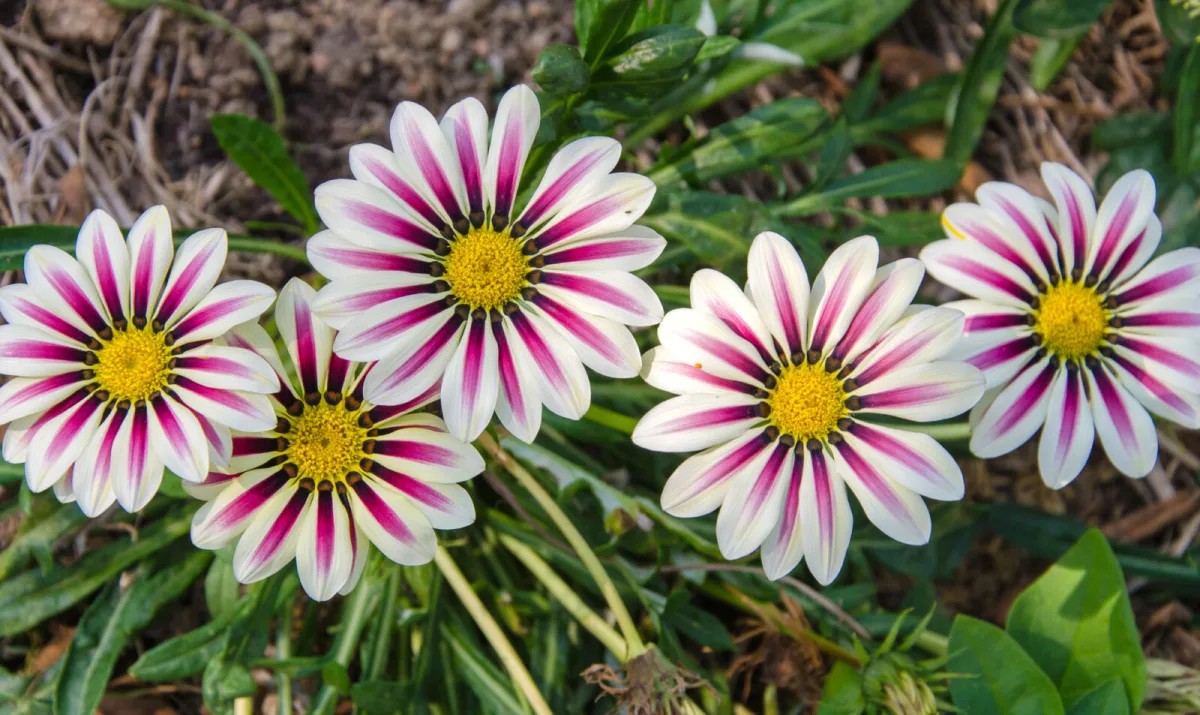
Standout cultivars include Big Kiss White Flame, with large white flowers streaked with pink. It’s excellent for containers and sunny summer borders. Also very popular is Tiger Stripes, with striped blooms in yellow and orange tones that really shine in bold, colourful planting.
If you prefer a longer-lasting option, Christopher Lloyd is an interesting choice, with richly rose-purple flowers. It blooms for a long time, often from May right through to October, as long as it has plenty of sunshine and the right conditions.
Do gazanias come back every year
That depends on the type. Many gazanias are annuals that germinate, flower, and complete their life cycle in one season. Perennial species are often grown like annuals too, because they don’t tolerate frost.
In very mild areas, some plants may survive outdoors, but it’s more reliable to bring them under cover for winter. If you protect them from cold and don’t overwater, they can reward you again next year.
Source: Gardeners World, The Spruce , Pestrazahrada.cz
Related articles
Homegrown Physalis Tastes Better Than Store Bought But Green Fruit Can Be Toxic
Cape gooseberry (Physalis peruviana) rewards you with aromatic, sweet-tart fruit when grown in a sunny, sheltered spot. Learn how to raise plants from seed, care for them, and why unripe green fruit should never be eaten.
Never prune a walnut tree in spring
English walnut is a magnificent, long-lived tree, but timing matters—spring pruning can cause heavy sap bleeding and slow healing. Learn the right site, spacing, feeding, harvesting, and pruning window for a healthy crop.
Autumn asters turn the garden into a haven for pollinators
Autumn asters light up borders in September and October with clouds of colour while offering vital nectar and pollen when many other plants have finished. Chosen well, they’ll keep feeding pollinators right up to the first proper frosts.
Comments (0)
Be the first to comment.