
 English
  Polski
  Deutsch
  Nederlands
  Svenska
  Norsk
Norsk  Dansk
Dansk  Français
  Italiano
  Español
  Português
  Slovenčina
  Suomi
Suomi  Gaeilge
 Experienced gardeners follow two rules for ornamental grasses

Ornamental grasses have become one of the most rewarding elements in garden planting in recent years. They suit both modern and naturalistic designs, adding height to borders, a gentle movement in the breeze, and often colour for a long stretch of the season. With their rising popularity come the same questions: when is the best time to plant, when and how to cut them back, and how to go about dividing clumps. Proper care isn’t complicated, but you do need to respect the type of grass and its growth rhythm.
Start by identifying the type: cool-season, warm-season and evergreen
The basic rules of care depend on which group your plant belongs to. Cool-season grasses grow most strongly in spring and again in autumn, when temperatures aren’t high. In summer they usually keep decent colour, but they don’t put on much growth in the heat.
Warm-season grasses, by contrast, get going later, often not until late spring or early summer. They grow and flower most during warm weather and usually die back in winter to brown shades. Evergreen grasses and grass-like plants are a special category because they keep their foliage through the colder part of the year. Often they aren’t true grasses at all, but plants with a similar look and habit, such as sedges.
When to plant ornamental grasses so they establish well
The safest times for planting are spring and early autumn. Spring planting gives plants plenty of time to root in before summer heat and drier spells arrive. You can plant in summer too, but it requires much more careful watering and monitoring so the young roots don’t dry out.
If you miss the spring window, plant at the beginning of autumn, ideally about six to eight weeks before the first frosts. That gives the grass time to build a root system and come through winter better.
When to cut back ornamental grasses and why it matters
Warm-season grasses: cut back in autumn or, at the latest, in spring
Warm-season types typically turn brown and dry down in autumn. Once they are dry, you can cut them back almost anytime, depending on what suits you. If you like the garden looking tidy in autumn, or you’re concerned about fire risk in dry growth, you can reduce clumps to a few centimetres above the ground before winter.
Where that risk isn’t an issue, you can leave the dry foliage and flowerheads standing over winter for decorative effect. Frost or snow on dry stems often looks very striking. If you choose to delay cutting, it’s important to do it by late spring at the latest, before new growth really gets underway. Some species don’t look good through winter, though, and in that case it’s more practical to tidy them in autumn.
Cool-season grasses: cut back very early in spring
Cool-season grasses often hold their shape and colour well into the colder season, so it’s worth leaving them untouched over winter. As soon as the snow has gone and the bed is accessible in spring, it’s the right moment to cut back. With these grasses, it’s not advisable to cut right down to ground level. It’s usually better to leave roughly a third of the plant’s height, because cutting back too hard can permanently weaken the clump.
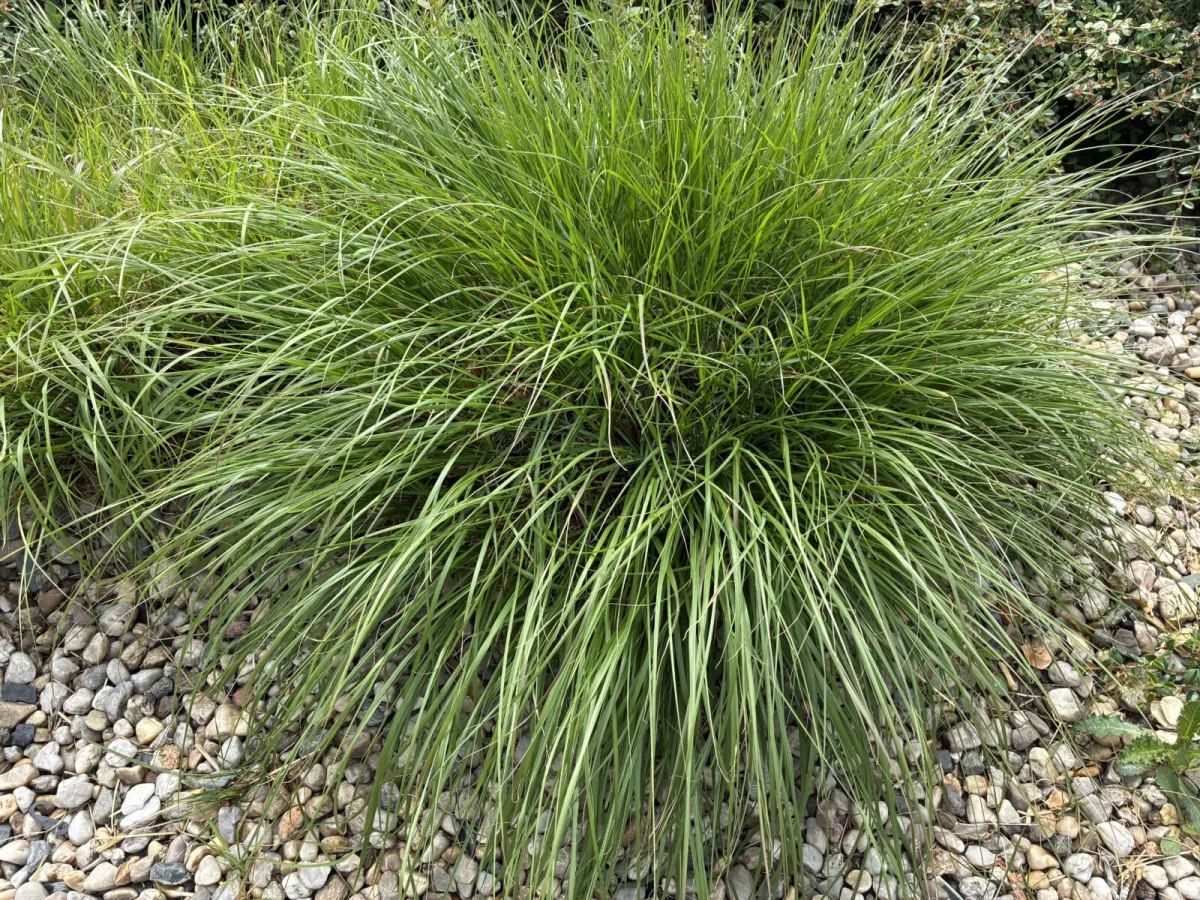
How to cut clumps back so it’s safe and practical
It’s worth thinking about hand protection as you work. The leaves of some ornamental grasses have sharp edges and can give you nasty cuts, so sturdy gloves, ideally leather, are a good idea. Smaller clumps are easily handled with secateurs. With cool-season grasses, you typically remove about two thirds of the top growth, leaving part of the plant intact.
With many grasses, it helps to tie the stems into a bundle before cutting. This keeps the job cleaner and makes clearing up much easier. With low-growing types it’s not always possible, but with taller clumps it’s a very effective trick.
For large, older and dense clumps, hand shears may not be enough. In that case, more powerful tools are used, such as hedge shears or a brushcutter with an appropriate blade. Tying the top growth again saves time when carrying the material to the compost.
When to divide ornamental grasses and why it’s worthwhile
Division is a simple way to get new plants at no extra cost. It also helps keep clumps in good condition. With some grasses, after a few years the centre of the clump can weaken or die out. Dividing and replanting often results in a noticeable rejuvenation and stronger growth.
Warm-season grasses: divide from spring to mid-summer
Warm-season types are best divided when they are actively growing but not yet in full flower. Moving them while dormant usually leads to poorer rooting. That’s why the best period is from spring to mid-summer, when warm-season grasses are getting going and building strength.
Cool-season grasses: spring or early autumn
Cool-season grasses are most active in spring and autumn, so both timings make sense. Early spring is considered the most reliable. If you divide in autumn, keep an eye out for winter freeze–thaw cycles, which can heave freshly replanted sections out of the soil.
Evergreen and grass-like types: divide only in spring
Evergreen plants don’t have a pronounced dormant period, and division is a strain on them. If divided later in the season, they recover more slowly and may struggle to survive winter. That’s why spring is the only suitable time.
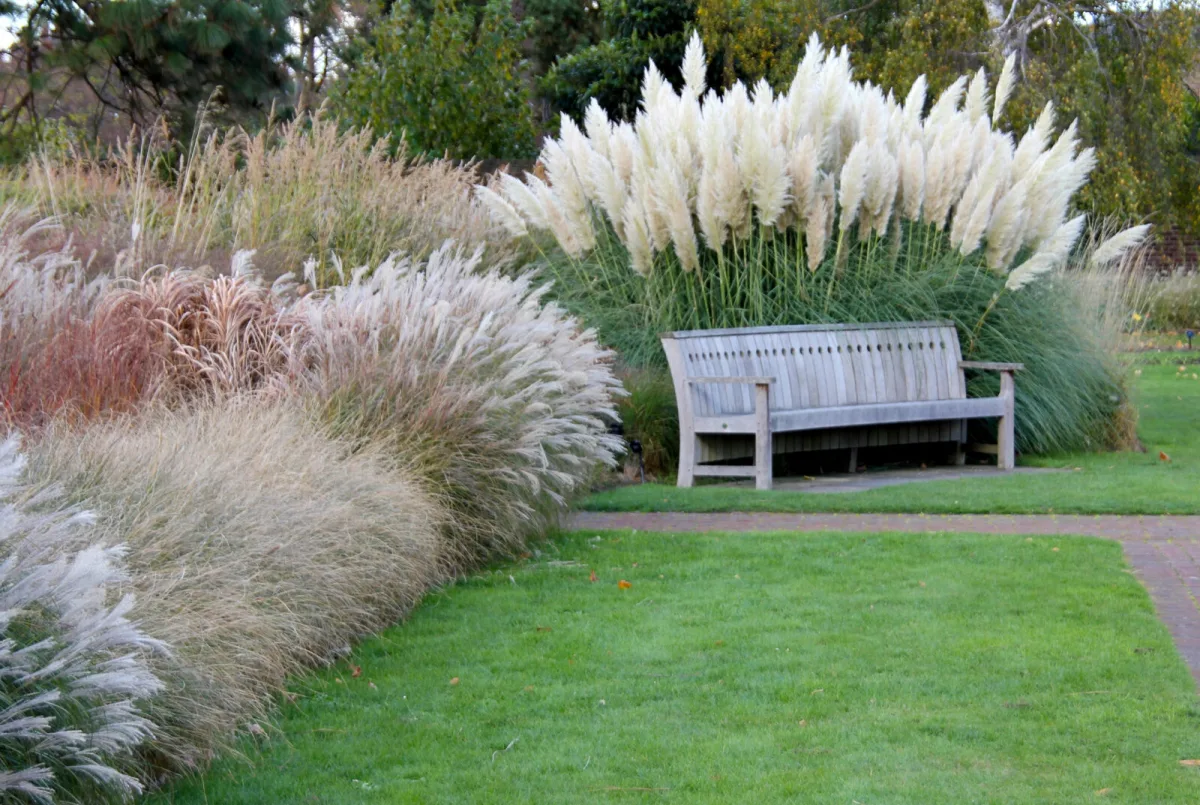
How to divide ornamental grasses correctly
With smaller clumps, the method is similar to dividing ordinary perennials. Carefully lift the plant, then split the clump into several pieces. You can do this by hand, with a knife, a sharp spade, or secateurs, depending on how tight the root ball is. The key is that each division has healthy roots and at least some vigorous growth.
Replant the divided pieces as quickly as possible so the roots don’t dry out unnecessarily. In sunny weather, it helps to temporarily cover exposed roots until they’re back in the ground. And because the leaves can be sharp, gloves aren’t a needless luxury but practical protection.
With large grasses, the principle is the same, but the work is often more physically demanding. Dense clumps hold fast and sometimes you need leverage to get them out of the ground at all. Then divide into sections so each has a share of roots. You can use various robust tools, but it’s always best to work as gently as possible. If the main clump is still healthy and doesn’t need taking apart completely, you can also propagate the plant by removing smaller pieces from the outer edge. It’s often quicker and kinder to the original plant.
After dividing, remove any obviously dead parts, plant the new sections and water thoroughly. For the first few weeks, freshly divided grasses need more frequent watering until they re-establish. Once they’ve settled in, their water needs usually drop.
Do ornamental grasses need feeding
Most ornamental grasses come from environments where plants get by on relatively lean conditions, such as prairie or woodland communities. In natural settings, they take up nutrients mainly from decomposing remnants of their own leaves and surrounding plants. You can mimic a similar regime in the garden by adding a mulch of shredded leaves around the base of the clump in autumn.
Additional feeding is usually unnecessary and often not desirable. Too many nutrients can cause grasses to produce long, soft leaves that flop and lose their elegant form.
What about drought tolerance
Drought tolerance depends on the specific species, so it’s important to know what you’re growing. Some prairie species are naturally adapted to drier conditions and usually cope with minimal watering once established.
Other ornamental grasses, however, need even moisture. They don’t like drying out completely, but they also cope poorly with permanently waterlogged soil. The ideal is a consistently moist site. A sign the soil is too dry is browning leaf tips, which is especially noticeable on cultivars with deep red or purple colouring.
There are also grass-like plants that genuinely love water, and some can even grow in standing water. In beds and containers they’ll manage with average moisture, but they perform best where they have plenty of water on a regular basis.
Source: Proven Winners, Rhs , Pestrazahrada.cz
Related articles
The Christmas Amaryllis That Can Bloom for Years but Most People Throw It Away After Flowering
Hippeastrum is a spectacular winter-blooming bulb that, with the right care, will flower again year after year. Learn how to plant it correctly, look after it after flowering, and bring it into dormancy so it reliably reblooms.
How to Grow Winter Garlic for a Much Bigger Harvest
Autumn planting is the key to strong, healthy winter garlic, but the details make all the difference. With the right timing, bed choice, seed-clove treatment and a simple bicarbonate trick, you can noticeably boost yield.

A tree or shrub planted properly in autumn can outpace spring stock and improve fruiting
Many fruit trees and soft-fruit shrubs establish better when planted in autumn, because roots keep growing while the top is dormant. Done well, this head start means stronger spring growth, less watering, and a healthier first year.
Comments (0)
Be the first to comment.