
 English
  Polski
  Deutsch
  Nederlands
  Svenska
  Norsk
Norsk  Dansk
Dansk  Français
  Italiano
  Español
  Português
  Slovenčina
  Suomi
Suomi  Gaeilge
 Common Mistakes When Raising Ducklings at Home and How to Avoid Them
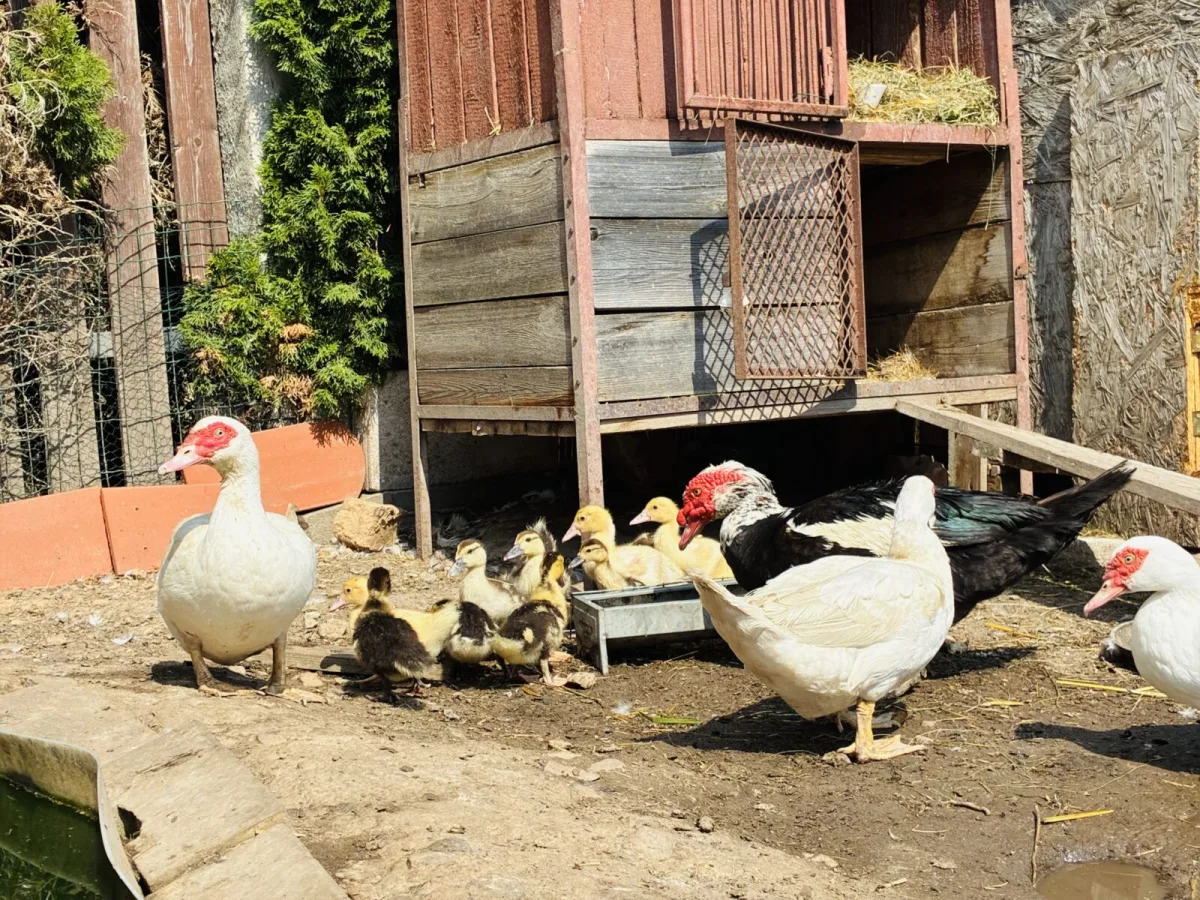
Many people fall in love with ducks at first sight. They’re cute, entertaining to watch, and their temperament is often surprisingly sociable. At the same time, ducklings aren’t just a sweet addition to the yard. From the first days they need the right warmth, suitable feed, plenty of water and a clean environment. If you prepare properly from the start, you’ll be rewarded with a healthy little flock and content birds that stay active and resilient.
How many ducklings to get and why keeping just one doesn’t pay off
The absolute basics: don’t buy a single duckling on its own. Ducks are highly social, and without company they can quickly become stressed and start to fail to thrive. For a beginner, it’s sensible to start with two to four ducklings so they form a small flock and keep each other company. Even before you buy, think through whether you want to breed ducks later on, or whether you’re keeping them purely for enjoyment or practical use.
The sex ratio matters too. If you’ll have a drake, it’s worth keeping roughly one male to three to five females. Too many males can lead to overmating, stress and injuries to the hens. If you don’t want to breed, one solution is to keep only females or only males. In practice, though, there’s often a snag: ducklings sold through general feed-and-animal outlets may not be sexed, so you can’t reliably plan the exact ratio in advance. When ordering from a hatchery, sex selection is often available, which helps prevent future flock issues.
The first days after bringing them home: feed, water and a quick health check
As soon as you bring ducklings home, watch whether they learn to eat and drink quickly. In the first week the most important things are steady warmth, calm surroundings and easy access to feed and water. Ducklings drink a lot, and they also love to splash water everywhere. So plan on topping up frequently and expect the bedding to get damp fast and need regular changing, so hygiene doesn’t deteriorate and skin problems don’t develop.
Water has to be set up so a duckling can submerge its whole bill. That isn’t a minor detail but a key need. Ducklings clear their nostrils by dipping their bills; without that, they can run into breathing issues and blockage. At the same time, choose a drinker that reduces spillage as much as possible, even though with ducks you’ll never eliminate it completely.
Pasty butt risk and how to deal with it safely
Young birds can develop a condition often called pasty butt, meaning the vent becomes stuck shut with dried droppings. It’s more common in chicks and ducklings that have been stressed, for example during transport or when temperatures fluctuate. If droppings build up, they can form a plug and the youngster then can’t pass waste. That’s dangerous and without help it can be fatal.
Checking is simple. Gently pick up the duckling, turn it and look at the vent area. If you see dried droppings, soak the area with warm water and carefully loosen it. Don’t pull it off dry, because you can tear delicate down and irritate the skin. Once cleaned, dry the youngster and return it to warmth.
Setting up a safe, warm brooder
Ducklings need an indoor brooder for the first weeks of life until they’re fully feathered. That’s usually around seven to nine weeks, depending on conditions and breed. The brooder should have bedding, a feeder, a drinker and a heat source, most often a heat lamp. Bedding needs to absorb moisture well and be safe. Softwood shavings are commonly used because they’re easy to replace and hold their shape.
Set the heat so the youngsters have a choice. It’s practical to warm only part of the brooder. Then ducklings can decide for themselves whether to stay under the lamp or move to a cooler area. Their behaviour will tell you more than the numbers on a thermometer.
How to tell whether they’re cold or too hot
If they’re cold, they often huddle tightly into a small pile and may shiver. In that case you need to add heat or adjust the lamp height. If it’s too hot, ducklings spread out as far from the heat source as possible and may breathe rapidly with their bills open. Ducklings can pant like a dog, and it’s a clear sign you need to lower the temperature.
Once they’re mostly feathered at around six weeks, most keepers start reducing supplemental heat gradually. The key is to go by the room conditions and by how the ducklings behave, not by a single universal chart.
Bathing and swimming: when to start and what to watch out for
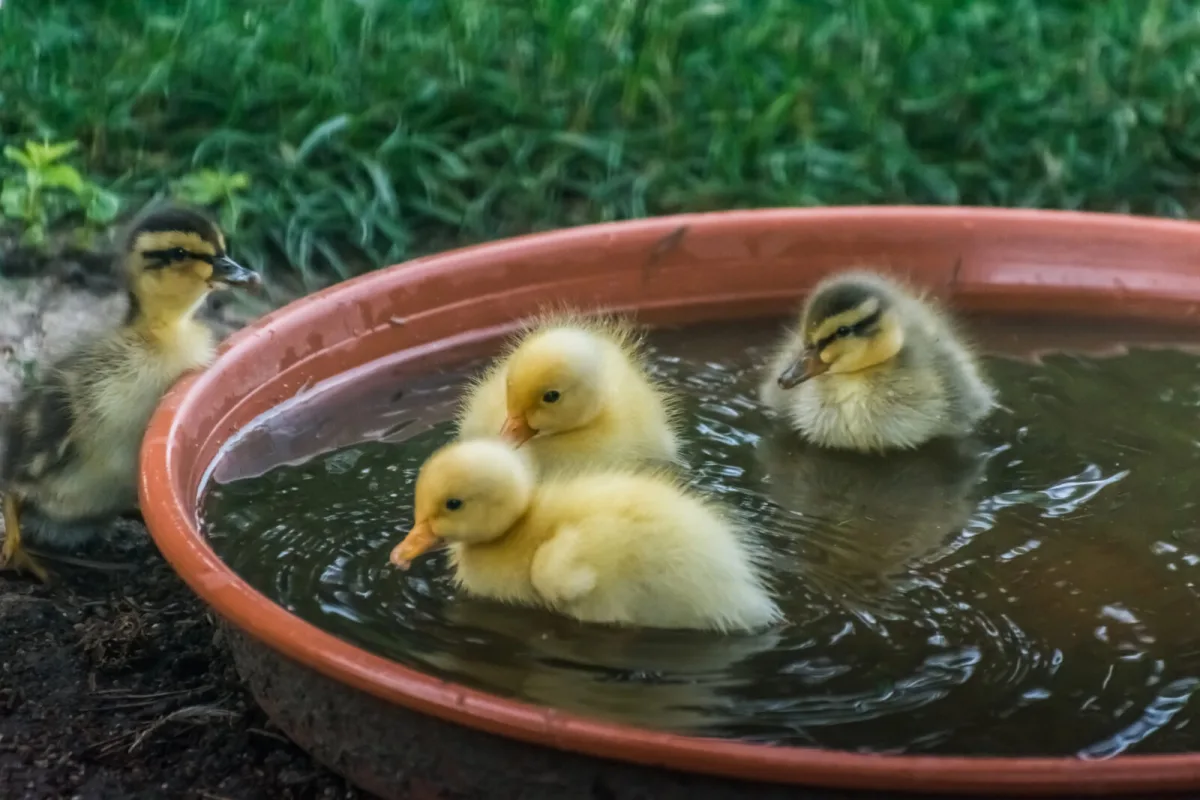
Swimming is natural for ducks, but with ducklings there are safety rules. From about one week of age you can offer short baths in warm, shallow water, for example in a bathtub or sink. Supervision is essential the entire time. Ducklings can tire quickly, and if they run out of strength they can drown, especially during longer time in water.
Unlike adult ducks, they aren’t naturally waterproof at first. The protective oil on the feathers starts developing around the fourth week. Until then, water doesn’t bead off their down and a youngster can chill easily. After bathing, always towel them dry and return them to a warm brooder. Unnecessary chilling can be very risky for a small duckling and they may not recover well from it.
Feeding ducklings and their specific nutritional needs
Ducks have slightly different needs than chickens. You can use feed formulated specifically for waterfowl, or choose chick starter and grower, but with a few adjustments. If you use chicken feed, pick a non-medicated version. Ducks usually don’t need the same medications as chicks, and they also tend to eat more, so with medicated feed the risk of overdosing increases.
Niacin is a common topic in duck keeping
Another difference is the need for niacin. Ducklings generally require more of it than chicks, and if you’re feeding chicken feed it’s wise to supplement niacin until around 20 weeks of age. One commonly used option is adding brewer’s yeast to the feed at about one and a half tablespoons per one cup of the feed mix. The aim is to support proper growth and prevent leg and mobility issues that can show up when they’re deficient.
How much protein at different growth stages
In the first three weeks of life, a higher protein level is often recommended, roughly 18–22%, because youngsters grow quickly. After that you can switch to a mix around 15–16% up to about 18 weeks of age. Then a typical layer ration at around 16% is used if you’re keeping ducks for eggs. Always watch body condition and adjust feeding to your keeping goals, breed and environment.
Conclusion: what to watch so ducklings thrive
Success with ducklings rests on a few simple pillars. Get more than one so they’re not alone, keep on top of cleanliness and water, provide safe warmth and quality feed with attention to niacin and non-medicated rations. Add short, safe bathing only at the appropriate age, and always focus on drying them off and getting them back to warmth. Ducklings can be hard work because they’re messy and need daily care, but with a good start they’ll grow into hardy, friendly ducks that will bring you enjoyment for many years.
Source: The Galloway Farm, High Country Living, Pestrazahrada.cz
Related articles
The Most Common Mistake With Home-Laid Eggs That Seems Careful but Actually Harms Them
Fresh eggs from your own or local hens have a natural protective coating that helps keep bacteria out. Washing them too soon can strip that protection and shorten their keeping quality.
An Empty Nest Box in a Tree Reveals a Mistake Even Experienced DIYers Make
Making a bird nest box is an easy project, but small construction and placement mistakes can leave it sitting empty. Get the sizing, ventilation, materials and siting right so birds will actually move in.
Late Feeding Weakens the Whole Colony and Beekeepers Know the Deadline They Must Not Miss
Successful overwintering depends on timely feeding and enough easily digestible stores. If you feed too late, you overburden winter bees and risk a weakened colony or starvation losses.
Comments (0)
Be the first to comment.