
 English
  Polski
  Deutsch
  Nederlands
  Svenska
  Norsk
Norsk  Dansk
Dansk  Français
  Italiano
  Español
  Português
  Slovenčina
  Suomi
Suomi  Gaeilge
 Common Mistakes When Harvesting and Storing Pears and How to Keep Them Fresh Longer
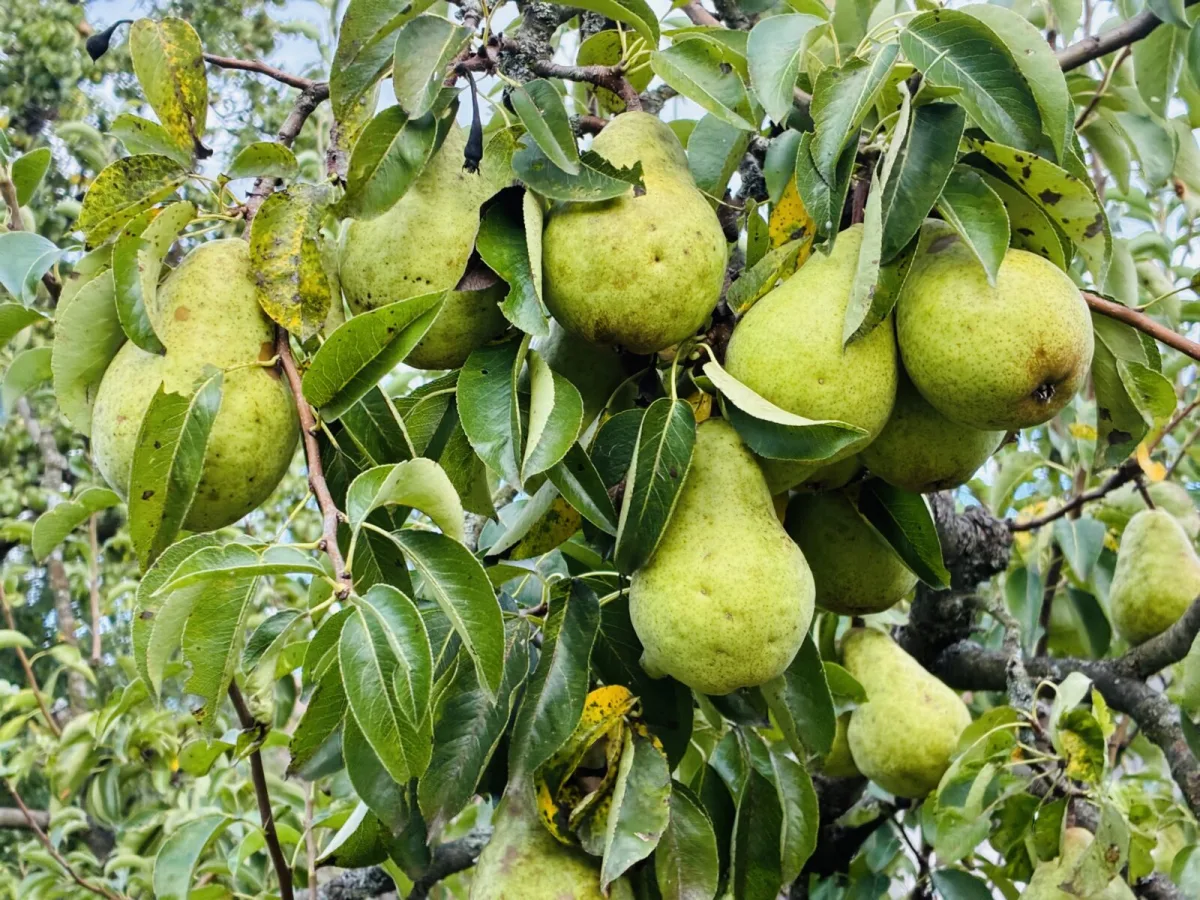
Pears unfairly live in apples’ shadow. Yet when you hit the right stage of ripeness, they reward you with a full, juicy flavour that’s excellent fresh and in warm desserts alike. With pears, though, it isn’t enough to wait until they look perfect on the tree. This fruit ripens a little differently from most others, so it’s important to know when to pick it, how to let it finish ripening, and how to store it for longer.
When to harvest pears
Most varieties are ready from September, though some earlier ones ripen as soon as late August. Unlike many other fruits, pears are best picked before they reach full eating ripeness. If they’re left on the tree too long, the flesh can turn mealy or mushy inside while the skin still looks flawless. The result is fruit that looks tempting but disappoints once cut open.
How to tell the right moment to pick
Keep an eye on the usual timing for your particular variety and the condition of the fruit. A pear that’s ready to pick should come away from the spur or twig with a gentle lift and twist. The aim isn’t to harvest rock-hard, underdeveloped fruit, but neither should you pick pears that have already softened too much on the tree. It’s a proven approach to pick pears slightly under-ripe and allow them to finish ripening off the tree.
A gentle harvest without bruising
Handle pears carefully when picking, as they bruise easily. It’s best to cradle each fruit in your palm and gently twist it by the stalk until it releases. Rough pulling or tossing fruit into a container unnecessarily increases the risk of damage. Bruised areas spoil faster in storage, so careful handling significantly extends how long the fruit will keep.
How to ripen pears
After harvesting, the ideal is to keep pears in a cool, dry place where they can ripen gradually. This is where the flesh develops properly, gaining its characteristic tenderness and sweetness. The advantage is that the fruit ripens more evenly from the inside, reducing the risk of over-ripening on the tree.
How to tell they’re ready to eat
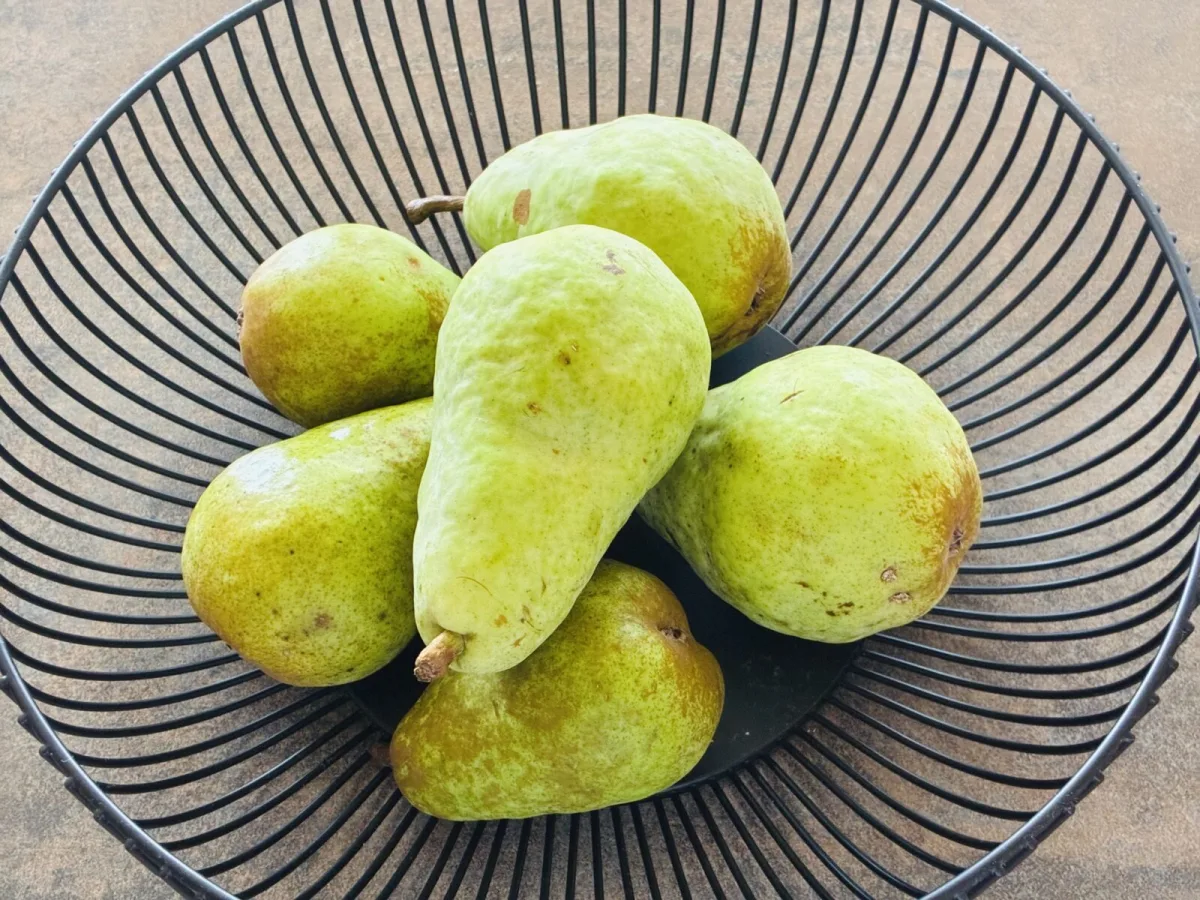
The most reliable check is the neck of the pear, the area just below the stalk. If it yields slightly to a gentle press, it’s time to eat it. With pears this is a more important indicator than skin colour alone. Some varieties can look fairly firm even when they’re at their best for flavour.
How to speed up ripening
If you don’t want to wait too long, place harvested fruit in a paper bag and close it. Ethylene, a natural gas that promotes ripening, is trapped inside. This helps pears soften more quickly. However, it’s not a good idea to keep fruit in an unventilated environment without checking it, because pears can quickly go from perfectly ripe to over-ripe.
What to do with over-ripe pears
Even with careful monitoring, pears sometimes soften more than is ideal for eating fresh. That doesn’t mean they’re destined for the bin. Over-ripe fruit is perfect for crumble desserts, sorbets, cakes, purées or cooking. Their softer texture is actually an advantage in the kitchen, as they break down easily and release their flavour well.
Storage options for the short and long term
Once pears are harvested, decide whether they’re for quick use or longer keeping. Ripe pears usually last around five days in the fridge before they start to soften too much. The refrigerator is therefore best used mainly to hold pears at their optimum ripeness for short periods.
For longer storage, pears can be frozen. In the freezer they’ll keep for roughly ten to twelve months. How you prepare them before freezing depends on whether you’ll later use them in baking, compotes or smoothies. Another option is drying. Thinly sliced pears can be dried in a dehydrator or in the oven at a low temperature. Prepared this way, they’re compact to store and make a handy snack.
Conditions for winter storage
If you have a larger crop, it’s worth using a cellar, garage or another space with suitable conditions. The ideal is a cool, frost-free, dark and well-ventilated place with a temperature of roughly 4 to 7 °C. The space should be slightly humid but not musty, and protected from rodents. A stable environment strongly affects how long pears will keep.
How to store the fruit correctly
Crates, shallow wooden boxes or shelving that allows air to circulate are suitable for storage. Store only healthy, unblemished, preferably medium-sized fruit, ideally with the stalk attached. The best are pears picked slightly before full ripeness. Arrange pears in a single layer so they don’t touch. Any bruise increases the risk of rot.
It’s best to keep different varieties separate, as they don’t ripen at the same pace. Strongly aromatic fruit, such as quinces, is better kept apart so it doesn’t taint other fruit with its scent. Likewise, don’t store pears near paints, onions or fertilisers.
Regular checks are essential
Pears can move from perfect to over-ripe fairly quickly, so they need more frequent checking than apples, for example. In warmth they soften noticeably; in cooler storage, ripeness may show only as a subtle change in colour. Once a batch reaches its best eating stage, it’s a good idea to remove it from storage. Gases released by ripening fruit speed up ripening in the rest.
Regularly remove any fruit showing signs of rot or suspicious softening. This prevents disease from spreading to healthy pears.
Which varieties store best
Reliable storage varieties include Conference and Doyenné du Comice. Both are valued not only for keeping well, but also for their pronounced flavour and pleasingly fine-textured flesh. In general, later varieties tend to store longer than very early types.
What to watch out for in storage
The most common issue is rot, encouraged by poor ventilation and damaged fruit. You may also see shrivelling caused by high temperatures or overly dry air. Sometimes internal browning of the flesh occurs, which may not be visible on the outside for a long time. A clean store, regularly washed containers and careful sorting at harvest all help.
Final recommendation
With pears, the details make the difference. Picking at the right moment, letting them finish ripening off the tree and storing them under suitable conditions has a big impact on both flavour and keeping quality. Get this process right and you can enjoy pears at their best not only in autumn, but throughout the winter months.
Source: Roots Plants, RHS , Pestrazahrada.cz
Related articles
What to Do Before Frosts So Tuberous Plants and Bulbs Make It Through Winter
Tender tuberous plants and bulbous flowers often need help to survive winter. Learn when to lift and store them and when a thick mulch layer in situ is enough.
How to Store Carrots for Winter and Why the First Step After Harvest Matters
Carrots can stay fresh for much of the winter, but only if you handle them properly right after harvest. Careful sorting, gentle handling and the right storage method prevent rot and keep roots crisp for longer.

Simply Bringing Balcony Plants Indoors Isn’t Enough
Many popular balcony plants aren’t true annuals—they just can’t cope with frost. Overwinter them properly and they’ll restart stronger, flower earlier, and look fuller than newly bought plants.
Comments (0)
Be the first to comment.