
 English
 Polski
 Deutsch
 Nederlands
 Svenska
 Norsk
 Dansk
 Français
 Italiano
 Español
 Português
 Slovenčina
 Suomi
 Gaeilge
Big Garlic Bulbs Depend on Autumn Planting
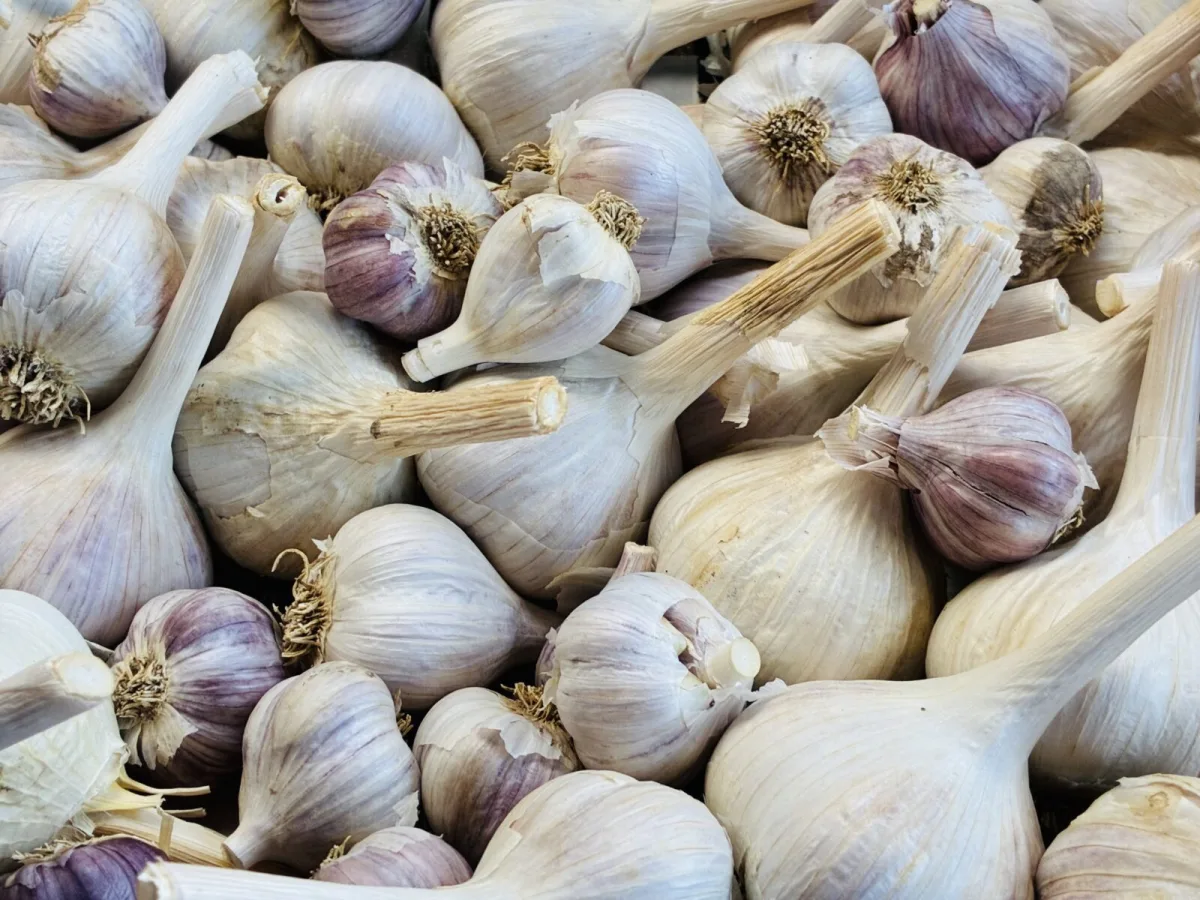
Garlic belongs to the same plant family as onions and is a popular staple in the kitchen as well as the home garden. It grows best in a warm, sunny spot in soil that doesn’t hold excess water. It isn’t grown from seed, but from individual cloves, most often planted in autumn. Harvest then follows the next year, from late spring into summer depending on the variety and planting date.
A major advantage of garlic is how little care it needs. It doesn’t take up much space, usually gives a dependable crop, and when dried properly it stores for a long time. You mainly need to keep it weed-free, water occasionally during dry spells, and remove flower stalks promptly if they form.
Which garlic to choose
Garlic is grown from individual cloves separated from a whole bulb. The best option is to buy planting stock from a reputable garden centre or specialist supplier. Standard supermarket garlic may not suit local conditions and can also carry a risk of introducing disease.
There are two main types: hardneck and softneck. Hardneck garlic produces fewer but larger cloves and usually has a stronger flavour. However, the bulbs don’t store for as long, typically just a few months, and the plant is more likely to send up a flowering stalk. Softneck garlic forms smaller, more tightly packed cloves, but stores much longer and rarely flowers.
There are many varieties on the market, differing in flavour, bulb size, harvest time and storage life. An interesting option is so-called elephant garlic, which is actually closer to a leek. It forms very large bulbs with a few hefty cloves and tends to have a milder taste. It does, however, need a longer, warmer growing season.
Preparing the soil before planting
Garlic needs a bed in full sun and soil that drains well. Waterlogged ground, especially in winter, increases the risk of disease and rot. If you have heavy soil that stays wet for a long time, it’s often better to start cloves in modules and transplant them outside in spring.
Before planting, it’s worth weeding the bed and working in well-rotted compost or thoroughly decomposed manure. This improves soil structure, its ability to hold the right amount of moisture, and the nutrient supply. Garlic doesn’t like overly acidic conditions, so on strongly acidic soils, liming done well in advance can help.
To reduce later weed growth, you can cover the surface with biodegradable weed-suppressing fabric or mulch with organic material. Planting is then done into prepared holes.
When and how to plant garlic
The most common planting window is from mid-autumn to early winter. Most varieties need a spell of cold to form bulbs properly. Some types, however, can also be planted later, towards the end of winter or in early spring.
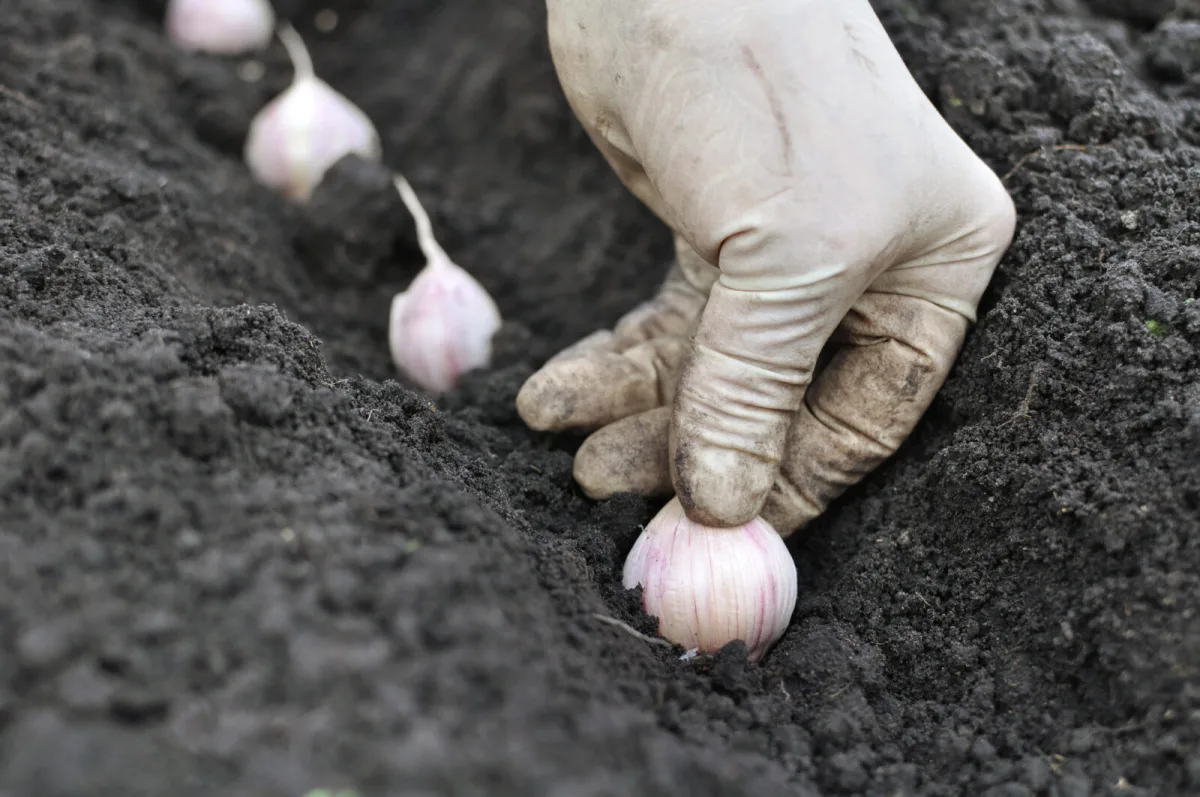
Carefully split the bulb into individual cloves only just before planting. Each clove must be planted the right way up, with the flat basal plate down and the pointed tip up. Space them about 15 cm apart and set them roughly 2.5 cm below the soil surface. Rows should be about 30 cm apart. In lighter soils you can plant a little deeper, while in heavy ground it’s better not to plant too deeply.
Newly planted cloves can be scratched up by birds, so it’s sensible to cover the bed temporarily with horticultural fleece or a light net until the plants are well rooted.
Planting into modules and containers
In areas with heavy or waterlogged soil, you can start garlic in modules in autumn. Use a standard seed or multipurpose peat-free compost that should be only lightly moist, never waterlogged and muddy. Place the trays in an unheated greenhouse, cold frame, or a sheltered spot outdoors. In spring, transplant the young plants into a prepared bed.
Garlic can also be grown in pots. The container should be at least 25 cm deep and wide enough to keep similar spacing to an outdoor bed. In containers the compost dries out faster, so moisture needs checking regularly.
Care during growth
Garlic doesn’t need complicated care. The key tasks are weeding and watering during prolonged dry periods in spring and early summer. Water helps the bulbs size up, but once they are well developed, it’s best to reduce watering to avoid increasing the risk of rot. Yellowing leaves are usually a sign of ripening.
Weeds are best removed by hand, as hoeing can damage bulbs sitting close to the surface. If plants produce a flower stalk, it’s best to cut it off as early as possible. Otherwise, some of the plant’s energy goes into flowering rather than bulking up the bulb. Young flower stalks are also edible and can be cooked much like a vegetable.
Harvesting garlic
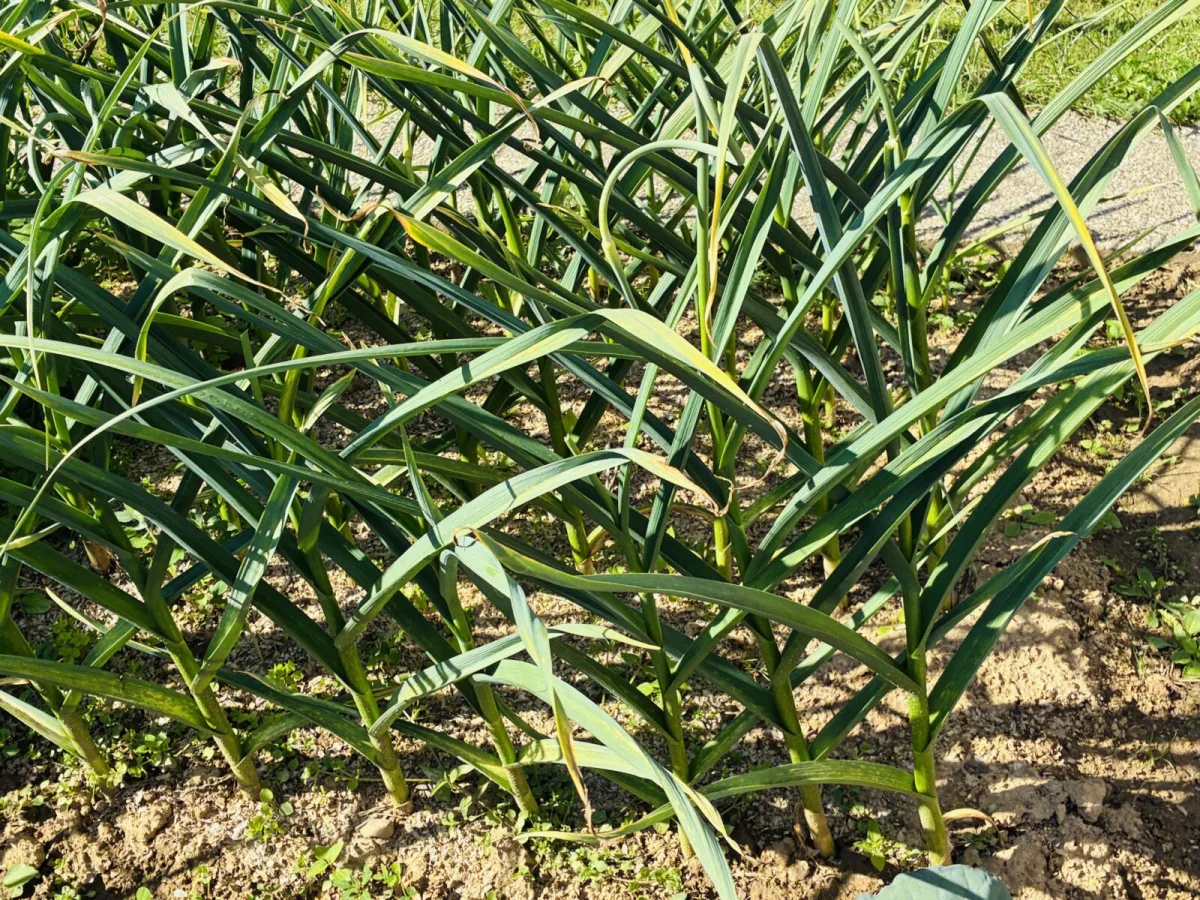
As it grows, you can carefully take a few green leaves for the kitchen. The main harvest comes when the leaves begin to yellow. Garlic planted in autumn usually matures from late spring to early summer, while spring plantings are more often ready from mid-summer into early autumn.
It doesn’t pay to delay harvesting for too long. Bulbs lifted late are more likely to split and store poorly. Loosen garlic gently with a garden fork and lift it so the bulbs aren’t knocked and bruised. Damage shortens storage life.
Drying and storage
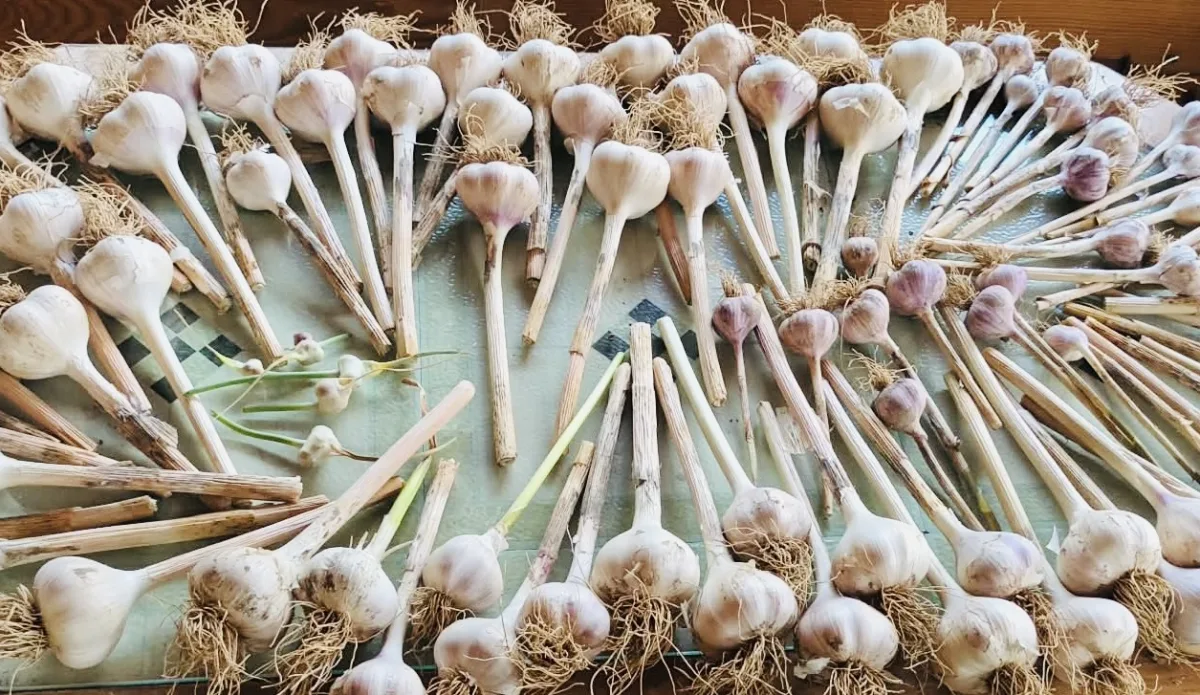
After harvest, garlic must be dried thoroughly. Ideally, spread it out in a single layer in a sunny, airy place, or in a greenhouse with good ventilation, or a dry shed. Excessively high temperatures aren’t suitable. The first stage of drying usually takes two to four weeks, depending on the weather.
Once the tops are dry and papery, you can trim them and store the bulbs in a cool, dry place. An ideal temperature is around 5 to 10 °C. Hardneck types typically keep for four to six months, while softneck types often store much longer, sometimes right through to the next season.
Possible growing problems
With correct cultivation, garlic is fairly trouble-free, but a few issues can still show up. Sometimes small cloves form along the stem, usually as a result of changeable spring weather. These can be used in the kitchen as normal. If the bulb doesn’t divide into cloves, the most common reason is a lack of winter cold.
In hardneck types, bolting is common, so flower stalks need removing in good time. Bulbs cracking open is often a sign of delayed harvest. Green colouring of cloves can occur when planted too shallowly. Such garlic is edible, but it’s usually not suitable for long-term storage.
Garlic is an ideal crop for growers who want a reliable harvest without complicated care. All it needs is sun, free-draining soil, timely planting and patience until harvest.
Source: Rhs, Mind and Soil, Pestrazahrada.cz
Related articles
Drought tolerant fruit trees for Czech gardens that handle heat and winter frosts
Warmer summers and longer dry spells are changing what can be grown in Czech gardens. With the right variety and a sunny, sheltered spot, olives, pomegranates and figs can cope with heat, drought and even winter cold.
Thuja hedges are on the way out gardeners are choosing a shrub that shrugs off frost and drought and never looks dull
Thuja may be a long-standing classic, but today’s hedges are increasingly built from more varied shrubs that look better through the seasons. One standout choice is ninebark, prized for its toughness, colour and easy care.
Autumn planted grapevines bud earlier the most common mistake happens before they even go in the ground
Planting grapevines in November can give them a head start in spring, as roots can still establish in warm soil. Success depends mainly on proper planting depth and reliable winter protection.
Comments (0)
Be the first to comment.