
 English
  Polski
  Deutsch
  Nederlands
  Svenska
  Norsk
Norsk  Dansk
Dansk  Français
  Italiano
  Español
  Português
  Slovenčina
  Suomi
Suomi  Gaeilge
 Baikal skullcap thrives in drought, rock gardens and slopes yet still flowers freely
Baikal skullcap, Latin Scutellaria baicalensis, has been used in herbal practice for centuries and holds an important place in traditional Chinese medicine. It is classed among so-called adaptogenic plants, meaning species whose potential to support the body’s resilience to stress is being studied. At the same time, it has attracted scientific interest for possible use in supportive care for certain serious diseases. Even so, it remains something of a rarity in Czech gardens, despite being fairly easy to grow and highly ornamental.
Where it comes from and where you may encounter it
This perennial originates in the Far East and grows naturally, for example, in China, Mongolia, Korea, Russia and northern Vietnam. Over time it has spread to other parts of the world too, mainly via botanic gardens and medicinal-plant collections, where it is grown as an intriguing species with a substantial root and striking flowers.
A blue-flowering perennial that insects seek out
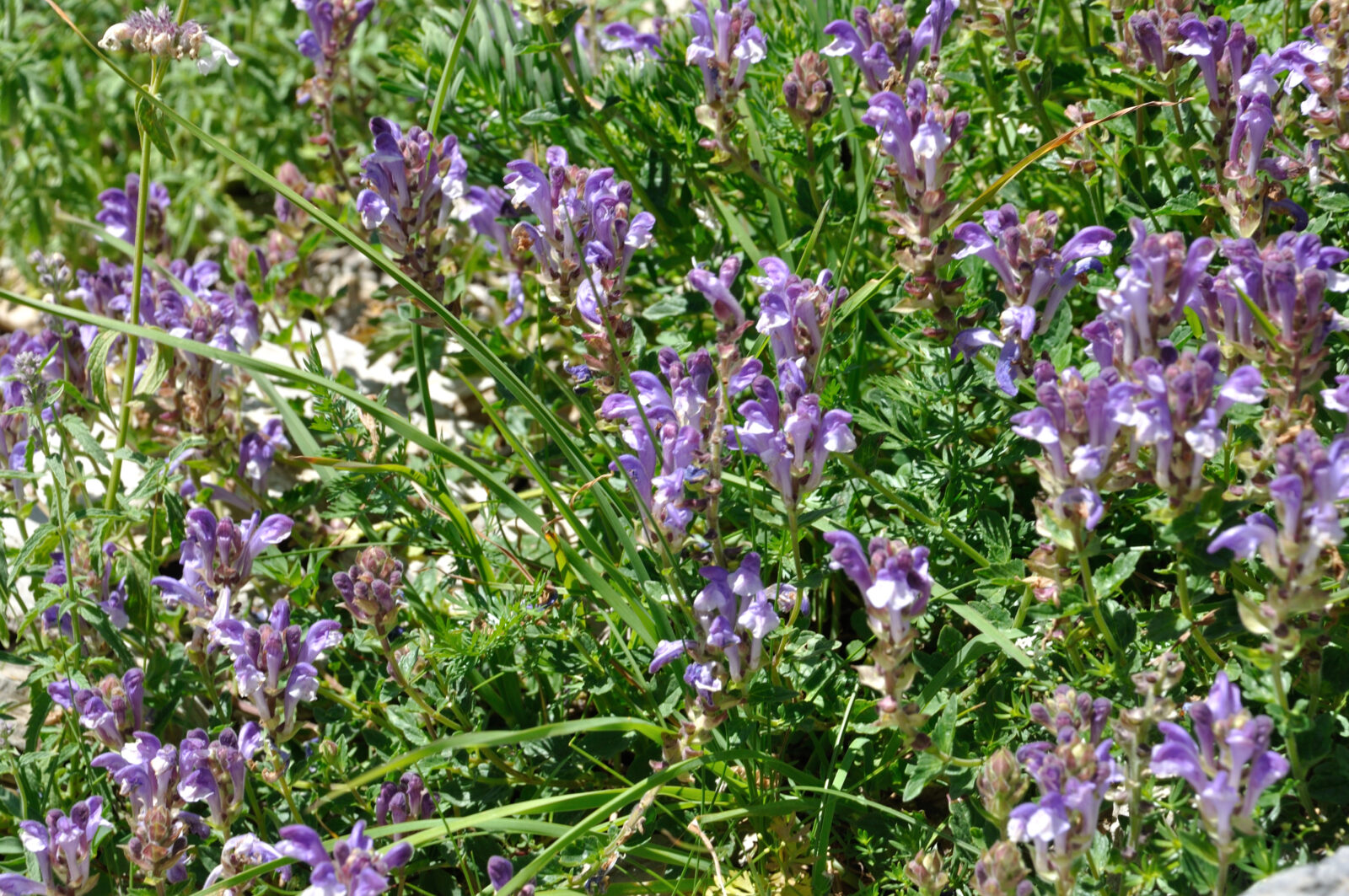
Baikal skullcap forms, in good conditions, denser clumps with multiple stems. In flower it reaches roughly 40 to 50 cm. It has elongated, lance-shaped leaves that sit close to the stems and look neat even without much attention.
In summer, blue flowers appear that attract bees, butterflies and other pollinators. In the garden this is a practical benefit, because the plant can support beneficial insects at a time when some other species are no longer flowering as heavily.
It is also interesting that even during flowering the plant sets buds on the roots, from which new shoots grow the following season. Thanks to this, it can gradually thicken up if it has the right site.
The most valuable part is hidden underground
The main attention with skullcap focuses on the root, because that’s where the highest concentration of active compounds is found. The most valued components are usually associated with older plants that have more shoots. The strength of the content is often mentioned as being higher in spring and then again after flowering.
From harvested roots, which are brownish on the outside and typically lemon-yellow within, various home preparations are made, most often tinctures. In folk use, it is mentioned for support with high blood pressure, calming the nervous system and easing allergic symptoms. Once dried, the roots can also be used to make a decoction. Use doesn’t necessarily end with the root either; fresh leaves are sometimes added to light salads.
It is important to distinguish between traditional use and what has been reliably proven by clinical studies in people.
What the root contains and what research suggests
Baikal skullcap root is a source of biologically active flavonoids, most commonly baicalin, baicalein and wogonin. Laboratory and animal studies describe antioxidant, anti-inflammatory and anti-allergic effects for these compounds. A possible protective effect on the nervous system and liver is also being investigated, and in selected experiments there is also activity against certain types of tumour cells.
Even so, it cannot yet be claimed that a homemade skullcap tincture or decoction reliably treats high blood pressure, allergies or cancer. Clear conclusions require further clinical studies in humans to clarify effectiveness, safe dosing and possible interactions with medicines.
The site it likes best
In the wild, Baikal skullcap grows on sunny, rather dry slopes, in steppe habitats and often in stony or gravelly places. It can also occur at higher elevations, which suggests it isn’t especially delicate provided it has the right conditions.
In the garden it appreciates full sun, but it will also cope with partial shade. Ideal is ordinary garden soil that is free-draining. Once well established it tolerates drought quite well, although it generally does better when the soil is not left bone-dry for long periods or extremely depleted.
When to plant and how to get plants
It can be grown in lowlands as well as in mid and higher elevations. Skullcap suits herb beds, gravel gardens, rockeries, dry walls, slopes and also as an edging plant in mixed perennial borders, where the blue flowers look natural and are hard to miss.
You can plant throughout the season, but it’s most practical to buy ready-grown plants from specialist nurseries. Another route is to sow seed available from online seed suppliers. Sow the seed shallowly in spring into seed compost, but allow for a longer germination period, which can stretch to nearly two months. By contrast, dividing older clumps is not usually a very reliable method for this plant.
Source: Záhrada, Science Direct, Wikipedia, Pestrazahrada.cz

A lover of nature, gardens, and everything that moves, blooms, or grows. He literally grows everything, from herbs to rare species, and he enjoys caring for animals just as much. In his work, he connects modern technology with tried-and-tested grandmotherly methods and is happy when both paths lead to the same goal.
Related articles
Take care with pruners on ornamental grasses Some are best cut back in autumn others in spring
Ornamental grasses bring movement and structure, but not all of them should be left standing until spring. For several warm-season and self-seeding types, an autumn cut-back keeps borders tidier and helps limit spread.
Don’t Prune Hydrangeas in October
Tidying the garden in autumn is tempting, but October pruning can cost your hydrangeas next year’s flowers. Only two light interventions make sense this time of year; everything else is best left until the right season.
A Pineapple Top Will Root in Two Weeks, but Success Depends on the Step Most People Skip
Don’t throw away the leafy crown when you cut a pineapple. With the right prep, light, warmth and careful watering, you can root it and grow a houseplant that may eventually fruit.
Comments (0)
Be the first to comment.