
 English
  Polski
  Deutsch
  Nederlands
  Svenska
  Norsk
Norsk  Dansk
Dansk  Français
  Italiano
  Español
  Português
  Slovenčina
  Suomi
Suomi  Gaeilge
 Why Zucchini Rot Before They Reach Harvest Size
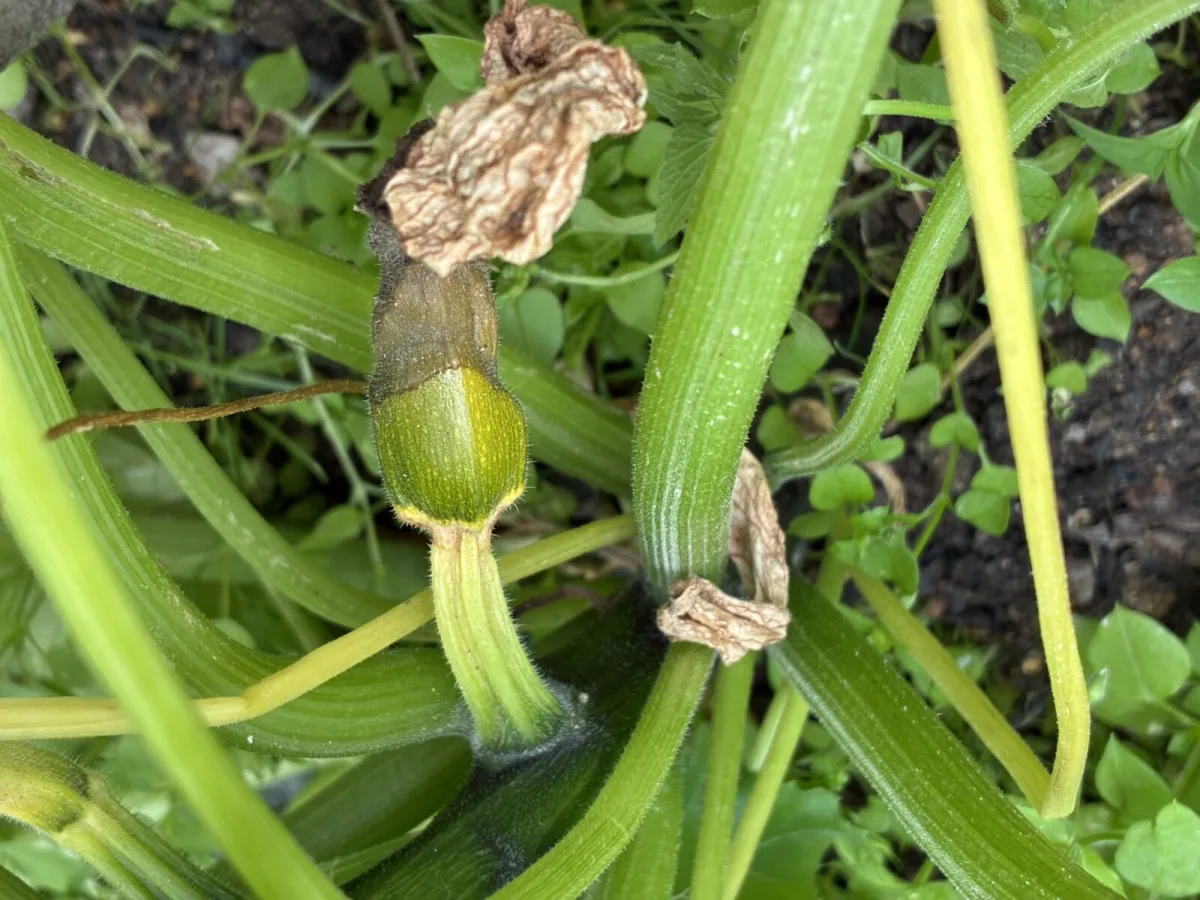
July is usually the time when summer squash really hit their stride. Zucchini often set flowers one after another, and it looks like the crop will be huge. But this is also the point in the season when problems show up that cause unnecessary panic. Fruits start to spoil, flowers drop, and you may feel the issue is the soil or a bad seedling. In most cases, though, it’s a normal situation with a clear explanation—and it’s fairly easy to correct once you know what to watch for.
The garden keeps sending signals. A plant will often show you whether it’s struggling with pollination, water, or extreme heat. All it takes is a moment to stop, look closely at the flowers and tiny fruits, and work out what’s actually happening.
Rot at the blossom end most often means weak pollination
If a small zucchini starts to soften and rot on the side where the flower was, it’s typically a sign of inadequate pollination. That doesn’t automatically mean contaminated soil or a “bad” plant. It’s common when there are few pollinators, when it’s rainy or windy, or when flowers only open briefly.
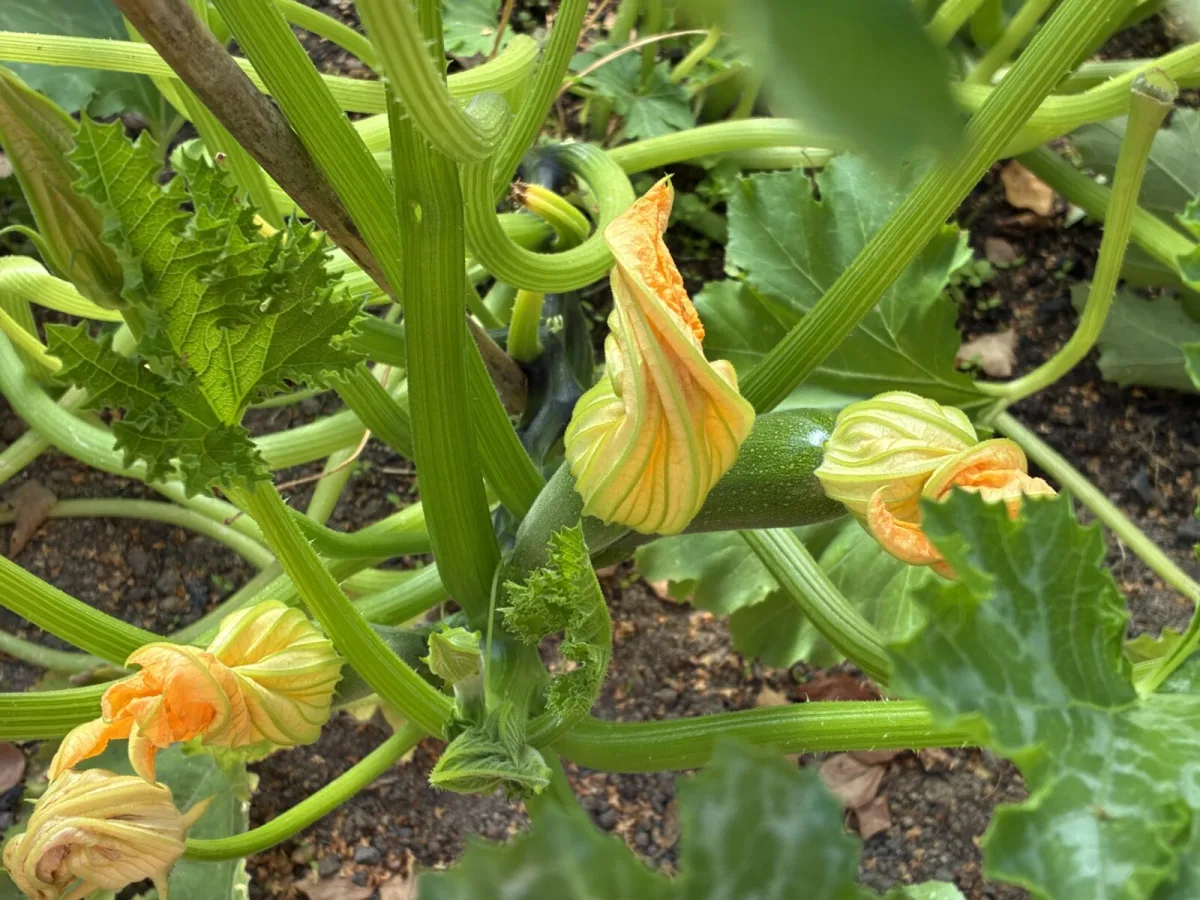
Zucchini have both male and female flowers. The male flower sits on a thin, straight stem. You can recognize the female flower by the small swollen section at the base that looks like a miniature zucchini. For it to develop into a healthy fruit, pollen from a male flower must reach the stigma of the female flower while the blooms are open.
Hand pollination as a quick fix
If you suspect weak pollination, you can step in by hand. Choose an open male flower and transfer the pollen to the center of an open female flower. Some people gently rub the flower onto the stigma; others use a small paintbrush. The key is making sure the pollen actually reaches where it needs to go. Once pollination is sufficient, the fruit starts to grow evenly and the blossom end usually stops rotting.
Flowers drop and fruits don’t form, or they stall in growth
Flower drop can have several causes, and it’s worth distinguishing what’s normal from what’s a warning sign. Male flowers naturally fall after they finish blooming. The plant is simply done with them—male flowers have one job, to provide pollen. So if mostly male flowers are dropping, that alone isn’t a reason to worry.
Pay attention when flowers drop before they even open, or when a tiny fruit forms but quickly turns yellow, softens, and falls off. Most often this is caused either by improper watering and consistently waterlogged soil, or—on the other end of the spectrum—several days of extreme temperatures.
Watering and soil matter more than you’d think
With zucchini, it’s important that the soil can also re-aerate after watering. If it stays wet for a long time, the roots struggle and the plant drops flowers or small fruits because it can’t support them. At first glance the surface may look dry, but a few centimetres down it can still be damp. That’s why it helps to push a finger a few centimetres into the soil and check the real condition.
How to adjust your watering routine
In practice, it often works best to water less often but thoroughly. Then let the soil partially dry before watering again. As the plant grows, the root system spreads both outward and downward, so it’s better to get water deeper into the root zone rather than just wetting the surface. Zucchini usually thrive in well-draining soil that doesn’t stay muddy for long.
What if you have heavy, clay soil
In soil with poor drainage, waterlogging problems show up more often. Planting on a raised mound or in a raised bed filled with loose, fertile soil can help. This kind of site sheds excess water better and gives roots more air, which quickly improves both flower quality and fruit set.
High temperatures can cause flowers and small fruits to drop
Another frequent culprit is heat. When daytime temperatures hover around 32 °C and higher for several days, zucchini may drop flowers or underdeveloped fruits. The plant is responding to stress and conserving energy. During these spells, regular watering helps prevent the plant from drying out completely through the hot afternoon.
That may sound contradictory, because both overwatering and heat can lead to flower drop. The difference is how water behaves in the soil. In hot weather, water evaporates quickly and the plant uses it faster. In heavy soil, or with frequent light surface sprinkling, it can happen that the lower root zone stays wet and airless. That’s why it’s so important to know your soil, watch how quickly it dries, and adjust watering accordingly.
Look for patterns and read the plant’s signals
Plants give us clues. It’s up to us to interpret them correctly and act accordingly.
When something isn’t going well, it pays to approach it like a small detective case. Check whether the problem is at the blossom end, whether flowers are dropping before opening, what the soil moisture is like, and what the weather has been doing over the past week. Often, it becomes clear what fits your situation. Once you identify the likely cause, make one specific change and watch whether things improve over the next few days.
Most often, two things are enough: support pollination and fine-tune watering to match your soil type and the current heat. With that, zucchini usually bounce back quickly—and instead of rotting starts, you’ll be harvesting firm, evenly grown fruits.
Source: Plant Harmony, Zahrada.sk , Pestrazahrada.cz
Related articles
Next year you can harvest better if you don’t sow carrots where they won’t thrive
Carrot root fly can ruin carrots, parsley and celery from the inside out, often without obvious warning until harvest. Better site choice, rotation, later sowing and simple physical barriers can dramatically cut damage next season.
How to Propagate Roses from Cuttings at Home and Fill Your Garden with Blooms Almost for Free
Want more roses without paying for new plants? With a few healthy cuttings and a simple plastic-bottle mini greenhouse, you can root new bushes at home in just a few weeks.
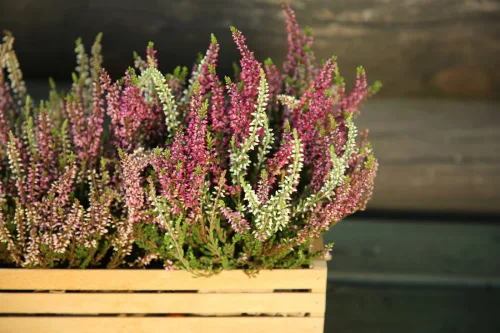
Heathers can cope where other plants won’t, but one soil detail decides everything
Heathers and heaths are tough evergreen shrubs that can flower across the seasons when you choose the right types. Success hinges on matching the plant to your soil pH and ensuring free drainage.
Comments (0)
Be the first to comment.