
 English
  Polski
  Deutsch
  Nederlands
  Svenska
  Norsk
Norsk  Dansk
Dansk  Français
  Italiano
  Español
  Português
  Slovenčina
  Suomi
Suomi  Gaeilge
 Why Rhododendron Leaves Turn Yellow Between the Veins and How to Help
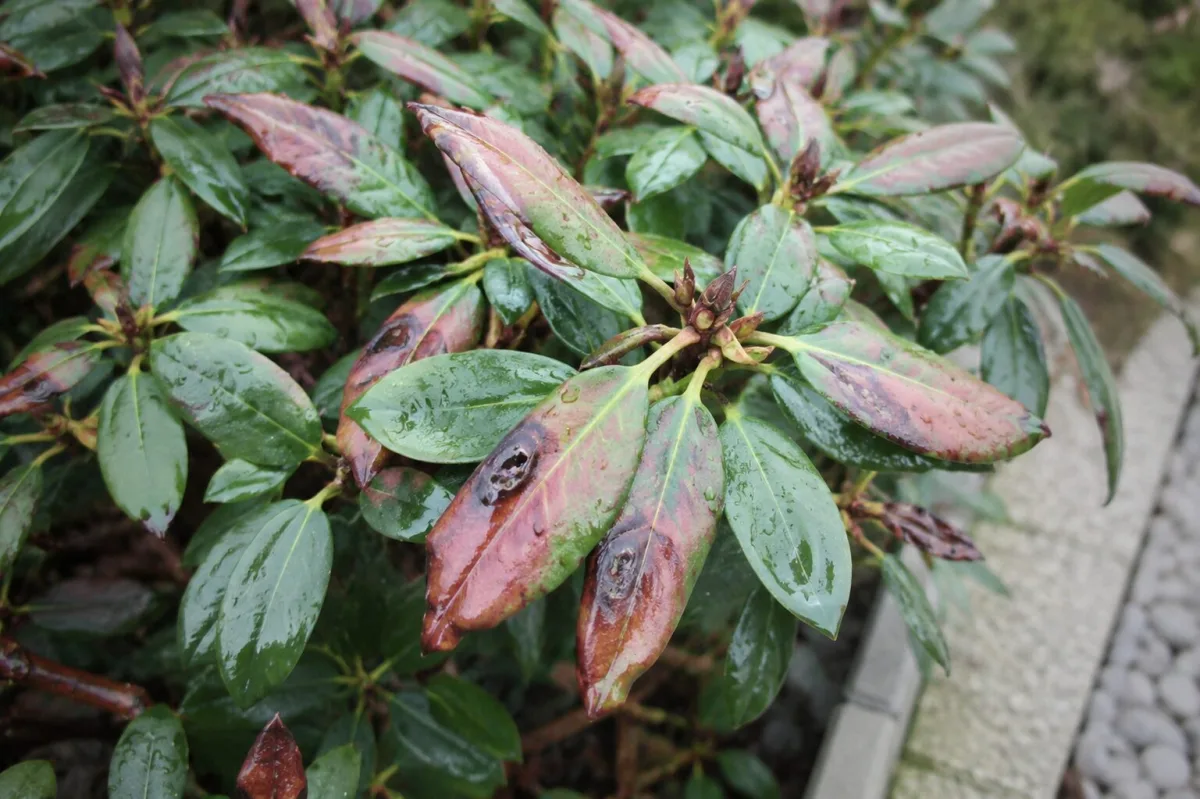
When new rhododendron leaves develop distinctly green veins while the tissue between them gradually turns yellow, it’s usually not normal seasonal colour change. This type of discolouration is typical of so-called chlorosis. The plant is still producing leaves, but it lacks the right conditions for proper chlorophyll formation, so the leaf doesn’t colour up evenly into a rich green. It’s often most visible on young leaves, because they have higher demands for available nutrients.
The most common cause is iron deficiency
Based on the symptoms described, the most likely culprit is iron deficiency, or more precisely poor availability of iron to the plant. Iron may be present in the soil, but rhododendrons can’t use it if the pH is unsuitable or if there are too many substances in the soil that block iron uptake. The result is yellowing between the veins while the veins remain green.
Rhododendrons are acid-loving shrubs. They grow best in soil with a pH of roughly 4.5 to 5.5 and they prefer watering with soft water. As soon as the pH rises, iron availability drops and the plant begins to suffer. Excess calcium in the soil has a similar effect: it raises pH and can also hinder the uptake of other elements.
What can reduce nutrient uptake
The issue isn’t always only iron. Higher pH, calcium, and also a lack of nitrogen or magnesium can lead to a rhododendron stopping efficient uptake of essential nutrients. Sometimes symptoms overlap, but the typical green veins with yellow interveinal tissue most often point to iron trouble. The key is not to rely only on a general-purpose fertiliser if you don’t also improve soil conditions.
How to relieve your rhododendron quickly and improve conditions
The first sensible step is to adjust the soil reaction back towards acidic. A practical intervention is adding peat, which acidifies the soil and helps restore the environment in which rhododendrons naturally thrive. If the soil has been unsuitable for a long time, it’s better to work peat into a wider area around the roots rather than just sprinkling a thin layer on the surface, so the acidifying effect is real.
Next, you can use a fertiliser that contains iron. Foliar feeding can also be helpful, meaning a spray applied to the leaves containing iron, because it can help the plant bridge a shortage more quickly. However, it’s best seen as supportive. If the pH stays high or calcium continues to enter the soil, the problem will return even after repeated spraying.
Watering and water quality can make the difference
Rhododendrons benefit from soft water. Hard water often contains more calcium and magnesium, and with long-term use it can gradually raise soil pH. If you water from the mains in an area with hard water, it may help to top up acidic mulch or an ericaceous compost more often and watch whether leaf condition improves over time.
Another possible cause is airless soil or waterlogging
Chlorosis can worsen when the roots aren’t functioning properly. If the soil is too compacted, poorly aerated, or chronically waterlogged, the root system is starved of oxygen and nutrient uptake stalls. In that situation, even a quality fertiliser may not help, because the problem is the root environment itself.
It helps to gently aerate the soil and improve drainage and overall water management. That means ensuring water doesn’t sit around the roots after rain or watering, while also preventing the plant from drying out. Rhododendrons like evenly moist soil, not soggy ground. If the site is heavy and clay-based, it may be necessary to improve soil structure by adding suitable acidic, airy components and renewing mulch to stabilise moisture.
When to expect improvement and what to watch
After correcting pH and adding iron, new leaves often start to colour up better, while already damaged leaves may not turn fully green again. A good indicator is therefore the appearance of the youngest growth. If further new leaves yellow in the same way, it’s worth checking soil pH again, the source of irrigation water, and the overall soil condition in terms of compaction and waterlogging. A stable acidic environment and correctly managed watering are the key to preventing chlorosis from returning in rhododendrons.
Source: Záhrada, The Spruce, Pestrazahrada.cz

A lover of nature, gardens, and everything that moves, blooms, or grows. He literally grows everything, from herbs to rare species, and he enjoys caring for animals just as much. In his work, he connects modern technology with tried-and-tested grandmotherly methods and is happy when both paths lead to the same goal.
Related articles
Yellowing cucumber leaves have a clear cause and with the right response plants recover quickly
Cucumber leaves turn pale and yellow when the plant is under stress—most often from watering mistakes, nutrient imbalance, or sudden temperature swings. Spot the pattern early and you can restore growth and protect your harvest fast.
How to Get Browning Hydrangeas Back on Track Without Chemicals
Brown leaf edges or spots on hydrangeas usually point to a simple mismatch in light, watering, or airflow rather than a lost cause. Learn how to read the symptoms and restore your shrub quickly with gentle, practical fixes.
Turn Ground Cinnamon Into a Secret Weapon for Stronger, Tougher Plants
Ground cinnamon isn’t just for baking—it can help protect houseplants and garden plants from mould and fungal issues, support cuttings, and even act as quick first aid for minor wounds. Used lightly, it’s an affordable, gentle, natural add-on to good growing practice.
Comments (0)
Be the first to comment.