
 English
 Polski
 Deutsch
 Nederlands
 Svenska
 Norsk
 Dansk
 Français
 Italiano
 Español
 Português
 Slovenčina
 Suomi
 Gaeilge
Overwintering Geraniums in a Cardboard Box Instead of Pots
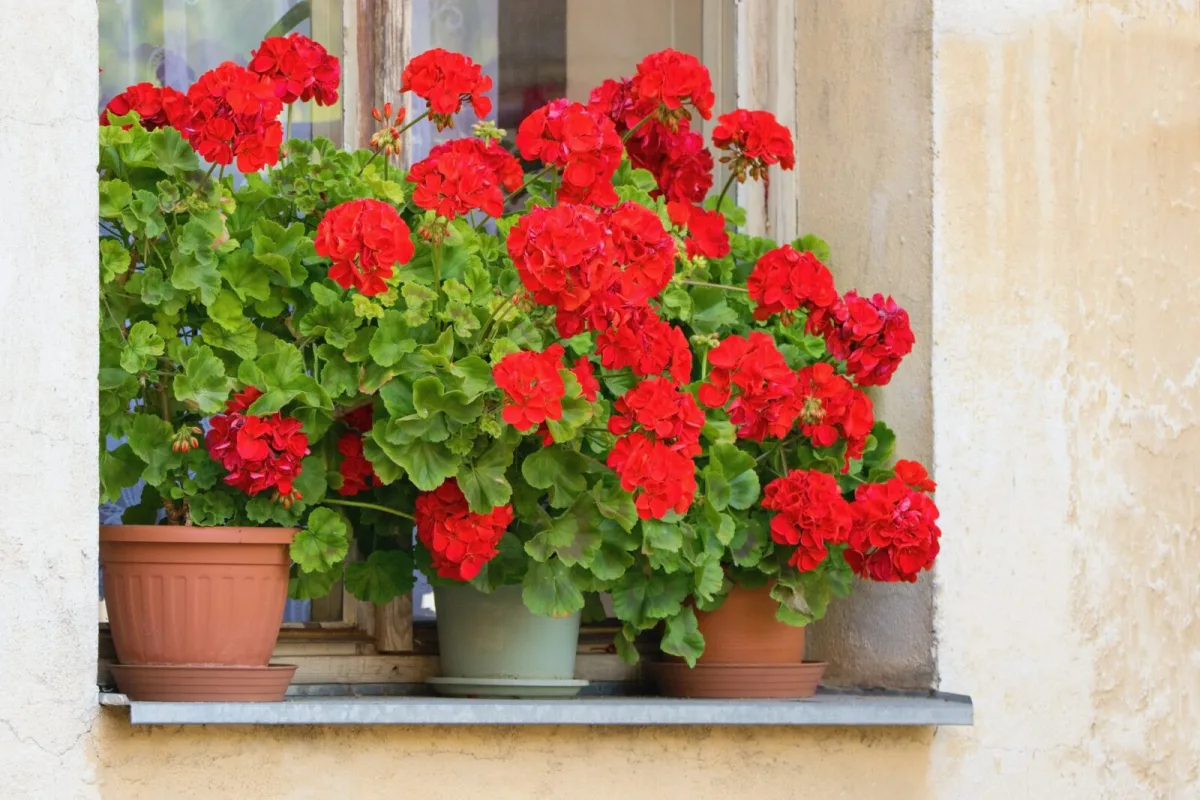
If you’ve already brought your geraniums indoors and don’t want to store heavy pots at home, overwintering without potting compost in a cardboard box can be a solution. This approach saves space, but it isn’t suitable for every plant or every location. The box itself won’t guarantee success. What matters most is a cool, frost-free environment, moderate dryness, and the ability to check on them regularly.
With this method, plants rest with limited growth, without normal watering and without a root ball. The key isn’t only taking them out of the pot, but above all whether they have enough air around them and whether you spot the first signs of rot or excessive drying in time.
Which geraniums are suitable for storing in a box
Your best chance of success is usually with older, strong upright pelargoniums, especially types with firm, partly woody stems. The real condition of the plant matters more than the label. Even an upright geranium may be unsuitable if its shoots are soft and not properly matured.
This is one of the less reliable ways to overwinter, so it makes sense to start with only a few healthy plants. Weak specimens, newly rooted cuttings, or pelargoniums affected by disease or pests are best left out. With trailing, large-flowered, or scented pelargoniums, it’s safer to keep them in their pots over winter in a bright, cool place. If you want to preserve a rare variety, it’s worth keeping a backup plant or a separate cutting.
First the right place, then the box
The most suitable option is a cool space that stays frost-free and can be ventilated. A temperature of roughly 5–10 °C without major fluctuations is usually recommended. A cellar, pantry, or garage can offer these conditions, but you can’t assume it automatically. It’s practical to place a simple thermometer near the plants and monitor it over time.
Heated rooms are a problem: pelargoniums lose water quickly and may start to sprout too early. Damp cellars with stale air and mould are also unsuitable, as are spaces where temperatures drop below zero. Darkness during storage is fine only until plants start producing new shoots. If pale, leggy growth appears, it’s a sign the conditions aren’t right.
How to store geraniums in a box correctly
Preparation before storage
Plants need to be prepared before the first frosts arrive. Select only healthy specimens and remove flowers, buds, dry leaves, and any damaged parts. Shorten long shoots so they won’t snap during storage. Soft, darkening stems, spotting, or the presence of pests are reasons to discard the plant.
Cleaning the roots
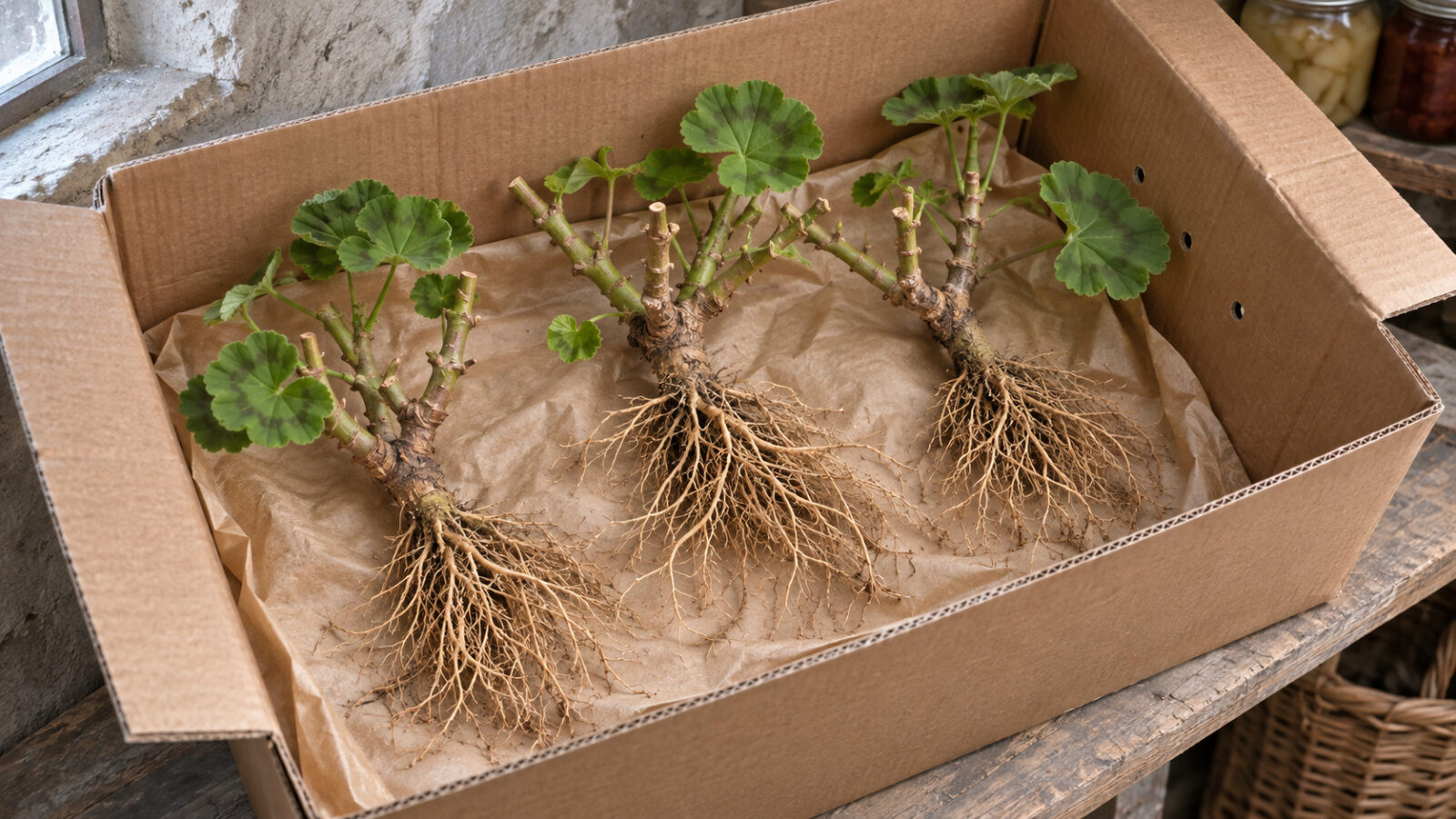
Carefully remove the pelargoniums from their containers and shake off most of the compost. There’s no need to scrub the roots perfectly clean, but they shouldn’t be left with wet, compacted potting mix. If the roots were wet or you rinsed them, let them dry on the surface before storing. That doesn’t mean leaving the plants to dry out for a long time by a radiator or in strong sun.
Choosing the box and arranging the plants
Use a dry, clean cardboard box with no signs of mould or dampness. You can line the bottom with dry paper. If the box has a lid, leave it slightly open or make ventilation holes. Plastic film isn’t suitable because it traps moisture and restricts airflow.
Lay the plants in loosely, ideally in a single layer. Don’t press the shoots together or tie the roots into a tight bundle. You can separate individual plants with dry paper, but don’t wrap them tightly in an airtight covering. The important thing is that they’re easy to inspect. It’s also practical to label varieties or flower colours, because in spring, without leaves, they’re very hard to tell apart.
Box or newspaper
Both methods work on the same principle. Pelargoniums overwinter without a pot and with almost no compost. The difference is that a box serves as a shared container, while newspaper allows you to wrap each plant individually. Loose storage in a box makes it easier to check stems and roots, but it requires spacing and good ventilation. With newspaper, the advantage is keeping plants separated, but if the paper becomes damp, the problem can worsen quickly.
More paper on its own won’t fix an unsuitable temperature or an overly damp room.
What to check during winter
It’s a good idea to do the first inspection after about two weeks, then roughly once a month. Firm stems are a good sign. Dry remnants of leaves don’t necessarily mean the plant is dead, but it’s best to remove them so they don’t accumulate on the bottom.
Warning signs on one side are softening, darkening, oozing, and a musty smell, which point to rot. Any affected plant should be separated immediately, and any damp paper replaced. On the other side, stems may become overly shrivelled and roots brittle, which indicates severe drying. In that case, a short soak of the roots, then draining and light drying, can help. But don’t water all plants simply by the calendar.
When to replant geraniums in spring
At the end of winter or in early spring, check the plants, remove dead parts, and pot them up into fresh, free-draining compost in containers with drainage holes. After planting, place them in a bright spot protected from frost. Water cautiously, because plants without leaves and new roots use less water. Wait to feed until growth clearly resumes. Move them outdoors only after the risk of frost has passed, and acclimatise them to direct sun gradually.
Who this method isn’t worth it for
If you only have a warm flat available, or on the contrary a damp cellar, overwintering in a box won’t be a good choice. It’s also not ideal for growers who want to put plants away in autumn and open them again only in spring. The advantage is saving space, but at the cost of regular checks and a certain risk of losses. The most sensible approach is to try it first with a few strong pelargoniums and see how it performs in your specific conditions.
Source: The Secret Garden Centre, Annie’s Annuals & Perennials, Pestrazahrada.cz

A lover of nature, gardens, and everything that moves, blooms, or grows. He literally grows everything, from herbs to rare species, and he enjoys caring for animals just as much. In his work, he connects modern technology with tried-and-tested grandmotherly methods and is happy when both paths lead to the same goal.
Related articles
Overwintering cacti follows three rules by species a wrong temperature with occasional watering is a trap
Cacti don’t all rest the same way in winter. Match temperature, light and especially watering to the type you grow, or plants will stretch, weaken and struggle to flower.
Wild Birds Struggle in Winter A Well Placed Feeder Can Save Lives
Wild birds have a much tougher time finding food in winter than they do in spring and summer. With the right feed, good hygiene and safe placement, your garden feeder can make a real difference to their survival.
Feeder Full but No Tits in Sight
If your bird feeder stays full while blue tits and great tits keep away, the problem is usually the food you offer and how you serve it. Use high-energy, safe feed and keep the feeder clean to turn your garden into a reliable winter stop.
Comments (0)
Be the first to comment.