
 English
  Polski
  Deutsch
  Nederlands
  Svenska
  Norsk
Norsk  Dansk
Dansk  Français
  Italiano
  Español
  Português
  Slovenčina
  Suomi
Suomi  Gaeilge
 How to Stop Arborvitae Turning Brown and Keep Your Hedge Lush Green for Years
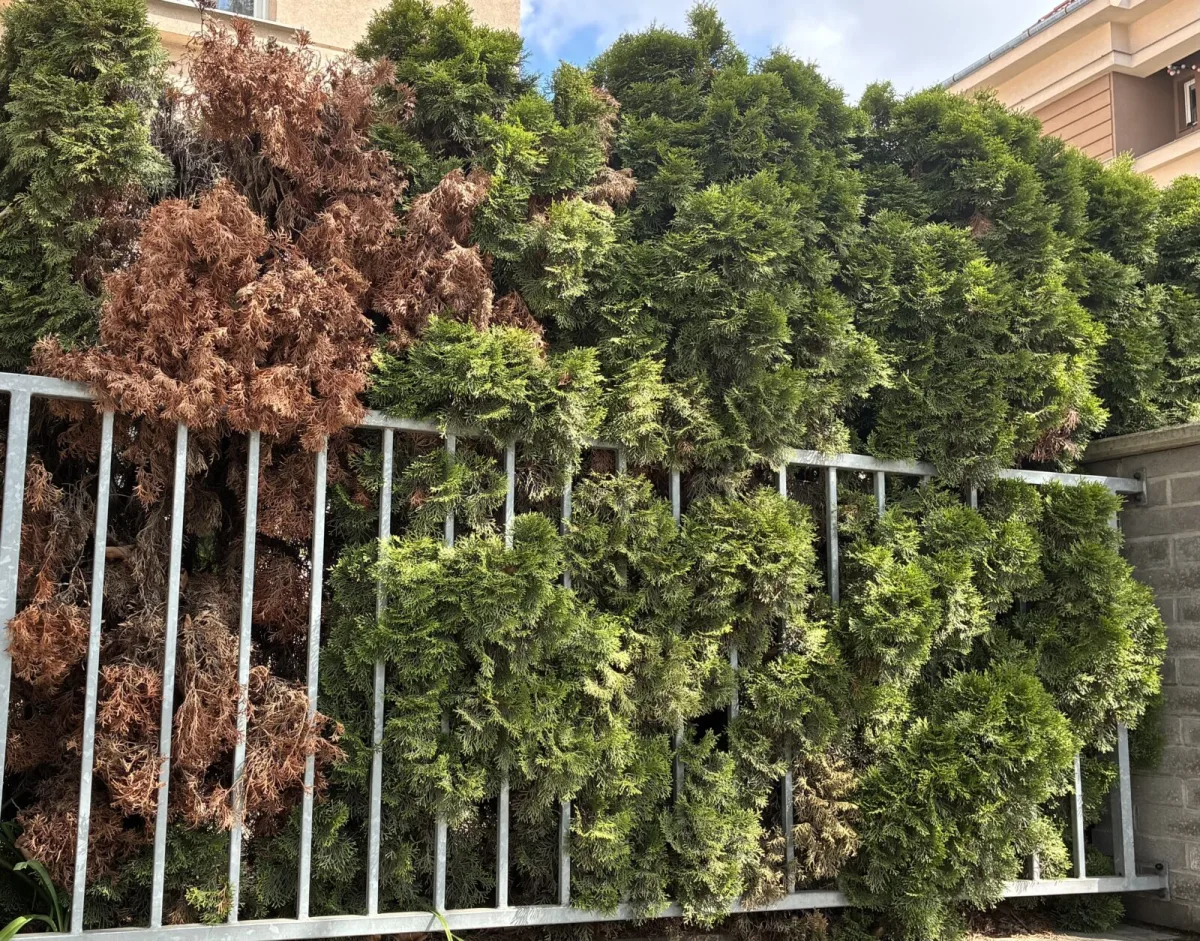
Arborvitae are among the most commonly planted conifers for hedging because they grow quickly, provide excellent screening, and with regular care form a compact green wall. The most widely grown types are species and cultivars derived from Thuja plicata and Thuja occidentalis. With arborvitae, however, people often notice unsightly brown areas that can appear as isolated patches in the middle of the hedge, at the base, on the tops, or as larger sections stretching across several plants.
Browning doesn’t have to mean one specific disease. The same symptom can have multiple causes, from pests and fungal infections to unsuitable growing conditions or pruning mistakes. What matters is observing when the problem shows up, how quickly it progresses, and whether it affects individual shoots, whole plants, or entire sections of the hedge.
Typical symptoms of browning in arborvitae
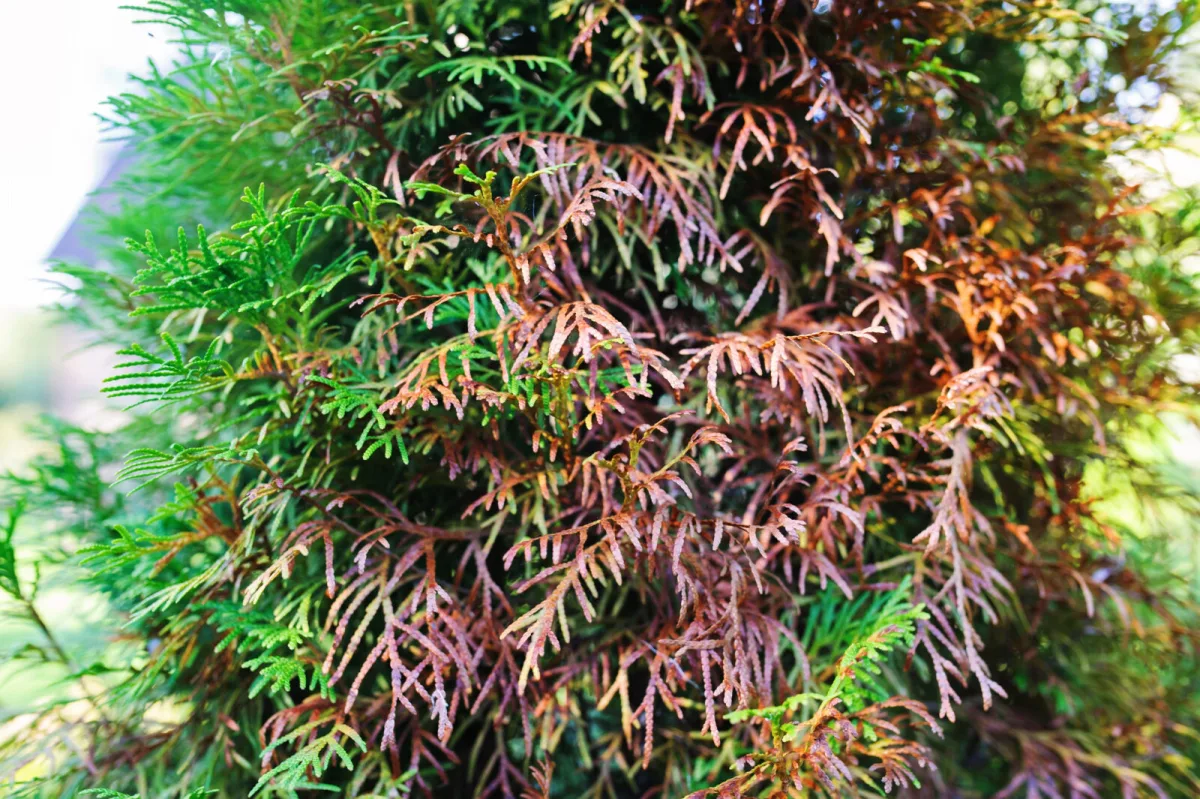
Brown patches may appear as small islands just a few centimetres across, or as broad bands running for metres. They often show during the active growth period, from late spring through summer, but sometimes only become obvious later, when the original cause is no longer easy to spot. Sometimes the tips of shoots brown; other times the dieback spreads from inside the crown outward. In hedges, it’s also common to see damage appearing at a particular height or predominantly on one side, for example on the windy side or the sun-exposed side.
The most common causes of brown patches
Sap-sucking pests
Various aphids and related pests can occur on conifers, feeding on plant sap and weakening tissues. Damage often becomes visible only after the pests have moved on, so the gardener mainly sees browning without an obvious culprit. Clues can include cast skins, sticky honeydew, or a black coating on the surface of twigs caused by sooty mould growing on honeydew. On arborvitae, soft scales and armoured scales can also be involved; when populations are heavy, they can lead to general decline and dieback of parts of the plant.
Fungal diseases and shoot dieback
Browning can also be caused by fungal infection, which is most likely when arborvitae are weakened by drought, waterlogging, frost damage, or poor pruning. Some fungi produce tiny dark dots on dying tissue; these are fruiting bodies. Problems are often worse in wet summers, when infection spreads more easily. If dieback is confined to individual branches and progresses from the tips inward, it may be typical shoot dieback, whereas a sudden decline of the whole plant more often points to trouble in the root zone.
Root diseases and soil stress
If browning affects most of the crown of a single arborvita in the hedge, or the plant dies outright, it’s sensible to suspect a root issue. Roots suffer from prolonged waterlogging, compacted airless soil, and planting into unsuitable ground. Under such conditions, pathogens that cause root rots establish more easily. A classic sign is that things worsen after a rainy period, growth stalls, and the plant gradually thins—something that cannot be reversed by watering or feeding alone.
Pruning mistakes in hedges
Arborvitae have a limited ability to break from old wood. If you cut too deeply into older, already leafless sections, you’ll create bare patches that may fill in very slowly or not at all. Poor timing of pruning is also risky. Cutting during stress—such as prolonged drought and heat—can cause the freshly cut tips to dry out. Problems are also more common after late-autumn pruning, when the plant no longer has time to seal wounds properly and enters winter in a weakened state.
Unsuitable growing conditions
A large proportion of browning cases come down to a combination of factors such as drought, freeze-thaw swings, drying winter winds, or, conversely, overwatering. Arborvitae prefer evenly moist but free-draining soil. In drought they respond with drying tips and browning within the interior; in waterlogged ground the roots essentially suffocate. If a hedge is exposed to cold winds and winter sun, tissues can dry out because roots in frozen soil can’t supply water quickly enough.
Prevention and practical care through the year
The foundation is to prevent stress and avoid overtaxing plants with poorly timed or overly harsh interventions. With trimming, it’s safest to follow the rule of not cutting into old wood and choosing dates when arborvitae have time to respond with fresh growth. Several light trims during the season often work well, for example in spring and early summer, with the final touch-up no later than the first half of August. In heat and drought, watering takes priority over pruning.
Correct soil care also helps enormously. At the base of the hedge, keep a strip free of competing grass and weeds, because they take water and nutrients. In late winter you can apply a general garden fertiliser and cover the soil surface with a layer of well-rotted organic matter to stabilise moisture and improve soil structure. If the site is prone to waterlogging, it’s worth addressing drainage or creating a raised planting strip so roots aren’t sitting in water.
What to do when brown patches have already appeared
Start by assessing the extent. Small patches may partly disappear over time if conditions improve and surrounding shoots cover them. You can carefully remove dead material, but always in a way that avoids cutting deeply into old wood. If there are healthy, long shoots nearby, it can help to gently tie and guide them into the gap so the space is visually filled faster.
If you suspect pests, examine shoots up close, especially in the lower parts and inside the hedge where airflow is weaker. With recurring issues, prevention of stress is key, because weakened arborvitae are more susceptible. If, on the other hand, an entire plant (or several in a row) is dying back, check drainage, your watering routine, and root health—without solving the underlying soil-related cause, the problem will keep returning.
How to tell when it’s time to replace plants
Some gaps only fill after several years, and on older arborvitae that may not be realistic. If a large section of the hedge is bare and won’t re-shoot, or if extensive dieback keeps returning despite improved care, replacing the affected plants may be more practical. When replanting, choose vigorous, similarly sized plants and pay maximum attention to soil preparation so the new arborvitae root quickly and don’t start out stressed.
Browning in arborvitae is most often a combination of stress from conditions and unsuitable pruning; only then do pests and diseases come into play. If you focus on steady moisture, free-draining soil, and gentle trimming, most problems can be greatly reduced.
Source: Rhs, My perfect plants, Pestrazahrada.cz
Related articles
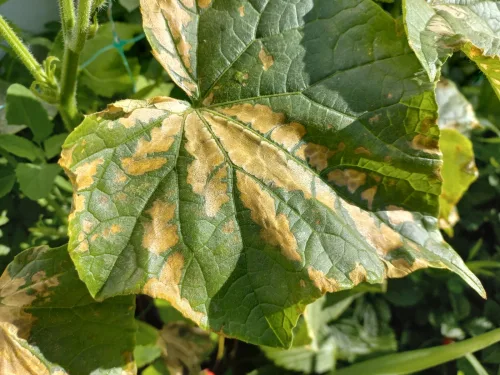
Yellowing cucumber leaves have a clear cause and with the right response plants recover quickly
Cucumber leaves turn pale and yellow when the plant is under stress—most often from watering mistakes, nutrient imbalance, or sudden temperature swings. Spot the pattern early and you can restore growth and protect your harvest fast.
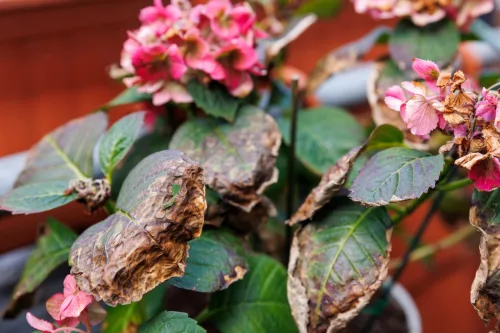
How to Get Browning Hydrangeas Back on Track Without Chemicals
Brown leaf edges or spots on hydrangeas usually point to a simple mismatch in light, watering, or airflow rather than a lost cause. Learn how to read the symptoms and restore your shrub quickly with gentle, practical fixes.
Turn Ground Cinnamon Into a Secret Weapon for Stronger, Tougher Plants
Ground cinnamon isn’t just for baking—it can help protect houseplants and garden plants from mould and fungal issues, support cuttings, and even act as quick first aid for minor wounds. Used lightly, it’s an affordable, gentle, natural add-on to good growing practice.
Comments (0)
Be the first to comment.