
 English
  Polski
  Deutsch
  Nederlands
  Svenska
  Norsk
Norsk  Dansk
Dansk  Français
  Italiano
  Español
  Português
  Slovenčina
  Suomi
Suomi  Gaeilge
 How to Keep Your Garden Well Watered So Plants and Lawn Don’t Suffer
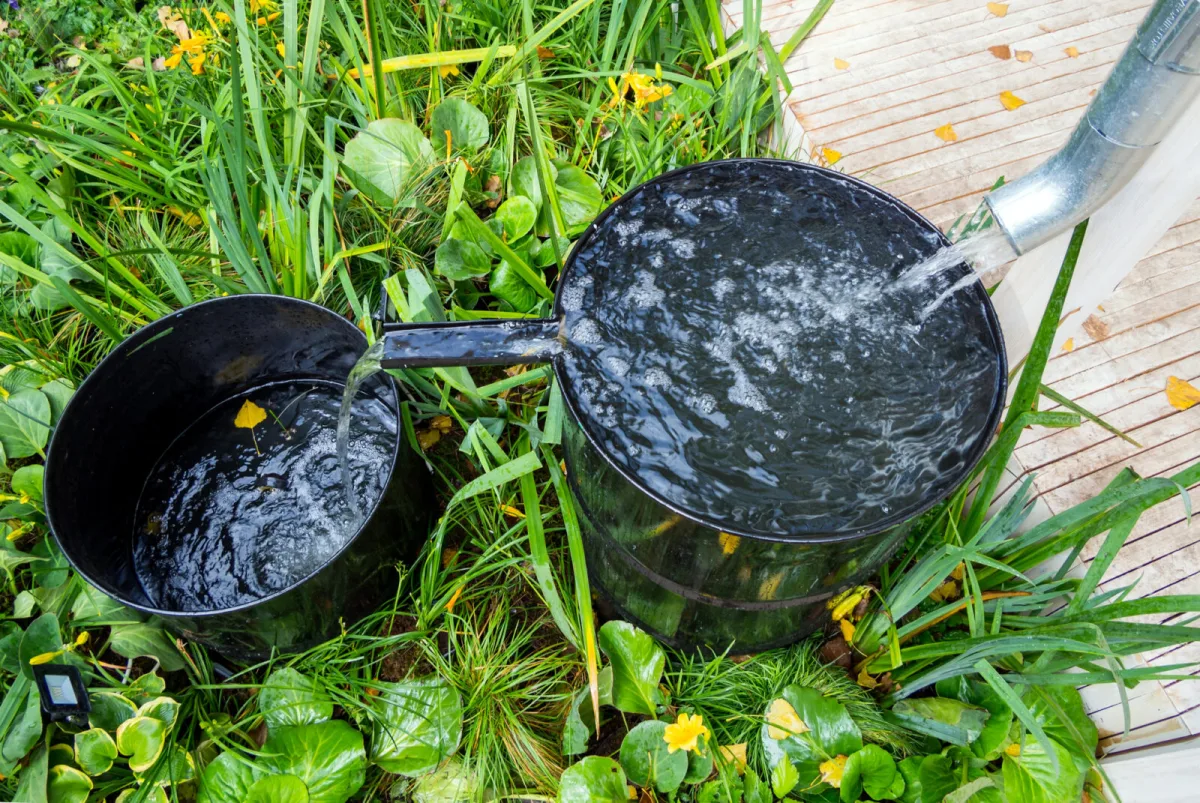
Choosing the right type of water for watering has a direct impact on plant health and on how much drinking water you use from the mains. When you know when to reach for rainwater, when to use so-called greywater, and what you’re better off avoiding, your garden will cope with dry spells more easily while you cut costs and reduce your environmental footprint. It’s also important to consider hygiene so that stored water doesn’t harm people or plants.
Rainwater is the best choice for most plants
Rainwater is the most suitable for watering. It is naturally soft, contains very few minerals, and its pH usually suits the majority of garden and houseplants. This is especially helpful where tap water is hard. Hard water can gradually raise soil pH, reducing the availability of certain nutrients. More sensitive plants that prefer a more acidic environment, such as rhododendrons or camellias, often grow noticeably better with rainwater.
How to collect and store rainwater
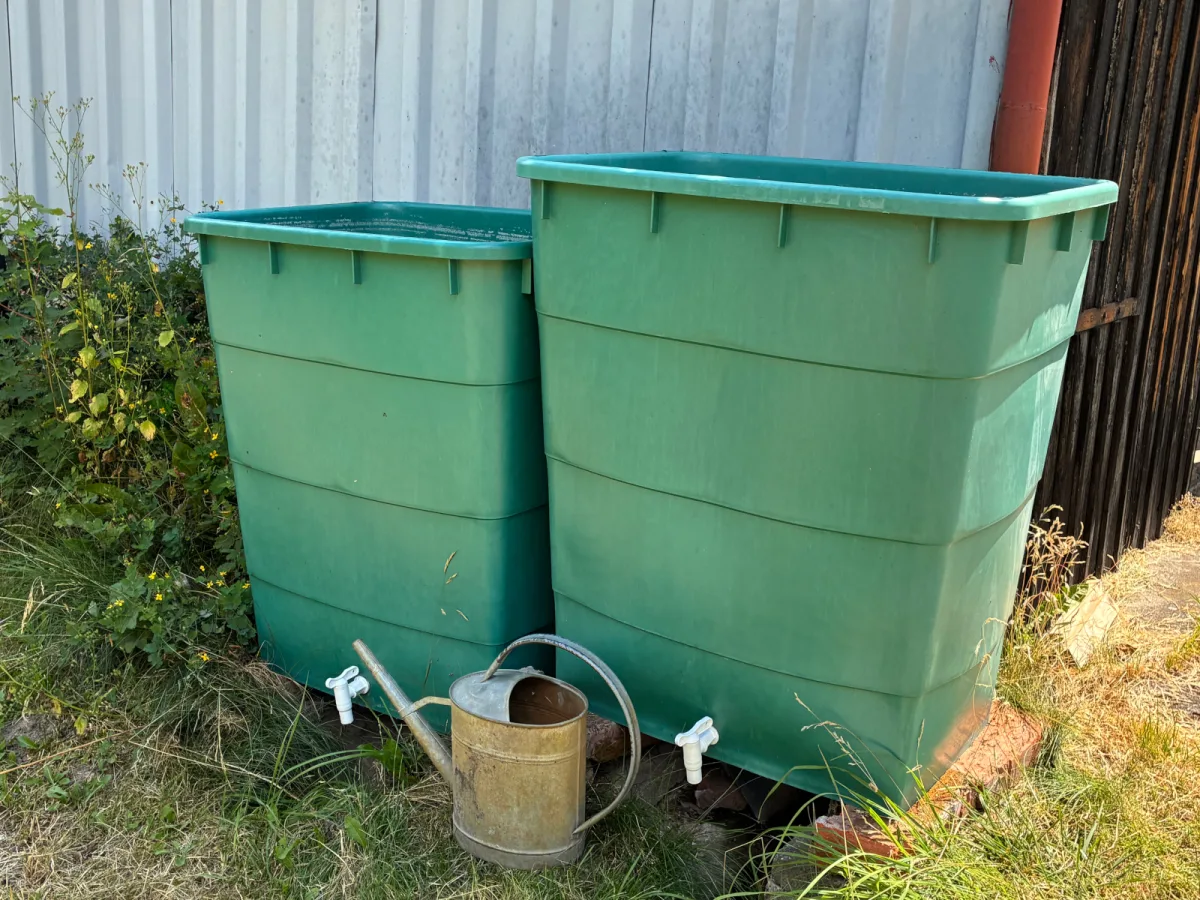
The simplest approach is to collect water from the roof of the house, garage, greenhouse or shed into a water butt or tank. A roof with a good pitch and, ideally, a clean surface helps keep the collected water in better condition. If space is tight, choose slimmer tanks or decorative models that tuck neatly against a wall or into a corner.
In practical terms you need guttering with a downpipe, or a diverter kit that connects to the downpipe. A filter is also useful to catch leaves and debris so organic material doesn’t build up in the tank. Place the tank on a firm, level base and raise it on a stand or bricks so a watering can fits under the tap. If one container isn’t enough, you can link several butts with connectors or a siphon to increase your water supply without adding more downpipes.
You can connect a hose to the tap too, but without a pump the pressure is often weak. If you want comfortable hose watering, a submersible or external pump will help. A well-sealing lid is also important. It limits algae growth, helps prevent water quality from deteriorating, and reduces the risk of spores from certain water-borne diseases getting into the tank.
How much water you can realistically collect
Even a small roof can capture a surprisingly large amount. In practice, even modest roof areas can provide thousands of litres over the year, which adds up to several full water butts. Especially in wetter periods, it pays to have capacity ready and store water for drier weeks.
Open tubs and so-called dipping tanks
An alternative to lidded butts is an open tub connected to a downpipe, sometimes complemented with aquatic plants. They can look great, but an open surface spoils more easily, and unwanted microorganisms can multiply in standing water. For this reason, water from open containers is not suitable for seed sowings, seedlings and young, sensitive plants.
Where to use rainwater and when to be cautious
Water from a butt can be used without problems on established plants in borders and containers. For seed trays and freshly pricked-out seedlings, however, it’s better to choose a safer source, because stored water can under certain conditions carry soil-borne pathogens that cause damping off. Rainwater is also excellent for houseplants, including orchids and carnivorous plants, which often suffer from the minerals found in hard water.
Cleaning water butts and basic maintenance
To prevent sediment, odours and any disease inoculum from building up in stored water, it’s worth cleaning the container at least once a year. Warm water and a small amount of standard washing-up liquid is usually enough. If the water starts to smell, it’s better to empty and wash the butt than to try to fix it with chemicals.
How to reduce risks when using stored water
Safety for people
If you water with a hose connected to a tank, it’s best to use a coarser spray. A fine mist from warm, standing water is easier to inhale, which isn’t ideal. When you’re not using the hose, it’s sensible to disconnect it and drain it so water doesn’t sit inside.
Safety for plants
The basics are to keep gutters clear and free of leaf build-up. Less organic debris means a lower risk of water-borne diseases developing. It’s also a good idea to use stored water regularly so it doesn’t deteriorate unnecessarily. With open containers, cleanliness matters even more, as they can harbour pathogens that are particularly problematic for young plants.
Larger water-harvesting systems and climate change
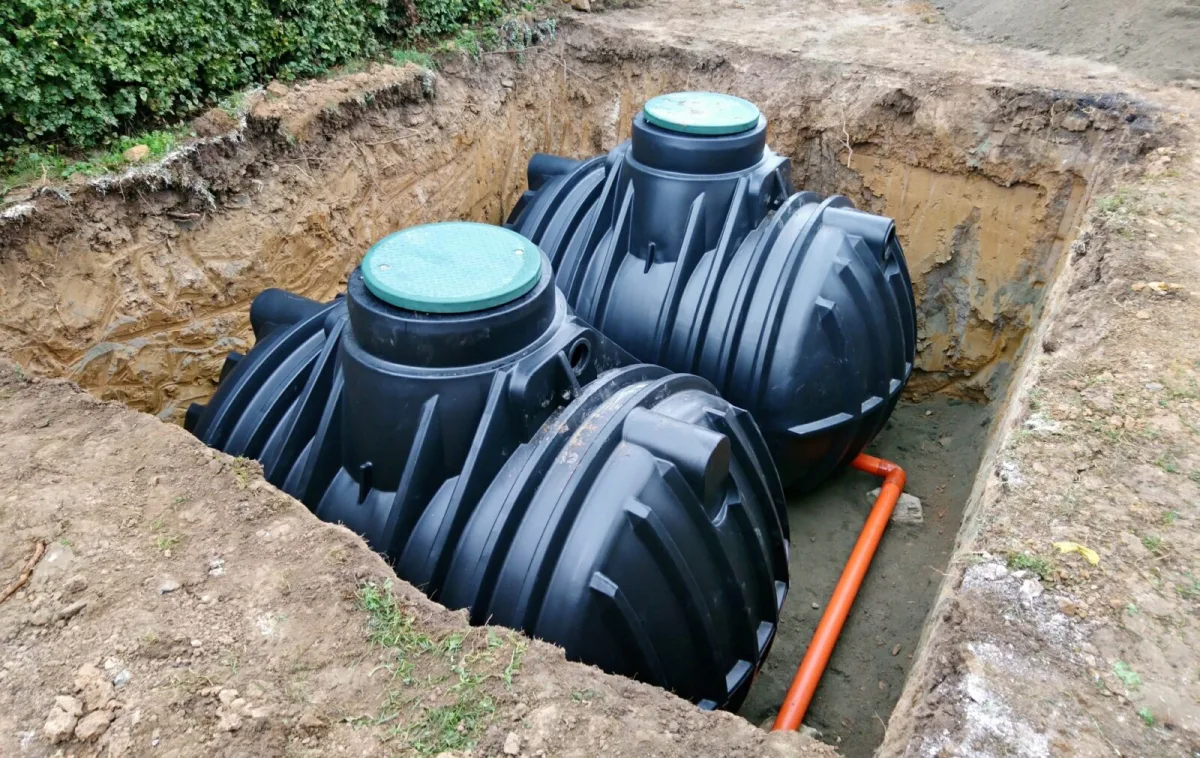
With increasing weather extremes—drier summers alongside more rainfall at other times of the year—it can make sense to consider a more advanced system. This may include larger tanks, sometimes underground, and a distribution setup into the garden. Such a solution helps carry some winter or spring moisture through to the periods when plants struggle most.
Greywater and how to use it in the garden
Greywater is household water that has already been used, typically from the shower, bath, laundry rinse water, or the kitchen sink. In times of restricted water use it can be very helpful, but it needs to be handled sensibly. Water containing bleach, disinfectants, harsh cleaners, or dishwasher salt is unsuitable, because these substances can damage both soil and plants.
Greywater is best used as soon as possible, ideally straight away. Without filtration and without a dedicated system, it should not be stored for more than 24 hours. A watering can is best for application, because grease and fibres can clog irrigation systems. It’s also helpful to alternate greywater with rainwater or tap water to prevent salts building up in the soil.
The safest use of greywater is on ornamental plants. If you occasionally want to use it on edible crops, it’s sensible to limit it to those that will be cooked, and avoid crops intended to be eaten raw.
Softened water and why it can cause long-term harm
Softened water is produced by removing calcium and magnesium and replacing them with sodium. In the short term it can be used for watering, but it isn’t recommended long term. Sodium can gradually accumulate in the soil, limit the availability of important nutrients, and at higher concentrations reduce plant vigour. It can also negatively affect soil structure, resulting in poorer infiltration and worse workability through the soil profile.
Boiled water as a substitute for soft water
Boiling helps reduce the number of bacteria. In hard-water areas, some of the calcium precipitates out during boiling, but it usually isn’t enough to fully replace rainwater for plants that need very soft water. For general watering, boiled water can be usable, but as a main solution for acid-loving plants it’s more of a stopgap.
Condensate water from a dehumidifier or tumble dryer
Water collected by condensation, for example from an air dehumidifier or a tumble dryer, is usually soft and often suits many ornamental plants. It is also beneficial for orchids, carnivorous plants and other mineral-sensitive species. However, it’s important to keep the appliance you’re collecting from clean so unwanted contaminants don’t end up in your watering water.
Purified and distilled water for special cases
Distilled or deionised water contains very few dissolved minerals. It’s usually too expensive for large-scale watering, but it can help with plants that require very soft water when you don’t have rainwater to hand. Because it contains no nutrients, you need to factor in that plants must receive nutrients via fertiliser. Some growers use their own deionisation units or reverse osmosis, but for most people it’s impractical to buy, transport and store larger amounts of this kind of water.
How to cut garden water use even without technology
The biggest savings often come from simple steps. Choose plants suited to the site, improve soil by adding organic matter, and mulch every year to reduce evaporation. It also makes sense to capture rainfall from hard surfaces into containers and use mains water only when other options aren’t enough.
Source: Rhs, NPS , Pestrazahrada.cz
Related articles

Three Mistakes When Packing Cabbage into a Crock That Can Turn Your Winter Stores into Waste
Traditional crock-fermented sauerkraut keeps for months and stays wonderfully crisp—if you avoid a few common missteps. Here are the three mistakes that most often lead to soft, grey, foul-smelling cabbage and how to prevent them.

One Rat in the Garden Can Quickly Turn Into a Colony How to Prevent It Without Chemicals
A rat on your property is a warning sign that your garden is offering food and shelter. With a few practical, chemical-free changes, you can make the area far less attractive and stop a bigger infestation taking hold.
Garden robotics and automation save time but one thing surprises owners after purchase
Robotic mowers, smart irrigation and garden sensors can take over routine tasks and improve day-to-day plant care. The catch is that the real cost and upkeep often become clear only after you’ve bought in.
Comments (0)
Be the first to comment.