
 English
  Polski
  Deutsch
  Nederlands
  Svenska
  Norsk
Norsk  Dansk
Dansk  Français
  Italiano
  Español
  Português
  Slovenčina
  Suomi
Suomi  Gaeilge
 How to Get Rid of Ants in Fruit Trees Without Sticky Bands
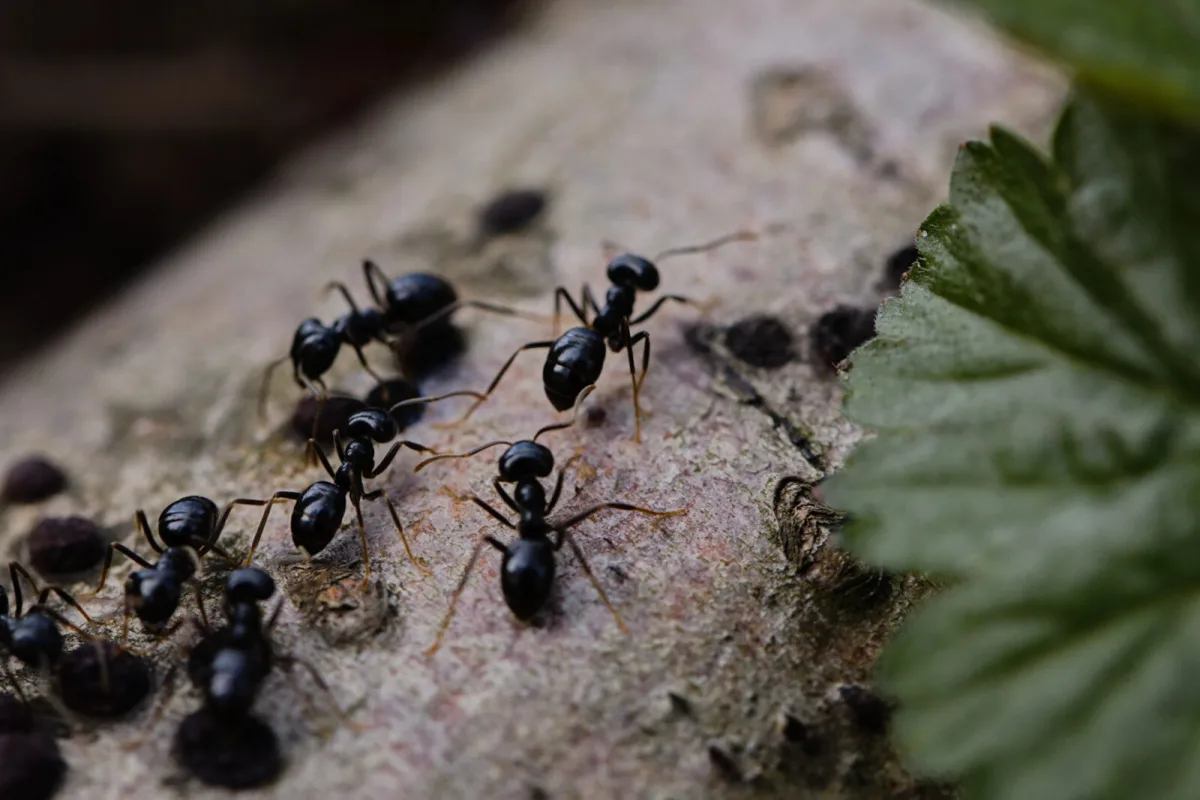
Ants in the canopies of fruit trees can cause trouble even for careful gardeners. It’s not only that they may go after ripening fruit. An even bigger issue is their partnership with aphids. Ants will often literally carry aphids onto the tree and then protect them, because they feed on the sweet honeydew the aphids produce. The result is a weakened tree, sticky leaves, and a poorer harvest. If you want to act, there’s a gentler option than classic sticky bands.
Why it’s best to limit sticky bands on the trunk
Sticky bands look like an easy fix, but they come with several significant drawbacks. The sticky layer easily gets clogged with dust, pollen, or fine debris. Once the surface is dirty, it can turn into a firmer, more walkable “bridge” that ants can cross without much difficulty. Effectiveness then drops quickly, and you have to check and replace the bands often.
More serious, however, is the risk to wildlife in the garden. The adhesive can become a dangerous trap for small birds. All it takes is bad luck and contact with the sticky layer, and the bird may not be able to free itself. Protecting a tree shouldn’t come at the cost of unnecessarily endangering beneficial species that actually help control pests.
A DIY barrier that makes the ants’ route much harder
A simple barrier made from everyday items can be a more practical alternative. Prepare a strip of old fabric or nonwoven fleece and wrap it tightly around the trunk. To be safe, tie it off with string so it stays firmly in place and doesn’t slip. Onto this base you apply a mixture that ants dislike, while posing far less risk to birds.
Put petroleum jelly in a small bowl and add a few drops of lavender essential oil. The petroleum jelly creates a slick, hard-to-cross layer that ants are reluctant to tackle. Lavender also has a strong aroma and repels them by scent alone. The advantage is longer-lasting performance than adhesive products, and it isn’t a typical sticky trap.
What to watch for so the barrier actually works
The most common weakness of measures like this is uneven bark. Ants can exploit even a small gap between the barrier and the trunk and find a way upwards. Before wrapping the fabric, remove any loose flakes of bark and try to smooth the area as much as possible so the material sits snugly. The fewer gaps, the lower the chance the ants will bypass the barrier.
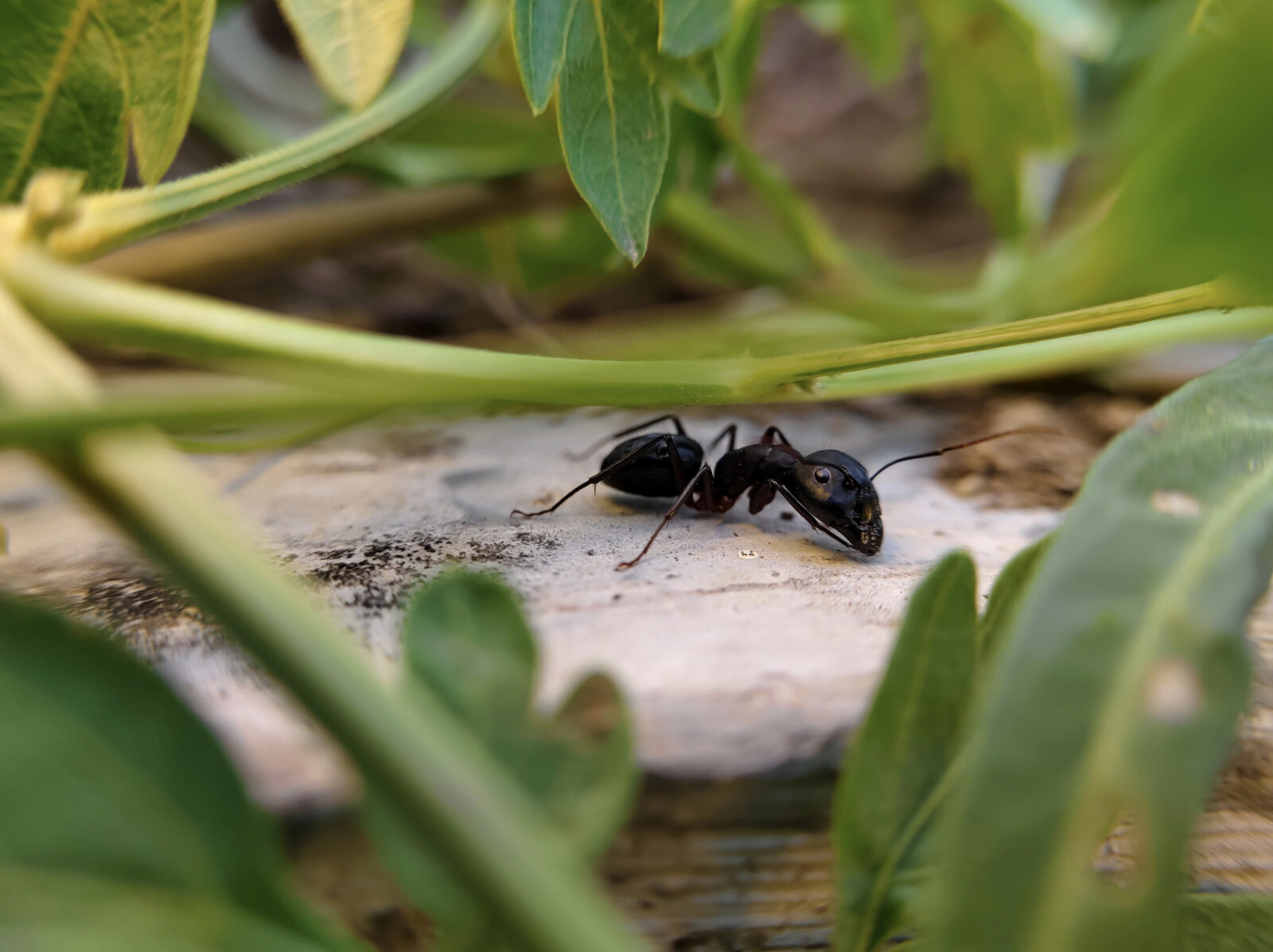
Maintenance matters too. The lavender scent fades over time, so it’s worth adding a few more drops of oil about once every ten days to keep the repellent effect steady. Also check regularly that the layer of petroleum jelly hasn’t broken or become so dirty that walkable edges form.
A soil-level barrier to keep ants from even reaching the trunk
If you want to intervene right at ground level, you can make access to the tree unpleasant for ants with a fragrant ring around the trunk. Strong scents generally bother them, so you can create a more continuous band using spices and herbs. Cinnamon, mint, or dried lavender work well, ideally in a heavier layer so the smell remains noticeable even after a brief rain or wind.
Extra support through planting
It’s also practical to think about prevention through the season. Under fruit trees you can plant nasturtiums and place lavender nearby; ants dislike the scent, and it also brightens the area. Combining a mechanical barrier on the trunk with aromatic deterrence at ground level often brings better results than relying on just one method.
Kinder protection for your tree without unnecessary risks
The goal isn’t to wipe out everything living in the garden, but to break the ants’ easy route into the canopy and reduce the support they give aphids. A homemade barrier with petroleum jelly and lavender essential oil can be effective, longer-lasting, and more considerate than sticky bands. If you also make sure it sits snugly against the bark and refresh the scent from time to time, you’ll have a simple solution you can manage without special products.
Source: The Spruce, Gardening Know How, Pestrazahrada.cz

A lover of nature, gardens, and everything that moves, blooms, or grows. He literally grows everything, from herbs to rare species, and he enjoys caring for animals just as much. In his work, he connects modern technology with tried-and-tested grandmotherly methods and is happy when both paths lead to the same goal.
Related articles
Fighting moles tempts you into a quick fix that can put you on the wrong side of the law
Fresh molehills can ruin a lawn, but the common mole is a protected species and lethal control can be illegal. Learn how to tell a mole from a vole and which lawful, effective methods actually encourage it to move on.
Why the Tree That Feeds a Family for Generations Is Disappearing from Czech Gardens
The English walnut used to be a staple of larger gardens and farmyards, valued for its nutritious nuts and many practical uses. With the right site and variety, it remains one of the most rewarding long-lived trees you can plant.
How to Get Rid of Mice and Rats in the House, Loft and Garden Effectively
Mice and rats don’t leave quietly—scratching sounds, droppings and gnaw marks are clear warnings. A lasting solution comes down to three steps: block entry points, remove food sources, then use traps or professional control.
Comments (0)
Be the first to comment.