
 English
  Polski
  Deutsch
  Nederlands
  Svenska
  Norsk
Norsk  Dansk
Dansk  Français
  Italiano
  Español
  Português
  Slovenčina
  Suomi
Suomi  Gaeilge
 Help Pelargoniums Bloom Their Best with Proven Tips and Seasonal Care
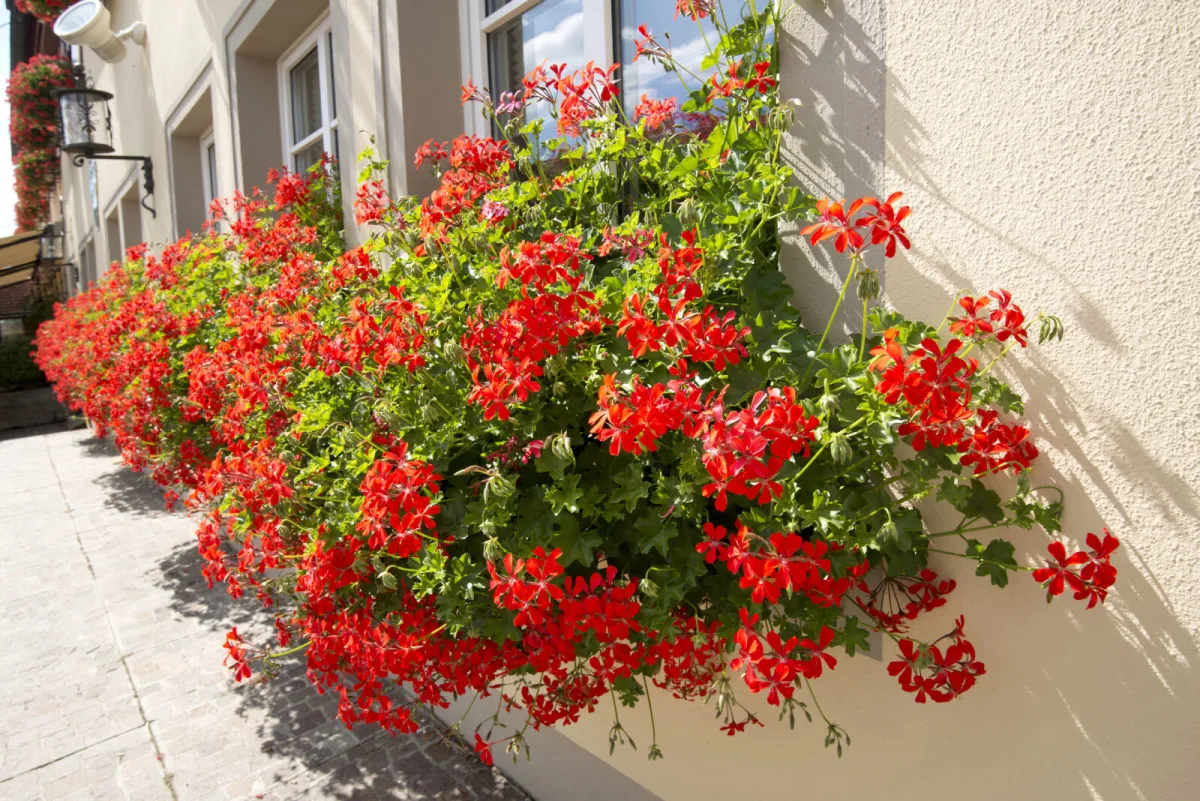
Pelargoniums are among the most popular balcony plants because they deliver bold colour and a long flowering season without demanding complicated care. Many people associate them with summer holidays at Grandma’s, with window boxes on the sill or large pots by the front step, where they can create a cosy, welcoming feel in just a few weeks. Beyond looks, their practicality matters too: they tolerate sun well, bounce back quickly, and with the right handling they’ll bloom from spring until the first cooler nights.
In everyday speech they’re often called “geraniums”, but strictly speaking these are pelargoniums. They’re rewarding for beginners as well as for anyone who wants to get the maximum performance from a single plant. They also carry a bit of symbolism: traditionally they’re linked with good health, friendship and good will, which is one reason you see them so often around homes.
What types of pelargoniums are there and how do they differ
The pelargonium genus includes many species and cultivars grown in a range of climates. In our conditions, you’ll most often come across a few main groups, which differ in growth habit, leaf shape, and how well they suit window boxes or hanging containers. Some are grown as seasonal plants, while others can be overwintered indoors as houseplants.
Zonal pelargoniums
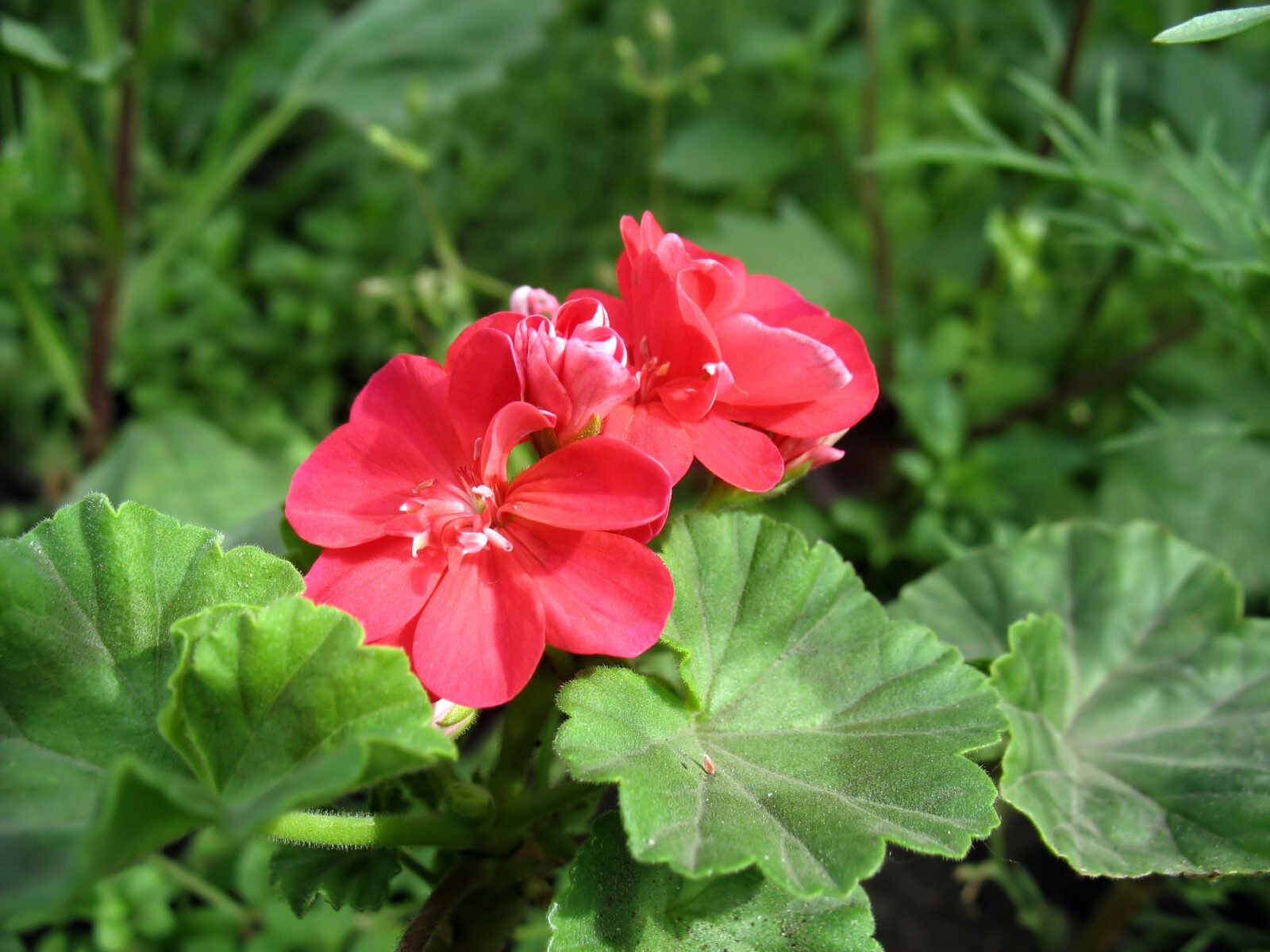
The most widespread are zonal pelargoniums, recognised by the typical “zone”, a darker band or ring on the leaf. They have fleshier stems and rounded leaves, sometimes with variegation. The flowers appear in clusters and can be single, semi-double or fully double. Colours range from classic red through pink and white to purple or orange shades. In good conditions they reach roughly 0.5 m in both height and spread, although there are also dwarf and miniature cultivars for smaller containers.
Trailing pelargoniums
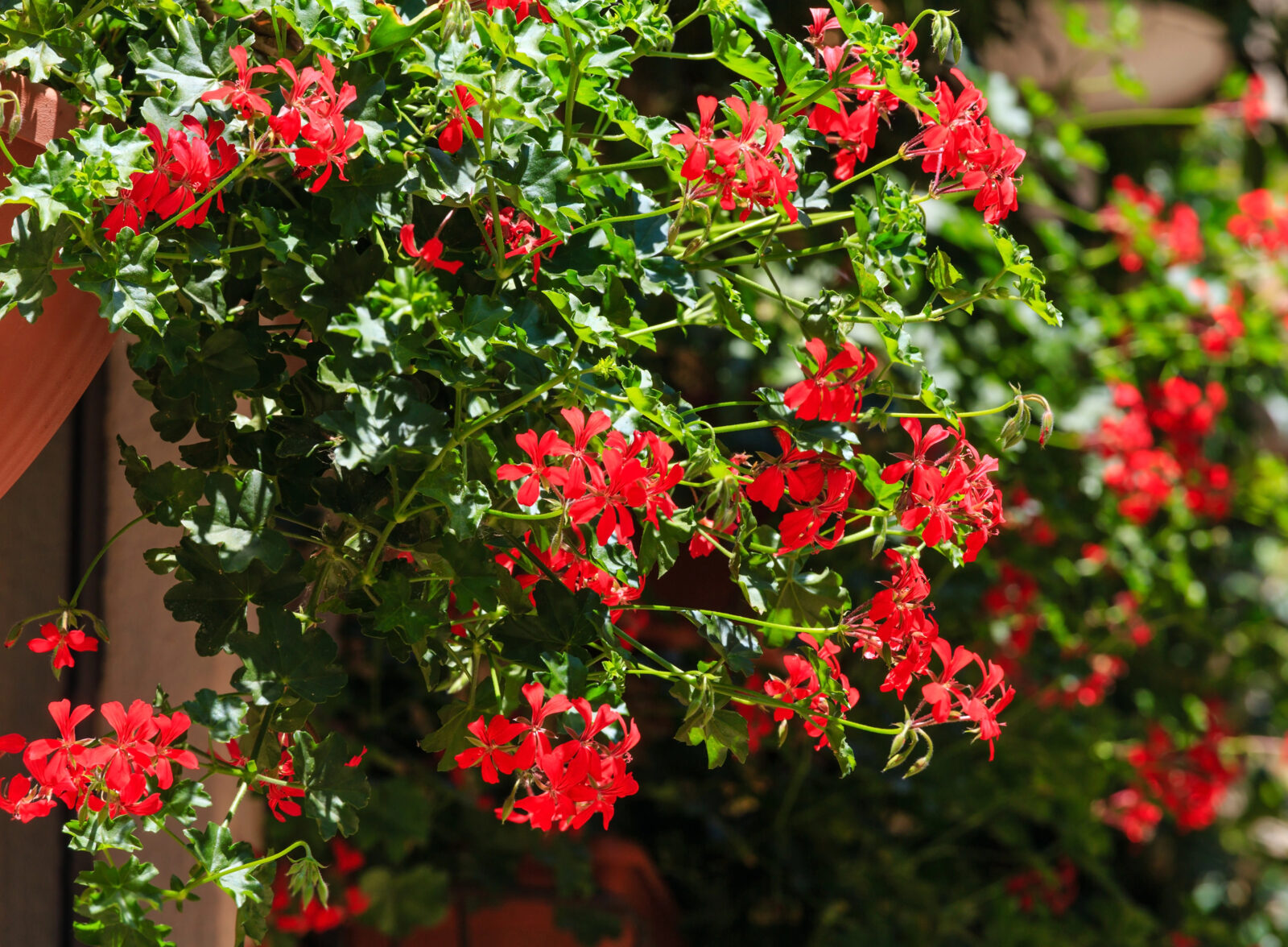
Trailing types are ideal for window boxes and hanging baskets, where they create cascading waterfalls of flowers. If you want a softer edge to the container and a lush effect spilling over the rim, trailing pelargoniums are one of the surest choices.
Scented and other groups
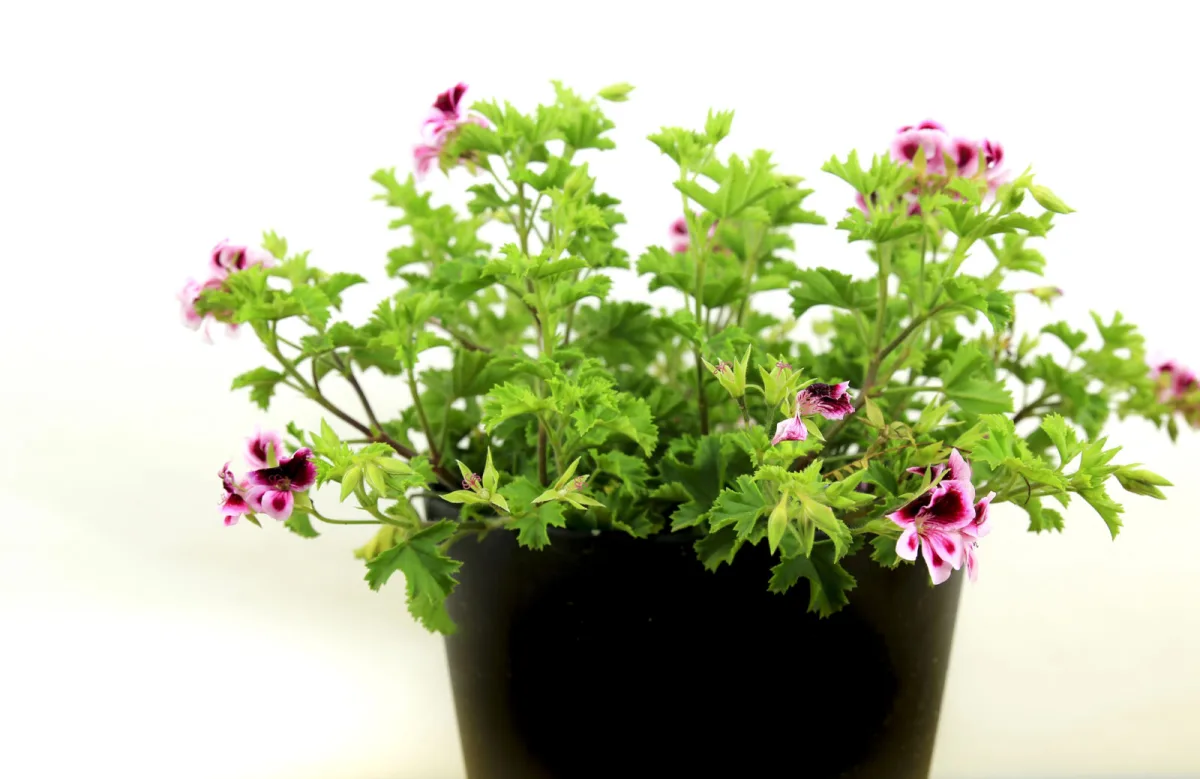
Scented pelargoniums stand out mainly for their foliage, which releases fragrance when touched, often citrusy, minty or spicy. The flowers are usually more delicate, but the overall look of the plant is highly attractive. There are also other groups, such as large-flowered (regal) pelargoniums, which have showy blooms but typically need slightly more careful handling and a more sheltered spot.
Choosing the container matters more than it seems
To succeed, it’s essential to choose a container with drainage holes. Pelargoniums do love regular watering, but they cannot tolerate sitting in water for long. If you’re growing in a pot with a saucer, make sure water doesn’t remain in it for extended periods. A larger container means more stable moisture and fewer temperature swings around the roots during hot days, which shows up in the number of flowers.
You can put a small layer of material at the bottom to help keep the drainage clear, typically a few stones over the holes. There’s no need for a thick drainage layer; a good compost and working drainage are more important. Still, this small detail can reduce the risk of holes clogging and roots suffering.
How to plant pelargoniums in a pot step by step
Pelargoniums develop best in a sunny position, where they get enough light to set flowers. Do bear in mind that full sun means more frequent watering. Prepare a quality potting compost for balcony plants, one that holds nutrients well but doesn’t stay waterlogged.
First, fill the container about three-quarters full with compost. Carefully remove the plants from their original plastic pots; don’t tear the root ball apart, but if the roots are tightly circling, you can gently loosen them. Space pelargoniums so they have room to grow and for air to circulate, which helps prevent mould and disease.
If you want a display like a country-house terrace, a simple principle works well: in the middle, place a taller, upright plant for height, around it pelargoniums for colour, and at the edge something trailing to soften the rim. A dracaena or another narrow, vertical plant suits the centre. Between the pelargoniums and over the edge of the container, you can add a trailing green plant to set off the flower colour and add fullness. Finally, top up with compost so the crown sits at a natural height, press everything in gently, and water thoroughly so the soil settles.
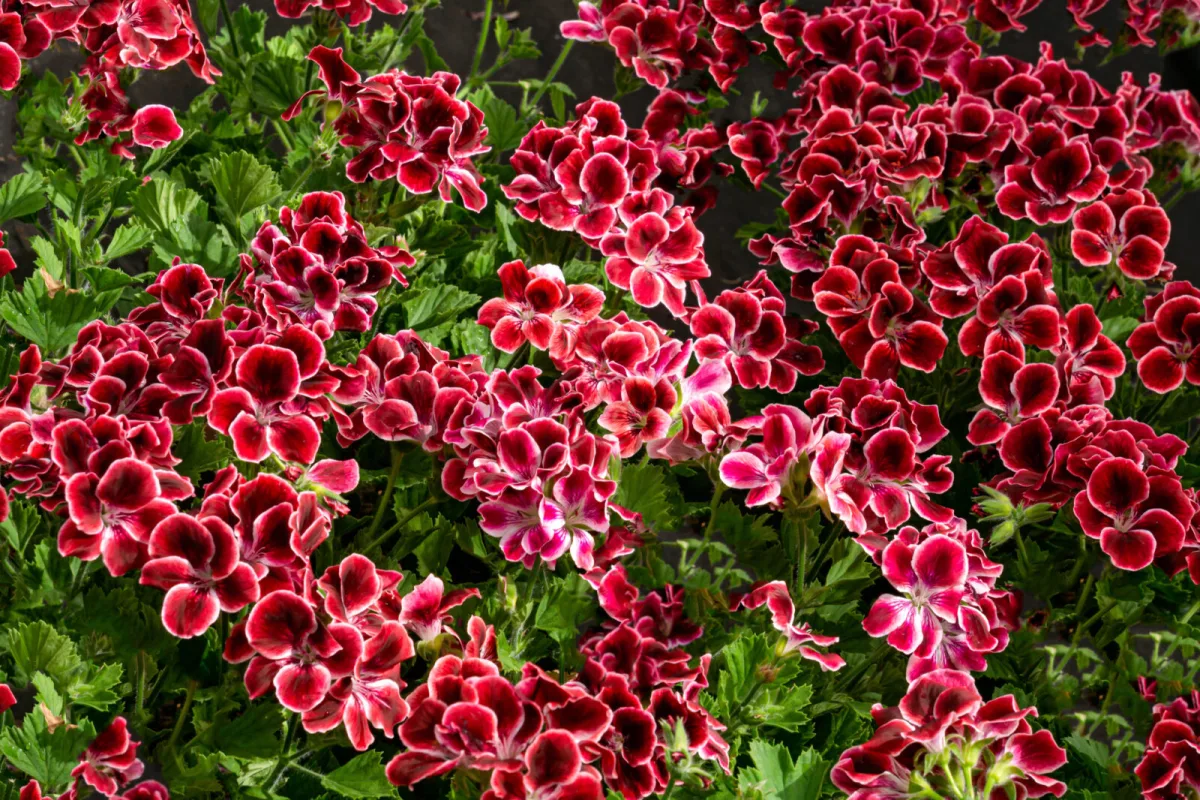
Position, watering and compost for long flowering
Pelargoniums like sun and an airy spot. The compost should be fertile and free-draining. Water thoroughly, but only once the top layer of compost has dried slightly. A practical rule is to check with your finger about the first 2–3 cm. When that feels dry, it’s time to water. In hot weather this can easily be daily; in cooler spells, much less.
Feeding is important too. In containers, nutrients are depleted faster, so pelargoniums appreciate regular feeding with a fertiliser for flowering balcony plants. If you want the most flowers possible, avoid excess nitrogen, which mainly drives leaf growth. A balanced feed with an emphasis on phosphorus and potassium is better.
Deadheading is a simple trick that makes a big difference
If you want pelargoniums to keep producing new flowers, you need to remove spent flower heads regularly. It’s not enough to pull off the individual petals. The right approach is to take the entire flower head and snap or cut the stalk lower down, ideally just above a joint where new growth will form.
Deadhead by removing the whole flower stalk right below the point where it joins the main stem. The plant won’t waste energy on seed and will produce more buds instead.
On well-watered plants, the stems are more flexible and snap out cleanly. If you prefer precision, use scissors, especially if the growth is dense.
The most common mistakes and how to avoid them
The biggest problem is usually overwatering and poor drainage. If leaves turn yellow and the plant looks “tired” while the compost is still wet, check the drainage holes and adjust your watering routine. Another common mistake is too little light: pelargoniums will survive in partial shade, but flowering is weaker and shoots may become leggy. A third weak spot is irregular feeding, because container plants have nowhere else to draw nutrients from.
Give your pelargonium sun, free-draining compost, sensible watering and regular removal of spent blooms, and it will reward you with a long season of colour. Whether you prefer classic red, elegant white or soft pink shades, pelargoniums in balcony pots often steal the show in summer.
Source: Plantersplace, Rhs , Pestrazahrada.cz
Related articles
Next year you can harvest better if you don’t sow carrots where they won’t thrive
Carrot root fly can ruin carrots, parsley and celery from the inside out, often without obvious warning until harvest. Better site choice, rotation, later sowing and simple physical barriers can dramatically cut damage next season.
How to Propagate Roses from Cuttings at Home and Fill Your Garden with Blooms Almost for Free
Want more roses without paying for new plants? With a few healthy cuttings and a simple plastic-bottle mini greenhouse, you can root new bushes at home in just a few weeks.
Heathers can cope where other plants won’t, but one soil detail decides everything
Heathers and heaths are tough evergreen shrubs that can flower across the seasons when you choose the right types. Success hinges on matching the plant to your soil pH and ensuring free drainage.
Comments (0)
Be the first to comment.