
 English
  Polski
  Deutsch
  Nederlands
  Svenska
  Norsk
Norsk  Dansk
Dansk  Français
  Italiano
  Español
  Português
  Slovenčina
  Suomi
Suomi  Gaeilge
 Are Your Herbs Dying One Subtle Mistake Is Usually to Blame
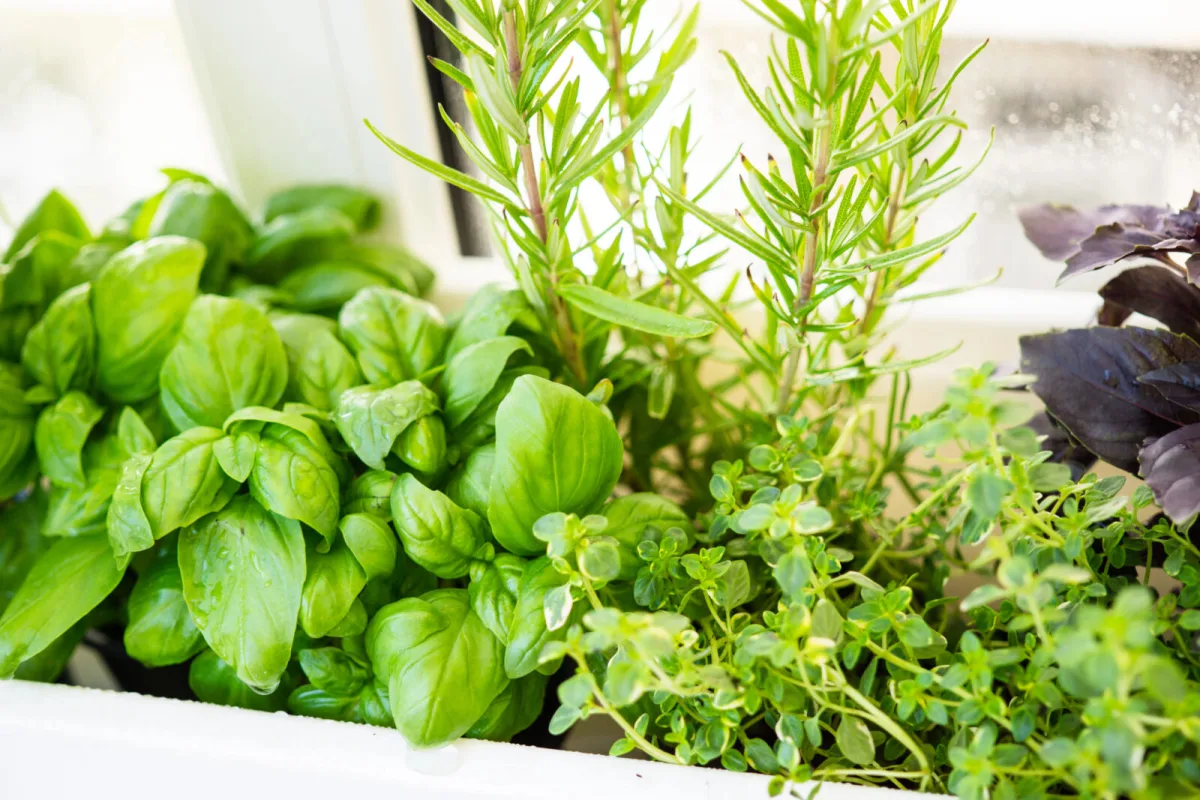
A successful herb garden is built on a few simple rules. Most culinary herbs need plenty of light, ideally direct sun for roughly six to eight hours a day. Just as important is soil that doesn’t stay wet for long. Waterlogging leads to root rot and is the most common reason herbs fail, especially in pots and window boxes. If you’re growing in containers, allow for a minimum depth of around 15 cm; with woody herbs it’s better to go deeper. A smart approach is also to combine growing indoors and outdoors, so you can harvest almost year-round.
It’s practical to group herbs by watering needs. Mediterranean types such as rosemary, sage and oregano prefer a drier routine and a free-draining mix with added sand or grit. Leafy and annual herbs, for example basil, parsley and coriander, do better in a richer compost and with more regular watering.
Start simple and only expand once you’re confident
It’s best to begin with just a few pots on a sunny windowsill and only add more types once the plants have settled in and grown on. If you buy too many at once, you often lose track of watering and day-to-day care.
For absolute beginners, chives, parsley and thyme are ideal. They’re resilient, can be harvested little and often, and forgive small mistakes. In summer you can add basil, which loves warmth, and outdoors you can grow rosemary too, as long as it gets a sheltered, sunny spot and excellent drainage.
Indoor herbs and harvesting even in winter
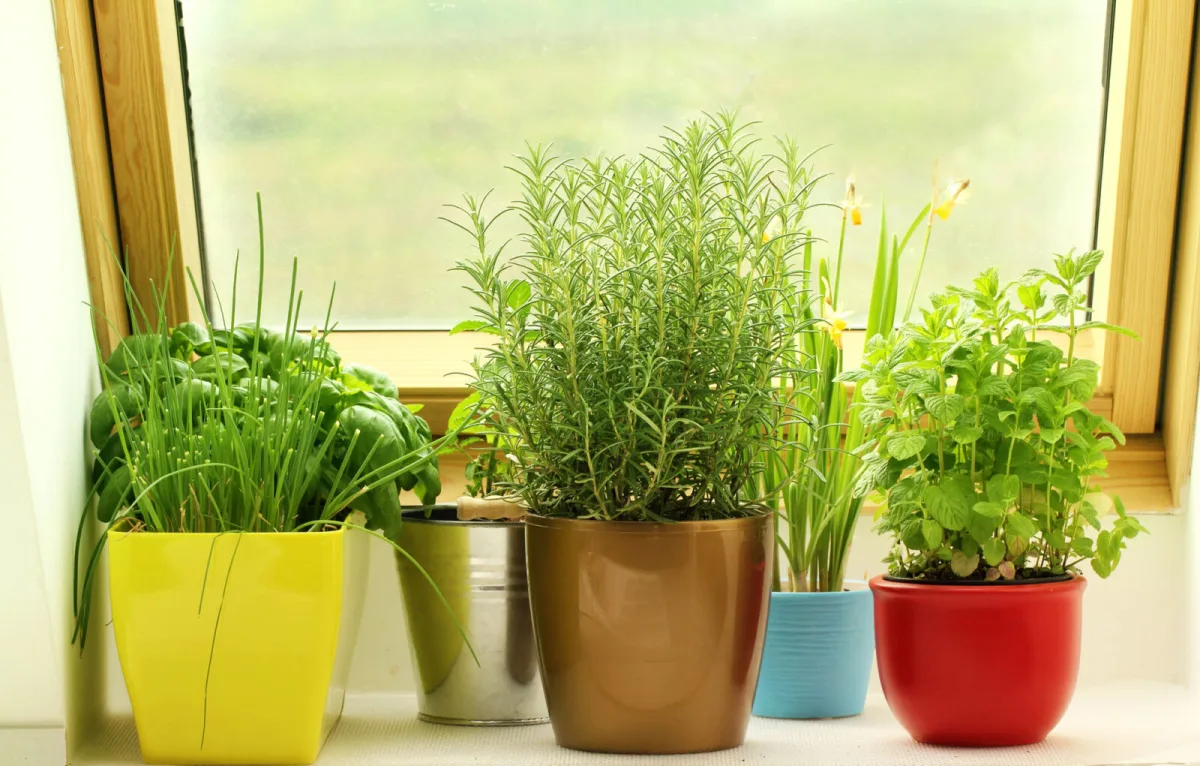
Growing indoors is ideal for the time of year when it turns cooler outside and growth slows. The best place is a south-facing windowsill where herbs get at least four to six hours of direct light. If there isn’t enough light, a LED grow light positioned roughly 30 to 45 cm above the plants will help. In the kitchen you also have herbs within easy reach while cooking, which increases the chance you’ll harvest them regularly.
The best herbs for growing at home
Basil thrives on a bright windowsill and, with regular pinching out, forms a dense, bushy plant. Chives tolerate a bit less light and can be snipped almost continuously; their purple flowers are edible too. Parsley grows well even in partial shade and prefers slightly cooler temperatures. Coriander likes cooler conditions, so indoors it’s easier to prevent it from bolting too quickly. Thyme stays compact and is excellent for smaller pots; trailing varieties also work well in hanging containers.
Tips that make all the difference
Choose containers with drainage holes and use a quality potting compost, not heavy garden soil, which compacts easily in pots. Rotate plants from time to time so they don’t lean one-sided towards the light. If flowers appear and your main goal is leaves, it pays to pinch out flower stems regularly.
Ideas for an herb garden that’s both attractive and practical
An herb bed doesn’t have to be purely functional. Try choosing a theme and planting the space accordingly. A Mediterranean mix with rosemary, thyme, oregano, sage and lavender is fragrant and also unified in its needs. For everyday cooking, it’s useful to keep the most-used herbs near the door, such as basil, parsley, chives or dill. If you enjoy making herbal teas, you can grow chamomile, lemon balm and mint—just make sure you keep mint’s spread firmly under control.
Space-smart layouts that work
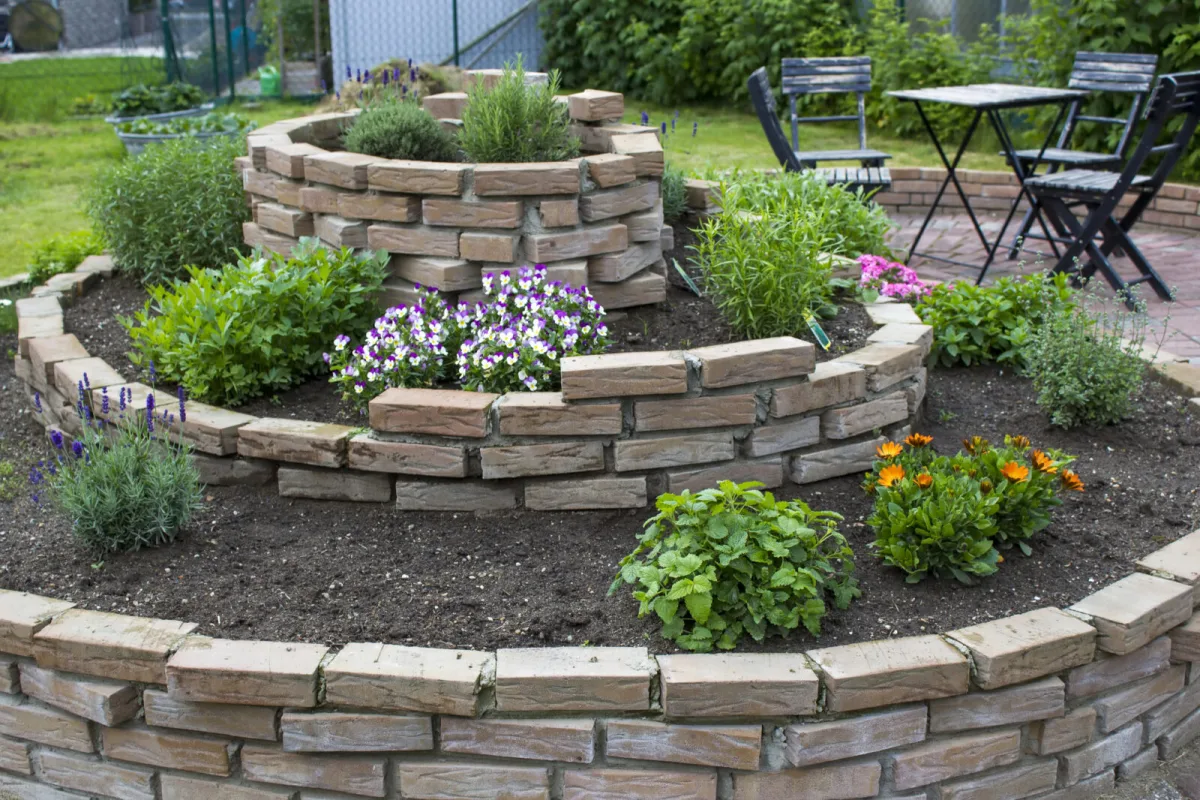
A herb spiral creates different microclimates. The top is drier and warmer, making it suitable for woody and Mediterranean herbs, while lower down suits herbs that cope with more moisture. Another option is a circular bed divided into segments, where it’s easy to keep track of which sections you water more often and which you allow to dry a little between waterings.
Choosing containers and why drainage is essential
The pot material affects how quickly the compost dries out. Terracotta and unglazed ceramic breathe and are excellent for herbs that dislike wet conditions. Plastic holds moisture longer, so it suits herbs that want a steadier supply of water. Wood insulates roots well but needs to be prepared for outdoor conditions. Metal containers look modern, but in full sun they can overheat.
Container depth should be at least about 15 to 20 cm, and more for rosemary and other woody herbs. Drainage holes are a must, as is a free-draining layer and a compost that doesn’t stay waterlogged long after watering.
An outdoor herb garden step by step
Outdoors you gain more space and can grow a larger selection. Choose the sunniest spot, ideally sheltered from strong wind. Avoid low-lying areas where water collects. Watch your garden through the day, because it’s often warmer by a wall or fence and plants are better protected there—useful for more tender herbs.
Soil preparation by herb type
Most herbs prefer a free-draining soil that’s neutral to slightly alkaline. Heavy clay is best lightened with sand, grit or compost. Mediterranean herbs often thrive even in poorer soil, so don’t overdo feeding and focus instead on structure and water runoff. Basil or coriander, on the other hand, will appreciate a richer mix with a higher proportion of organic matter.
How to grow year-round
Perennials such as rosemary, thyme and sage hold their shape through winter and form the backbone of the garden. Add annual herbs in the warmer part of the year. You can protect sensitive herbs in spring and autumn with a simple cover, or move them temporarily into a sheltered spot or greenhouse.
Herb families and why it helps to know them
Plants from the same family tend to have similar needs, which makes planning easier. The mint family (Lamiaceae) includes rosemary, thyme, sage, oregano, marjoram, summer savoury, lavender, basil and lemon balm. The carrot family (Apiaceae) is represented mainly by parsley, dill and coriander. The daisy family (Asteraceae) includes chamomile or calendula. The onion family (Alliaceae) includes chives, one of the most reliable herbs for beginners.
Aphids sometimes appear on soft-leaved herbs, especially when grown in warmth without air movement. Regular checks, a rinse with lukewarm water and good ventilation help prevent pests from spreading.
Raised beds and window boxes
A raised bed is excellent because it warms up faster in spring and drains better. It also makes it easy to mix different compost zones. In one section use a free-draining, sandy mix for Mediterranean herbs; in another, a richer soil for leafy herbs. Size the bed so you can reach the middle without stepping on the soil.
Window boxes save space and keep herbs closest to the kitchen. Choose containers that are deep enough and remember they dry out faster, so you’ll water more often in summer. Chives, thyme, oregano and smaller basil varieties suit them well; trailing types also spill nicely over the edge.
Vertical growing, hanging pots and tiered planters
When you’re short on ground space, growing on a wall or in tiers helps. Vertical pocket systems look striking and make use of empty surfaces. The top usually gets more light, so place sun-loving herbs there, and lower down put herbs that tolerate a bit of shade. Expect faster drying and water so moisture reaches the lower sections too.
Tiered terracotta planters are particularly suitable for herbs that prefer a drier routine, because terracotta helps regulate moisture. Hanging baskets work well for trailing thymes and oreganos, but make sure the fixing is secure and remember that containers become much heavier after watering.
Labelling herbs for easier harvesting
Labels aren’t just decoration. On young plants, leaves often look similar and it’s easy to mix them up. Outdoors, choose materials that withstand rain and sun, and place them where they won’t soon be hidden by growth. If you rotate herbs frequently, a rewritable option is handy so you always know what’s what in the bed.
Most common questions and practical answers
What layout is easiest for beginners
The easiest start is a small rectangular bed or a few larger containers. The key is to separate herbs by water and compost needs, so Mediterranean herbs don’t sit in damp conditions and leafy herbs don’t suffer from drought.
Which herbs are better not planted together
The main issue is aggressive spreaders—typically mint and often lemon balm—which can quickly swamp their neighbours. It’s safer to grow these separately, ideally in a pot. The aim is to stop the other herbs competing with one dominant plant for space and nutrients.
When is the best time to start
Hardier perennials can be planted in spring as soon as the soil is workable. Warmth-loving herbs such as basil should go outside only once temperatures have reliably risen and the soil has warmed up, usually around late May to early June. If you want a head start, raise seedlings indoors.
Which herb is the easiest to grow
Chives are one of the most rewarding choices. They tolerate partial shade, regrow quickly after cutting, and cope with less regular care. They also return every year, and the flowers can be used in the kitchen.
What can grow together in one larger pot
Mediterranean herbs that like similar conditions combine well in one container—for example rosemary, thyme, sage and oregano—as long as there’s enough space and a free-draining mix. Basil, parsley and coriander can also grow together, but they need more moisture and nutrients than drought-tolerant herbs.
Source: Green House Stores, Rhs , Pestrazahrada.cz
Related articles
Next year you can harvest better if you don’t sow carrots where they won’t thrive
Carrot root fly can ruin carrots, parsley and celery from the inside out, often without obvious warning until harvest. Better site choice, rotation, later sowing and simple physical barriers can dramatically cut damage next season.
How to Propagate Roses from Cuttings at Home and Fill Your Garden with Blooms Almost for Free
Want more roses without paying for new plants? With a few healthy cuttings and a simple plastic-bottle mini greenhouse, you can root new bushes at home in just a few weeks.
Heathers can cope where other plants won’t, but one soil detail decides everything
Heathers and heaths are tough evergreen shrubs that can flower across the seasons when you choose the right types. Success hinges on matching the plant to your soil pH and ensuring free drainage.
Comments (0)
Be the first to comment.