
 English
  Polski
  Deutsch
  Nederlands
  Svenska
  Norsk
Norsk  Dansk
Dansk  Français
  Italiano
  Español
  Português
  Slovenčina
  Suomi
Suomi  Gaeilge
 Earwigs in the garden feared attacker or surprisingly useful helper
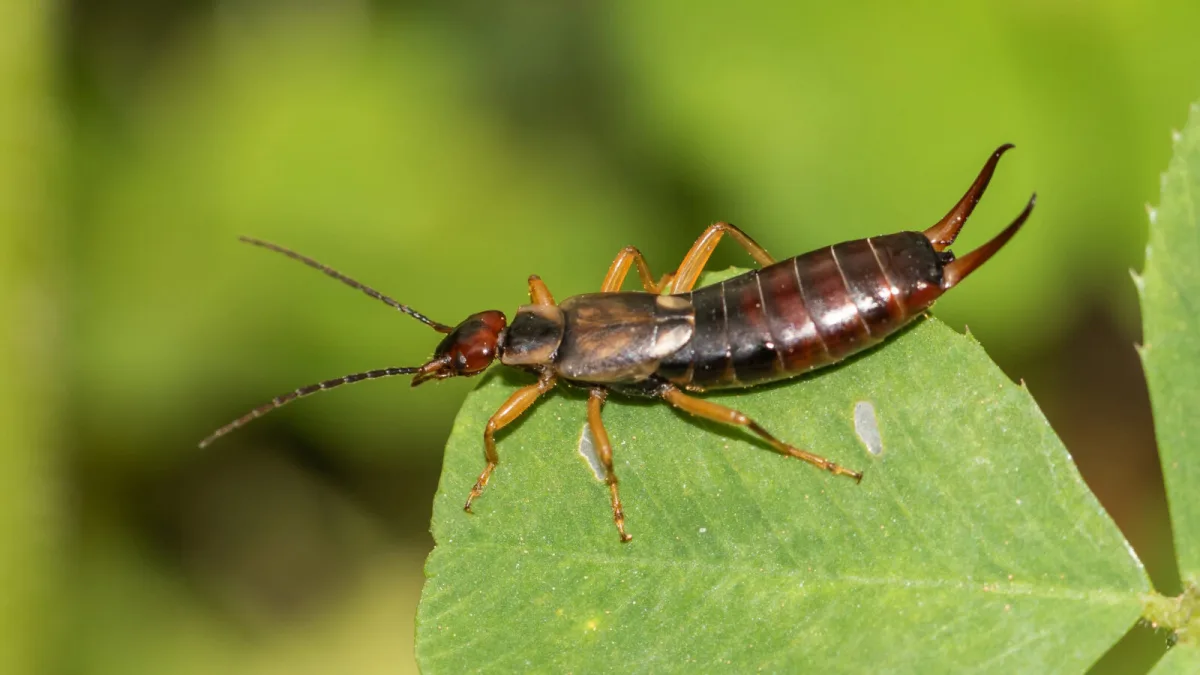
The common earwig is one of those insects that many people instinctively dislike. It’s inconspicuous, vanishes quickly into the nearest crack, and its characteristic “pincers” at the end of the body look like a weapon. That appearance has fuelled the widespread idea that earwigs attack people, pinch, and harm plants. In reality it’s mostly a misunderstanding: an earwig isn’t aggressive, doesn’t seek out humans, and in normal situations has no reason to defend itself.
When an earwig turns up indoors or in a plant pot, the first reaction is often to get rid of it fast. Yet its presence often indicates a relatively natural setting with plenty of hiding places, moisture, and food. In the garden, an earwig can be more a sign of balance than a problem.
Those pincers are not a tool for attacking people
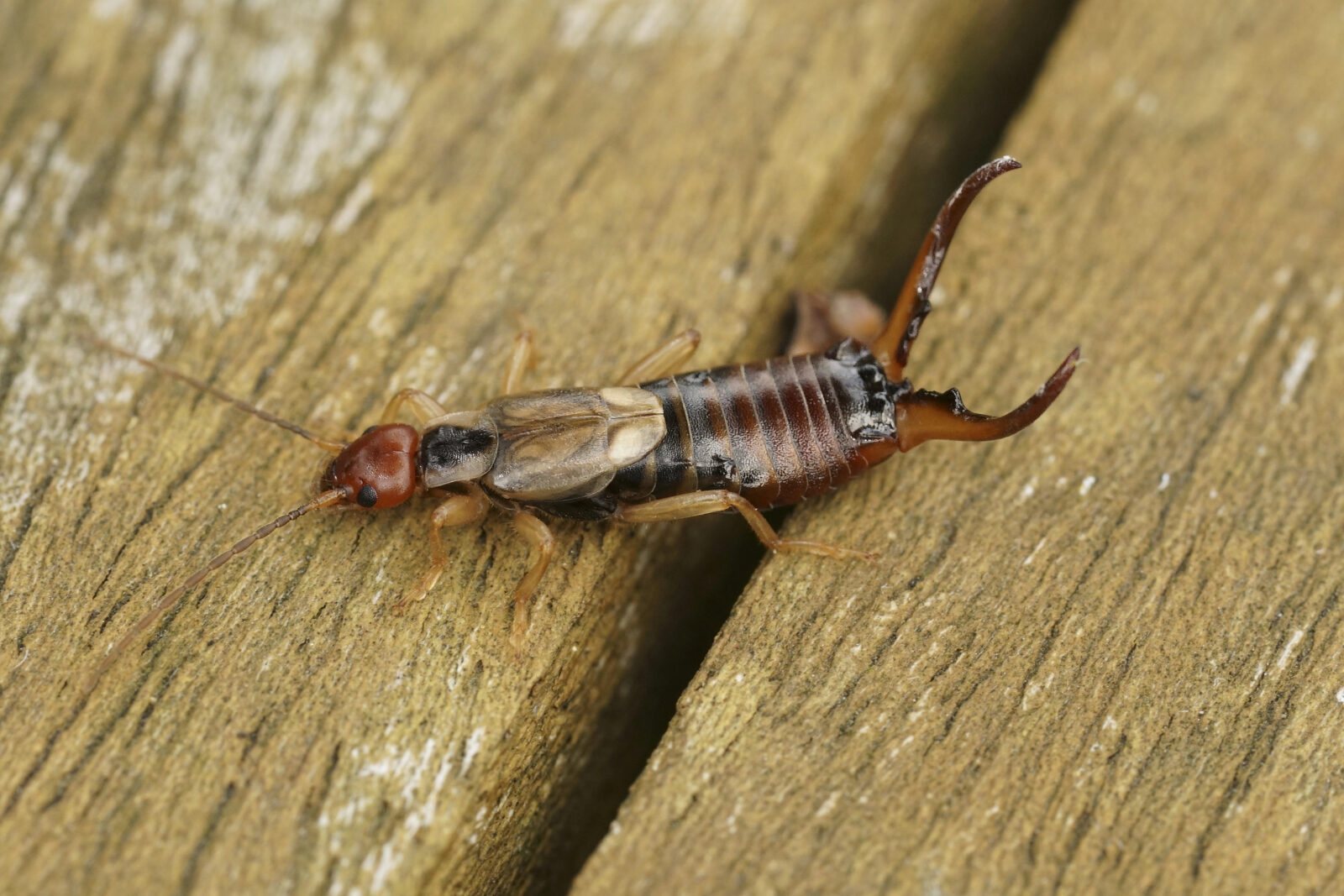
The pincers, technically called cerci, mainly help earwigs handle food, mate, and, in a pinch, defend themselves. If you pick one up or squeeze it, it may try to “pinch,” but it’s usually a mild grip that for most people causes nothing more than a brief surprise. It isn’t venomous, doesn’t transmit any “earwig” toxins, and certainly isn’t trying to attack people on purpose.
What looks like an aggressive weapon is, in fact, mostly a tool for everyday life and a last line of defence.
A night-time hunter of aphids and other small pests
Earwigs are mainly active after dark. During the day they hide in damp, shaded, sheltered places, for example under a plant pot, a board, a stone, in a thick layer of mulch, or in the folds of leaves. At night, however, they become attentive hunters, moving over plants and searching for small prey.
Their menu includes aphids, spider mites, larvae, and other soft-bodied pests that can quickly weaken vegetables and ornamental plants. Alongside live prey they also make use of organic debris and dead plant material, contributing to the garden’s “clean-up.” From this perspective, earwigs can be natural allies, especially where you don’t want to use chemical sprays and are aiming for more sustainable care.
When earwigs can still be a problem
Although earwigs are often helpful, there are situations where their presence can become inconvenient. If there are very many earwigs and at the same time they don’t have enough small prey, they may switch to softer plant food. Sometimes they nibble ripe fruit, such as strawberries, apricots, or overripe fruit fallen on the ground. Similarly, they can damage the delicate petals of certain flowers, typically dahlias, pot marigolds, or chrysanthemums, where the damage is most noticeable in the morning.
It’s important to distinguish whether the earwig is truly causing the main damage, or simply taking advantage of already compromised or overripe parts. It often happens that an earwig comes to a fruit that already has a split, has been started by a slug, or is beginning to ferment. Then it looks like the culprit, but in reality it is just “finishing off” an easy meal.
Earwigs in and under plant pots what they are trying to tell you
Finding an earwig under a plant pot is very common. This spot offers an ideal microclimate: shade, a more stable temperature, and above all moisture. Earwigs rest here during the day and head out after dusk to hunt on nearby plants. If it seems like there are several in one place, it doesn’t necessarily mean an “invasion” in the human sense, but rather a shared shelter with good conditions.
Their breeding behaviour is also interesting. Earwigs are among the insects that show fairly pronounced parental care. The female guards the eggs, cleans them, and stays with them to increase the young’s chances of survival. So if you come across small, pale eggs in a sheltered corner, it’s not necessarily a reason to panic, but a glimpse of a natural cycle taking place quietly in the garden.
How to live with earwigs without unnecessary interventions
If earwigs aren’t causing visible damage, it’s often best to leave them alone. In the garden they help regulate pests and support a natural balance. If you do notice nibbling on flowers or ripe fruit, changing conditions tends to help more than blanket control. Reduce overripe and fallen fruit that attracts them, and keep an eye on spots with excessive moisture and dense hiding places right next to your most vulnerable plants.
It also helps to see earwigs as part of a bigger picture. Where earwigs thrive, their prey often thrives too, for example aphids. If there are lots of earwigs, it may mean the garden offers plenty of food and shelter. Instead of immediate elimination, it’s worth looking for the underlying cause: an outbreak of pests or an excess of easily available food.
A natural ally of plants and people
An earwig isn’t a dangerous attacker in the true sense of the word. It’s a night-active, rather timid garden resident that hides for most of the day and comes to the fore only when we disturb it or when it appears on fruit we wanted to harvest. In many cases, though, it’s working for you: hunting small pests, helping clean up organic debris, and strengthening the network of natural predators.
If you look at earwigs as indicators of a living garden, your reaction changes too. Instead of fear and a quick intervention, you may move to observation and small adjustments in care. And often you’ll find that the earwig is less an “enemy” and more a quiet helper doing at night the work that would otherwise fall to chemicals or your time.
Source: Natura Bohemica, Agromanual, Nature, Pestrazahrada.cz

A lover of nature, gardens, and everything that moves, blooms, or grows. He literally grows everything, from herbs to rare species, and he enjoys caring for animals just as much. In his work, he connects modern technology with tried-and-tested grandmotherly methods and is happy when both paths lead to the same goal.
Related articles
Fighting moles tempts you into a quick fix that can put you on the wrong side of the law
Fresh molehills can ruin a lawn, but the common mole is a protected species and lethal control can be illegal. Learn how to tell a mole from a vole and which lawful, effective methods actually encourage it to move on.
Why the Tree That Feeds a Family for Generations Is Disappearing from Czech Gardens
The English walnut used to be a staple of larger gardens and farmyards, valued for its nutritious nuts and many practical uses. With the right site and variety, it remains one of the most rewarding long-lived trees you can plant.
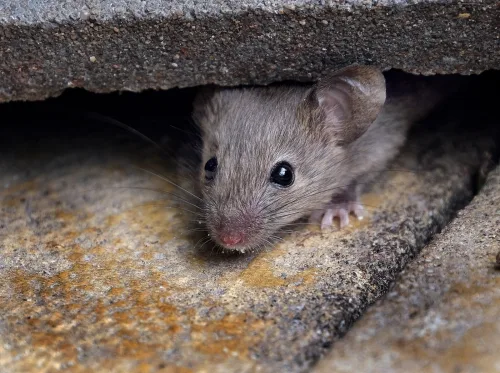
How to Get Rid of Mice and Rats in the House, Loft and Garden Effectively
Mice and rats don’t leave quietly—scratching sounds, droppings and gnaw marks are clear warnings. A lasting solution comes down to three steps: block entry points, remove food sources, then use traps or professional control.
Comments (0)
Be the first to comment.