
 English
  Polski
  Deutsch
  Nederlands
  Svenska
  Norsk
Norsk  Dansk
Dansk  Français
  Italiano
  Español
  Português
  Slovenčina
  Suomi
Suomi  Gaeilge
 An Ant Trail on a Tree Reveals the Problem Hiding in the Canopy
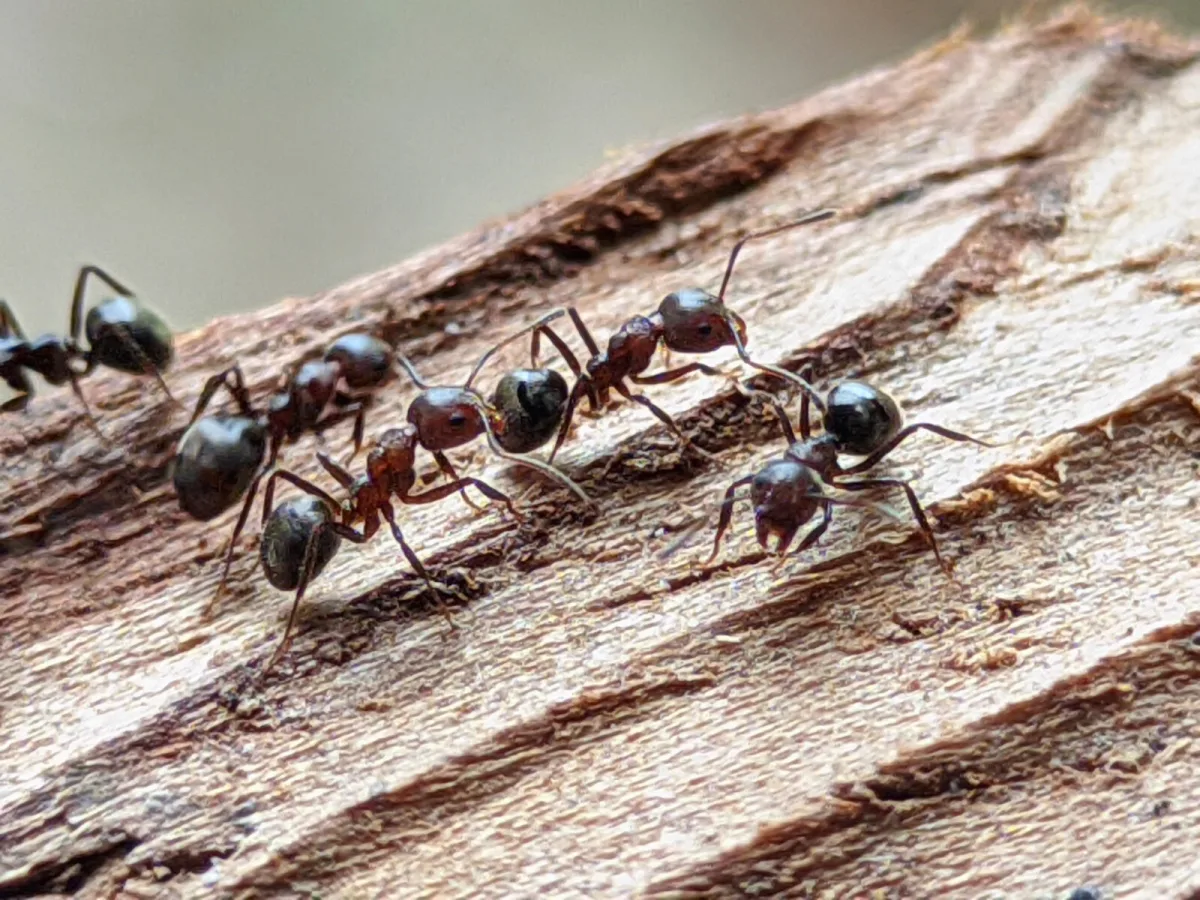
When a larger number of ants suddenly appears in the garden, or they form noticeably long trails, they are usually signalling something. Many people’s instinct is to eliminate the ants immediately, but it’s often wiser to first understand what is attracting them to that spot. The direction of their march typically reveals the real cause, and removing it tends to be more effective than any quick strike against the insects themselves.
A trail on a tree usually means aphids
An ant column climbing up the trunk of a tree or ornamental shrub almost always points to aphids in the canopy. Ants seek out the sweet honeydew that aphids excrete while sucking plant sap. You’ll most often see this on roses, fruit trees, and denser ornamental shrubs, where aphids multiply easily.
Aphids weaken plants, deform leaves, and some species can also spread diseases. An infestation is often recognised by curled, sticky leaves, sometimes with a dark coating as well. Ants don’t just tolerate aphids—they often protect them, because they benefit directly. Once you get rid of the aphids, ants usually lose their reason to visit the tree.
With a light infestation, mechanical removal may be enough, such as a stronger jet of water. A spray of gently diluted soapy water can also help; apply it outside of harsh sun—morning or evening—to minimise the risk of leaf damage.
Ants between paving joints may be building a nest
If ants are mainly around the patio, paving, or a path and small piles of sand appear in the joints, it often means they are establishing a nest under the surface. Dry, warm, loose material suits them as ideal building media. As they gradually bring sand up, voids can form under the paving and over time show up as depressions. These can look like the base is settling, even though the cause is biological.
The biggest risk is where paving is laid on a sand bed. In this type of base, ants can tunnel for a long time, quietly and unnoticed. By contrast, a firmer concrete base makes this kind of undermining much more difficult for them.
As a practical prevention and remedy, it’s often suggested to replace ordinary jointing sand with polymeric sand. After wetting, it hardens; ants find it harder to create new tunnels in it, and the area becomes less attractive to them.
Pots attract ants with light, easy-to-dig compost
Ants also often show up where you wouldn’t expect them—in pots on a terrace or balcony. The reason is simple: a light, loose potting mix is easy to excavate. Their presence is hinted at by tiny piles of soil on the surface, or by the moment you water and ants suddenly rush out in numbers.
The biggest issue usually isn’t the ants themselves, but the network of their tunnels. These change how water moves through the pot. Research focused on certain ant species shows that soil with an anthill can let water pass through significantly faster than soil without one. The plant may then wilt even if you water it, because moisture doesn’t stay in the root zone as long as it needs.
In practice, it often helps to water the pot thoroughly, or briefly submerge it in a container of water so the compost absorbs evenly. For plants that don’t tolerate waterlogging—such as cacti and succulents—it’s usually better to gently loosen the surface of the compost and water more often, but in smaller amounts.
A trail into the house forms because of food and scent
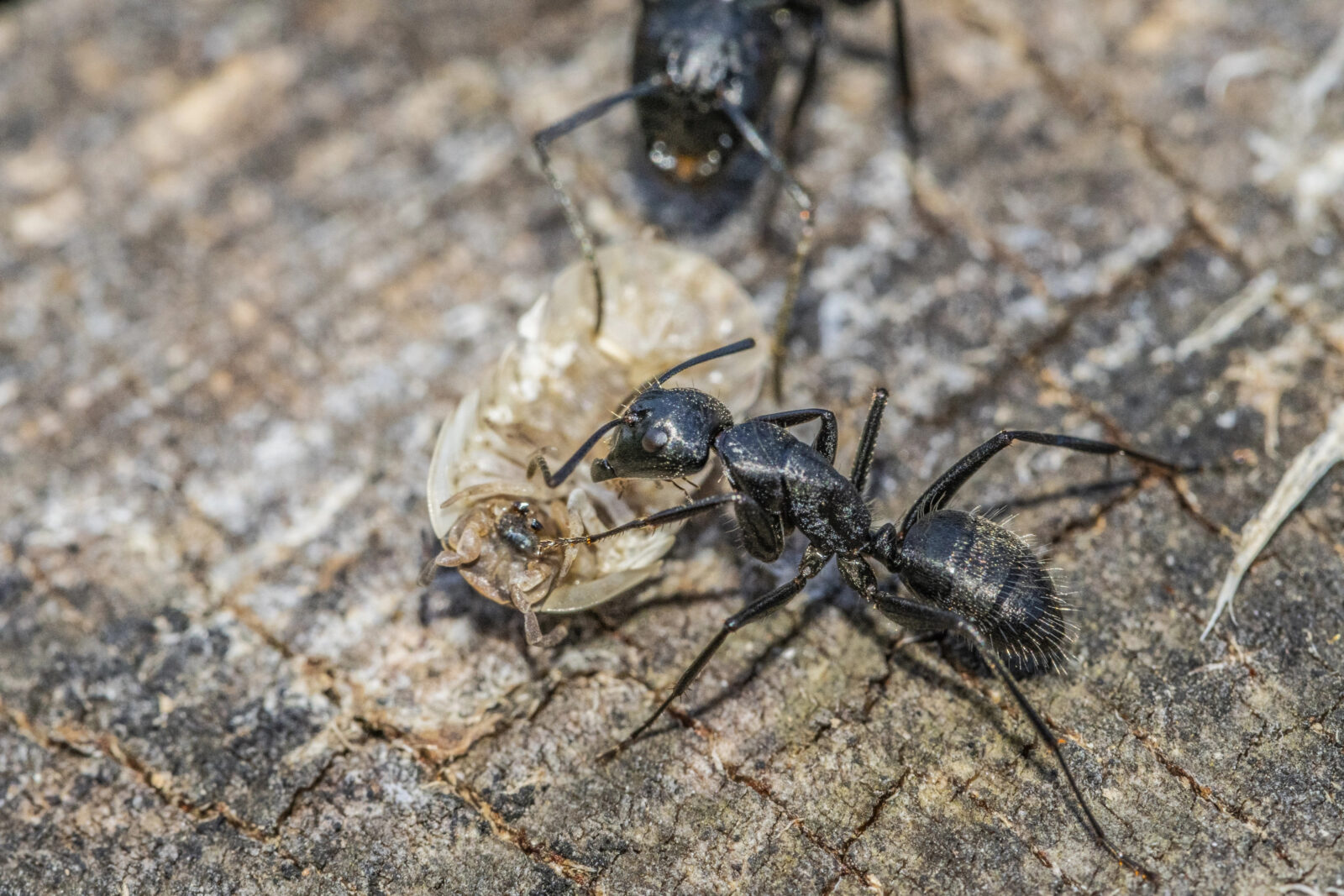
Once an ant finds food, it leaves a pheromone trail on its way back. Others quickly pick it up, and within moments an isolated sighting turns into a clear column that can lead right into the house—typically to the kitchen or towards the barbecue.
At that point, it’s not enough to simply sweep up the visible ants. The key is to remove the scent trail too—for example, by wiping the area with water and washing-up liquid or with a vinegar solution. Just as important is clearing away the food source. Common temptations include exposed sugar and sweets, crumbs, leftovers from grilling, or a pet food bowl left outside overnight.
As an additional measure, you can use scents that ants dislike and that may discourage them from returning, such as cinnamon or lavender. Their main value is that they help reduce repeated foraging around sensitive areas.
Look for the cause first, and only then deal with the ants
Ants often simply show that there is a food source somewhere, a suitable nesting site, or a problem on your plants.
In most cases, ants retreat on their own once what attracts them is gone. Removing aphids, thoroughly cleaning up food residues, or adjusting the joints in paving tends to have a longer-lasting effect than immediate extermination. Chemical treatments are therefore often unnecessary if you can address the real reason for their visit.
Source: Nature, Science Direct, Pestrazahrada.cz

A lover of nature, gardens, and everything that moves, blooms, or grows. He literally grows everything, from herbs to rare species, and he enjoys caring for animals just as much. In his work, he connects modern technology with tried-and-tested grandmotherly methods and is happy when both paths lead to the same goal.
Related articles
The Most Overlooked Shrub in the Czech Landscape Sloe Feeds Bees Shelters Birds and Bears Fruit Few People Know
Blackthorn (sloe) is an unassuming, thorny shrub that supports wildlife early in the season and yields dark, frosted fruits in autumn. Once touched by frost, its astringent sloes become a valued ingredient for preserves, drinks, and traditional remedies.

How to Choose a Sack for Storing Potatoes So They Don’t End Up in the Compost in a Few Weeks
The right storage sack helps protect potatoes from light and excess moisture, two common reasons they spoil. Learn when to choose a jute sack or a paper sack and how to keep your crop sound for months.
Silverfish Appear at Night and Vanish into Cracks Get Rid of Them with One Change Not a Spray
Silverfish thrive in dark, damp corners and often show up only at night. Long-term control comes from drying the space and removing hiding places, not just spraying chemicals.
Comments (0)
Be the first to comment.