
 English
 Polski
 Deutsch
 Nederlands
 Svenska
 Norsk
 Dansk
 Français
 Italiano
 Español
 Português
 Slovenčina
 Suomi
 Gaeilge
Winter salads extend your harvest for months
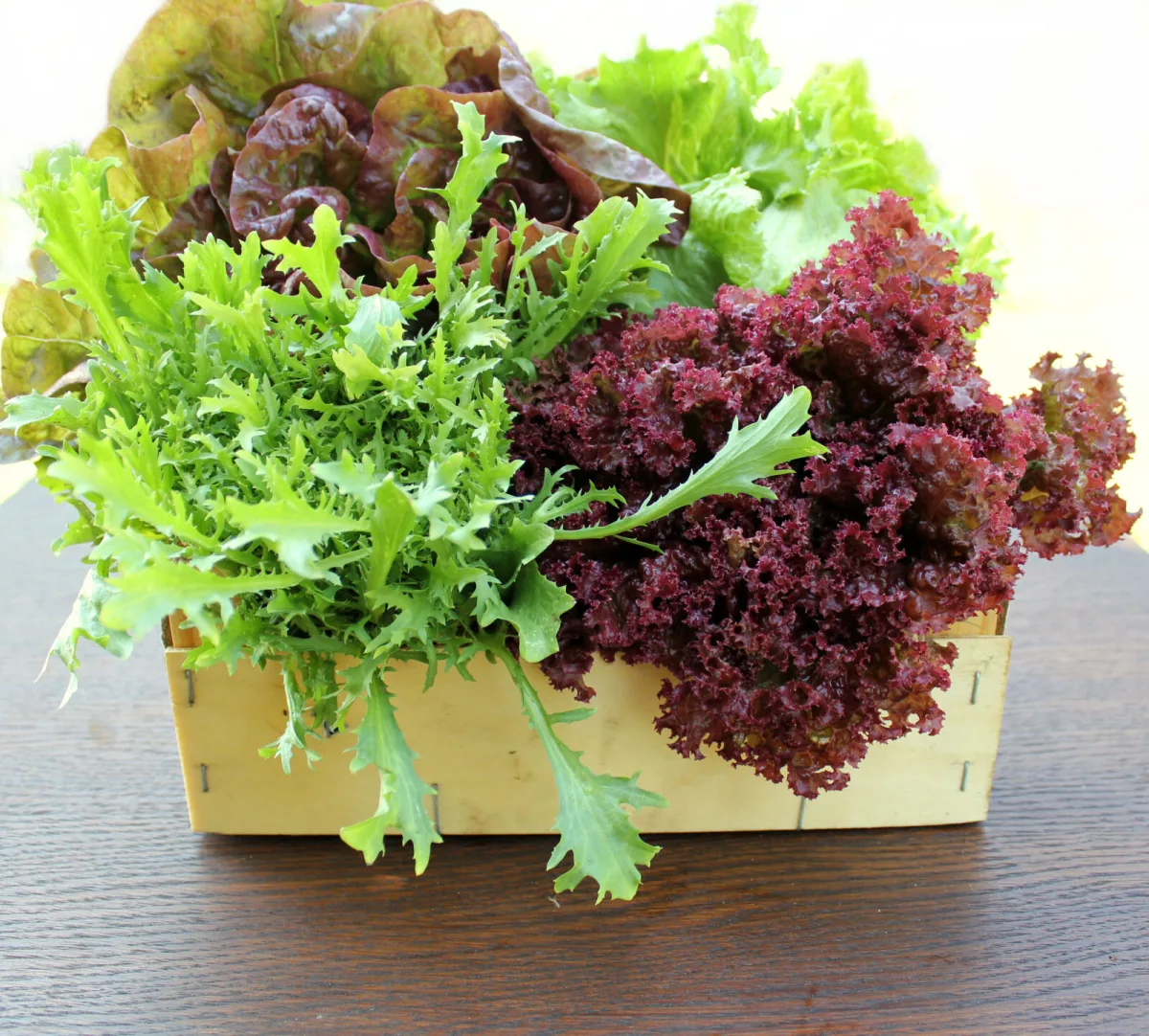
Growing salad leaves doesn’t have to end with summer. A number of leafy crops cope with the colder season very well, as long as you give them the right start and at least basic protection. The most important thing is to plant them in good time, ideally in early autumn while the soil is still warm. That’s when young plants establish quickly and have time to build strength before winter arrives.
As well as using raised transplants, some types can also be sown directly into the bed. The advantage of autumn planting is that plants make use of the soil’s residual warmth and form a solid base for growth through the colder months. Thanks to this, you can enjoy fresh leaves at a time when the garden is otherwise largely resting.
Which types to choose for winter growing
For winter picking, it’s best to reach for hardy varieties of salad leaves. Classics include different types of heading lettuces and loose-leaf lettuces, but less familiar crops can work just as well. An interesting choice is winter purslane or salad burnet, both of which add a different flavour and texture to mixed leaves.
One of the most reliable winter salad crops is lamb’s lettuce (corn salad). It’s valued for its toughness and its ability to keep growing in lower temperatures. Sow it in late summer into modules or directly where it’s to grow. Alongside it, you can also try winter cress, rocket (arugula), mustard, or small lettuce plants intended for the colder season.
The key to success isn’t just choosing the right crop, but above all planting on time and giving it a sheltered spot.
The right site is the foundation
Winter salads need the brightest possible position that’s also sheltered. They do best where they get sun and aren’t exposed to harsh winter winds. A good microclimate can be created by a bed near a wall, the south side of the garden, or a spot protected by a fence or hedge.
Soil quality matters just as much. The soil should be free-draining so water doesn’t sit around the roots. If roots are left in icy puddles, frost can damage the plants easily. Waterlogged ground is often a bigger winter problem than cold itself. It’s worth improving the bed in advance and making sure it sheds excess moisture well.
Planting transplants and spacing
If you have transplants ready, plant them out as early as you can in autumn so they can form enough leaves before winter. Young plants are typically set about 10 cm apart in rows roughly 20 cm apart. After planting, water thoroughly so the roots settle firmly into the soil.
If you haven’t raised your own plants, you can use ready-to-plant seedlings from a garden centre. This is especially practical when you want to get an autumn bed going quickly without waiting for germination. Suitable choices include lamb’s lettuce, winter lettuce, wild rocket, mustard and cress.

Help from a greenhouse, cold frame and covers
You’ll get even better results if you give plants some cover. A simple clear tunnel, a rigid cloche or a low protective cover helps keep temperatures a little higher than outside. In autumn, this keeps growth moving along, and in winter it offers better protection from harsh weather.
Many growers prefer raising winter salads in a cold frame, greenhouse or polytunnel. Although it means a bit more work, the result is usually a more dependable harvest. A covered environment provides steadier conditions and supports germination and continued growth, especially when outdoor temperatures drop sharply.
Sowing seed and early care
Lettuce seed is tiny, so it’s often sown a little more generously along drills. After sowing, cover with only a thin layer of soil, to a depth of a few millimetres. Keep the soil evenly moist so the seed can germinate well. In protected conditions, the first seedlings usually appear within one to two weeks.
Once the seedlings put on a bit of growth, they need thinning. When they reach a height of a few centimetres, leave spacings according to the variety. Some lettuces need more room, others less. In general, smaller loose-leaf types manage with shorter distances, while romaine/cos or firmer heading forms need more space.
Harvesting in several ways
A big advantage of salad crops is speed. Some varieties are ready to pick just over a month after sowing. Leaves can be taken gradually from the outside of the plant while the centre keeps growing. This works especially well with loose-leaf lettuces and lets you harvest repeatedly from the same bed.
Another option is to cut the whole head at once. This is typical of heading lettuces, which are cut when they’re well formed but still young and tender. A popular method is also to cut leaves higher above the soil surface. The plant then regrows and can give one or two smaller pickings afterwards.
It’s worth watching for when lettuce starts to bolt. As soon as a stem appears in the centre, the flavour deteriorates and becomes more bitter. At that point, it’s best to harvest as soon as possible.
Colour and variety in the winter garden
Winter salads are interesting not only for their flavour, but also for their looks. They can brighten up a time when most beds feel empty. Varieties are available in many shades of green, blue-green, red, burgundy and deep purple. Some have smooth leaves, others blistered, lightly frilled or deeply cut.
It’s exactly this mix of colours and shapes that makes winter salads not only productive, but decorative too. If you combine several types, you’ll get an attractive bed as well as a varied harvest for the kitchen. And because salads are easy both to grow and to harvest, they can slot into almost any garden.
Why winter salads are worth it
Anyone who tries autumn planting for salads once often comes back to it year after year. Fresh leaves through winter or early spring are a welcome boost to both your diet and your gardening season. Choose hardy crops, plant on time, provide free-draining soil and, if possible, a protective cover. The reward is a harvest at a time when many people wouldn’t expect to be picking anything from their beds at all.
Source: Gardeners World, Fine Gardening , Pestrazahrada.cz
Related articles

Don’t Prune Hydrangeas in October
Tidying the garden in autumn is tempting, but October pruning can cost your hydrangeas next year’s flowers. Only two light interventions make sense this time of year; everything else is best left until the right season.
A Pineapple Top Will Root in Two Weeks, but Success Depends on the Step Most People Skip
Don’t throw away the leafy crown when you cut a pineapple. With the right prep, light, warmth and careful watering, you can root it and grow a houseplant that may eventually fruit.

Overwintering Geraniums in a Box Ensures Stronger Growth and More Abundant Spring Bloom
Many people throw balcony geraniums away after the season, even though they can overwinter very well. Stored correctly in a box in cool, dark, dry conditions, they’ll come back stronger and flower generously in spring.
Comments (0)
Be the first to comment.