
 English
  Polski
  Deutsch
  Nederlands
  Svenska
  Norsk
Norsk  Dansk
Dansk  Français
  Italiano
  Español
  Português
  Slovenčina
  Suomi
Suomi  Gaeilge
 When Arborvitae Browns from the Inside Proper Care and Fast Action Help
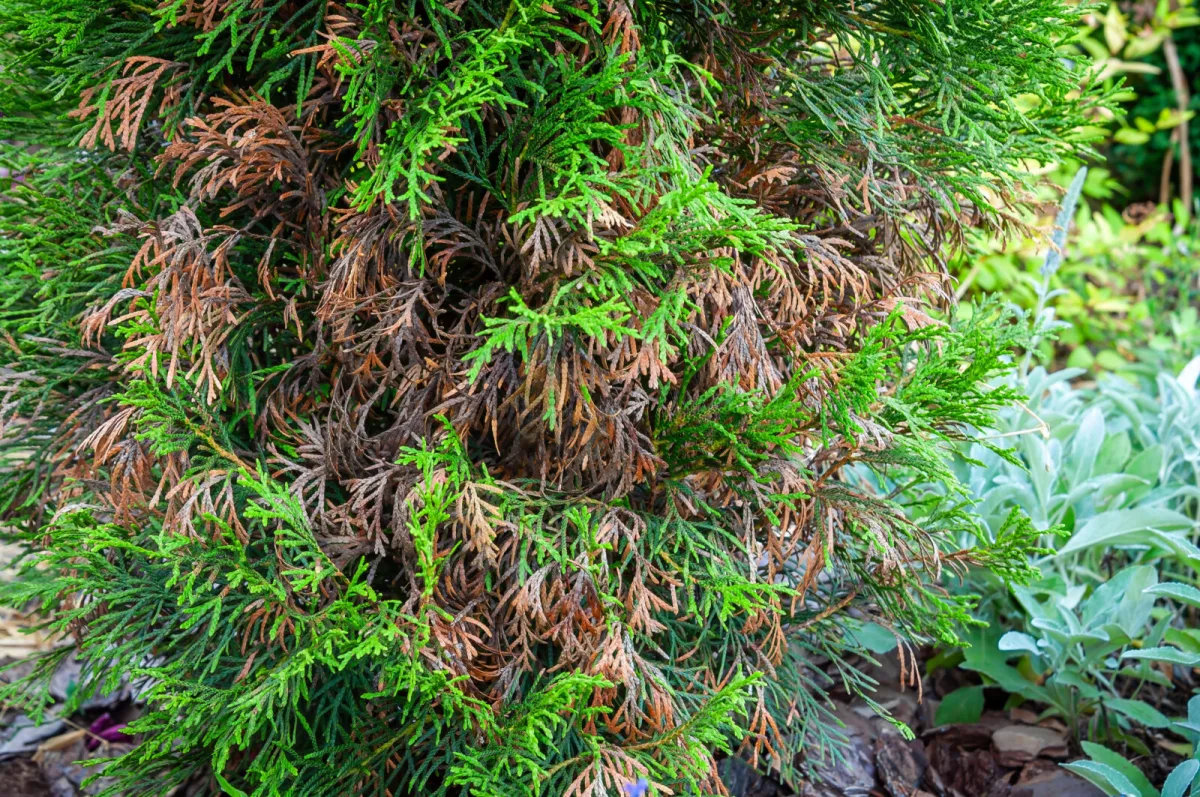
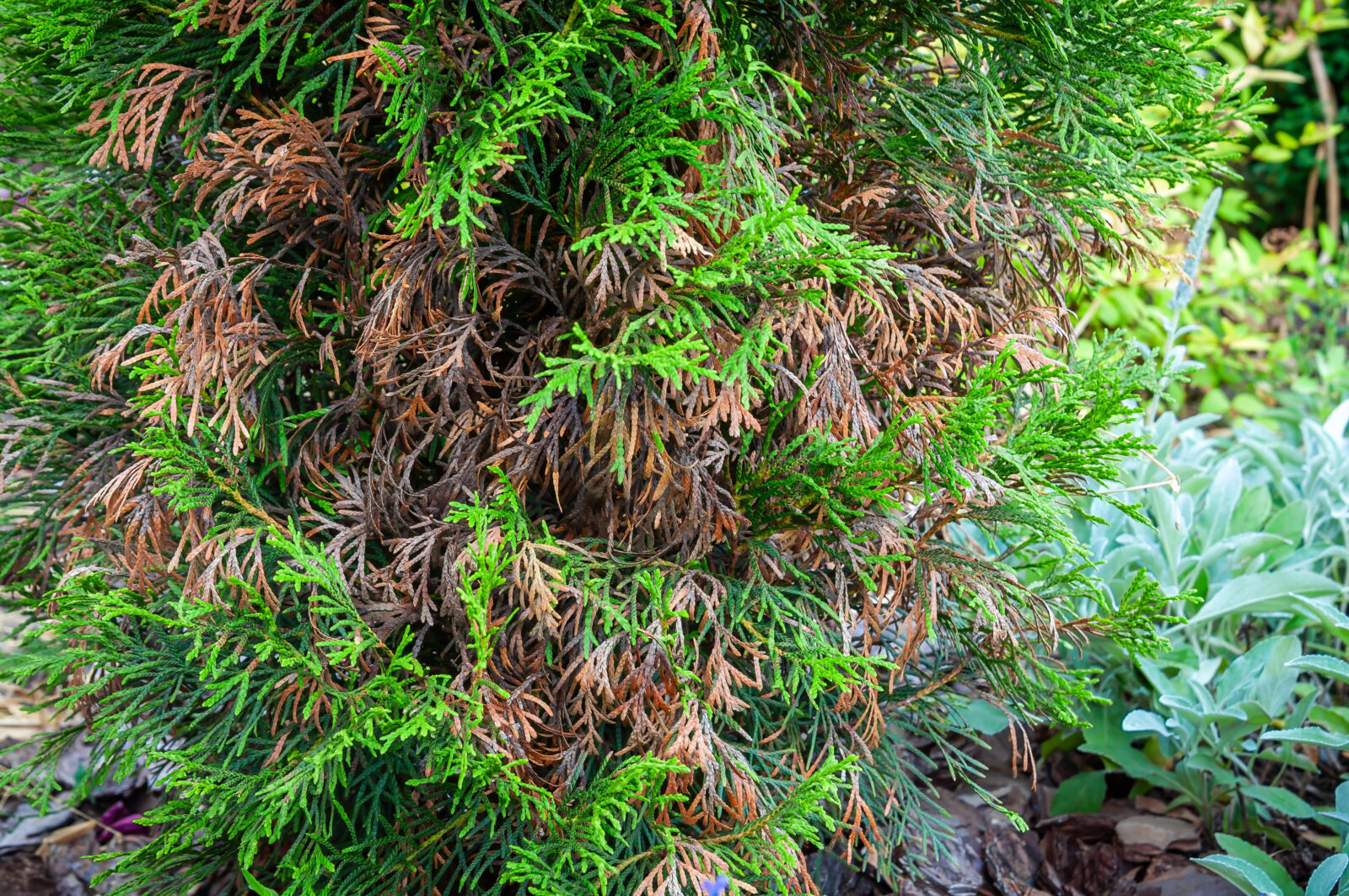
Arborvitae (thuja) are among the most commonly planted evergreens in gardens because they tolerate the weather well, hold their shape, and stay green year-round. That is exactly why it can be alarming when you notice the foliage drying and turning brown inside the shrub or in the middle of a hedge. With arborvitae, the problem often starts subtly, but if the right moment is missed it can lead to dieback of shoots and gradual thinning of the whole plant. A timely response, however, usually means the situation can be brought under control and the arborvitae will firm up and green up again.
The most common culprit is mold or a fungal disease
Inner browning in arborvitae can have several causes, but fungal diseases are very common. They show up as a change in foliage color, loss of vigor, and gradual dieback of the scale-like leaves and young shoots. In a dense hedge, moisture also lingers and air movement is weaker, creating ideal conditions for problems to spread. If browning is progressing quickly, the tips of shoots are drying out, or larger brown patches are forming inside the shrub, it is best to act immediately and also check whether the plant shows any other signs of stress.
A homemade garlic spray as quick first aid
As a simple home remedy, a garlic solution is often mentioned, as it can act as a natural antibacterial and anti-fungal support. Prepare it by adding about 10 crushed garlic cloves to 1 liter of water. Mix thoroughly and let it stand for roughly 24 hours so the active compounds can release into the water. Then strain the solution and use it as a spray on the affected parts of the arborvitae, ideally also deep inside the shrub, where the damage is often most pronounced.
How often to spray and when to increase intensity
For milder issues, applying it once a day and monitoring changes is recommended. Once you see the browning stopping and new growth looking healthier, you can gradually switch to less frequent use and focus mainly on prevention. If the arborvitae are in poor condition and the browning is spreading, you can temporarily increase the frequency to twice a day. It is important not to neglect supportive care at the same time, because a spray alone will not solve the problem if the cause lies in the growing conditions.
It is not always disease: Care and garden conditions are often to blame
Brown foliage inside arborvitae does not automatically mean an infection. A common reason is also a lack of light in the center of the shrub, especially in older, densely clipped hedges. When sunshine cannot reach the interior, the inner foliage gradually weakens, yellows, and dries out. Watering plays an equally significant role. Watering too infrequently leads to drought stress, while long-term waterlogging can contribute to fungal disease and weakened roots.
Dense planting and competition for water and nutrients
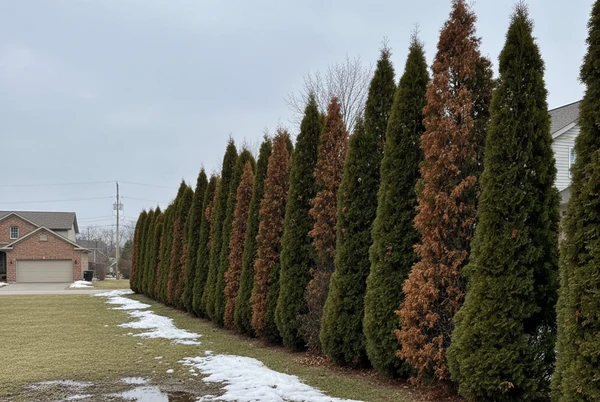
If arborvitae are planted too close together, they can end up competing with one another. The roots then have too little space to take up water and nutrients, and the plants regenerate more poorly after drought or winter. The result can be thinning, drying in the interior, and an overall slowdown in growth. In this situation, more thorough deep watering helps, along with mulching to retain moisture, and in older plantings also gentle thinning to let light reach the inner parts.
Pests and nutrition: Two areas that are often overlooked
Arborvitae can also turn brown due to pests, such as aphids or spider mites. They weaken the plant by feeding, which can show up as a change in foliage color and gradual decline. It is therefore worth checking shoots regularly, especially in dense sections, and if you suspect pests, choosing a suitable product intended for that specific pest. Nutrition matters just as much. A lack of key elements such as nitrogen, phosphorus, and potassium can lead to weakness and browning. In practice, a fertilizer formulated for conifers helps, along with following the recommended rates so you do not over-fertilize and add further stress.
Prevention is the best rescue: What to do so browning does not return
The best strategy is to combine early inspection with good ongoing care. Give arborvitae enough light, keep watering consistent, and during the growing season feed them so they have the strength to produce healthy new growth. Regularly checking the interior of the shrub also helps, because that is where the problem often appears before it is visible from the outside. If browning does start, fast action, for example with a garlic spray, along with adjusting watering, thinning to improve light and airflow, and checking for pests can stabilize arborvitae and keep the hedge attractive and dense over the long term.
Source: My Perfect Plants, Eco Tree Company, Pestrazahrada.cz

A lover of nature, gardens, and everything that moves, blooms, or grows. He literally grows everything, from herbs to rare species, and he enjoys caring for animals just as much. In his work, he connects modern technology with tried-and-tested grandmotherly methods and is happy when both paths lead to the same goal.
Related articles
An Orchid That Only Grows but Won’t Bloom Has Three Common Causes You’ll Never Fix with Fertiliser
If your orchid looks healthy but refuses to bloom for months, the cause is usually not a lack of fertiliser. Light, watering habits, and temperature patterns are far more often to blame.
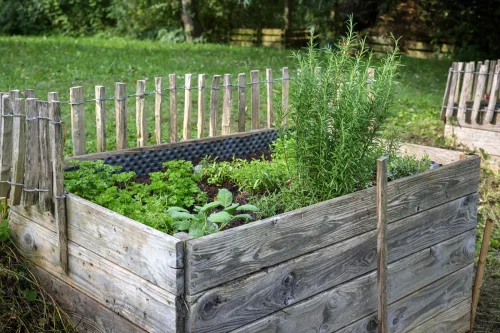
Winter is crucial for raised beds and most people skip the pest prevention step
Your raised beds don’t go dormant just because winter arrives. A few quick, well-timed tasks now will protect the soil, discourage pests, and set you up for a smoother, more productive spring.
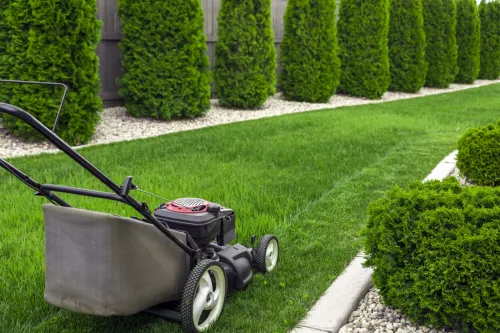
When to Mow the Lawn for the Last Time Before Winter
There’s no universal date for the season’s final mow—your lawn and the weather will tell you. Time it just ahead of hard frost and leave the grass slightly higher to help it overwinter healthier and bounce back faster in spring.
Comments (0)
Be the first to comment.