
 English
 Polski
 Deutsch
 Nederlands
 Svenska
 Norsk
 Dansk
 Français
 Italiano
 Español
 Português
 Slovenčina
 Suomi
 Gaeilge
What coop temperature chickens need in winter and when to start heating
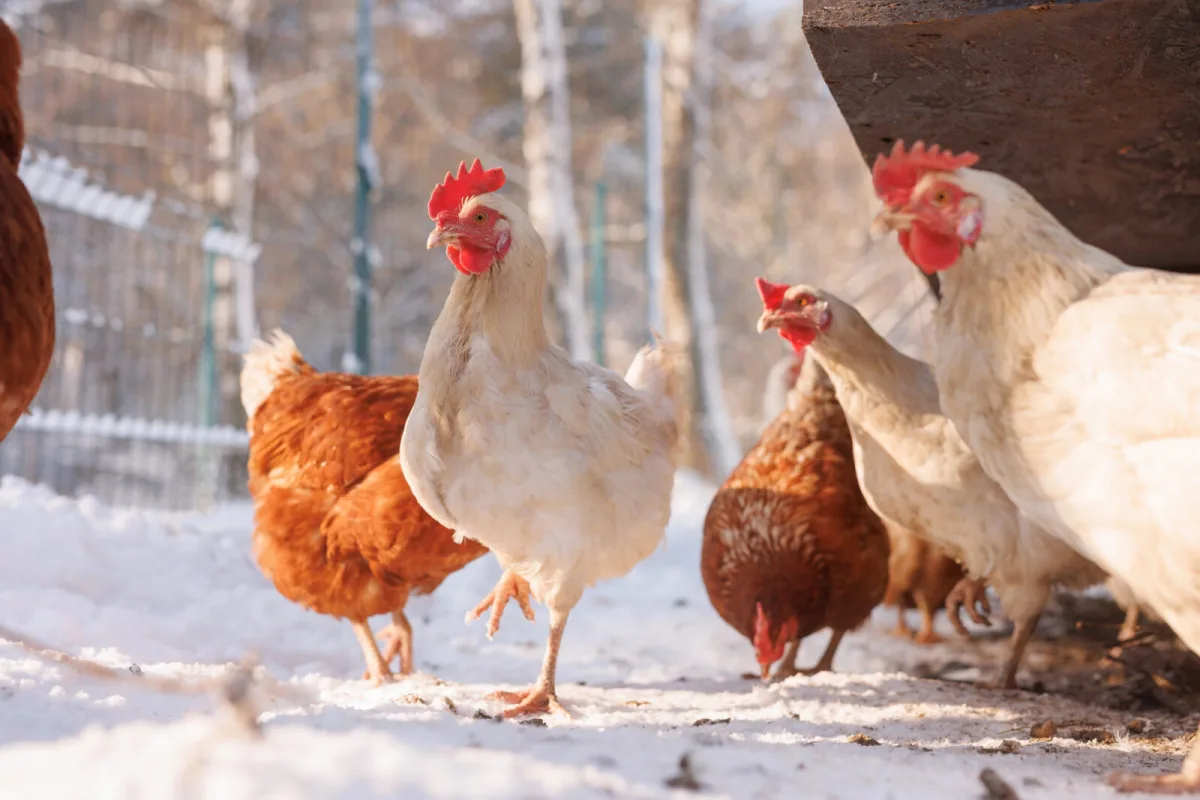
It’s freezing outside and you’re wondering whether your hens are cold in the coop. The good news is they need far less warmth than you might think. Healthy adult chickens do fine as long as the coop temperature doesn’t drop below freezing. Below you’ll find clear thresholds for when the temperature is fine, when egg production starts to suffer, and when it’s time to consider supplemental heat.
A comfortable temperature isn’t the temperature they need
The “ideal” range for adult chickens is often given as roughly 18 to 24 °C. At these temperatures, hens don’t need to burn extra energy to stay warm. But that doesn’t mean you have to maintain those conditions in the coop. Chickens can handle temperatures well below zero if they have good shelter and protection. They also acclimatise to gradual cooling, so in winter the cold-stress threshold shifts lower.
Chickens come with their own feather duvet and a body temperature around 41 °C. At night on the roost they fluff up, huddle together, and keep themselves warm. A coop with a whole flock inside will also warm slightly from their body heat.
Specific temperature thresholds inside the coop
What matters is the temperature inside the coop, not outside. That’s why it’s worth hanging a simple thermometer indoors, ideally one that records the minimum temperature. The guidance can be summed up like this:
- 10 °C and above: more than enough for adult chickens all winter.
- Below 13 °C: laying hens gradually start to reduce production, which is normal in winter.
- Around 4 °C: a recommended minimum during cold snaps if you want to maintain laying.
- Below 2 °C: the point at which it makes sense to think about supplemental heat. This threshold is cited by the University of Minnesota, where harsh winters are common.
If your main goal is eggs, gentle heating can help. If you’re focused on the hens’ health, it usually isn’t necessary. The winter drop in laying is also driven mostly by something else: short days. Layers need 14 to 16 hours of light per day.
How to tell your chickens are cold
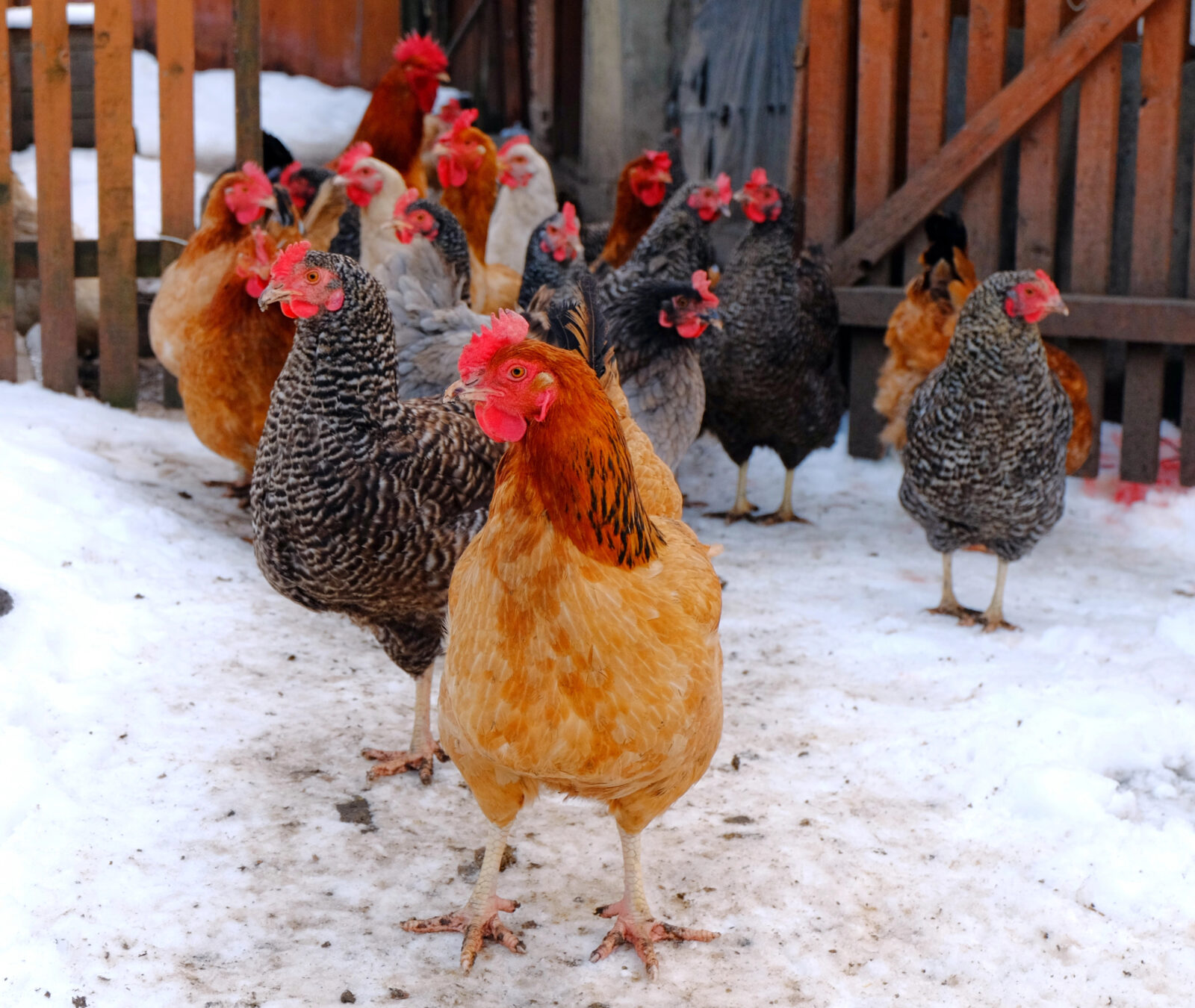
A thermometer is helpful, but your chickens will tell you more. The signs of cold are clear. They huddle together, stand on one leg with the other tucked into their feathers, or stay fluffed up constantly. If cold stress goes on for too long, performance drops and in extreme cases a hen can die.
Dryness matters more than degrees
This is the least intuitive advice for many keepers. Frost itself won’t harm chickens nearly as much as frost combined with damp. Chickens breathe out moisture, and their droppings are about 70 percent water. In a sealed coop, the air quickly becomes saturated with moisture and ammonia. Damp increases the risk of frostbite and respiratory problems.
Frostbite most often develops at night in a cold, poorly ventilated coop with damp bedding.
That’s why the coop needs ventilation openings high up under the roof, but there mustn’t be a direct draught blowing onto the roost. A dry coop at minus 2 is better for chickens than a damp coop at plus 5.
How to keep the coop warm without heating
The foundation is deep, dry bedding, ideally a 10 to 20 cm layer of wood shavings or chopped straw. It works as insulation, and you can simply remove the wet patch near the entrance as needed. Wall insulation isn’t essential, but it does help retain the warmth the birds produce themselves. Any insulation must be covered so the chickens can’t peck at it.
Check for cracks and gaps that let in draughts. If possible, position the coop so the sun can shine in during the day. In an oversized coop, chickens struggle to warm the space. It can help to place a large box on its side and fill it with straw so they can move in at night. Roosts should be wooden; metal and plastic draw heat from the feet. A wide, flat perch lets a hen cover her toes with feathers at night.
What if they head out into the frost in the morning
Let them, if they want to. Chickens should be able to move freely in and out, and they’ll enjoy a sunny, sheltered spot even in winter. The main issue is standing for long periods on snow and in wind. That’s why it’s worth clearing a patch of ground in the run or bedding it with straw.
When heating really makes sense
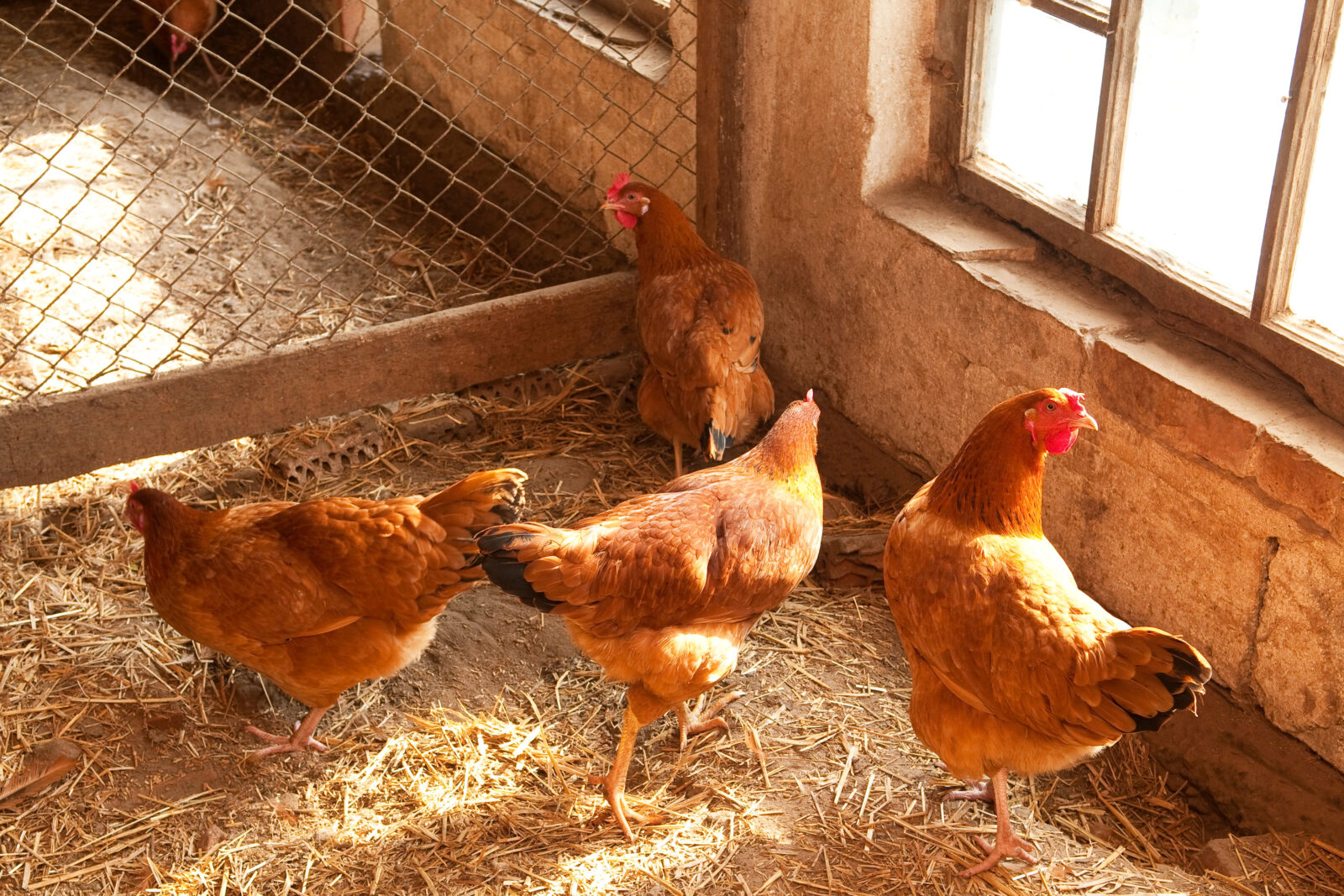
Supplemental heat makes sense when the coop temperature stays below 2 °C for extended periods. Also for hens that are moulting and missing part of their feather cover. Also for hens from commercial operations, which can be sparsely feathered. And it’s useful if you want to keep egg production going through winter.
However, try not to use a standard 250 W heat lamp. It’s one of the most common causes of coop fires, because there’s so much dust, feathers, and shavings around. A safer option is a heat source with a thermostat, such as an oil-filled radiator with tip-over protection. Have electricity run to the coop by a qualified electrician; extension leads are only for short-term use. Reduce heat gradually so the birds have time to readjust to the cold.
In summary: above freezing in the coop is fine for healthy chickens, and around 10 °C is excellent. Below 2 °C, consider supplemental heat. And all winter long, focus above all on dryness, unfrozen water, and a coop free of draughts.
Source: University of Minnesota Extension, University of Kentucky / Poultry Extension, Rutgers University, Hobby Farms, My Pet Chicken, Pestrazahrada.cz

A lover of nature, gardens, and everything that moves, blooms, or grows. He literally grows everything, from herbs to rare species, and he enjoys caring for animals just as much. In his work, he connects modern technology with tried-and-tested grandmotherly methods and is happy when both paths lead to the same goal.
Related articles
A Weasel Is Causing Damage in Your Garden and You Want to Trap It
A weasel can be a valuable ally against mice and voles, but it may also threaten chicks and other small livestock. Before you consider trapping, confirm the culprit, secure the coop properly, and follow the legal rules that apply in the Czech Republic.
Dwarf Rabbit Indoors or Outdoors What Really Affects Lifespan
A dwarf rabbit can live 8–12 years with good care, but lifespan depends on far more than whether it lives indoors or outside. Diet, hygiene, stress levels and veterinary care make the biggest difference.
A Hen’s Egg as a Small Miracle of Nature
A hen can lay with impressive regularity, but her egg production depends on breed, condition, and housing. Learn what happens inside her body, why shells matter, and what egg quirks can tell you.
Comments (0)
Be the first to comment.