
 English
 Polski
 Deutsch
 Nederlands
 Svenska
 Norsk
 Dansk
 Français
 Italiano
 Español
 Português
 Slovenčina
 Suomi
 Gaeilge
A Weasel Is Causing Damage in Your Garden and You Want to Trap It
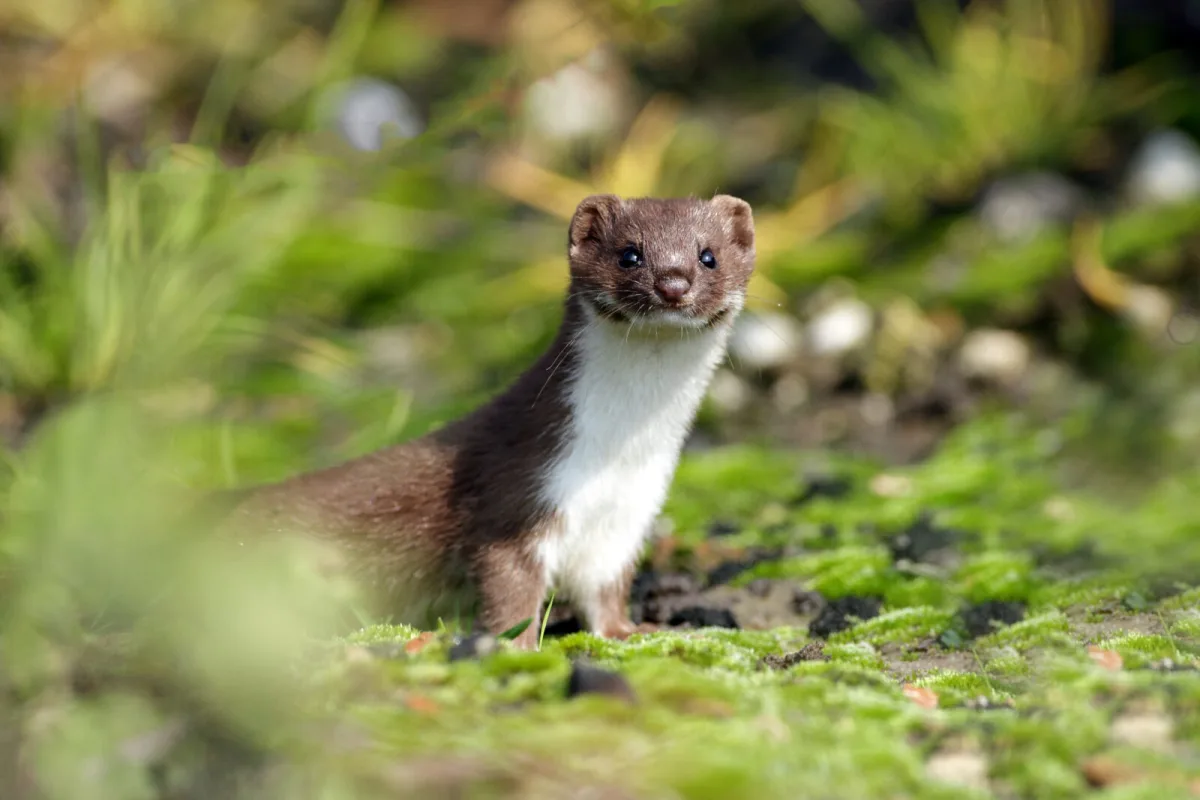
The weasel, known in Czech as the least weasel, can take an impressive number of mice and voles in the garden. For gardeners it can be a welcome helper, but its presence sometimes raises concerns for chickens or other small livestock. Before you start thinking about trapping, it’s worth checking whether the damage really is caused by a weasel, and securing any places it could use to get inside.
A weasel helps against rodents, but it can also attack small animals
In the Czech countryside, the least weasel is common and is one of our smallest predators. It has a slim body, short legs and brown fur with a pale belly. Thanks to its tiny size, it can squeeze through narrow gaps and tunnels where it hunts its prey.
Its diet consists mainly of mice, voles and other small rodents. Occasionally, however, it will also take small birds, chicks or eggs. That’s why it can pose a risk to newly hatched chicks and other small animals.
If several adult hens disappear overnight, though, it’s not right to automatically blame a weasel. Similar losses can be caused by martens, foxes or other predators. Correctly identifying the visitor is therefore the first step towards protecting your birds effectively.
First, find out whether it really is a weasel
The least weasel is often confused with the stoat or a marten. Although they are related predators, they differ in size, appearance and way of life.
A least weasel has a small, elongated body and a short tail with no black tip. A stoat is usually larger and its tail has a distinct black end. A stone marten is much bulkier, has a longer bushy tail and a typical pale bib on the chest.
If you only catch a quick glimpse, it may not be easy to identify the species correctly. A trail camera placed near the coop, or along a route the predator regularly uses, can help.
The best protection is a coop secured with no gaps at all
A weasel can exploit even very small openings. If it gets close to chicks or small livestock, it can be difficult to drive it away afterwards. That’s why prevention is the best approach.
Check walls, doors, ventilation openings and the places where the structure meets the ground. Weak points are often damaged boards, gaps around the roofline or poorly protected ventilation.
To protect openings, it’s best to use sturdy welded wire mesh with small apertures. Standard lightweight poultry netting may not be enough against small predators. Proper fixing is also crucial so the animal can’t squeeze past the edges.
Pay attention to the floor and the area beneath the walls as well. Some predators can dig, so mesh set into the ground or a solid foundation can help.
What attracts a weasel and why it keeps coming back
A weasel usually doesn’t come into the garden because of people, but because of food and suitable shelter. It’s especially drawn to places with mice and voles.
If spilled grain, leftover feed or other food remains around the coop, rodents may multiply there. They then attract small predators.
Store feed in well-sealed containers and regularly remove leftovers from around the run. It also helps to clear away unnecessary materials right by the coop and reduce easy access routes.
That said, there’s no need to remove every natural hiding place in the garden. A weasel is a natural part of the local ecosystem and, away from areas with livestock, it can be beneficial.
Can you trap a weasel in the Czech Republic
In the Czech Republic, trapping wild animals must comply with legal regulations. The least weasel is not listed as a specially protected species under Decree No. 395/1992 Coll., but it is covered by the general protection of animals under Act No. 114/1992 Coll. and by rules on the protection of animals against cruelty.
That means the mere fact that a weasel is moving around on private land is not a reason for handling the animal however you like.
If you are considering trapping, first verify the permissible procedure with the relevant nature protection authority, usually the environmental department of the municipality with extended powers. Correct species identification is also important, because different conditions may apply to other predators.
A live-capture trap can catch the animal without intentionally killing it, but it does not by itself guarantee there will be no injury or severe stress. Its use should therefore not be seen as an automatically safe or legally straightforward solution.
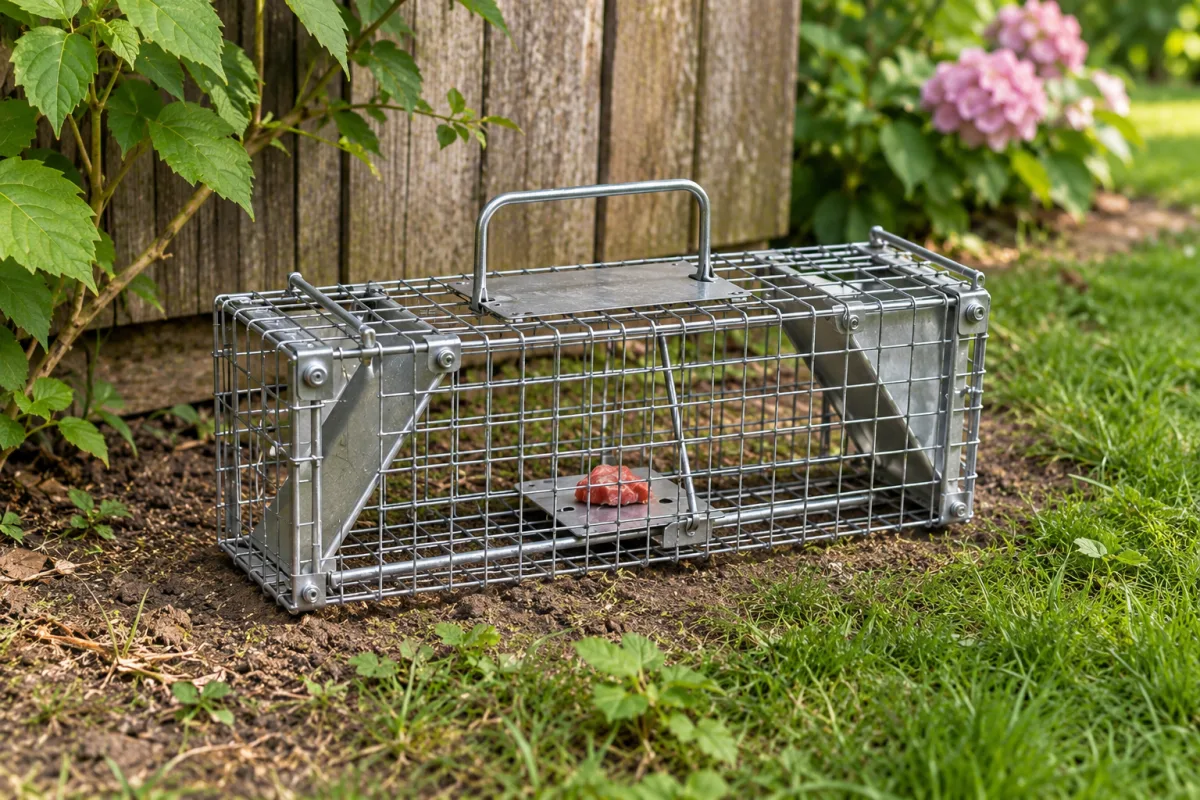
How to proceed if trapping proves necessary
If an expert or the competent authority confirms that trapping is permissible and appropriate in a specific case, it should be carried out in a way that minimises stress and the risk of injury to the animal.
The equipment used must match the size and behaviour of the species. It’s also important to prevent accidental capture of other animals and to ensure adequate supervision.
A captured animal must not be left without necessary care or exposed to extreme temperatures. There is also a risk of being bitten when handling it, so it’s safer to leave this to an experienced person.
It’s not advisable to transport a weasel tens of kilometres from the capture site on your own initiative. Relocating it to unfamiliar surroundings can reduce its chances of survival and may not solve the root cause of the problem. Any release should therefore be decided according to the specific situation and expert advice.
Which signs can reveal a weasel visit
A weasel leaves small paw prints in which, under good conditions, five toes can be made out. However, its tracks are tiny and can resemble those of other mustelids.
Another clue can be small droppings containing remnants of fur or bones from prey. Even these, though, are not enough on their own for reliable identification.
If you find killed animals in the coop, focus mainly on the point of entry, the size of any holes and any additional signs. Injuries to the head or neck are not conclusive proof of a weasel attack. Likewise, a higher number of killed hens may indicate a different predator.
The most reliable approach is a combination of several pieces of evidence, ideally supported by footage from a trail camera.
What to do if a weasel keeps visiting your garden
If a weasel is only hunting rodents in the garden and is not threatening livestock, there is usually no reason to intervene. Its presence can actually help keep mouse and vole populations under control.
If it repeatedly turns up near the coop, it pays to proceed systematically. First, work out how the animal is moving around and secure every access route. Then remove spilled feed and other food sources for rodents.
If losses continue, contact a specialist who can help identify the culprit and recommend an appropriate solution.
The most important thing to remember is that removing one predator often doesn’t solve the problem. If the coop remains insecure, sooner or later another predator may discover the same place.
Source: Národní park Šumava, e-Sbirka, wikiHow, Pestrazahrada.cz

A nurse by profession, she is passionate about healthy living, nature, and everything that benefits both people and the world around them. In her free time, she enjoys gardening, cooking, sewing, and caring for her family. In her articles, she loves combining professional expertise with practical experience from the garden and everyday life.
Related articles
Dwarf Rabbit Indoors or Outdoors What Really Affects Lifespan
A dwarf rabbit can live 8–12 years with good care, but lifespan depends on far more than whether it lives indoors or outside. Diet, hygiene, stress levels and veterinary care make the biggest difference.
A Hen’s Egg as a Small Miracle of Nature
A hen can lay with impressive regularity, but her egg production depends on breed, condition, and housing. Learn what happens inside her body, why shells matter, and what egg quirks can tell you.
Want fresh eggs in winter Chickens need more than a warm coop
Short days and cold weather naturally slow egg production, but the right mix of light, housing, nutrition and water can keep layers going through winter. Here’s how to set up your flock for steadier winter laying without stressing the birds.
Comments (0)
Be the first to comment.