
 English
 Polski
 Deutsch
 Nederlands
 Svenska
 Norsk
 Dansk
 Français
 Italiano
 Español
 Português
 Slovenčina
 Suomi
 Gaeilge
How to Propagate Roses from Cuttings on a Windowsill and Grow Strong New Bushes

If you already grow healthy, beautifully flowering roses in your garden, there’s no need to keep buying new plants. From one vigorous plant you can raise several young bushes—if you prepare the cuttings correctly and give them the right conditions to root. This method is practical, budget-friendly and, with a bit of patience, very effective.
Many growers try to root cuttings in water or simply push them straight into ordinary soil. Sometimes it works, but a lighter, airier medium that holds moisture without letting the stems rot is far more reliable. Proper preparation is the key to turning a small shoot into a strong new rose.
When is the best time to take cuttings
The best period is from June to August. At that time the shoots are mature enough, but not fully woody yet, so they root most readily. You can also take cuttings in autumn after pruning, but expect slower progress.
Autumn propagation needs a sheltered, frost-free spot, or growing indoors with enough light and warmth. Groundcover, climbing and miniature roses tend to root best this way. Hybrid tea roses, on the other hand, are usually more demanding to root.
How to choose the right shoot
For propagation, choose a healthy, firm shoot about the thickness of a pencil. The ideal cutting length is around 12–15 cm, and each one should keep three to four well-developed buds. Make the bottom cut on a slant just below a bud, and the top cut straight, about 1 cm above a bud.
Remove the lower leaves completely and shorten the upper leaves by about half. If there’s a flower or bud on the shoot, it has to go. An unrooted cutting needs all its energy focused on making roots, not blooming. It’s important to use clean, sharp pruners so you don’t unnecessarily crush the tissues.
Which rooting mix to use
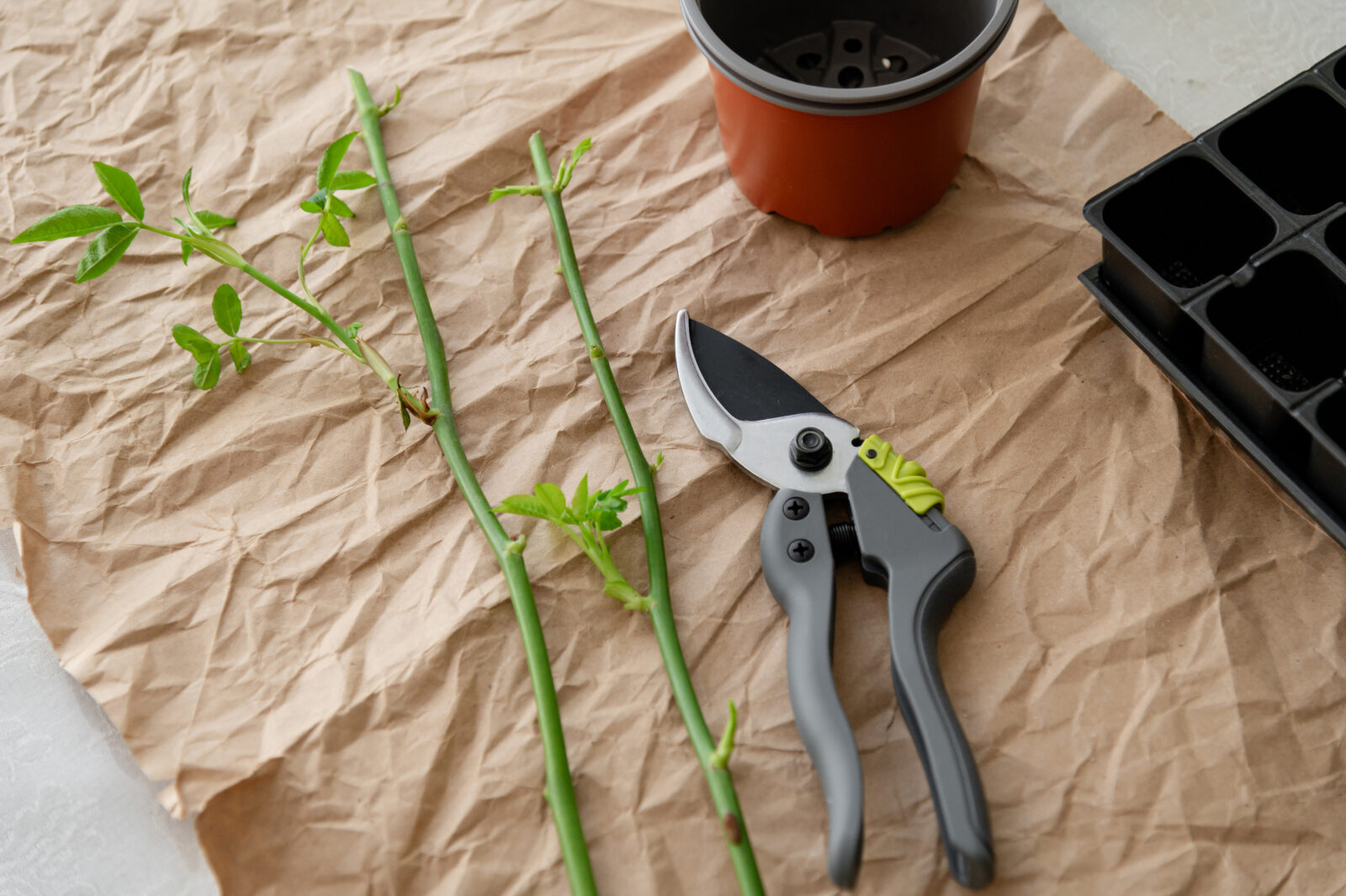
Ordinary garden soil is usually too heavy and holds too much water. That’s a common reason the base of the cuttings turns black and rots. A much better choice is a light mix based on peat or coconut coir, improved with perlite or coarse sand.
The container must have drainage holes so excess water can run out. Before planting, moisten the mix only lightly. It shouldn’t be soggy—just evenly damp and airy.
Rooting support and planting the cuttings
You can treat the base of the cutting with a rooting hormone. It helps speed up root formation, but it’s important to follow the recommended dosage. Too much stimulant won’t benefit the plant.
Make a small hole in the prepared mix and plant the cutting about 3–5 cm deep. At least one bud should remain below the surface. Then gently firm the mix around the stem so the cutting stands securely and stays in contact with the moist medium.
A simple mini greenhouse from a plastic bottle
Covering the cutting with a clear plastic bottle with the bottom cut off works extremely well. It creates a small greenhouse that keeps humidity higher and helps the young plant get through the first, sensitive weeks. Place the pot in a bright spot, but out of direct sun.
The ideal rooting temperature is around 20–25 °C. Each day, you need to ventilate the cover briefly. The mix should stay slightly moist, never waterlogged. If lots of large droplets form inside, extend the airing time.
When to expect the first roots
In good conditions, the first roots can appear in as little as three to six weeks. Some varieties take longer. Don’t pull the cutting out of the mix too soon—young roots are very delicate and easily damaged.
New leaves don’t necessarily mean the plant is fully rooted. It’s safer to wait until you can see roots through the clear side of the container.
Once the root system is strong enough, start acclimating the plant gradually to normal conditions. Each day, leave it uncovered a little longer without the plastic cover.
What to do next with young roses
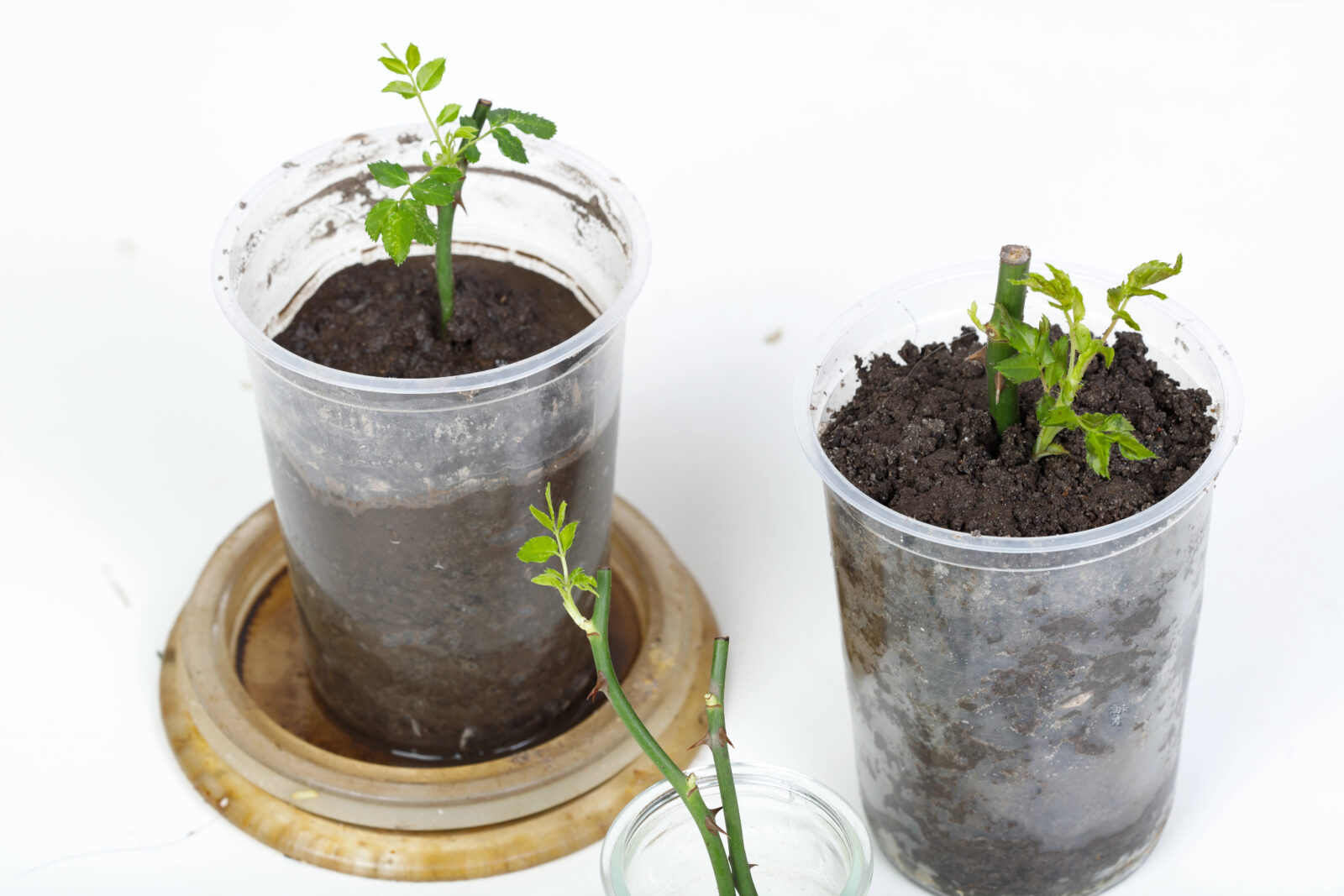
Transplant well-rooted cuttings into individual pots filled with a nutritious, free-draining soil mix. It’s better not to rush weaker plants outdoors. Cuttings taken in spring and summer can be moved to a garden bed once they’ve strengthened, provided the weather is favourable.
Roses rooted in autumn are best kept in a protected place until spring. The biggest risks are hard frosts and excess moisture. It’s also wise to remove the first buds on young plants so the rose puts its strength into shoot and root growth.
The most common propagation mistakes
The most damaging factors are overwatering, direct sun, and transplanting too early. Standing water leads to rot, strong sun can overheat the plant under the cover, and weak roots often can’t supply the whole little bush after potting on. That’s why it’s worth preparing several cuttings at once—because even with careful care, not every one will take.
With this approach you can gradually propagate your favourite varieties, rejuvenate an older rose bed, and raise new bushes that will later brighten both your garden and your home.
Source: To je nápad, Gardening know How, Pestrazahrada.cz

A lover of nature, gardens, and everything that moves, blooms, or grows. He literally grows everything, from herbs to rare species, and he enjoys caring for animals just as much. In his work, he connects modern technology with tried-and-tested grandmotherly methods and is happy when both paths lead to the same goal.
Related articles

How to overwinter geraniums upside down
You can overwinter strong, well-ripened pelargoniums bare-root by hanging them upside down in a cool, frost-free place. Done correctly, it saves space and plants will sprout strongly again in spring.
How to prune an apple tree in autumn for a heavy crop next year
If your apple tree crops heavily one year and then disappoints the next, an overly dense canopy is often to blame. A well-timed autumn prune improves light and airflow, supports healthy growth, and sets the tree up for better-quality fruit.
A Garden Shed Can End in a Fine or Even Demolition Many People Make a Mistake Without Realising It
Building a garden shed isn’t just about putting up walls. Smart planning, a level base and checking local rules early can save you costly fixes, fines or even an order to remove the shed.
Comments (0)
Be the first to comment.