
 English
 Polski
 Deutsch
 Nederlands
 Svenska
 Norsk
 Dansk
 Français
 Italiano
 Español
 Português
 Slovenčina
 Suomi
 Gaeilge
Missed pruning your roses in autumn It’s fine experts recommend a different timing
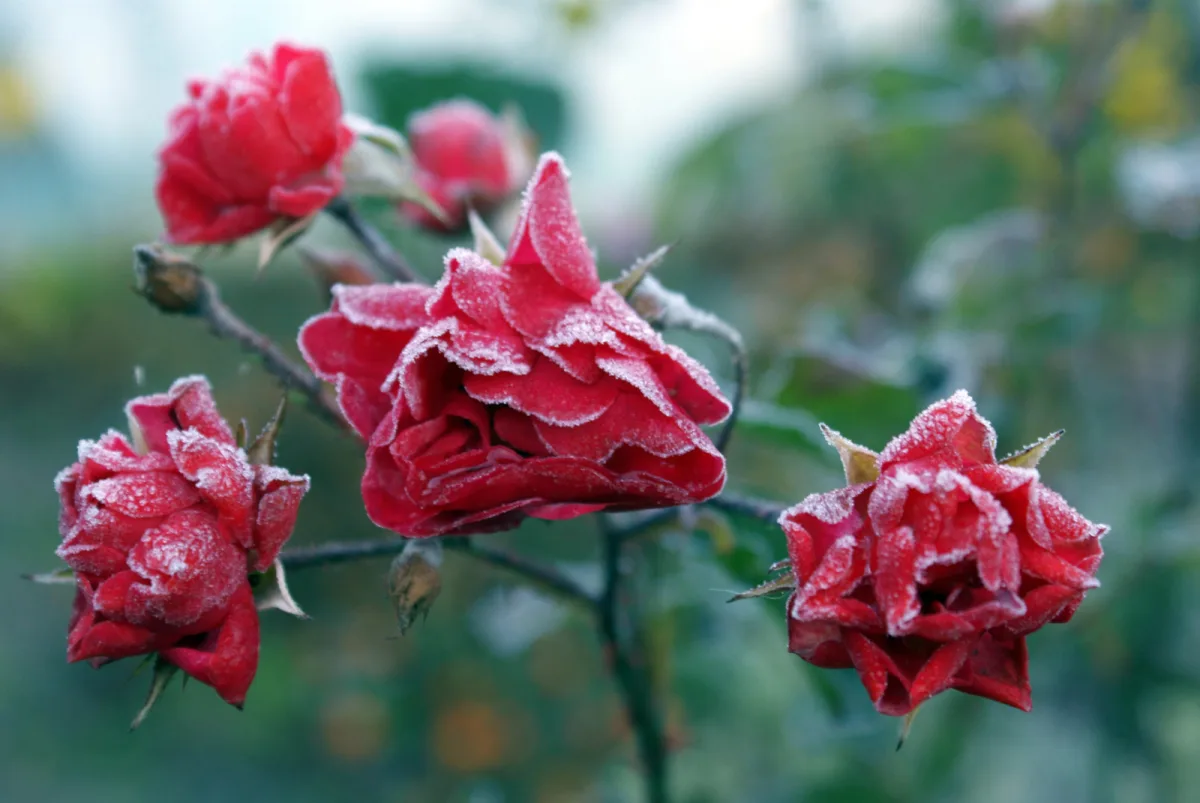
Correct rose pruning is one of the most important jobs affecting their health, vigour, and lifespan. While different rose groups vary in the details, a few basic rules apply to almost all of them. If you stick to these, the plant will have better airflow, suffer fewer diseases, and produce stronger shoots and a fuller display of flowers.
Pruning is usually done during dormancy, most often at the end of winter. In most cases, February or March is a suitable period, though the exact timing can vary depending on the specific type of rose and local conditions. The key is that hard frosts are no longer likely, and that you can clearly assess the condition of the canes and buds.
When is the best time to prune
For most roses, late winter is recommended as the ideal time. The plant is still resting, but the start of new growth is close. This makes it easy to remove damaged or old parts while encouraging new shoots. If you’re unsure of the exact timing, it’s usually safer to wait until the harshest frosts have passed.
Newly planted roses, with a few exceptions, are pruned more firmly. A harder cut back after planting encourages rooting and the production of sturdy, vigorous shoots. Exceptions may include some climbing roses and shrub roses, where a gentler approach is often better.
How to make each cut
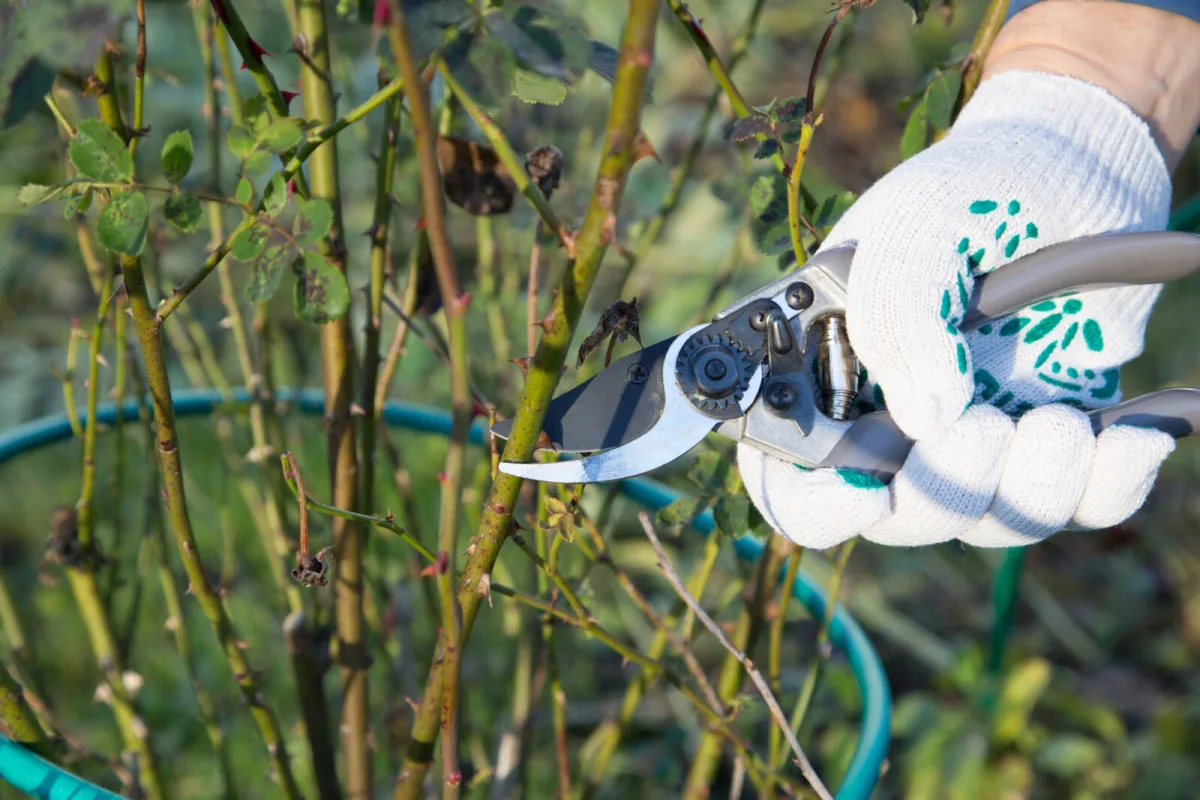
Every cut should be clean and precise. Make the cut just above a bud, roughly within 5 millimetres. The cut surface should be slightly slanted and angled away from the bud so water doesn’t sit on it. This rule applies to annual pruning, deadheading, and removing dead wood.
Most of the time, prune to an outward-facing bud. This encourages a more open plant shape and better airflow between shoots. With roses that have a more arching or overly spreading habit, you can shorten some branches to an inward-facing bud if you want to partly straighten growth and make the shrub more upright and stable.
If a dormant bud isn’t clearly visible, choose a sensible cutting height based on the plant’s shape and condition. It’s always essential that your tool is sharp. Blunt secateurs crush tissue and create wounds that heal more slowly. For thicker wood, long-handled loppers or a pruning saw are a better choice.
What must be removed
When pruning, cut out all dead, diseased, and weak shoots. It’s also best to remove branches that cross, rub, or create too much congestion. The goal is a well-spaced framework where air can move freely. That’s what helps limit fungal diseases and improves the rose’s overall condition.
If you find dried-back tips on the canes, cut back until the pith inside is healthy and pale. On older roses, it pays to remove old wood that flowers poorly, as well as old stubs that no longer produce new growth. This frees up space for younger, more productive shoots.
Special attention should be paid to wild suckers growing from the rootstock. These unwanted shoots are best traced back to where they originate and removed right at the root, rather than simply shortened at the surface. Otherwise, they often grow back quickly.
How to proceed with an unknown rose
Sometimes you inherit an older rose with no label, or over time you simply stop being sure which group it belongs to. In that situation, you can go by the plant’s overall look and choose a careful, all-purpose approach. Here too, February or March is the most suitable time.
How to prune climbing roses and ramblers
If the plant has long, arching canes, reaches a substantial height, or needs support, it’s likely a climber or a rambler. With a rose that has a single strong, old main stem running down to the ground, proceed modestly. Cutting back too hard could mean it won’t break into growth again. In that case, shortening by roughly one third to one half of the length is recommended.
If the plant has multiple canes, you can remove one or two of the oldest right down low at the base. You’ll recognise them by grey, peeling bark and an overall tired look. The plant’s response the following season can reveal more about the type. If it produces lots of strong but non-flowering shoots, it’s more likely a rambler. If new growth is calmer and it flowers at the same time, it’s more likely a classic climbing rose.
How to prune shrub roses and bedding roses
Very small roses are usually easy to identify, but larger shrubs can belong to different groups. If you’re not sure, start by removing one or two older canes just above the ground, or cut them back to a younger side branch low down near the base. Then shorten the remaining canes by about one third to one half.
In the next season, watch how the plant reacts. If it throws lots of strong new shoots and flowers well, it may be similar to hybrid tea or floribunda bedding types. If the growth is looser and less vigorous, it’s more likely one of the shrub roses.
Care after pruning is finished
After spring pruning, it’s a good idea to feed roses. A general-purpose fertiliser works well, as does a product formulated specifically for roses. The plants then have enough nutrients to produce new shoots, leaves, and flowers. Alongside feeding, mulching is also very useful, for example with garden compost or well-rotted manure.
Rose pruning doesn’t have to be complicated if you focus on healthy wood, an airy shrub shape, and removing anything that weakens the plant.
Why regular pruning is worth it
Regular pruning isn’t just about looks. It helps roses maintain a balance between growth and flowering, extends their lifespan, and reduces the risk of disease. A well-managed rose gets more light, more space, and uses its energy more efficiently. As a result, it tends to be tougher and flowers more reliably each year.
Even though some types require a specific approach, these general principles are a dependable foundation. If you make clean cuts, remove damaged and old parts, and keep the plant open in shape, you’ll give your roses excellent conditions for strong growth and long-term vigour.
Source: RHS, Almanac , Pestrazahrada.cz

A nurse by profession, she is passionate about healthy living, nature, and everything that benefits both people and the world around them. In her free time, she enjoys gardening, cooking, sewing, and caring for her family. In her articles, she loves combining professional expertise with practical experience from the garden and everyday life.
Related articles
Grow a Stunning Hibiscus from an Ordinary Seed with a Few Simple Tricks
Growing hibiscus from seed takes patience, but the reward is a strong, vigorous plant with standout blooms. Start indoors with warmth and gentle handling, then harden off and plant out when frost has passed.
African violets can flower almost year-round with a few simple care rules
African violets are compact houseplants that can bloom for months on end when given the right light, watering routine, and potting mix. Follow a few straightforward care principles and they may flower almost continuously through most of the year.
Eucalyptus can be quite demanding, the right pruning and care are the key to healthy growth
Eucalyptus can make a striking specimen, screen or neatly maintained shrub, but it only thrives when pruned at the right time and in the right way. Learn when to cut, how to shape it, and how to care for it afterwards so it stays strong and long-lived.
Comments (0)
Be the first to comment.