
 English
  Polski
  Deutsch
  Nederlands
  Svenska
  Norsk
Norsk  Dansk
Dansk  Français
  Italiano
  Español
  Português
  Slovenčina
  Suomi
Suomi  Gaeilge
 Unusual Beer Feed for Cucumbers in July for a Summer-Long Harvest
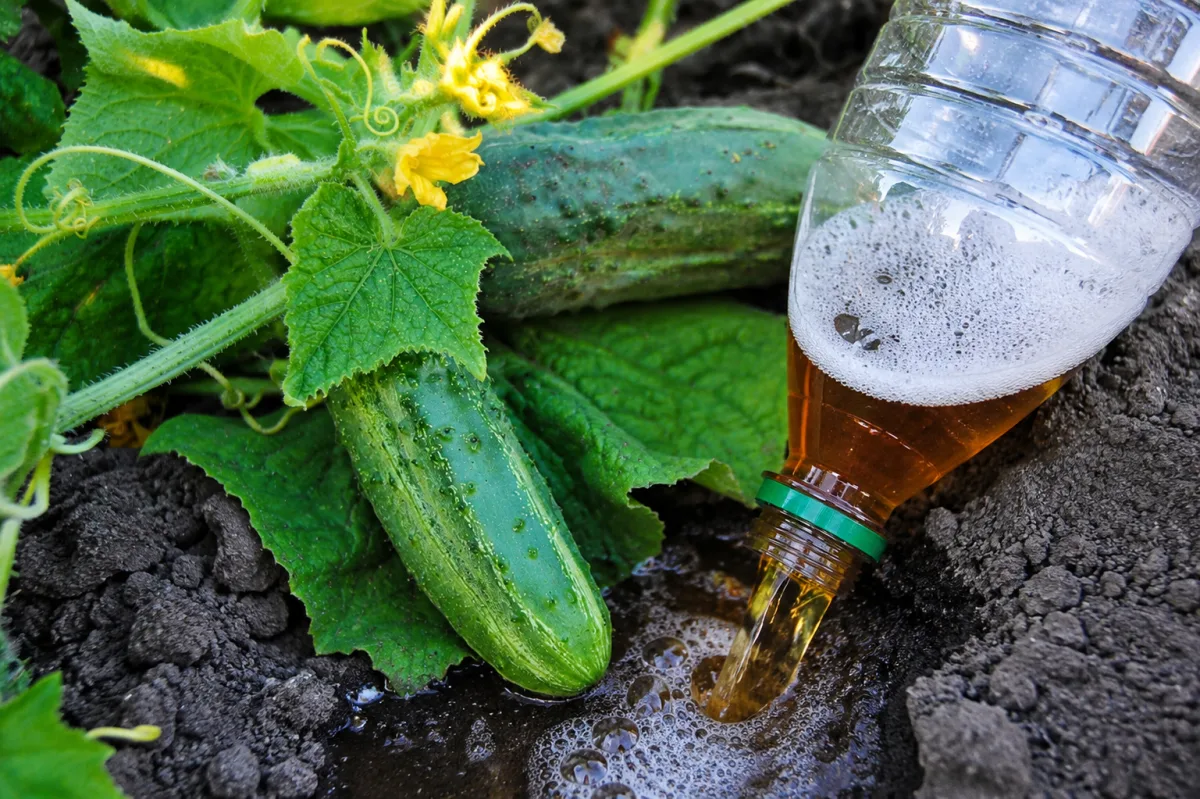
In July, cucumbers often hit full stride—growing fast, flowering, and setting fruit—but they can also become depleted very easily. That’s exactly when a simple homemade beer drench comes in handy, giving plants a lift and supporting overall vigor. It’s not only useful for the cucumbers themselves; it can also benefit the soil, because it stimulates soil microflora and helps improve the bed’s overall fertility.
Beer contains biologically active compounds that may act as a mild biostimulant. It’s often noted for containing succinic acid, growth-promoting substances, and amino acids that help plants cope better with stress. At the same time, it provides minerals too—such as nitrogen and potassium, with potassium being especially important for strong fruiting. This drench is sometimes recommended for older or weakened cucumber plants that no longer have the same energy they had at the start of the season.
A simple recipe for beer fertiliser for cucumbers
Preparation is quick and anyone can do it. You can use pale lager—even older or flat beer nobody wants to drink. The only important thing is the correct dilution so it supports the plant rather than putting unnecessary strain on the roots.
Ratio and mixing
The basic dosage is 1 litre of beer to 10 litres of warm water. If you have more or less beer, keep the same ratio. Stir the solution well so the beer disperses evenly through the water.
How to water properly for best effect
Pour the drench at the base of each plant, right to the root zone. The key rule is: always apply it to soil that’s already moist—ideally after a normal watering or after rain. This solution isn’t recommended on completely dry soil, because it may soak in poorly where it needs to work and can stress the plant unnecessarily.
How often to repeat
The usual recommendation is to repeat about once every two weeks. During peak harvesting, this helps cucumbers keep up the pace and supports the planting’s condition even through changeable weather.
Other practical ways to use beer in the garden and at home
Beer also shows up in gardening tips beyond the cucumber patch. These are often simple tricks for using leftover beer on houseplants, seedlings, or as bait for pests. As always, less is more—it’s better to start gently than overdo the concentration.
Reviving an orchid by wiping the leaves
With orchids, a method is described where the leaves are gently wiped with a cotton pad soaked in undiluted beer. This isn’t watering; it’s a careful cleaning of the leaf surface while also supplying substances that may act as a pick-me-up. The process is repeated roughly once every two to three days as needed. Practical experience suggests that over time the leaves may become firmer, take on better colour, and the plant may more readily return to forming buds.
Beer is credited with containing sugars and B vitamins, as well as vitamin D, which may serve as fast support for a weakened orchid.
Support for pepper and tomato seedlings
With young transplants, the benefit often mentioned is the yeast present in beer, which can enrich the growing medium more quickly with available nutrients and encourage growth. Unpasteurised beer is often recommended because it tends to contain a higher share of nutrients and biostimulant components. The basic ratio is again 1 litre of beer to 10 litres of water, applied to the root zone about once a week. The effect is described as stronger top growth and root development and improved resistance to some diseases.
A trap for tiny flies indoors
When small flies multiply in pots and hover around the home, a simple beer trap can help. Put a little beer into a shallow dish, cover it tightly with cling film or foil, and make several small holes. The insects can get in easily, but getting back out is much harder.
Beer as fertiliser for houseplants and for glossy leaves
Flat beer that would otherwise be poured down the drain can be diluted with water and used to water houseplants. Another option is to add a small amount of beer to water used for misting leaves, which is mentioned as a way to achieve a cleaner look and a natural sheen. Here too, it’s best to stick to dilution and not use it too often.
Bait for slugs and snails
Beer is highly attractive to slugs, so it’s used as a trap bait. Sink a plastic cup into the soil near vulnerable plants so its rim sits slightly above ground level. This reduces the risk of beneficial creatures falling in as well. Fill the cup about halfway with beer and check the trap in the morning.
A similar principle is sometimes used for mosquitoes too, with a container of beer placed near an outdoor seating area to lure them elsewhere.
A homemade mix for a tired lawn
Recommendations also include a recipe to strengthen a lawn, combining beer with other ingredients. A mixture is given consisting of one cup of ammonia solution, one cup of baby shampoo, and one can of beer. This method is described as long-proven among some gardeners looking for a quick boost for a dull, tired-looking sward.
Source: GrowVeg, Plukkers, Pestrazahrada.cz

A lover of nature, gardens, and everything that moves, blooms, or grows. He literally grows everything, from herbs to rare species, and he enjoys caring for animals just as much. In his work, he connects modern technology with tried-and-tested grandmotherly methods and is happy when both paths lead to the same goal.
Related articles
The More Often You Harvest, the Longer Plants Keep Cropping
With fruiting vegetables, frequent picking keeps plants flowering and producing for longer. A few crops, such as aubergines, are tastiest when harvested slightly earlier rather than fully mature.
Wasps Aren’t Just a Barbecue Menace They Can Ruin Your Garden Woodwork Too
Weathering isn’t always the main culprit behind damaged outdoor timber. Wasps can scrape fibres from boards and beams surprisingly fast, leaving grooves that soak up water and accelerate decay.
Why hydrangeas wilt in summer even when watered and how to save them fast
Hydrangeas can look limp in hot weather even if you’ve been watering faithfully. The key is to check what’s happening in the root zone, then adjust watering, shade and mulching so the plant can actually use the moisture available.
Comments (0)
Be the first to comment.