
 English
 Polski
 Deutsch
 Nederlands
 Svenska
 Norsk
 Dansk
 Français
 Italiano
 Español
 Português
 Slovenčina
 Suomi
 Gaeilge
Tulips can still be planted in November, daffodils and hyacinths are at the last call
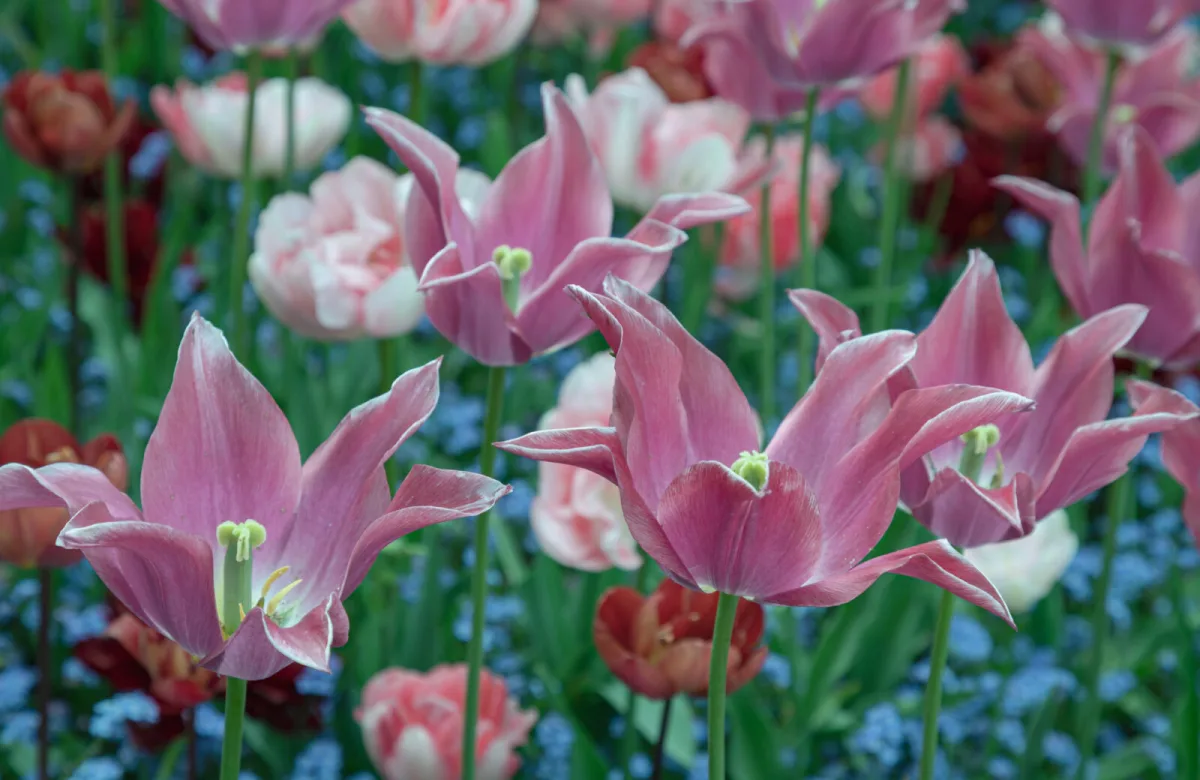
Bulbs are among the most rewarding ornamental plants, because they can bring strong colour to borders and containers at a time when the garden is otherwise fairly quiet. In spring, daffodils, snowdrops and tulips really shine, brightening up the space after winter. Many species also flower very early, making them some of the first messengers of the new season.
Summer-flowering bulbs are valuable too. Lilies and gladioli, for instance, produce tall, eye-catching blooms, often with a lovely fragrance, and they have a wonderfully celebratory feel. Autumn bulbs also have their place in the garden, because they can offer unexpectedly rich, vibrant colour at the very end of the season.
When to plant different bulbs
Getting the timing right matters a great deal. Spring-flowering bulbs are best planted in autumn. This includes daffodils, crocuses and hyacinths, ideally no later than the end of September. Tulips tolerate later planting and are commonly planted as late as November.
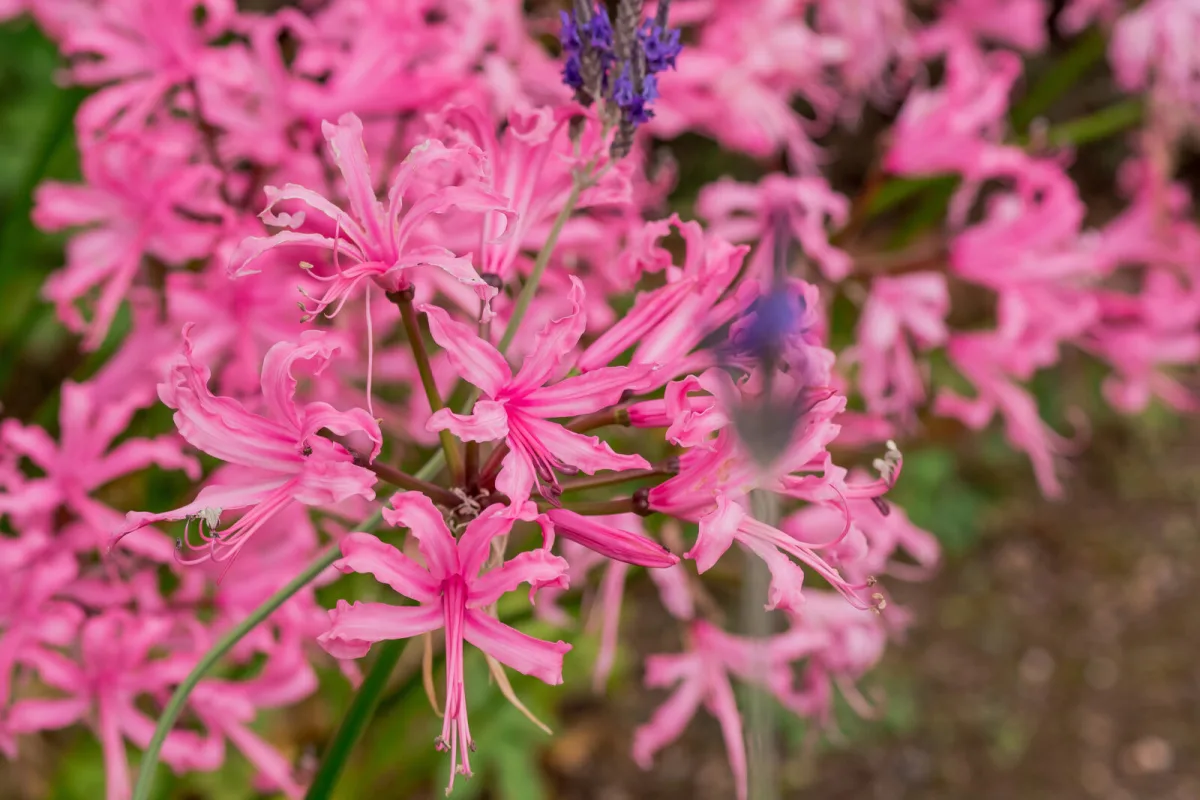
Hardy summer-flowering bulbs, such as lilies, ornamental alliums and crocosmia, are also planted in autumn, most often in September and October. More tender summer-flowering types, such as gladioli, go into the ground only in early spring. Autumn-flowering bulbs, like nerines, are best planted while it is still late summer.
How to choose the right position
Most hardy bulbs prefer a warm, sunny spot with well-drained soil. The reason is simple: many originate from regions where summers tend to be on the dry side. For that very reason, waterlogged soil often doesn’t suit them.
However, there are also species from cooler, damper woodland habitats that need conditions closer to their natural environment. If your soil is too light and sandy, or conversely too heavy, it’s worth improving it with organic matter, such as good garden compost. This improves both soil structure and its ability to manage moisture.
How to plant bulbs in borders
Bulbs are usually sold dry and dormant, with no leaves and no roots. It’s best to plant them as soon as possible after purchase. Storing them too long or planting too late can lead to weaker flowering and a slower start.
In borders they look best when planted in groups rather than singly. Plant at least six together, and for a truly striking effect you will often need several dozen bulbs.
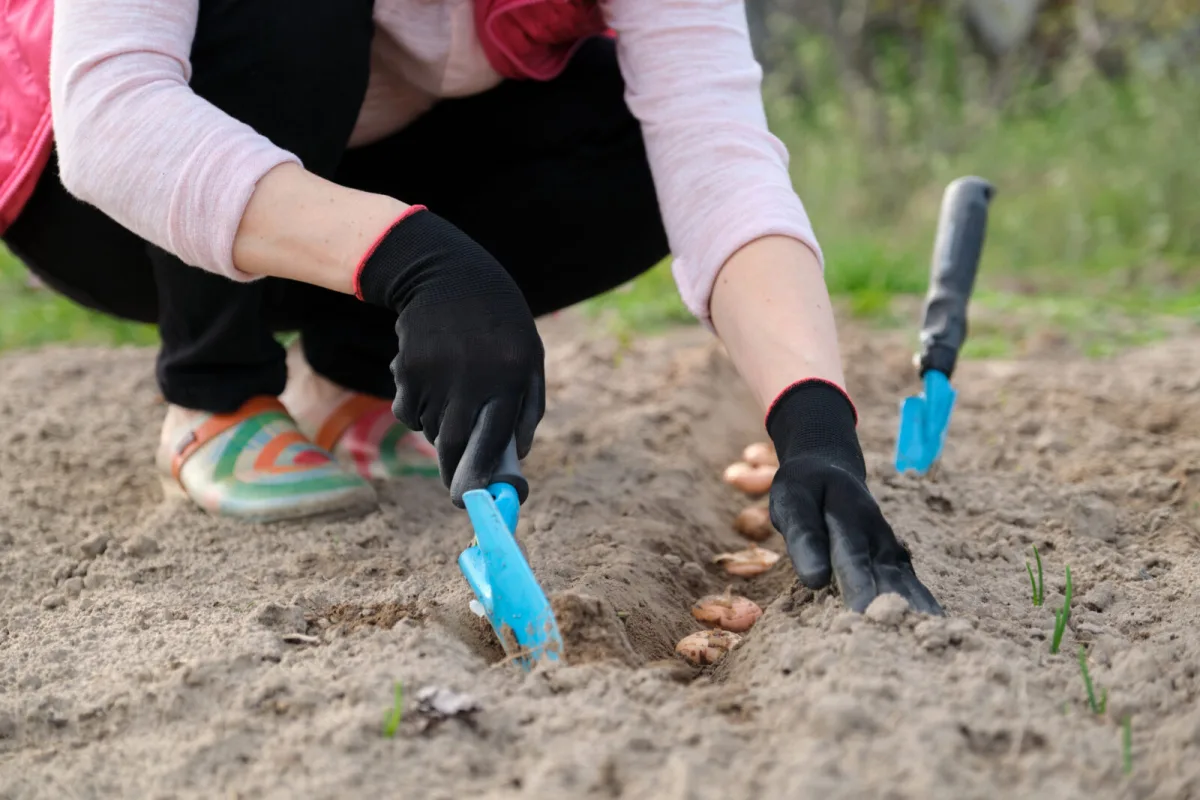
When planting, dig a hole that is wide and deep enough. A general rule is that most bulbs are planted at a depth equal to two to three times their height. Place the bulb with the pointed end upwards. Leave spacing between bulbs of at least twice the bulb’s width. After backfilling, firm the soil lightly, but don’t stamp it down with your feet, to avoid damage.
If the soil is naturally moist, or you are planting in autumn, watering immediately after planting is not always necessary. In drier conditions, though, it’s sensible to water the bulbs straight after planting, ideally with rainwater.
Bulbs that are best moved while ‘in the green’
Some species do better if they are not transplanted as dry bulbs, but only after flowering, while they still have leaves. This approach is often called moving “in the green”. It applies, for example, to winter aconites, Siberian squills and snowdrops. Even so, dried bulbs of these plants are commonly sold and, in good conditions, can also establish successfully.
Growing in containers
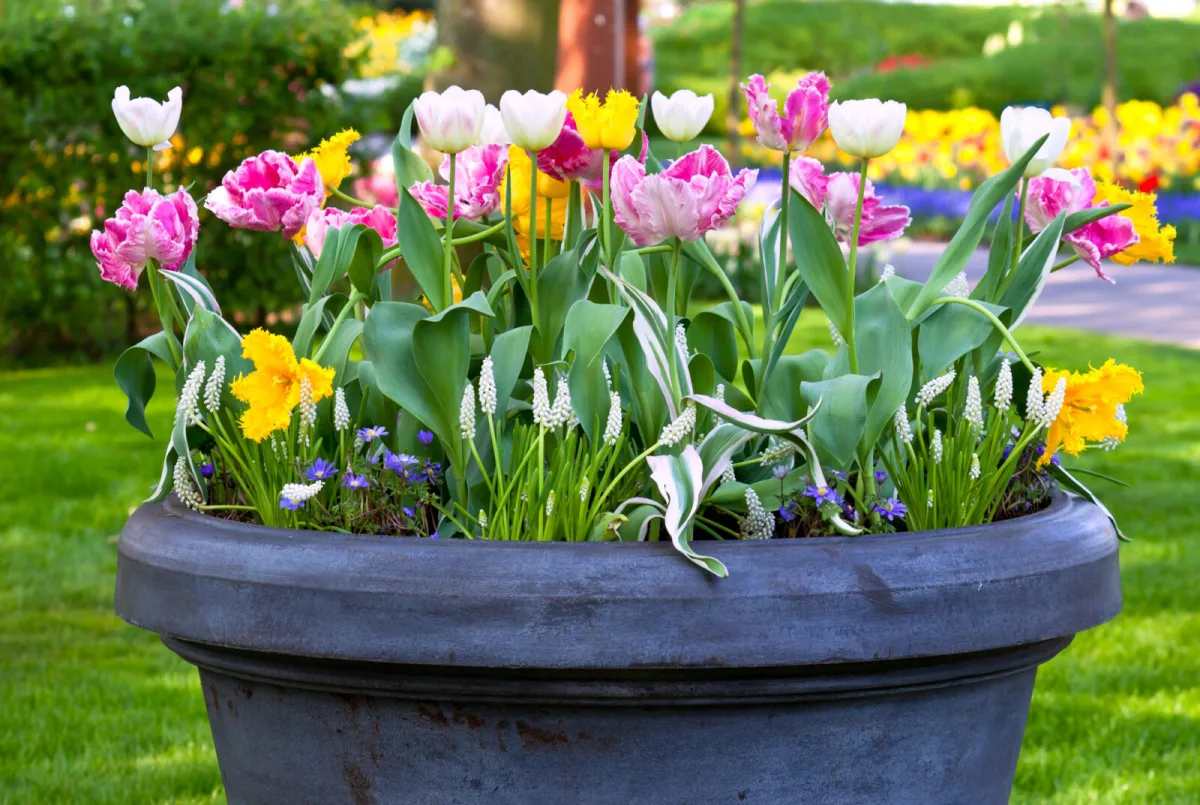
Many bulbs are perfectly suited to pots and window boxes. Tulips, lilies, arums and ornamental alliums are especially effective in containers. If they are only to stay in the pot for one season, use a lighter compost mix made from three parts peat-free multi-purpose compost and one part sharp sand or grit. For longer-term growing, a more substantial mix is better, again with the same proportion of drainage material added.
In containers, the rule still applies: plant to around three times the bulb’s depth, with spacing roughly equal to the bulb’s width. After planting, water the bulbs, and during growth keep the compost slightly moist, not waterlogged. Once the leaves begin to die back, gradually reduce watering. Even in winter, though, containers must not dry out completely.
To encourage strong flowering the following year, regular feeding with a higher-potassium fertiliser helps. Start when shoots appear and stop as the leaves dry down at the end of the season. If you bring frost-hardy bulbs indoors while they are in flower, move them back outside to a sheltered spot as soon as possible after they finish.
What to watch out for
There are not usually many problems, but the key is choosing healthy bulbs. Soft bulbs or any showing signs of rot are best discarded without hesitation. Among animal pests, slugs and snails can cause damage, and in some places squirrels too, which are particularly fond of tulips and crocuses.
Diseases can also appear, such as viral infections in daffodils, grey mould on snowdrops, basal rot of daffodils, or tulip diseases including so-called tulip fire and viral issues. Prevention is therefore important: start with healthy planting stock and choose a suitable site without excess moisture.
If you don’t manage to plant in time
It’s easy to forget bulbs, especially if they end up left in a shed or in the car. If you miss the recommended planting window, the best solution is simple: plant them as soon as you find them. Waiting for the next “correct” season will usually only make their condition worse.
Even late-planted bulbs can succeed, as long as they are not rotten or overly soft. Some species store better than others, so results won’t always be identical. If you need a guaranteed decorative effect, it’s sensible to supplement with already-sprouting bulbs from a garden centre.
In the first year after delayed planting, flowering may not be ideal. Flower stems may be shorter and overall performance weaker. With species that return year after year, however, things often improve in subsequent seasons. When planting, adding a balanced fertiliser to the soil can also help plants recover.
Bulbs are among the easiest and most rewarding garden plants. Give them the right planting time, a suitable place, and a healthy start, and they will repay you with reliable, showy flowering.
Source: RHS, Sarah Raven , Pestrazahrada.cz
Related articles
Drought tolerant fruit trees for Czech gardens that handle heat and winter frosts
Warmer summers and longer dry spells are changing what can be grown in Czech gardens. With the right variety and a sunny, sheltered spot, olives, pomegranates and figs can cope with heat, drought and even winter cold.
Thuja hedges are on the way out gardeners are choosing a shrub that shrugs off frost and drought and never looks dull
Thuja may be a long-standing classic, but today’s hedges are increasingly built from more varied shrubs that look better through the seasons. One standout choice is ninebark, prized for its toughness, colour and easy care.
Autumn planted grapevines bud earlier the most common mistake happens before they even go in the ground
Planting grapevines in November can give them a head start in spring, as roots can still establish in warm soil. Success depends mainly on proper planting depth and reliable winter protection.
Comments (0)
Be the first to comment.