
 English
  Polski
  Deutsch
  Nederlands
  Svenska
  Norsk
Norsk  Dansk
Dansk  Français
  Italiano
  Español
  Português
  Slovenčina
  Suomi
Suomi  Gaeilge
 The Secret to Steady, Heavy-Cropping Peppers Isn’t Any Miracle Fertiliser
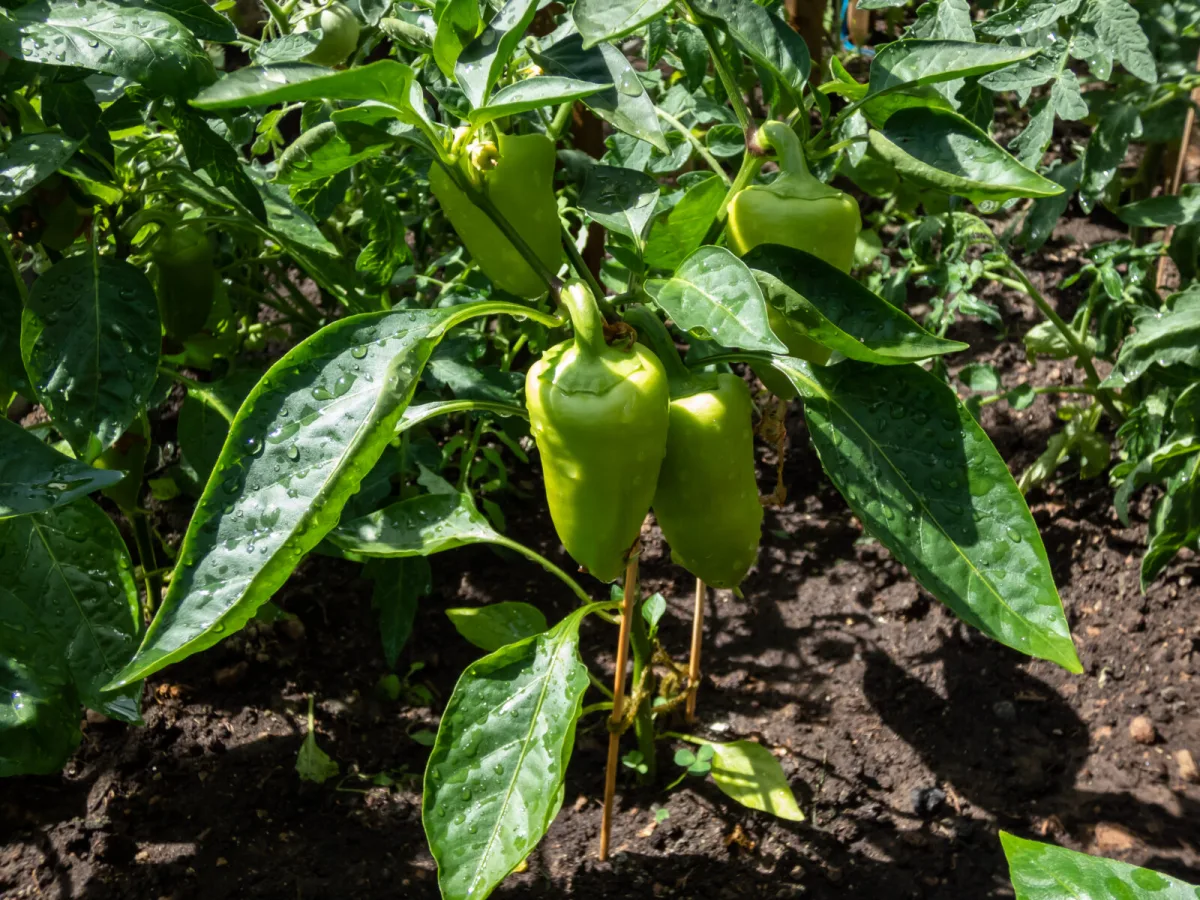
Peppers are heat-loving crops and can be surprisingly “patient” through the season: when it’s cool or, conversely, oppressively hot, they often just sit there, hold their leaves, and delay setting fruit. That’s why a heavy crop doesn’t come down to one miracle fertiliser, but to a combination of light, even moisture, the right nutrition, and disease prevention. Once peppers are weakened by stress (irregular watering, too much nitrogen, cold nights), fungal and bacterial problems are more likely to follow—and yields can drop quickly.
The good news is that with steady care, peppers can keep fruiting right into autumn. The aim is to keep the plant growing, but also to “switch” it at the right time into making flowers and fruit.
Light and warmth as the engine of the crop
Peppers need full sun—ideally 6 to 8 hours of direct light a day. They’ll survive in shade, but set fewer flowers and the fruit stays smaller. Temperature is just as important: in the daytime they do best roughly between 21 and 27 °C, and at night around 16 to 21 °C. With prolonged night temperatures below 15–16 °C, growth slows and flowers may drop.
During heatwaves above 32 °C, flowers can also drop or pollinate poorly. On those days, even watering and light midday shading help—especially for plants in containers and in polytunnels or greenhouses, where temperatures rise quickly.
Soil, roots and mulch as the foundation of stability
For heavy cropping, peppers need fertile, humus-rich, well-drained soil. Ideal is a loamy soil with plenty of compost and a pH of about 6.5 to 7. Pepper roots dislike waterlogging and compaction, because they then suffer from lack of oxygen and the plant easily picks up root rots. If you have heavier soil, it’s worth growing in a raised bed, or at least adding compost and structural materials to lighten the soil.
Mulch is very practical: dried grass clippings in a thin layer, straw, or leaf mould. Mulch stabilises moisture, buffers temperature swings around the roots, and reduces soil splash onto leaves during rain, which lowers disease pressure. It also saves time, because you won’t need to water so often.
Watering without swings: neither drought nor a “swimming pool”
Peppers usually need roughly 2.5 to 5 cm of water per week depending on soil and weather, but the key is splitting it into regular doses. The most dangerous pattern is drought followed by heavy watering: plants drop flowers, fruit can crack, and the risk of rots increases. Water less often but thoroughly, so moisture reaches down to the roots. Drip irrigation or a soaker hose is ideal.
Water in the morning so the leaves and the area around the plant can dry by evening. Avoid frequent overhead watering, because it encourages the spread of fungal diseases. With peppers in pots, expect faster drying; in hot weather they may want water daily, but the rule still stands: water properly, not a little every hour.
Feeding through the season: support flowers and fruit, not a jungle of leaves
Peppers are fairly hungry, but they don’t tolerate excess nitrogen in the first half of summer. Too much nitrogen gives you beautiful foliage and tall bushes, but fewer flowers and a later harvest. In practice, it works well to start with a balanced soil base (compost) and then feed purposefully at two key stages: at planting and when flower buds start to form.
At planting time or shortly after rooting in, a fertiliser with a higher share of phosphorus and potassium (for example a 5-10-10 type) helps roots and future flowering. Once peppers begin setting fruit, move to more balanced feeds (for example 10-10-10) or fertilisers formulated for fruiting vegetables. Potassium supports colouring and firmness of the fruit. If you use liquid feeds, apply smaller doses more often, and always to moist soil to avoid damaging the roots.
The most common mistake: lots of nitrogen early in the season and irregular watering. The result is usually plenty of leaves, few flowers, and buds dropping.
Pollination and fruit set: what you can do extra
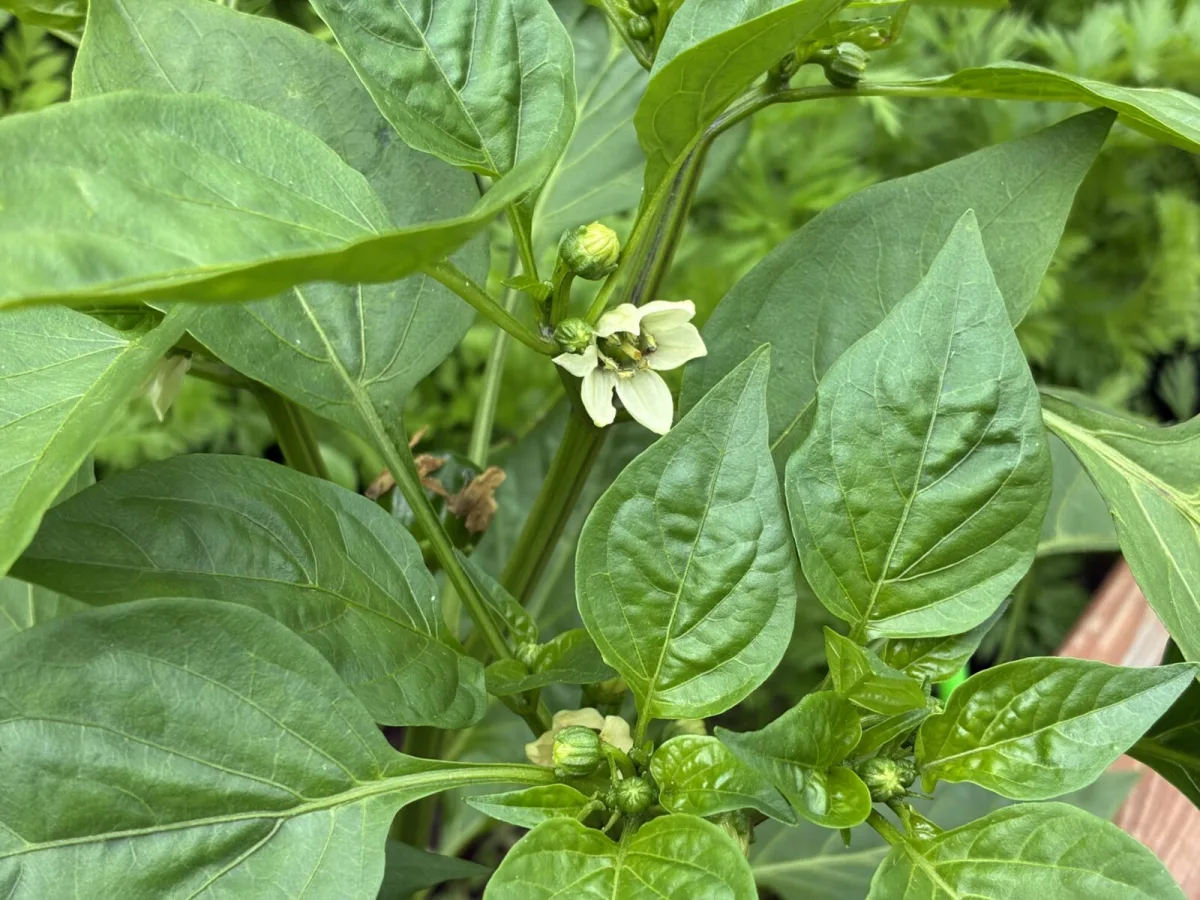
Pepper flowers are self-fertile, so in theory a single plant is enough. In practice, gently shaking the plant or lightly tapping the stems during flowering helps, especially in a greenhouse where there’s less breeze and sometimes fewer pollinators. It’s also important to watch for temperature extremes: in cool conditions pollen doesn’t function well, and in heat the flowers can dry out.
If peppers are flowering and the blooms drop, look for the cause first in temperature and watering. Only then focus on nutrition. It often helps simply to keep the plant “calm”: no moving it around, no deep hoeing near the roots, and no sudden shifts of potted plants between shade and full blazing sun.
Support, shaping and gentle pinching out
Most peppers manage without tying in, but once they carry more heavy fruit, a single cane and a loose tie will prevent branches from snapping. A broken branch is an open doorway for infection and needlessly reduces yield. If you want to guide the plant a little, you can remove weak shoots without buds and those growing into the centre of the plant that thicken it. The goal isn’t to “prune it to the bone”, but to improve airflow and send energy into the developing fruit.
Be cautious when removing leaves. Leaves are the energy factory, and peppers need them for ripening. Remove only damaged or diseased leaves, or those lying on the soil that get splashed and dirty when you water.
Disease prevention: rotation rules and keeping the crop clean
Peppers can be affected by fungal, bacterial and viral diseases. Once they take hold in a bed, they often spread quickly and are difficult to manage, so prevention is the most effective approach. Give the bed a “break”: don’t grow peppers repeatedly in the same spot, and avoid planting after other nightshades (tomatoes, potatoes, aubergines). After the season, remove plant debris and don’t leave it to rot in place.
Water at the roots and keep plants airy, because leaves that stay wet for a long time increase mildew and mould pressure. When working with plants—especially if you snap or cut shoots—use clean pruners. If a plant shows strong signs of a viral disease (mosaic patterns, distortion, stunting), it’s often better to remove it so it isn’t a source of infection for the rest of the planting.
Summer pests: timely checks are half the harvest
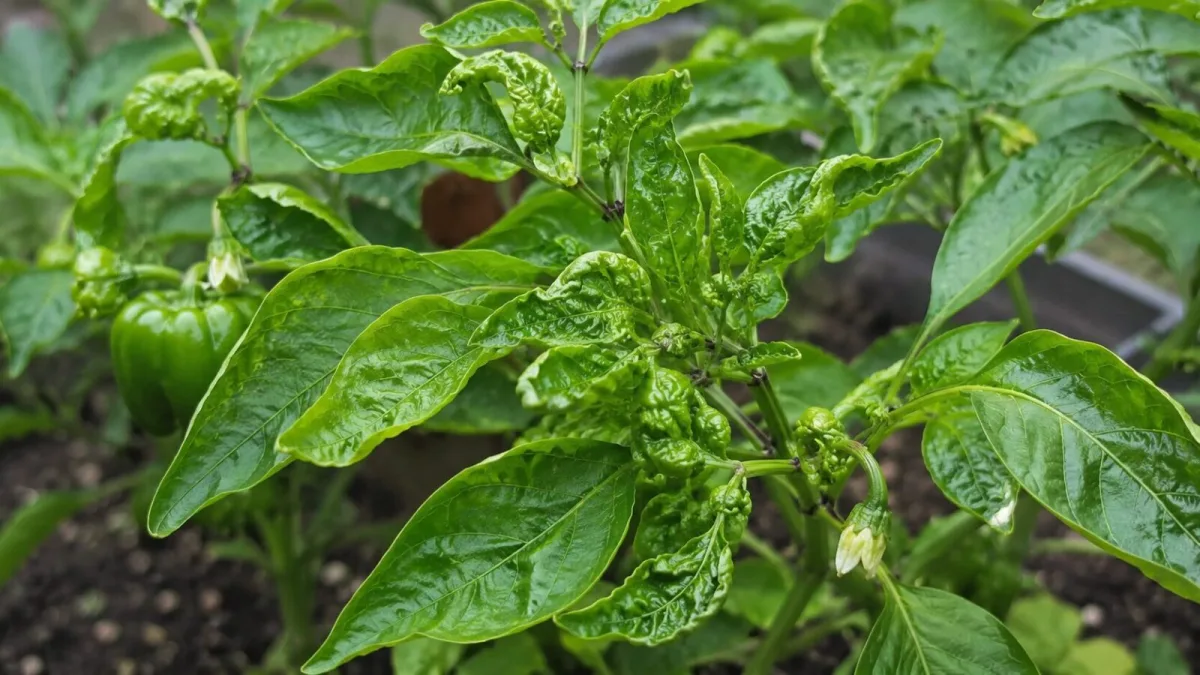
The most common pests include aphids, thrips, flea beetles and caterpillars. Regularly check the undersides of leaves and the young growing tips, because that’s where pests like to gather. A plant that’s being sucked on for a long time flowers poorly and sets fewer fruit. A morning rinse over the foliage helps (only occasionally and in a way that allows the plant to dry), sticky traps in the greenhouse, and encouraging beneficial insects nearby. With caterpillars, hand picking is the quickest fix.
Harvesting as a tool for continued cropping
Regular picking encourages more flowers to set. Green peppers reach their harvest stage earlier, but fully coloured fruit usually has a stronger flavour. Expect that from the “green” stage to full colour often takes another two to three weeks, depending on the variety and the weather. If a cold spell is approaching at the end of the season, it can be worth harvesting fruit that has started to colour and letting it finish ripening in warmth, even if the flavour won’t always be as full as fruit ripened on the plant.
Cut fruit with clean scissors or secateurs and leave a short piece of stem so you don’t tear branches. The plant then keeps growing without unnecessary wounds. The less stress you put it under through the season, the longer and more willingly it will keep producing.
A quick mid-season check: what to adjust when the crop stalls
If your peppers aren’t producing as expected, check three things: light, water, nitrogen. Does the plant get enough sun, or is it shaded by taller crops? Is watering regular and deep? Has nitrogen feeding dominated, pushing leafy growth? Once you correct these basics, you’ll usually see more flowers and better fruit set within two to three weeks. Peppers reward stability and patience, and once they get going they can deliver a surprisingly generous harvest right up to the first cool nights.
Source: The Spruce, Rhs , Pestrazahrada.cz
Related articles
The More Often You Harvest, the Longer Plants Keep Cropping
With fruiting vegetables, frequent picking keeps plants flowering and producing for longer. A few crops, such as aubergines, are tastiest when harvested slightly earlier rather than fully mature.
Wasps Aren’t Just a Barbecue Menace They Can Ruin Your Garden Woodwork Too
Weathering isn’t always the main culprit behind damaged outdoor timber. Wasps can scrape fibres from boards and beams surprisingly fast, leaving grooves that soak up water and accelerate decay.
Why hydrangeas wilt in summer even when watered and how to save them fast
Hydrangeas can look limp in hot weather even if you’ve been watering faithfully. The key is to check what’s happening in the root zone, then adjust watering, shade and mulching so the plant can actually use the moisture available.
Comments (0)
Be the first to comment.