
 English
  Polski
  Deutsch
  Nederlands
  Svenska
  Norsk
Norsk  Dansk
Dansk  Français
  Italiano
  Español
  Português
  Slovenčina
  Suomi
Suomi  Gaeilge
 Spruces and firs won’t survive the heat but these conifers will save your garden
In recent years, climate swings have started to show in what will reliably thrive in our gardens over the long term. There’s less water, summers are longer and hotter, winters are often dry, and spring is short. If you can’t water regularly, you need to plan plantings not only around looks, but also around a plant’s real moisture needs and the conditions you can genuinely provide.
That’s why some ornamental woody plants that used to be a given in Czech gardens are gradually disappearing. Alongside moisture-loving shrubs such as hydrangeas, rhododendrons and azaleas, it’s increasingly affecting part of the conifer group too. It doesn’t mean conifers will vanish altogether in the future, but it does mean you need to choose more wisely and adapt cultivation to new conditions.
Why traditional conifers are declining
Spruces, firs and yews, planted for decades with hardly a worry, are now running into a combination of factors that don’t suit them. The issue isn’t only higher temperatures and lower rainfall totals, but also drier air and long periods without natural moisture. In species originating from mountain regions, this shift is especially noticeable.
Their condition shows in thinner, poorly coloured needles. With conifers, needle replacement is slower than with deciduous plants, so damage remains visible for several seasons. Weakened trees and shrubs then become easier targets for diseases and pests. In practice, various sap-sucking and chewing insects join in, and a plant that used to be trouble-free suddenly starts dying back in sections or entirely.
Watering and correctly chosen feeding can slow a lot of this down, but it won’t always solve the situation. If you want to keep growing conifers in the future, it pays to select species and cultivars that naturally tolerate drought, or to choose smaller forms where conditions are easier to keep under control.
Selection strategy: what to replace and what to downsize
One approach is to reach for species from warmer, drier regions that cope better with limited water. In the past, their use was restricted by the risk of winter damage, but with milder winters that’s becoming less of an issue in many areas. In some groups, more resilient cultivars are also appearing that handle our conditions more reliably.
Another very practical tactic is so-called miniaturisation. Dwarf, slow-growing or rock-garden cultivars use less water and make it easier to prepare the right growing medium. They can often be grown in containers too, where watering and feeding are easier to manage than in open ground. In drier gardens, it therefore makes sense to replace large spruces and firs with smaller forms, or with pines, junipers or cedars, depending on your site and soil.
Junipers as a safe bet
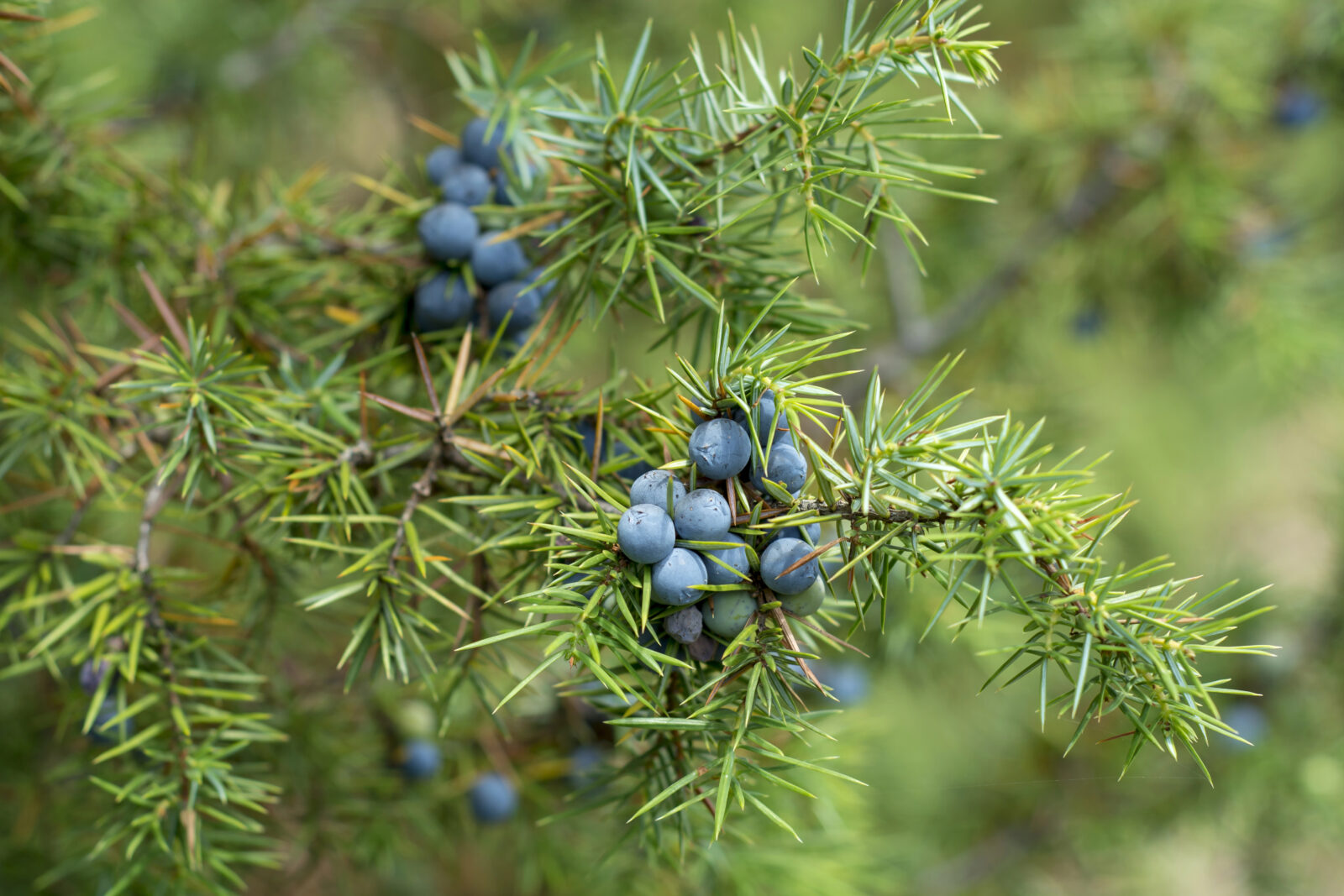
Junipers are among the most dependable conifers for drier conditions, including in towns and cities. In built-up areas, the air dries out significantly due to heat stored in walls and hard surfaces, so the choice of woody plants is often limited. Junipers, however, frequently perform very well here.
Their needles are often modified into short scales that reduce transpiration. When buying, it’s important to keep an eye on the eventual size, because some creeping types can cover a surprisingly large area over time. If you want to keep the planting compact, it pays to choose less vigorous varieties. Among low, tidy forms, the rich green cushions of Andorra Compact work well, or the variegated Andorra Variegata, which adds a lighter accent to the planting.
Juniperus squamata is also suitable for smaller spaces: it grows slowly, stays low and keeps a compact outline for a long time. In practice it also impresses with its ability to cope on stonier sites or in soils with a higher lime content, as long as it has plenty of sun and the soil is not waterlogged. Some cultivars have noticeably sharp needles and a very dense habit, which is an advantage where you want a firm, clearly defined structure all year round.
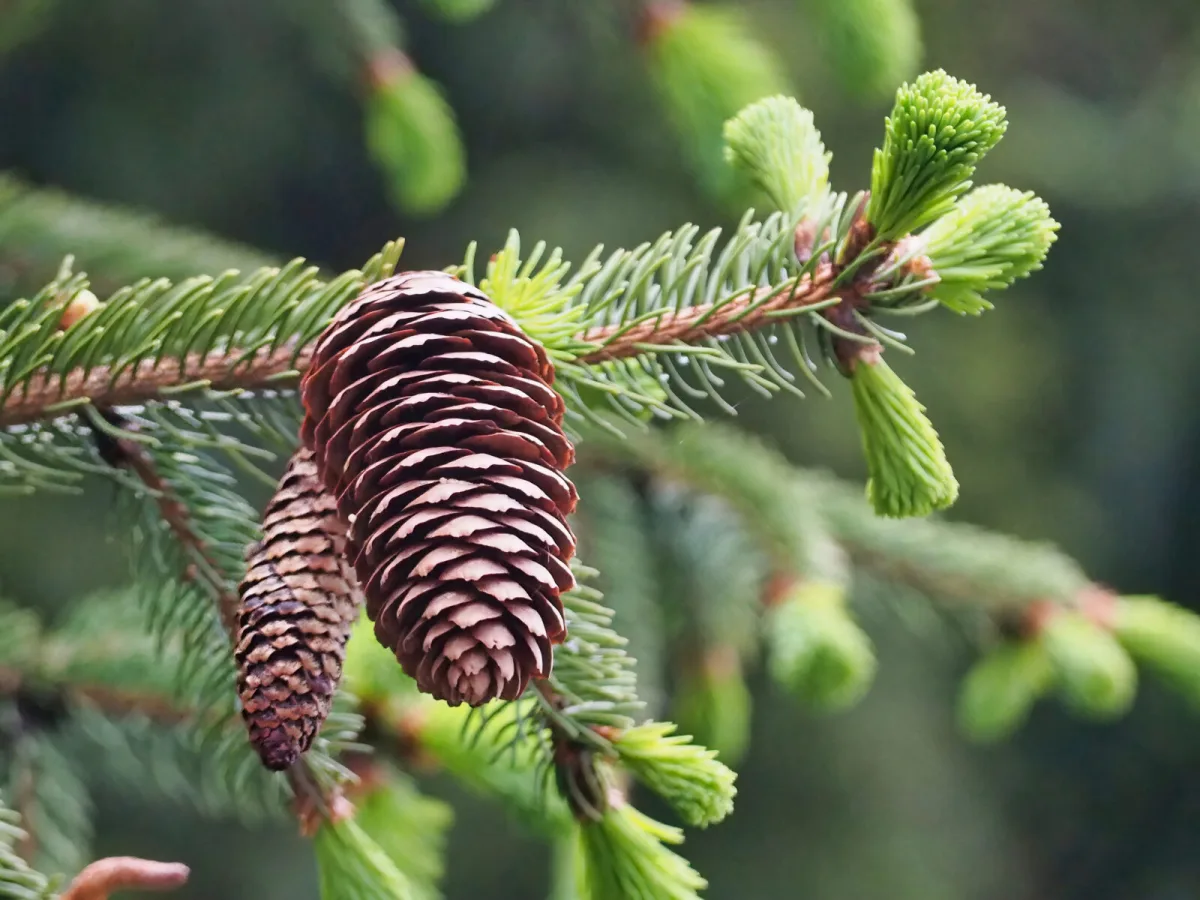
In dry times, grow spruces only in dwarf form
From a long-term perspective, spruces are now a riskier group in drier spells. If you do choose them, it’s safer to stick with dwarf cultivars that grow slowly and don’t place such a demand on watering. A typical example is Picea glauca ‘Conica’. It prefers more evenly moist soil, but thanks to its slow growth and smaller size, it’s easier to top up water in a garden than for a large tree.
The same principle applies to other low varieties that suit rock gardens, front gardens, entrances or containers on patios. It’s important to choose a sunny spot, because light is what helps maintain a dense, compact shape. In shade, even dwarf spruces tend to open up, thin out and look poorer.
If you’re tempted by miniature forms of Norway spruce, bear in mind that many of them do better in soils without a high lime content. They look very ornamental, especially when their shape stands out against a pale mineral surface, but without the right soil reaction and drainage they can struggle.
Pines: the winners of drier seasons
If any conifers respond well to a drier climate, it’s pines. Many originate from warmer or drier regions or have broad adaptability. A major advantage is their different root system. While spruce often roots more shallowly and spreads sideways, pines develop deeper roots that can reach moisture in lower soil layers more effectively.
For warmer, drier sites, Austrian pine is a good example: it tolerates heat and drought, and soils with a higher lime content often suit it. Because the species form can be robust, it’s better in most gardens to select more compact cultivars that stay a sensible size and won’t outgrow the space.
Another interesting choice is bristlecone pine from the Rocky Mountains, known for good drought tolerance. It has distinctive needles in bundles of five and small white resin droplets on the foliage that look decorative even up close. Eastern white pine also has five-needle bundles and is exceptionally adaptable across a range of conditions. In gardens, both more rounded, smaller forms and striking specimen types stand out, including weeping cultivars.
Himalayan pine offers a fine, elegant look with long, pendulous needles. It’s not usually overly demanding for water, but in cooler areas young plants may need winter protection. It’s worth remembering that even more compact cultivars typically grow in time to roughly human height, so they need adequate space.
Among European species, mountain pine has proved itself over the long term in drier gardens. It grows as a shrub without a prominent leader, and many popular garden varieties with restrained growth and compact form have been bred from it. These cultivars fit even small gardens, rockeries or mixed plantings. The general rule for pines is a need for light: in shade they stretch, thin out and lose their typically dense appearance.
Cedars: a Mediterranean-style alternative for warmer sites
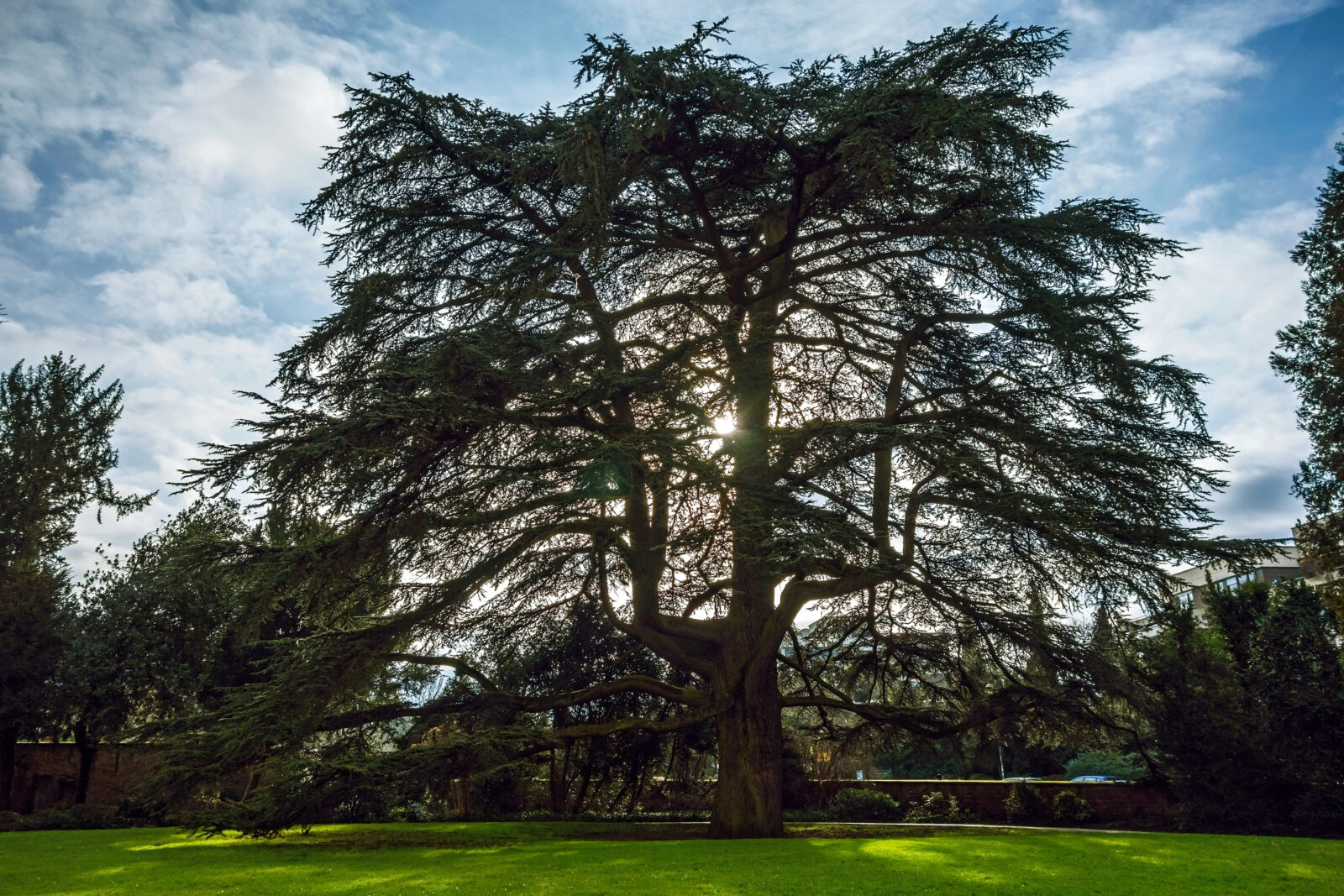
Cedars shine best where they have room to show their character. In their native range they reach monumental size, and even here it’s better to expect them to act as a strong specimen tree. Their form is usually broad-pyramidal, and in maturity they often spread more in width than they gain in height. The foliage resembles larch, but unlike larch it doesn’t drop.
The most commonly offered are Lebanon cedar, Atlas cedar and deodar cedar. Lebanon cedar is generally considered the most frost-hardy, but you still need to plan space in advance, because even narrower selections can have a substantial diameter at the base. Cedars don’t need shaping by pruning; they’re usually naturally dense and well balanced, and pruning is used only occasionally.
Atlas cedar attracts attention with bluish needles and bold horizontal branches that become even more decorative with age. However, it’s less suitable for very cold, mountainous areas. Deodar cedar tends to have a softer, more irregular silhouette and often lighter-coloured cultivars. Its typical feature is branches that slightly dip towards the ground at the tips, creating an elegant, gently weeping effect.
A shared requirement for cedars is a sunny position and well-drained soil. They won’t thrive on heavy clays or waterlogged sites, because the roots suffer from a lack of air. If your soil holds water, it’s better to lighten it significantly before planting and ensure excess moisture can drain away.
How to prepare the site so conifers can cope with drought
Success in drier locations isn’t only about species choice. Site preparation is just as important. The foundation is soil that can hold water yet still drain freely. In practice, that means working with a quality planting mix and adding organic matter where soil is too sandy, and improving drainage where the ground is heavy and clay-based.
With new plantings, well-planned watering helps too, whether by hand or with a simple irrigation setup. In the first years after planting, a regular supply of water is crucial because the roots are only just expanding into the surrounding soil. Sensible feeding should also be part of care to strengthen vitality and support healthy needle growth, along with ongoing health checks so any disease or pests are caught in time.
Practical planting principles for the future
In drier areas, it’s worth prioritising resilient groups, especially junipers and pines, and considering cedars in warmer locations on free-draining soils. With spruces and firs, it’s safer to choose dwarf, slow-growing cultivars that are easier to keep in good condition. In general, the smaller and more compact the plant, the easier it is to provide stable conditions.
If conifers matter to you, think ahead about space, light and how you’ll water during dry spells. The right cultivar choice, thorough soil preparation and regular checks of plant vigour are now just as important for conifers as the design of the planting itself.
Source: Cedar Nursery, BBC Gardeners World, iReceptář, Pestrazahrada.cz

A lover of nature, gardens, and everything that moves, blooms, or grows. He literally grows everything, from herbs to rare species, and he enjoys caring for animals just as much. In his work, he connects modern technology with tried-and-tested grandmotherly methods and is happy when both paths lead to the same goal.
Related articles
The Christmas Amaryllis That Can Bloom for Years but Most People Throw It Away After Flowering
Hippeastrum is a spectacular winter-blooming bulb that, with the right care, will flower again year after year. Learn how to plant it correctly, look after it after flowering, and bring it into dormancy so it reliably reblooms.
How to Grow Winter Garlic for a Much Bigger Harvest
Autumn planting is the key to strong, healthy winter garlic, but the details make all the difference. With the right timing, bed choice, seed-clove treatment and a simple bicarbonate trick, you can noticeably boost yield.
A tree or shrub planted properly in autumn can outpace spring stock and improve fruiting
Many fruit trees and soft-fruit shrubs establish better when planted in autumn, because roots keep growing while the top is dormant. Done well, this head start means stronger spring growth, less watering, and a healthier first year.
Comments (0)
Be the first to comment.