
 English
  Polski
  Deutsch
  Nederlands
  Svenska
  Norsk
Norsk  Dansk
Dansk  Français
  Italiano
  Español
  Português
  Slovenčina
  Suomi
Suomi  Gaeilge
 A Simple Trick to Store Garlic So It Lasts All Year
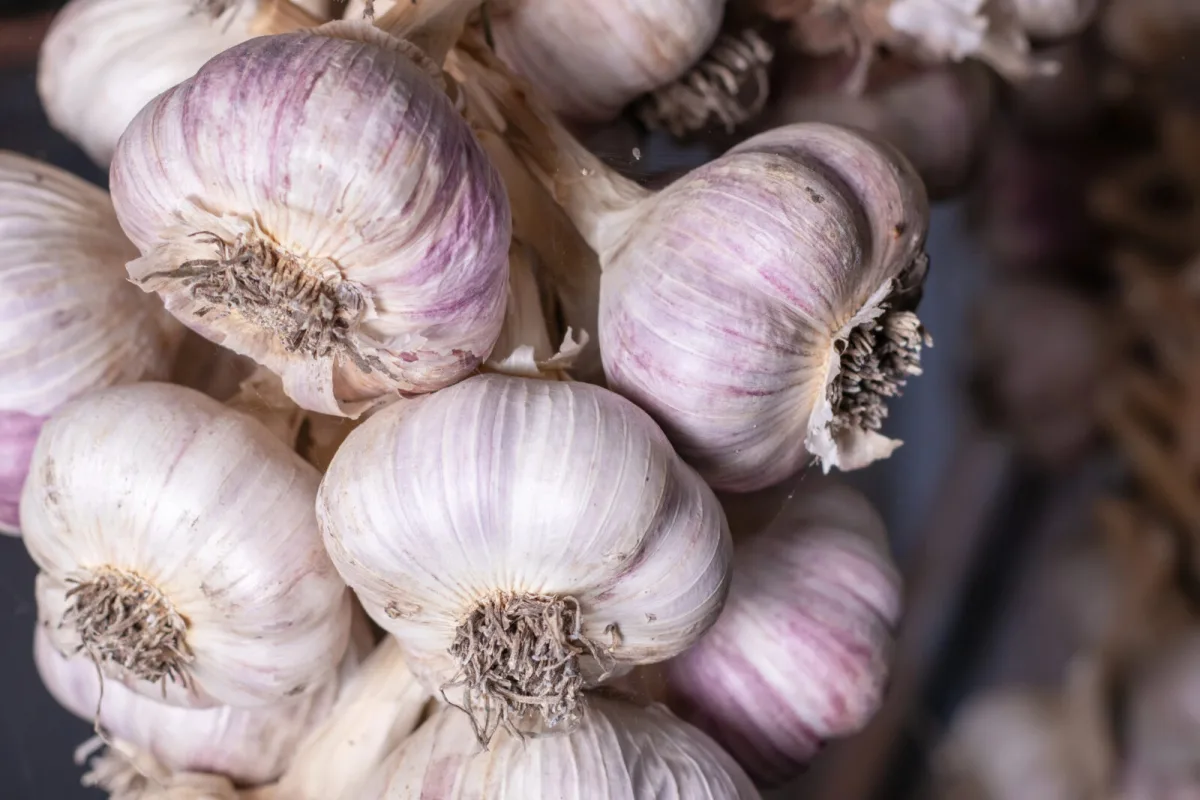
Garlic from your own garden is usually stronger, more fragrant, and indispensable in the kitchen. It’s all the more disappointing when, after harvest, poorly stored bulbs start to soften, shrivel, lose flavour, or even go mouldy. The way you store it is what decides whether you’ll have good cloves for only a few weeks, or a supply for many months.
It’s not just about putting garlic in the pantry. The timing of harvest matters, as does proper curing and making sure the bulbs don’t sprout over winter. If these steps are neglected, garlic will deteriorate quickly even under otherwise decent conditions.
How to tell when it’s time to harvest
Harvest time varies by variety, and the weather plays a big role too. In warm years, growth speeds up and it’s harder to rely on a fixed date. The best approach is to watch the crop and go by what the plant looks like.
A good sign is when roughly half of the leaves have yellowed and are drying down. If you’ve left the flower stalks on, they are often straight and firm at this stage. That’s usually when the garlic is close to ideal maturity and it’s worth getting ready to lift it.
Pre-harvest preparation that extends keeping quality
About two weeks before the planned harvest, it’s a good idea to stop watering. The bulbs are then less at risk of rot and cope better with long-term storage. You can also lightly tie the leaves together so the plant directs more energy into the underground part. The result is often tighter, more resilient bulbs.
Drying after lifting determines quality
Once the bulbs are large and firm, lift the garlic and don’t leave it sitting unnecessarily long in wet soil. After lifting, spread it out in a sunny spot, and if the weather isn’t cooperating, move it to a dry, airy room. It’s best to brush off soil gently, without stripping away the protective skins.
After that, garlic is usually hung up or placed so air can circulate around it. After about three weeks it’s typically cured enough and ready for its final storage method.
Traditional storage as a braid or bunch
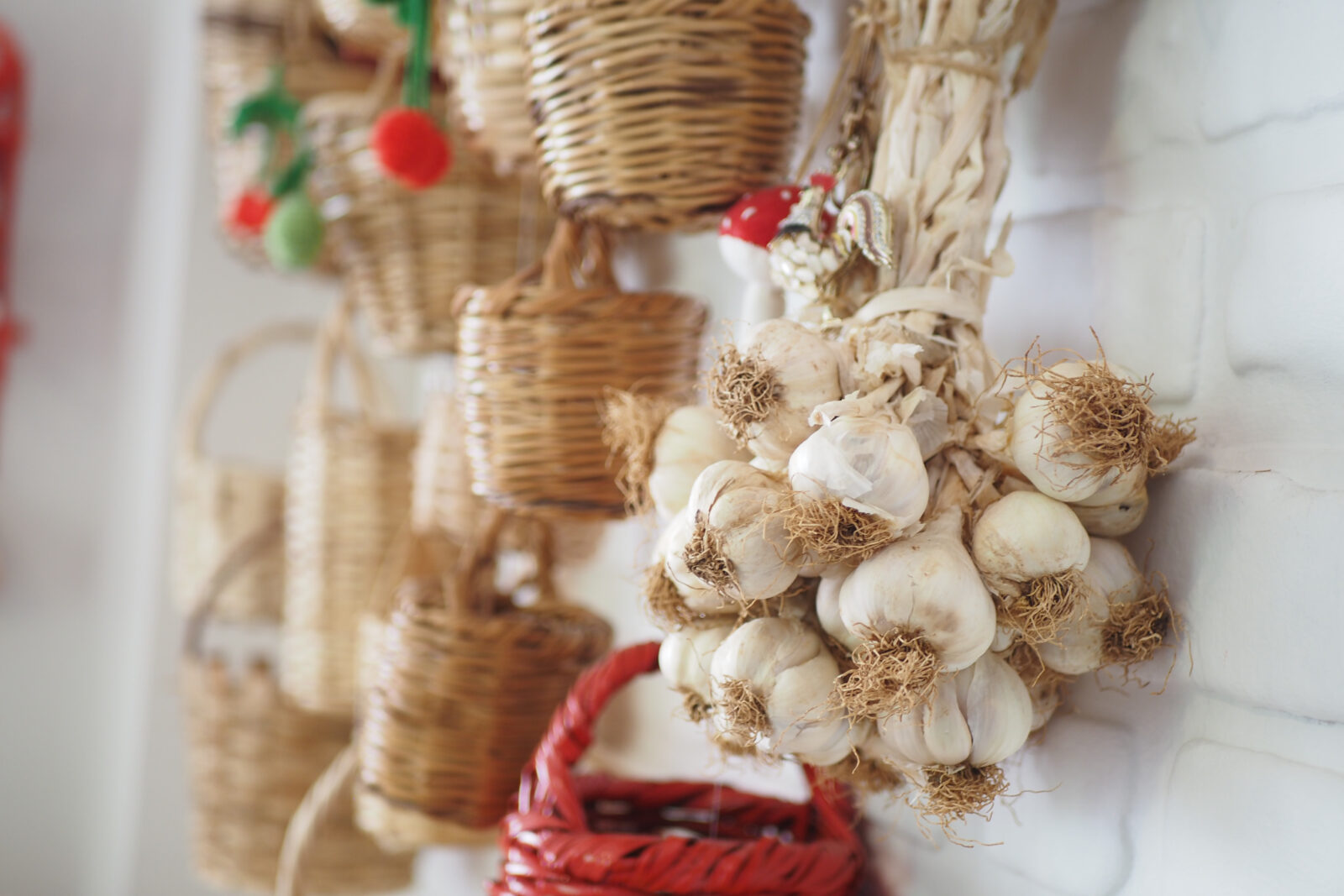
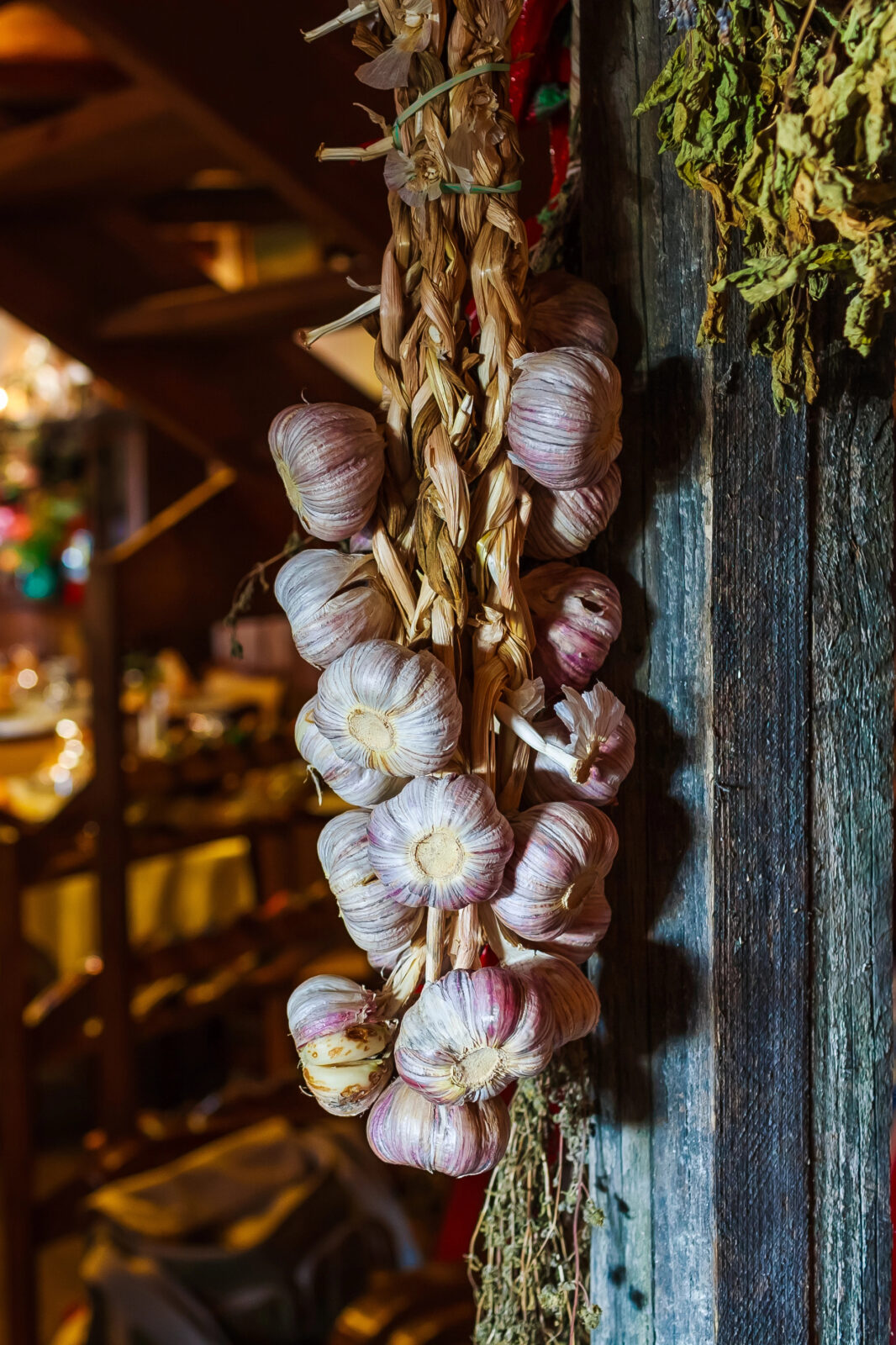
A tried-and-true method that has worked for generations is braiding the leaves. The stems are woven together and more bulbs are added gradually, leaving space between them for ventilation. If you don’t want to braid, you can tie the garlic into smaller bunches.
Whether you choose a braid or a bunch, the basic rules are the same. Garlic belongs in a dry, cooler, shaded place. If the environment is too warm or humid, it will dry out faster, soften, go mouldy, or sprout.
A secret trick that reduces sprouting without salt, oil or paraffin
There is a simple technique that’s especially handy when you want garlic to stay firm and sprout-free for a long time. You don’t need any preserving agents, and you don’t even have to braid the bulbs. The key is that the garlic must be well cured beforehand.
Leave the bulb in its skins, hold it by the dry neck and briefly scorch the area where the roots were until it blackens. You can also lightly scorch the top of the neck. This reduces the risk of the garlic starting to sprout, even if it ends up being stored somewhere warm by accident.
You can use a gas torch for scorching; if you don’t have one, a candle or lighter will do. The aim isn’t to burn the whole bulb, just to treat the ends briefly. Don’t remove the skins, as they help maintain the garlic’s natural moisture and protect the cloves.
Why it’s worth having fresh garlic even in winter
In winter, garlic isn’t only a bold seasoning for soups, sauces and meat dishes. Many people also use it as a traditional home support for colds and during the season when there’s less fresh veg available. If you give it a little care after harvest, it will reward you by staying firm, aromatic and usable right up to the next season.
The most important thing is to time the harvest correctly, cure the garlic thoroughly, and then store it somewhere dry, cool and out of the light. Scorching the root plate is an extra simple step that helps keep your stores from sprouting.
Source: To je nápad, GrowVeg, RHS, Pestrazahrada.cz

A lover of nature, gardens, and everything that moves, blooms, or grows. He literally grows everything, from herbs to rare species, and he enjoys caring for animals just as much. In his work, he connects modern technology with tried-and-tested grandmotherly methods and is happy when both paths lead to the same goal.
Related articles
How to Safely Tell Czech and Chinese Garlic Apart in the Shop by Taste, Appearance and Quality
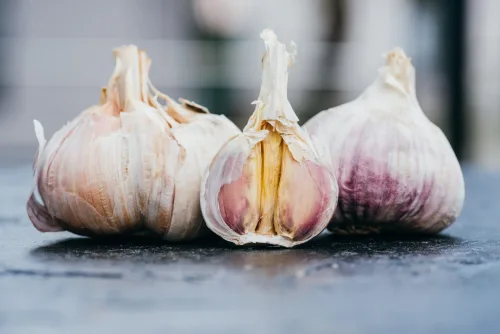
Czech and Chinese garlic can look similar at first glance, but they differ noticeably in flavour, aroma, bulb structure and keeping quality. Learn the quick visual and kitchen tests that help you choose the better bulb with confidence.
Three Mistakes When Packing Cabbage into a Crock That Can Turn Your Winter Stores into Waste
Traditional crock-fermented sauerkraut keeps for months and stays wonderfully crisp—if you avoid a few common missteps. Here are the three mistakes that most often lead to soft, grey, foul-smelling cabbage and how to prevent them.

One Rat in the Garden Can Quickly Turn Into a Colony How to Prevent It Without Chemicals
A rat on your property is a warning sign that your garden is offering food and shelter. With a few practical, chemical-free changes, you can make the area far less attractive and stop a bigger infestation taking hold.
Comments (0)
Be the first to comment.