
 English
  Polski
  Deutsch
  Nederlands
  Svenska
  Norsk
Norsk  Dansk
Dansk  Français
  Italiano
  Español
  Português
  Slovenčina
  Suomi
Suomi  Gaeilge
 A Simple Garden Hack A Homemade Wasp Trap Keeps Your Harvest and Guests Comfortable
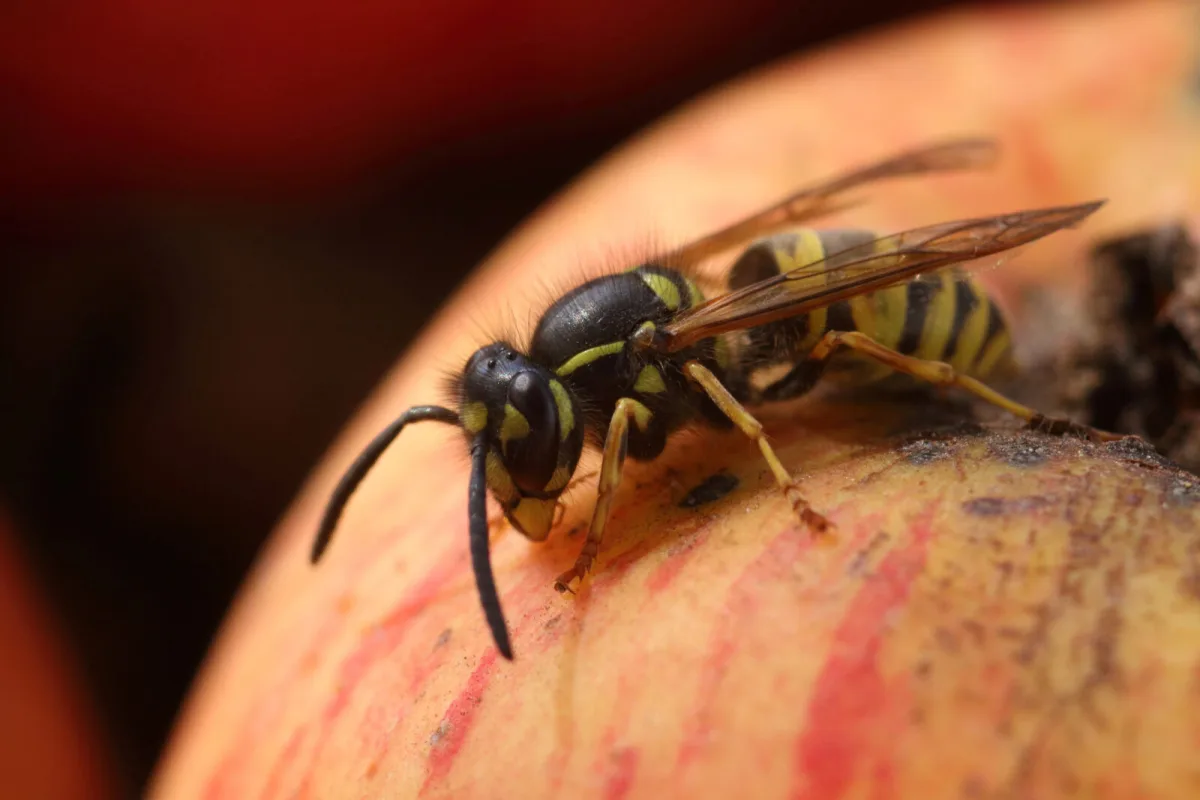
In summer, wasps often become unwelcome guests in the garden. They can ruin a barbecue, a relaxing sit-out on the patio, and even routine harvesting, because they’re drawn to the sweet scent of ripe fruit and drinks. Beyond the annoying buzzing, their defensive behaviour can also be a problem and sometimes leads to stings. Those are painful, and in sensitive people they can trigger a stronger reaction, so it’s best not to raise the risk unnecessarily.
That said, wasps do have their place in nature. They help control certain pests, for example. But when they start gathering in large numbers around fruit, the compost heap, or your seating area, it’s practical to limit their presence nearby. One of the simplest solutions is a homemade trap you can make in a few minutes, with no chemicals.
Why a plastic bottle trap works
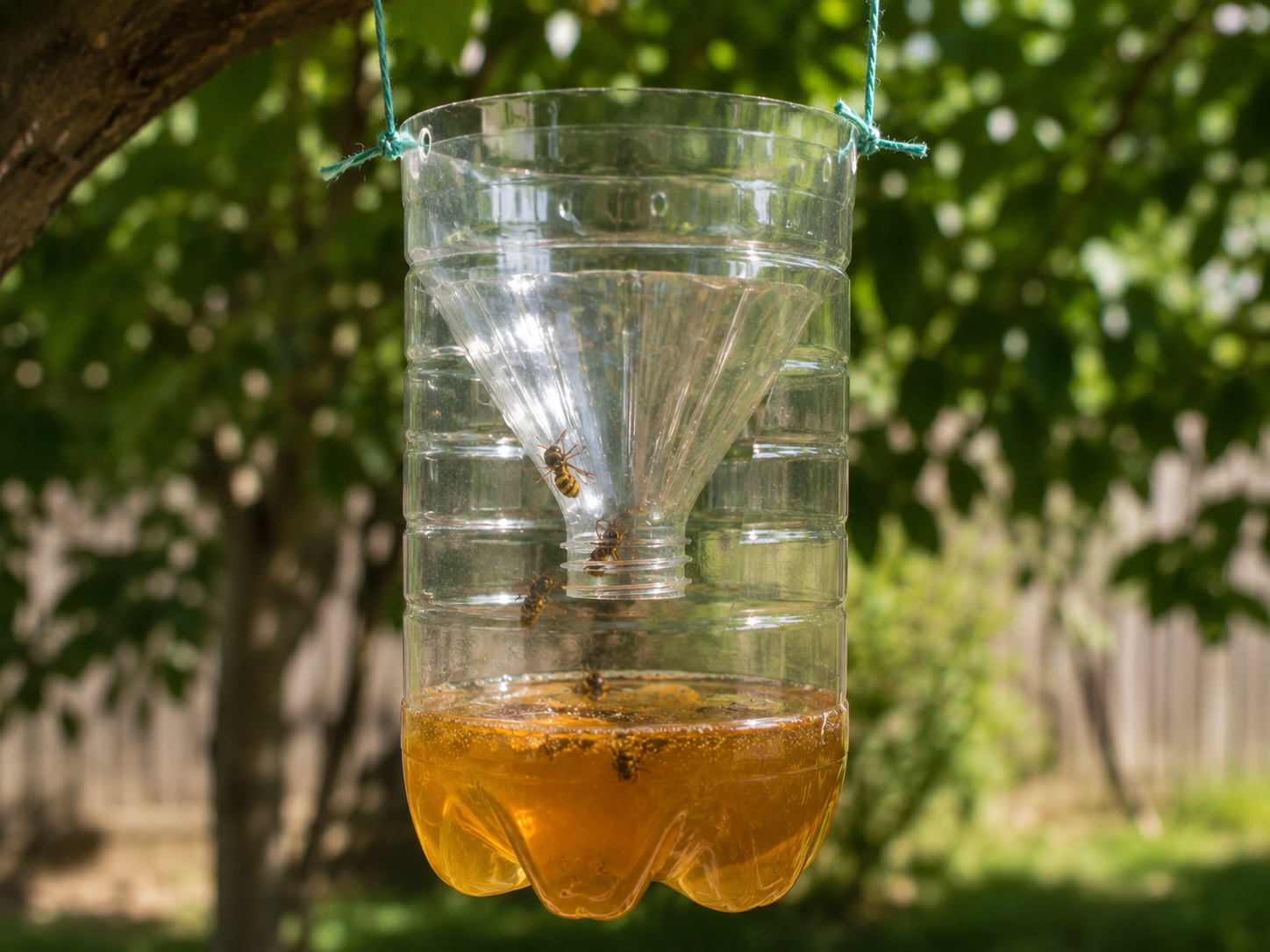
The principle is simple: a sweet bait attracts wasps, they fly in easily through the narrow neck, but because of the shape and confusion in flight they usually can’t find their way back out. The advantages are the low cost, quick assembly, and the fact you’re reusing an empty plastic bottle that would otherwise end up as waste.
Compared with chemical sprays, it’s a gentler option. It doesn’t rely on toxic substances, so it reduces the risk of accidental contamination around the garden. Even so, it’s important to place the trap sensibly so it doesn’t endanger children or pets, and so it doesn’t unnecessarily draw insects right to where you’re sitting.
What to prepare before you start
You’ll need a clean plastic bottle, a sharp knife or scissors, string or wire for hanging, and ingredients for a sweet solution. Jam is also useful because it boosts the scent and brings wasps in faster. If you want to increase effectiveness, you can add a small amount of washing-up liquid, which changes the surface tension and makes it harder for insects to escape.
Tip: The trap is most useful during ripening, when wasps actively seek out sweet sources. Place it nearer the edge of the garden or close to trees, not in the middle of the patio.
Preparing the bottle step by step
First, cut the bottle so you separate the top part with the neck at roughly one third of the height. The bottom will serve as the container for the bait. Make the cut straight so the top section can be inserted neatly later and the trap stays stable.
Pour the sweet mixture into the bottom section. A tried-and-tested option is water and sugar in a 1:1 ratio, for example 100 ml of water and 100 g of sugar. For a stronger aroma, add a teaspoon of jam and stir well so the sugar at least partly dissolves. If you want to improve the solution further, add a drop of washing-up liquid so that once wasps contact the liquid, they’re less able to stay on the surface.
How to reduce the risk to bees
This homemade trap is aimed mainly at wasps, but the sweet scent can attract other insects as well. If you want to reduce the chance of bees wandering into the trap, add 2 to 3 tablespoons of vinegar to the mixture. It usually doesn’t bother wasps as much as it does bees, and can act as a simple filter. Even so, the best protection for beneficial insects is correct placement and regular checking of the trap.
Assembling the trap and the final lure
Insert the top part of the bottle with the neck into the bottom section upside down, neck pointing downwards, like a funnel. This creates a narrowed entrance that wasps can easily get through, but they’ll find it much harder to navigate back out. To increase the effect, smear a little jam around the neck on the inside and outside so the entrance is as tempting as possible.
The trap should be sturdy enough. If the top section doesn’t stay put, you can secure it with string or a few wraps of tape, but even without that the plastic parts usually fit together in a way that works reliably.
Where to hang the trap for the best effect
Hang the finished trap with string, wire, or ribbon on a tree, pergola, or another spot where wasps typically fly, for example near ripening fruit. It’s important to keep it out of reach of children and pets and not right next to the table where you eat. The trap will attract wasps first and only then catch them, so placing it too close to where you’re sitting could briefly increase their activity.
For a tidier look, you can discreetly wrap the bottle with string. The key, however, is functionality: check the contents, replace the bait after a while, and move the trap as needed. Once wasps start keeping away from the fruit and from people, the job is done and you can enjoy the garden with less stress.
Source: Garden Therapy, Wonder How To, Pestrá zahrada, Pestrazahrada.cz

A lover of nature, gardens, and everything that moves, blooms, or grows. He literally grows everything, from herbs to rare species, and he enjoys caring for animals just as much. In his work, he connects modern technology with tried-and-tested grandmotherly methods and is happy when both paths lead to the same goal.
Related articles
The More Often You Harvest, the Longer Plants Keep Cropping
With fruiting vegetables, frequent picking keeps plants flowering and producing for longer. A few crops, such as aubergines, are tastiest when harvested slightly earlier rather than fully mature.
Wasps Aren’t Just a Barbecue Menace They Can Ruin Your Garden Woodwork Too
Weathering isn’t always the main culprit behind damaged outdoor timber. Wasps can scrape fibres from boards and beams surprisingly fast, leaving grooves that soak up water and accelerate decay.
Why hydrangeas wilt in summer even when watered and how to save them fast
Hydrangeas can look limp in hot weather even if you’ve been watering faithfully. The key is to check what’s happening in the root zone, then adjust watering, shade and mulching so the plant can actually use the moisture available.
Comments (0)
Be the first to comment.